

Sports
NHL trendspotting: Which first-month shock teams will stay red hot or ice cold?

A month into the NHL season, the playoff race is already shifting in unexpected ways. While many of the highest postseason chances belong to the usual suspects — as do the lowest (sorry, San Jose Sharks) — some are the property of rising teams surging ahead of schedule, versus others who’ve stumbled hard out of the gate.
Using playoff odds, season stats, Elo ratings and other indicators of team quality, we can see which clubs have overachieved or underwhelmed the most relative to preseason expectations.
Some of these early sources of curiosity (for good or bad) look built to last. But others? Not so much.
Let’s dive into the biggest surprises to see which look real, and what they say about the league’s shifting balance of power.

Pleasant surprises

Year 1 of Joel Quenneville’s tenure behind the bench in Anaheim has been nothing less than a rousing success early, with the Ducks ranking No. 1 in goals per game and No. 4 in goal differential overall. To say that’s a massive departure from their usual norm is an understatement; this team had previously ranked no better than 24th in scoring or 21st in goal differential in any season since 2018-19.
But the forward corps of Cutter Gauthier, Leo Carlsson and Troy Terry has been among the most productive teammate trios in the league (with 49 combined points), while former Rangers captain Jacob Trouba has solidified the blue line and Lukas Dostal has supplied strong goaltending.
Suddenly a team that hadn’t made the playoffs or posted a winning record in any of the previous seven seasons holds one of the best records in the NHL, with a 61% probability to make the playoffs.
Chance to continue: Moderate.
Because hockey is so prone to randomness in small samples, 12 games is a bit early to render a full verdict on the Ducks officially being back; they still rank No. 26 in the Elo ratings, for instance, which move slowly but are optimized to predict future games.
But it’s already clear that this team is better than it has been in a long time. (Case in point: a traditionally offense-starved team is generating far more chances than in recent years.) With the league’s third-youngest roster, it finally feels as if the Ducks are building toward something sustainable.

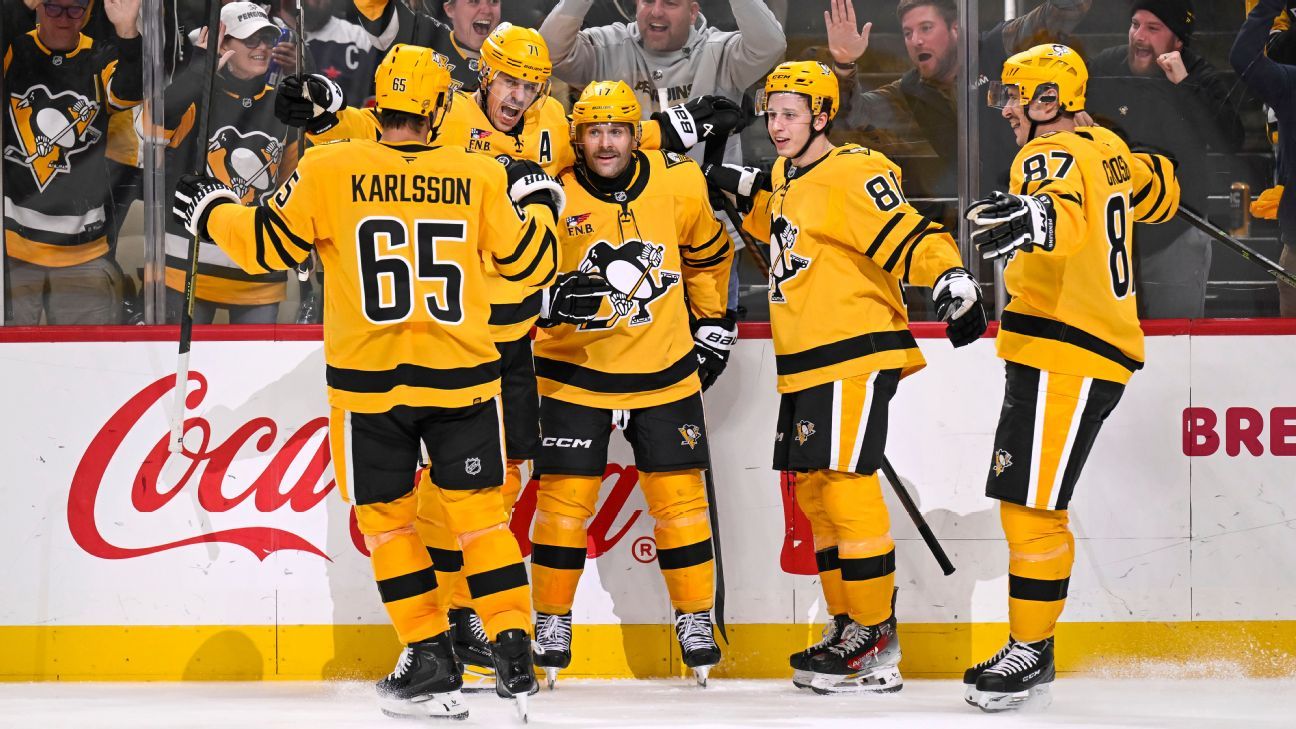
The Pens were written off so completely before this season that their main questions were when or if Sidney Crosby and Erik Karlsson would be traded — and whether Evgeni Malkin might just retire after the season. There didn’t seem to be any way that a team that had been the oldest in hockey — and sixth-worst by goals-per-game differential — in 2024-25 could actually contend a season later.
But that’s exactly what has happened to start 2025-26, as Sid the Kid has continued to play at an elite level at age 38, Malkin and Karlsson have rediscovered what once made them great, newcomers Justin Brazeau and Anthony Mantha have added scoring punch and the tandem of Arturs Silovs and Tristan Jarry has stood out in net.
Remarkably, Pittsburgh ranks in the top five in goal differential — a first for the club since 2020-21 — and they have a 56% chance at returning to the playoffs after a three-year absence.
Chance to continue: Low to moderate.
As great a story as the fountain-of-youth Penguins have been to start the season, there are some warning lights flashing that they might not be able to keep it up all season. The first is, obviously, age: The team still ranks as the league’s fifth-oldest roster, with a number of veterans playing key roles. Among their top 12 players by goals above replacement, eight of them — Malkin, Crosby, Karlsson, Mantha, Jarry, Kris Letang, Bryan Rust and Rickard Rakell — are age 30 or older this season.
Plus, the team is reliant on a few unsustainably high percentages, including a league-high power-play success rate of 35.9% and both the NHL’s fifth-highest team shooting percentage (13%) and second-best save percentage (.909). Strip away those, and this is a team outside the top 20 in zone-time percentage and share of total scoring chances in their games.
0:34
Arturs Silovs makes terrific glove save for Penguins
Arturs Silovs makes terrific glove save for Penguins

Given a fresh start with a new name this season, the Mammoth are skating full speed into what seems like a bright franchise future.
The team currently ranks top 10 in points percentage and goals-per-game differential, with the league’s 11th-best offense and defense. Prime-age (or younger) cornerstones Nick Schmaltz, Logan Cooley, Mikhail Sergachev, Dylan Guenther and Clayton Keller are all on pace for the best seasons of their careers by goals above replacement (GAR), while newcomers JJ Peterka and Nate Schmidt are also making a difference.
The Mammoth have the league’s best defense in terms of fewest shots allowed per game, and they could be even scarier if they ever get their goaltending in order. Right now, Utah has a 69% chance to make the playoffs for only the second time since 2011-12 (if we include their previous era as the Arizona Coyotes).
Chance to continue: High.
The Mammoth are no fluke. If anything, they should probably be doing even better than their .643 points percentage suggests.
The team ranks seventh in the share of shot attempts in their games, eighth in the share of scoring chances and sixth in the share of expected goals. Furthermore, Utah has done it against the league’s third-hardest schedule by average opponent Elo rating — which improves to 27th-hardest going forward.
The netminding duo of Karel Vejmelka and Vitek Vanecek have been mediocre so far, ranking 25th in save percentage as a team, but the skaters have been producing chances and playing airtight defense.
It’s easy to view Utah as a team that more established opponents would not be excited to face in a first-round series.

As we wrote when talking about the teams with the most to prove this season, the Red Wings have teased a playoff return too many times to be given the full benefit of the doubt this early.
That said, Detroit’s players are starting to click, with Dylan Larkin playing like a long shot MVP contender to lead a group that also includes Alex DeBrincat and the burgeoning trio of Lucas Raymond, Moritz Seider and Emmitt Finnie.
Nothing about the Wings’ résumé jumps off the page. Even after their improvement, they still rank only 15th in goals-per-game differential, but that would be their best mark since the second-to-last season of their 25-year playoff streak that ended after the 2015-16 season.
Chance to continue: Moderate.
With a 59% playoff chance, the Red Wings are still on the skate-blade’s edge of making the playoffs — and their middle-of-the-road rankings don’t make it seem like that stressful ride will change much over the rest of the season.
But there are reasons to think Detroit can shore up their chances a bit more from here. In terms of expected goals (a measure of controlling play that filters luck out of shooting and save percentages), they rank No. 9 in the share predicted to go their way in games. There’s also hope for better goaltending, as veterans Cam Talbot and John Gibson have a better track record than their average-at-best performances this season suggest.
Finally, the schedule should get a bit easier from here, going from fourth-hardest so far to 16th-hardest going forward.
0:48
Moritz Seider tallies goal vs. Sharks
Moritz Seider tallies goal vs. Sharks
Not-so-pleasant surprises

After a remarkable late-season run to the playoffs under new coach Jim Montgomery last season — during which the Blues somehow produced a better record (21 wins, nine losses) over the final 30 games of the regular season than the Cup-winning 2018-19 team did (20-10) — St. Louis appeared poised to build on that success this season.
But at 5-8-3 so far, the Blues hold the league’s second-worst record and they also sit last in goals allowed per game and goals-per-game differential, having lost the most playoff probability since opening night (minus-34%) of any team.
All of the team’s top skaters — Jordan Kyrou, Robert Thomas, Pavel Buchnevich, Dylan Holloway, Colton Parayko, Cam Fowler — have undershot GAR expectations by significant margins, while goaltender Jordan Binnington has been one of the worst netminders in the NHL. (His best act of protecting the puck might’ve been swiping Alex Ovechkin‘s 900th goal from the ice and into the back of his pants before having to return it.)
Chance to continue: Low to moderate.
Perhaps surprisingly for a team that has performed so badly over the season’s first month, St. Louis is not in terrible shape. The Blues still have a 32% playoff probability, owing to how the rest of the West basement hasn’t exactly been impressive either, and there’s a good chance the Blues start winning more games soon.
The team has been one of the unluckiest in the league by PDO, which measures which teams are unduly benefiting (or not) from shooting and save percentages. Cut through that noise, and St. Louis ranks No. 7 in their share of total scoring chances in games, 11th in their share of expected goals and fourth in offensive zone time percentage.
If they can get better goaltending — right now, Binnington and Joel Hofer combine to rank 31st in save percentage — the Blues are very capable of turning things around.

The Flames have been on parallel tracks with the Blues for a while, for whatever reason, complete with similar late-season changes that landed the two teams in a tie for the West’s final playoff spot in 2024-25 (which St. Louis won on a tiebreaker). Now, they have the two biggest losses of playoff chances in the league to start 2025-26.
The only difference is that Calgary’s goaltenders — Dustin Wolf and Devin Cooley — have actually done an admirable job under the circumstances this season, playing behind a defense that allows 30.5 shots per game and with some of the league’s worst goal support — the Flames’ 2.06 goals-per-game rate ranks last in the league.
This team needed either more scoring punch or a more stingy approach at the other end, but so far it has received neither.
Chance to continue: Moderate.
The Flames are in a less enviable position than the Blues because their dip in playoff odds has already landed them at 18%, roughly half as likely as the Blues’ chances. They’re also starting from a position of little hope for an offensive turnaround; the team ranked 29th in goals per game last season, and added little of note over the summer, so they’re banking on whatever positive regression is still left in Nazem Kadri, Jonathan Huberdeau, MacKenzie Weegar, Blake Coleman and Yegor Sharangovich.
Otherwise, Calgary does have a few factors in its favor: It looks better by scoring-chance and expected-goals shares than its bad record would indicate, and the Flames will go from facing the No. 1 most difficult schedule to No. 30 from here, the biggest scheduling easement in the league.

A few weeks ago, we wrote about how the Rangers were under some of the most pressure of any team to prove that last season’s disaster was a one-off from a franchise that typically has been the model of consistent quality over the previous two decades.
But their start in 2025-26 has done little to dispel the idea that something is fundamentally wrong with the Broadway Blueshirts.
New York currently ranks 20th in goals-per-game differential — which would be only their third season ranking so low since the 2005 lockout — and the way they’ve done it is downright bizarre. By goals per game, they have the best defense in the league, yet also the second-worst offense. A similar feat hasn’t been done since the 1963 Chicago Blackhawks finished first on defense and sixth (hey, it was the Original Six era) on offense.
Chance to continue: Low.
Like St. Louis, the Rangers have reasonably decent playoff odds (41%) despite currently sitting near the bottom of the pile in the East standings. They have too much offensive talent on hand — Artemi Panarin, J.T. Miller, Mika Zibanejad, among others — to sit last in scoring, after six consecutive seasons ranking 16th or better at that end. Though they might not finish first in goals allowed per game either, that extreme is a lot more fitting with this team’s track record than the 31st-ranked offense.
In terms of controlling play, the Rangers rank fourth in scoring-chance share, fifth in expected-goals share and seventh in offensive zone-time share. When they start improving upon their league-worst 7.8% shooting percentage, the Rangers should start winning more games, and their playoff chances will rise.

Before the season, the Wild signed Kirill Kaprizov to the richest contract in NHL history (which kicks in next season) because the data said he was as indispensable as any star: Since 2020-21, he’d driven roughly one-third of Minnesota’s offense, and in 2024-25 the team scored like a borderline top-10 team when he played and cratered without him. The logic around Kaprizov’s value still seems sound; he’s currently on pace for 45 adjusted goals and 105 adjusted points.
But while he’s holding up his end, the goaltending, defense and depth scoring aren’t, as Minnesota ranks just 20th in goals per game, despite Kaprizov’s production, to go with a No. 25 ranking in goals allowed per game and No. 29 in goals-per-game differential.
It’s now looking as if the Wild committed a lot to one player who hasn’t been able to overcome the rest of the team’s flaws to start the season.
Chance to continue: Moderate to high.
Minnesota is a confusing mixed bag so far in 2025-26. On the positive side, the Wild are a top-six team by share of offensive zone time, which would seem to suggest the potential for better results when their 98.9 PDO — 25th in the league — gets straightened out. (PDO is a highly luck-driven stat that tends to regress to the mean of 100.0 over time.)
But the Wild also haven’t done much with all that zone time, ranking 23rd in scoring-chance share and 25th in expected-goals share, perhaps indicating the need for tactical adjustments from coach John Hynes.
Also on the negative side: The Wild play a slightly tougher schedule from here, and with 24% playoff chances, they have little margin for error.
It is an issue that is dividing football, a classic example of one generation questioning the choices of another, but the sight of a former Tottenham and Germany player rolling on the pitch in agony with a severely gashed leg earlier this month might end up changing opinions about the ever-decreasing size of shin guards.
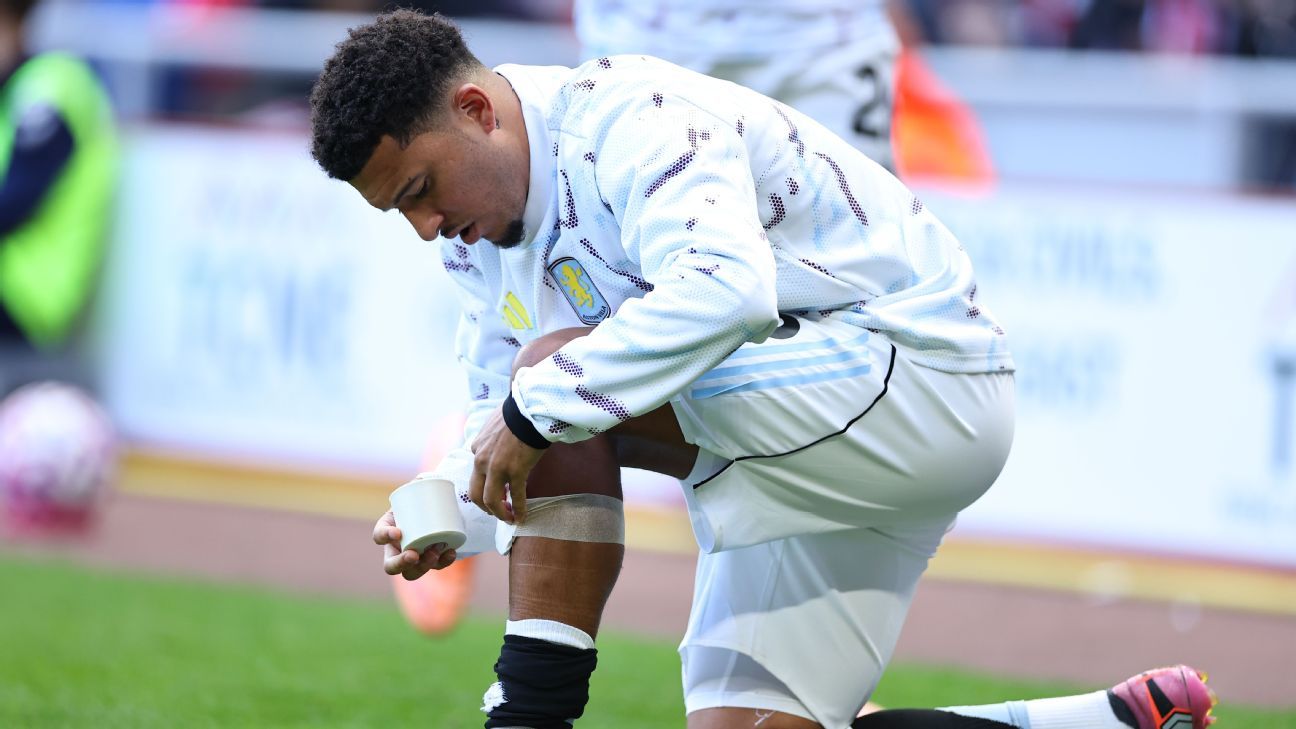
Until recently, shin guards covered the entire shin — sometimes up to 9 inches long — and they were made of foam or rubber with a hard plastic shell. But in recent years, some players have abandoned the protective element completely, wearing only tiny pieces of foam under their socks, and it seems only a matter of time before a serious injury leads to a rethink in what players are wearing.
Lewis Holtby‘s injury, sustained while playing for Dutch team NAC Breda against Fortuna Sittard in the Eredivisie on April 12, looks to have ended the 35-year-old’s season due to the depth of the wound on his left shin following a challenge with an opposition defender. It also led to a blame game centered on Holtby’s shin guards.
“I think it’s ridiculous that the referee [Jeroen Manschot] says something about it,” Breda coach Carl Hoefkens said after the game. “In the tunnel, it was said [by Manschot] that Holtby should just wear shin guards, or better shin guards. The officials also check the shin guards before the match, so it’s their responsibility as well.”
La aparatosa lesión de Lewis Holtby este fin de semana. 😬
Vía ESPNnl/X pic.twitter.com/WgHl4PL5xo
— ESPN Deportes (@ESPNDeportes) April 14, 2026
Breda defender Denis Odoi spoke about Holtby’s “small shin guards” and said “You’re never too old to learn,” when asked about players wearing “normal” shin guards again, while ESPN NL analyst, former Ajax and PSV Eindhoven winger Kenneth Perez, was more critical.
“They [players] are now wearing those tiny things, or basically toilet paper, just to have something there,” Perez said. “I have absolutely no sympathy for injuries that result from that.
“As a club, you can simply say: We require our players to wear proper shin guards.”
Watch any top-level fixture this season and you’re likely to see players with socks rolled down almost to their ankles — Everton‘s Jack Grealish and Tyler Dibling wear them low, covering tiny shin guards. Others have their socks just below the knee, but still sport shin guards half the size of a cellphone, as shown by Burnley midfielder Marcus Edwards during a game against West Ham in February. Arsenal forward Bukayo Saka has spoken this season about his preference for tiny shin guards — “I’m a fan of them; I don’t like big shin pads” — though Liverpool defender Virgil van Dijk harbors a more cautious approach to protecting his lower leg.
“If you get kicked on your shin and your shin pad is that size of an AirPod, then obviously that’s a big problem,” Van Dijk said.
Brighton forward Danny Welbeck has said that his younger teammates ridicule his old-school shin guards — “They say to me ‘Your shinnies are massive,’ but you need a bit more safety, you know?” — but just like Saka, Fulham winger Alex Iwobi prefers the small, lightweight guards because “I just don’t like having something heavy on my shin.”
Former England and Liverpool forward Peter Crouch regularly raises the shin guard issue on his podcast, That “Peter Crouch Podcast,” under the light-hearted “Make Shin Pads Great Again” banner, with Fulham midfielder Harry Wilson saying this season that some of his teammates “cut up the sponge you get from the physio and use that.”
If a high-profile player sustains this type of injury thanks to tiny shin guards, the kind of injury that forces them to miss the World Cup or that happens on the biggest stage this summer — the debate about the shrinking move towards smaller pads will likely increase in volume.
The trend toward smaller shin guards — and away from larger models that would also include ankle protectors — is rooted in many things, including the game becoming less physical with fewer tackles and players wanting to feel as light as possible to boost their sprinting speed. But it is also a result of a change in the Laws of the Game in July 2024 when IFAB (the International Football Association Board) amended the rule covering shin guards (Law 4) to place the responsibility on the player rather than the match officials to ensure sufficient shin protection was worn.
Prior to the change, the responsibility was on referees to police the rule, but many were being ignored by players and clubs and then criticized — or even sometimes challenged in court — for failing to impose the rules if a player was subsequently injured. But the Law remains vague and open to interpretation. There is no minimum size required, only that the shin guards are “covered entirely by the socks, are made of suitable material (rubber, plastic or similar substances) and provide a reasonable degree of protection.”
“The reason we changed the Law was because it is impossible to legislate and say a shin pad must be a certain size,” David Elleray, IFAB technical director and former Premier League referee told ESPN. “So two years ago, we put the responsibility on the players that they should wear something which they believe protects them.
“The challenge we had was partly legal. If we left the responsibility with the referees and the referees said, “Okay, that shin guard is okay,” then the player got injured, the player might decide to take action. So we put that very firmly in the court of the players and the coaches, and for young players, the parents.”
The change of the Law has led to players placing speed and aesthetics — many dislike the bulk of larger shin pads — above safety, however, and Elleray admits it has not led to a sensible approach by players and clubs.
“We [IFAB] had hoped, or expected, that they would take a responsible attitude to it, but there was one recently [Marcus Edwards] that was almost like a sticking plaster,” Elleray said. “The pressure needs to go on the individual players, the coaches and the clubs to make sure their players are protected because it’s impossible to legislate for.”
Former leading referee Pierluigi Collina, now the Chair of the FIFA referees’ committee, has urged players to be more mindful of their well-being when choosing their shin guards. “At the end of the day, the shin pad rule is for their own safety,” Collina told ESPN. “So they should care of what is really safe for them.”
But as shocking as Holtby’s injury was, it perhaps generated such attention because of the rarity of such incidents. Broken legs and deep cuts and gashes seem less prevalent despite the reduction in shin pad sizes, with muscle tears and ligament injuries to ankle and knee more likely to sideline a player.
The argument put forward by those who favor small shin guards is that players no longer suffer serious impact injuries, and that might be a valid point. In a recent example of a bad impact injury, Liverpool’s Alexander Isak was wearing small — but not tiny — shin guards when he suffered a fractured leg in a challenge with Tottenham’s Micky van de Ven last December, but it would be difficult to argue that larger shin pads would have diminished the severity of Isak’s injury.
Sources at the Professional Footballers’ Association (PFA) have told ESPN that “primary decisions around safety are taken by players in consultation with their club and medical teams” and that players ultimately “feel comfortable with different shapes and sizes of shin pads.” There is certainly no drive within the game to force players to re-think the protection being offered by their shin pads.
Football trends have changed since larger and heavier shin pads were the go-to model for top players. The Umbro Armadillo, which was manufactured during the early-2000s, was a large plastic guard with ankle protectors and was worn by Michael Owen and Alan Shearer, while Brazil forward Ronaldo wore Nike’s T90 model. Both designs were significantly larger, heavier and stronger than the pads now being preferred.
Today’s younger players prefer small, lightweight pads and the shifting trend led two brothers — Kaizer Chiefs midfielder Ethan Chislett and Zack, who plays for UAE-based Palm City — to develop their brand of Joga shinpads, which are tiny, much lighter and softer than traditional shin guards. The Joga Shinpad Sleeve, worn by Chelsea‘s João Pedro, is a cellphone-sized soft pad within a fabric sleeve that’s worn to cover the shin. Everton midfielder Grealish wears Joga’s Breathe pads that measure just 6 centimeters x 10 centimeters (2 inches x 4 inches).

“We were the first ones to make a mini shin pad that you could buy,” Zack Chislett told ESPN. “I was playing nonleague at the time, my brother Ethan was playing for AFC Wimbledon, and we noticed that pads were getting smaller and smaller, but there was no-one giving players an option to buy them. They were just using anything they could find in the physio’s bag, so the demand was obviously there.”
But why do young players want their shin guards to be so small and lacking in protection?
“When you’re training the whole week without shin pads and you then put the big pad on, sometimes with ankle pads, on a Saturday, it doesn’t feel natural like when you’re training,” Zack said. “Some players will feel better with the big shin pad, but a lot of the younger, more attacking players don’t feel that way and they don’t want to feel as restricted when they go on the pitch.
“And the game has changed, 100%. The tackles aren’t coming in like they used to, it isn’t as aggressive or as physical. I’m 23, and players of my generation just don’t want to wear big shin pads — it would be like wearing old, heavy leather boots. It just isn’t going to happen.”
The likes of Welbeck and Van Dijk are being usurped by players such as Saka, Iwobi, Grealish and Joao Pedro when it comes to the size and protective elements of their shin pads.
Perhaps Holtby’s injury will prompt some players to think about the risks of playing without suitable protection and a high-profile injury at this summer’s World Cup could also lead to FIFA imposing stricter guidelines on what can, and can’t, be worn by players. But right now, footballers are putting risk to one side in favour of speed and freedom of movement, so shin pads could get smaller and smaller.

NEWYou can now listen to Fox News articles!
Danhausen made his debut at Elimination Chamber in February when he appeared out of a mysterious box that was set up on the stage.
The pro wrestling star’s entrance came with a puzzled fan base and questions about who this guy was and how he was going to fit on a crowded roster filled with talented wrestlers all vying for championships and time on the major premium live events, “Monday Night Raw” and “Friday Night SmackDown.”
CLICK HERE FOR MORE SPORTS COVERAGE ON FOXNEWS.COM
Danhausen made his WWE debut during the Elimination Chamber event at the United Center in Chicago, Illinois, on Feb. 28, 2026. (Craig Melvin/WWE)
Danhausen came out with his faced painted and several women, known at the time as the Danhausenettes. It was his first appearance since he left All Elite Wrestling, where he had the same gimmick – putting a “curse” and emerging as more of a comedy act than anything.
In the weeks leading up to WrestleMania, Danhausen caught on with the fans. He “cursed” The Miz, Kit Wilson, Dominik Mysterio, the New York Mets and Stephen A. Smith in between his debut and WrestleMania 42. In Las Vegas, his T-shirts were everywhere and dozens of fans painted their faces to match the “very nice, very evil” superstar.
“I’ve only been here for about two months, and look at the impact Danhausen’s made,” he told Fox News Digital before WrestleMania Night 1. “He’s got a merchandise stand at WrestleMania. He’s going to be at WrestleMania. And his face is on everything. Gotta get it on the side of the truck still. But what was your question? I was talking about how great I am.”
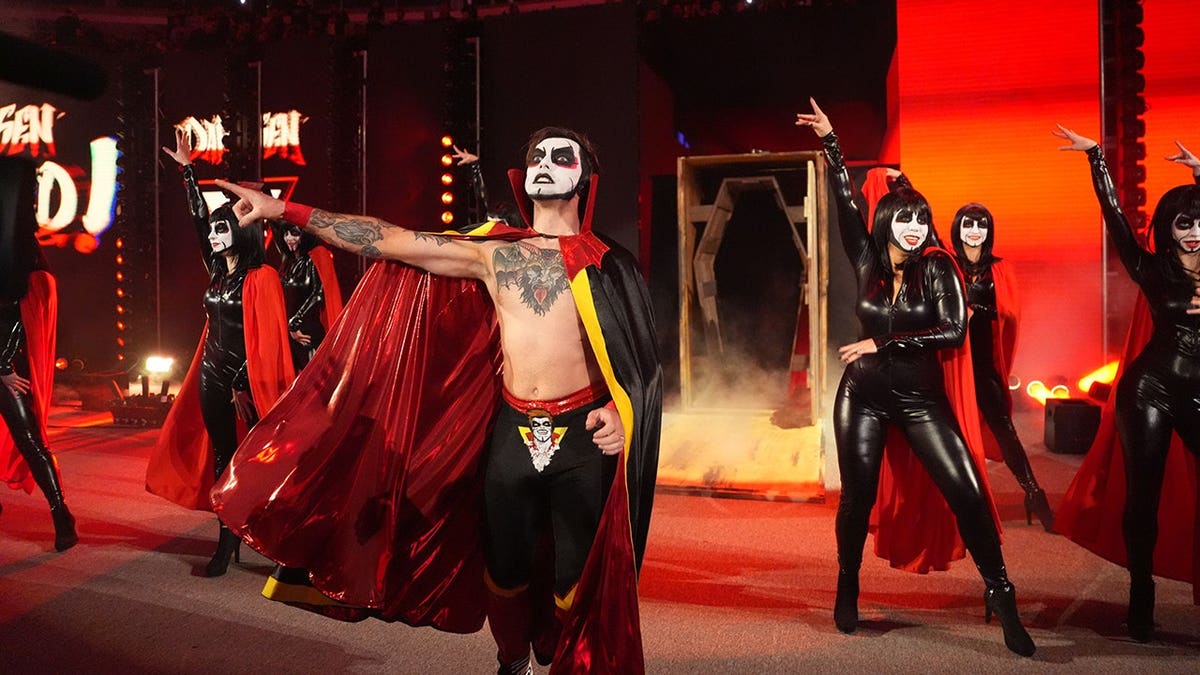
Danhausen came out with his faced painted and several women, known at the time as the Danhausenettes. (Craig Melvin/WWE)
ROMAN REIGNS, CM PUNK PUT ON PROFESSIONAL WRESTLING MASTERCLASS AT WRESTLEMANIA 42
Danhausen also provided an update on the Danhausenettes, who haven’t been seen since they were dancing and performing on the stage at Elimination Chamber.
“Well, we gave them a vacation,” he said. “A great reception. We gave them their human monies to go off and do whatever they want for the time being. Perhaps we’ll see them again. Perhaps we won’t. I don’t know. It’ll be a surprise.”
Danhausen appeared at WrestleMania Night 2 – his first WrestleMania.
He came out to a huge reaction in a segment that involved John Cena, The Miz and Wilson. He was accompanied by pro wrestlers from Micro Wrestling. They also got involved as Danhausen struck The Miz in the groin. The Micro Wrestling performers carried The Miz out of the ring.

Danhausen and John Cena celebrate during WrestleMania 42: Night 2 at Allegiant Stadium in Las Vegas, Nev., on April 19, 2026. (Andrew Timms/WWE)
CLICK HERE TO DOWNLOAD THE FOX NEWS APP
It was one of the funniest moments of the weekend. One thing is for sure, Danhausen is in WWE to stay.
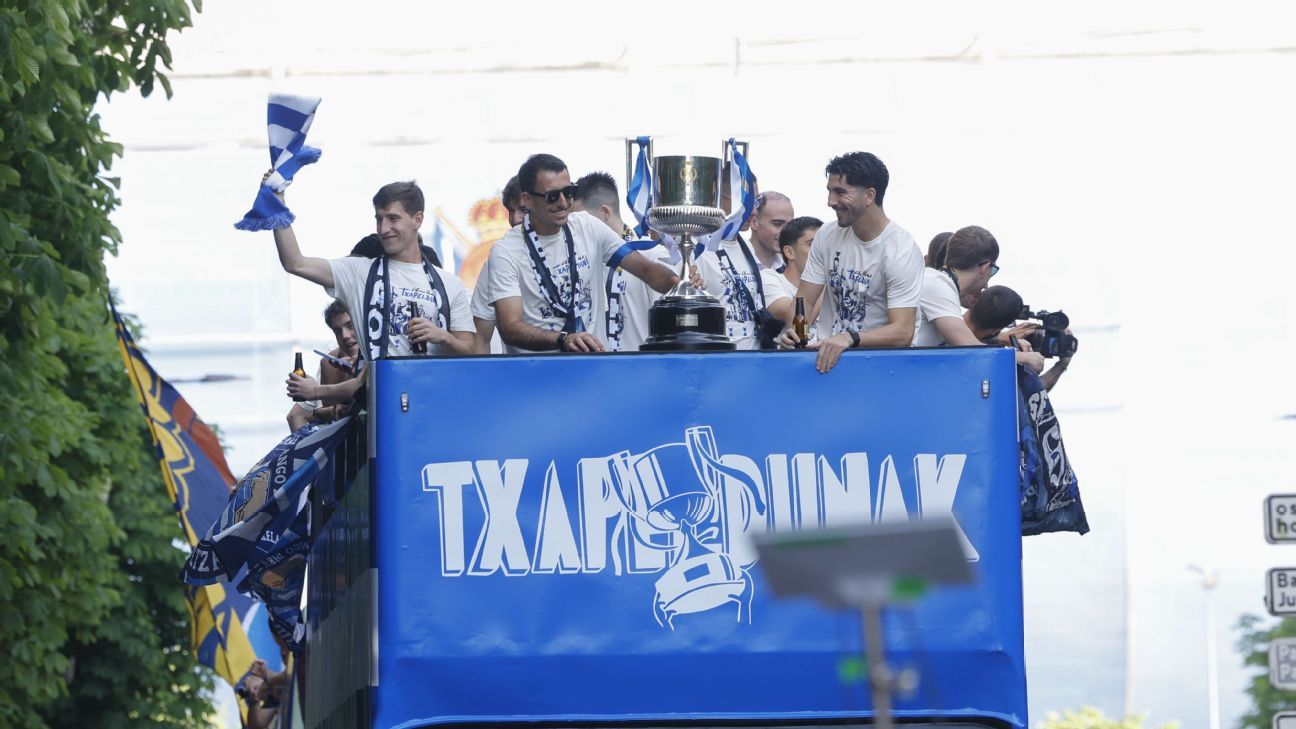
More than 100,000 fans gathered in the streets of San Sebastian, Spain, on Monday to celebrate Real Sociedad‘s Copa del Rey win over the weekend — a first major trophy for the Basque team since 2021.
Real Sociedad defeated Atlético Madrid on penalties Saturday to secure the title, marking a historic milestone for American coach Pellegrino Matarazzo, who earned his first trophy just four months after taking over the squad. In doing so, he became the first U.S.-born manager to win a major European tournament.
Matarazzo received one of the loudest ovations of the day. He further endeared himself to the local supporters by attempting a speech in Euskera, the Basque regional language.
“We are champions! I will try to do this in Basque, so I apologize for any mistakes I may make,” Matarazzo said from the balcony of San Sebastian’s town hall. “What a wonderful start on this path we are taking together. I feel that this is just the beginning! With your help, these players can achieve many great things.”
The “Blue and White” crowd chanted “Rino, Rino, Rino Matarazzo,” to which the New Jersey native responded that no one lifted the trophy as “high as I have,” due to his 6’6″ height and the proudness he feels.
Another moment of peak euphoria occurred when club captain Mikel Oyarzabal raised the trophy. The Spain striker thanked the fans for their unwavering support, while being frequently interrupted by the crowd chanting “Ballon d’Or” in his honor.
“Firstly, thank you very much for being here with us. It’s great to see how happy you look,” Oyarzabal said. “Here we are again, saying we are the champions of the Copa del Rey.”
Matarazzo — who previously coached Stuttgart and Hoffenheim in Germany — took charge of Real Sociedad as they struggled last December and has lifted them to seventh in LaLiga, and now a major trophy.
Information from The Associated Press was used in this report.


WhatsApp to let users generate private summaries of unread chats

US stocks today: Wall Street inches higher as markets eye ceasefire deadline; Dow jumps 300 points, S&P 500 remains flat – The Times of India

Soccer’s incredible shrinking shin guards could be a big problem

-

 Fashion5 days ago
France’s LVMH Q1 revenue falls 6%, shows resilience amid Iran war
-

 Sports1 week ago
The case for Man United’s Fernandes as Premier League’s best
-

 Entertainment1 week ago
Palace left in shock as Prince William cancels grand ceremony
-
 Business1 week ago
UK could adopt EU single market rules under new legislation
-

 Entertainment6 days ago
Is Claude down? Here’s why users are seeing errors
-

 Fashion1 week ago
Energy emerges as biggest cost driver in textile margins
-
 Business1 week ago
Delta Air Lines unveils first new Delta One suite in premium cabin arms race
-

 Fashion1 week ago
Asia claims largest share of markets on Kearney FDI Confidence Index