

Business
Nike posts surprise sales growth but turnaround work is far from over


Nike on Tuesday posted surprise sales growth in its fiscal first quarter, but the sneaker giant still has work ahead to execute its turnaround.
The company said revenue rose 1% in the three months ended Aug. 31, after previously saying it anticipated sales would fall by a mid-single digit percentage in the period.
Still, Nike’s profits fell 31% while gross margin dropped 3.2 percentage points to 42.2% during the quarter — a warning sign to investors that its efforts to clear through old inventory are still ongoing.
In a press release, finance chief Matt Friend warned that “progress will not be linear.”
“I’m encouraged by the momentum we generated in the quarter, but progress will not be linear as dimensions of our business recover on different timelines,” said Friend. “While we navigate several external headwinds, our teams are focused on executing against what we can control.”
Here’s how Nike performed during the quarter compared with what Wall Street was anticipating, according to consensus estimates from LSEG:
- Earnings per share: 49 cents vs. 27 cents expected
- Revenue: $11.72 billion vs. $11.0 billion expected
Nike’s reported net income for the period was $727 million, or 49 cents per share, compared with earnings of $1.05 billion, or 70 cents per share, in the year-ago quarter.
Sales rose to $11.72 billion, up about 1% from $11.59 billion a year earlier.
In a statement, CEO Elliott Hill said the company is making strides in three key areas: wholesale, running and North America. During the quarter, wholesale revenue rose 7 to about $6.8 billion%, while sales in North America climbed 4% to $5.02 billion — better than the $4.55 billion analysts were expecting, according to StreetAccount.
However, beyond those three areas, Hill acknowledged parts of the business are still struggling.
“While we’re getting wins under our belt, we still have work ahead to get all sports, geographies, and channels on a similar path as we manage a dynamic operating environment,” said Hill.
During the quarter, Nike direct sales fell 4% to about $4.5 billion. Revenue in China — one of the company’s most important markets — was down 9%.
Since Hill took over nearly a year ago, he’s been working to get Nike back to growth and undo some of the work his predecessor John Donahoe implemented. One of the most important parts of that strategy has been reigniting Nike’s innovation engine and clearing through stale inventory to make way for new styles.
Though the strategy is crucial to Nike’s efforts to grow again and take back market share, it comes with pain in the short term. Clearing out old inventory has required Nike to rely on discounting and less profitable sales channels to move products, which has impacted its profitability.
During the quarter, inventories were down 2% compared to the prior year as units decreased, which was offset by increased product costs related to higher tariffs.
Ahead of Nike’s release, investors were looking for any clues into how those efforts are going and how much longer they’ll take. The company was expected to provide more insight into its progress during a conference call with analysts at 5 p.m. ET.
Beyond inventory management, Hill has also pledged to realign Nike’s corporate structure so it would once again segment teams by sport instead of by women’s, men’s and kids. In late August, the company started shuffling teams. As part of the restructuring, Nike said it would cut around 1% of its staff, and most employees would be moved into new roles by Sept. 21.
Hill has said a focus on sports over lifestyle will help the company win back its crucial athlete consumer, but lifestyle merchandise is still an important part of the strategy because it allows Nike to reach a larger consumer segment, and more women. Growing the number of female customers has been another important part of Hill’s strategy and Nike’s recent partnership with Kim Kardashian’s shapewear brand Skims is one of the ways it’s getting there.
NikeSKIMS, originally slated to release in the spring, officially launched last week. Investors will be looking out for color on how the new brand is performing and how it could affect sales.
This story is developing. Please check back for updates.






Rolls-Royce has announced a significant surge in its annual profit, climbing by £1 billion, alongside an upgraded financial outlook for the coming years.
The engineering powerhouse attributed this robust performance to substantial military aircraft orders and burgeoning demand for powering data centres.
The company reported an underlying operating profit of £3.5 billion for 2025, marking a 40 per cent increase from the £2.5 billion achieved in the previous year.
Underlying revenues also surpassed £20 billion over the period, representing approximately a tenth’s rise compared to 2024.
This impressive growth was fuelled by strong profit and sales across its civil aerospace, defence, and power divisions.
Rolls-Royce highlighted particularly strong demand for its defence products, securing major orders throughout 2025. The firm stated its various business units are well-positioned to capitalise on “key global trends” in the years ahead.
This included contracts worth more than £1.5 billion with the UK’s Ministry of Defence and the US’s Department of War for EJ200 and AE 2100 engines to power military aircraft.
New orders for the Eurofighter aircraft engines from Italy, Germany and Spain, as well as export agreements from Turkey, will drive production into the 2030s, it said.
Furthermore, Rolls-Royce said it was benefiting from growing demand for power generation, driven by data centres with revenues up by more than a third.
Rolls-Royce said it was now expecting underlying operating profits to increase to between £4.9 billion and £5.2 billion by 2028 following the strengthened financial performance in 2025.
This is significantly higher than the £3.6 billion to £3.9 billion range that it had previously been targeting.
Chief executive Tufan Erginbilgic said growth would not have been possible “before our transformation”, with the business making £600 million worth of cost savings since 2022.

“With our new capabilities and mindset, we have navigated challenges from supply chain to tariffs, and delivered a strong performance in 2025, all while we built the foundations for significant growth for years to come,” he said.
“Based on our 2026 guidance, we expect to deliver underlying operating profit within the prior mid-term guidance range two years earlier than planned.
“Beyond the mid-term we continue to see significant growth from existing businesses as well as from new business opportunities.”
Business
Gold Could Hit 7500 Per Ounce: Gold in ‘structural repricing phase’, could hit $6,000 in 12 months: Report – The Times of India

Gold’s long-term outlook remains bullish as global de-dollarisation, rising fiscal stress and escalating geopolitical tensions reshape the global financial order, according to a report by Motilal Oswal Financial Services Ltd (MOFSL).In its latest Precious Metals Quarterly Report, the brokerage said gold prices crossed the $5,000 per ounce mark in early 2026, marking one of the strongest long-term bull phases in modern history.The firm said gold has entered a “structural repricing phase,” signalling the beginning of a new supercycle rather than a short-term cyclical rally.
Target of $6,000 in 12 months, $7,500 medium term
MOFSL expects Comex gold to settle towards $6,000 per ounce — equivalent to around Rs 1.85 lakh per 10 grams domestically — over the next 12 months. It also sees the potential for prices to move towards $7,500 per ounce in the medium term if geopolitical and fiscal pressures intensify.“The long-term outlook for gold remains positive. As global reserves gradually diversify away from dollar-centric assets and physical supply remains constrained, gold prices are likely to stay supported around and above $5,000 per ounce,” Navneet Damani, head of research, Commodities, Motilal Oswal Financial Services Ltd, said, as quoted by news agency PTI.Damani added that the current cycle is being driven not just by inflation, but by confidence — or the lack of it — in fiscal and monetary systems.
Gold rises despite positive real rates
The report highlighted that gold continued to climb even when real interest rates were positive between 2023 and 2025 — a period when prices would typically decline.This trend indicates that investors are increasingly worried about mounting global debt levels and the long-term stability of fiscal and monetary frameworks.“Gold’s strength despite positive real interest rates shows a clear shift in investor thinking. Real returns are increasingly seen as temporary and policy-driven, which reduces the cost of holding gold and strengthens its role as a safeguard against broader financial risks,” Manav Modi, analyst – commodities, MOFSL, said.
Geopolitical tensions, supply constraints add support
According to the report, rising geopolitical tensions in Eastern Europe, the Middle East and Asia, along with renewed trade tensions and tariff-related disruptions, have heightened inflation and currency volatility, making gold more attractive as a neutral and reliable asset.Damani noted that as fiscal stress increases and questions emerge over monetary independence, gold’s role as non-sovereign money has gained prominence, leading to a structural shift in demand.The brokerage also pointed to tight global physical supply conditions supporting prices. Limited mine output, shrinking inventories across major exchanges and rising production costs have kept precious metal prices elevated.
Domestic demand and central bank buying
On the domestic front, rupee depreciation and strong retail demand have further supported gold prices. Exchange-traded funds (ETFs) have seen renewed inflows after years of decline, the report said.Central banks have remained consistent buyers, adding around 1,000 tonnes of gold annually for four consecutive years as part of efforts to diversify reserves and reduce reliance on dollar-based assets.Overall, MOFSL expects gold to remain well supported over the long term, driven by reserve diversification, constrained supply growth and ongoing global economic and geopolitical uncertainty.
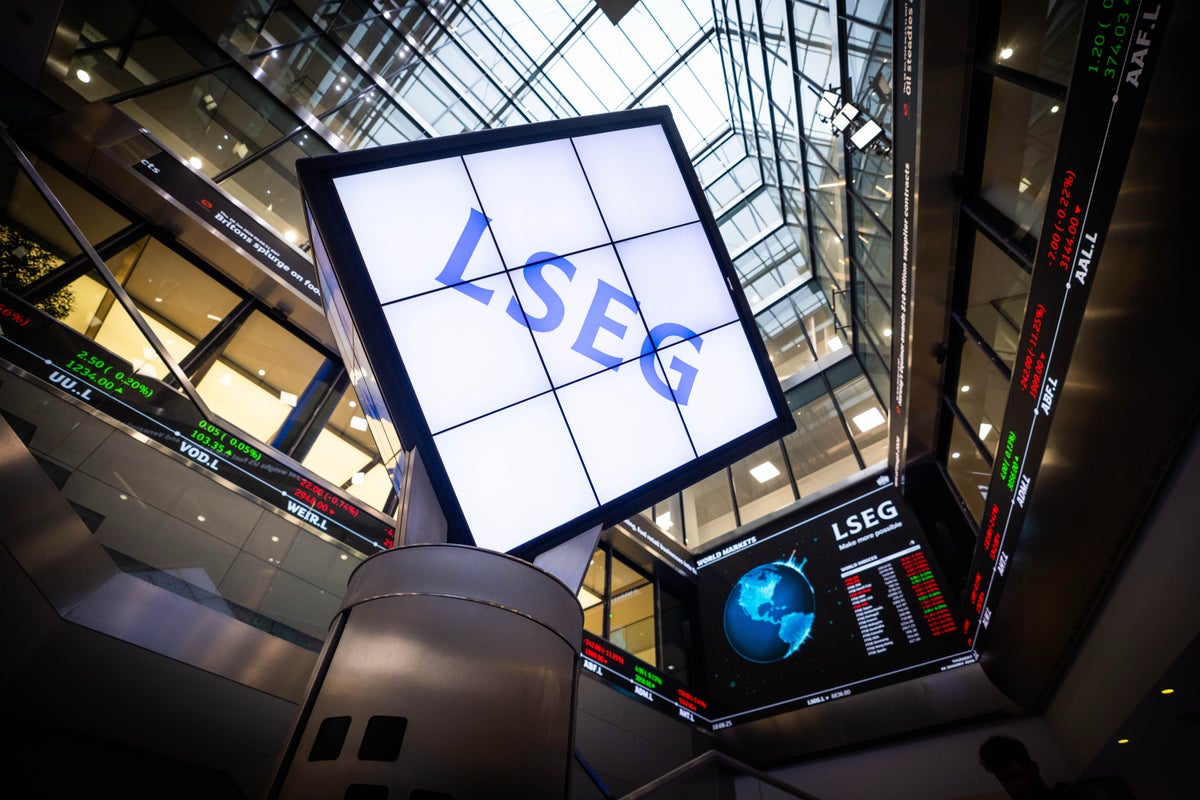
The London Stock Exchange Group has unveiled plans for a £3 billion share buyback amid pressure from an activist investor and as artificial intelligence fears have hammered the stock.
LSEG said it would follow £2.1 billion in buybacks made last year with another £3 billion by February next year, on top of a hike in dividend payouts.
Details of the pledge to step up returns for investors came as it reported underlying operating profits of £3.51 billion for 2025, up 10.8% or 14.7% higher on a constant currency basis.
On a bottom line basis, pre-tax profits jumped 56.5% to £1.97 billion for 2025.
Shares in the group rose as much as 5% in Thursday morning trading, in a welcome increase after the stock has been battered in recent weeks by global investor concerns over the impact of AI on its firm and data companies more widely.
Shares in the firm, which makes a significant chunk of its earnings from selling access to markets data, have slumped by nearly a third in the past year.
Activist investor Elliott Management has also built up a stake in the firm earlier this month and has reportedly been pushing for more share buybacks as it has held talks with LSEG bosses.
In the face of the recent shares slump, chief executive David Schwimmer said recent results showed “another year of very strong financial performance”.
He said: “In the fourth quarter alone, major financial institutions signed long-term contracts worth £1.9 billion to access our leading data and workflow.”
“With our LSEG Everywhere data strategy, we are positioning ourselves as the partner of choice for licensed, trusted data as the use of AI in decision-making scales – and we are seeing very positive signs of adoption,” he added.
It outlined new performance guidance for 2027 to 2029, with aims to deliver “mid to high single digit” growth in total income and further increase profitability.
Despite taking a significant stake in LSEG, the Financial Times newspaper reported earlier this week that Elliott has made assurances to the UK government over its intentions for LSEG as speculation mounted it would look to push for a break-up of the firm or for it to switch its listing to New York.


Uzbekistan to raise 2026 share of automated cotton harvesting to 70%
Rolls-Royce profits soar after major UK and US defence orders

Bangladesh-Japan EPA: Why do some analysts warn of competitive strain?

-

 Fashion1 week ago
Philippines expands logistics network to address supply chain issues
-

 Sports1 week ago
Nepal wrap up T20 World Cup campaign with Scotland triumph
-

 Entertainment1 week ago
Iran foreign minister says progress made in nuclear talks with US
-

 Tech7 days ago
A $10K Bounty Awaits Anyone Who Can Hack Ring Cameras to Stop Sharing Data With Amazon
-

 Fashion6 days ago
ICE cotton ticks higher on crude oil rally
-

 Sports1 week ago
USA vs. Canada is the women’s Olympic hockey rematch everyone was waiting for
-
 Business6 days ago
US Top Court Blocks Trump’s Tariff Orders: Does It Mean Zero Duties For Indian Goods?
-
 Business5 days ago
Eye-popping rise in one year: Betting on just gold and silver for long-term wealth creation? Think again! – The Times of India