

Business
No extension in tax year 2025 filing deadline: FBR – SUCH TV


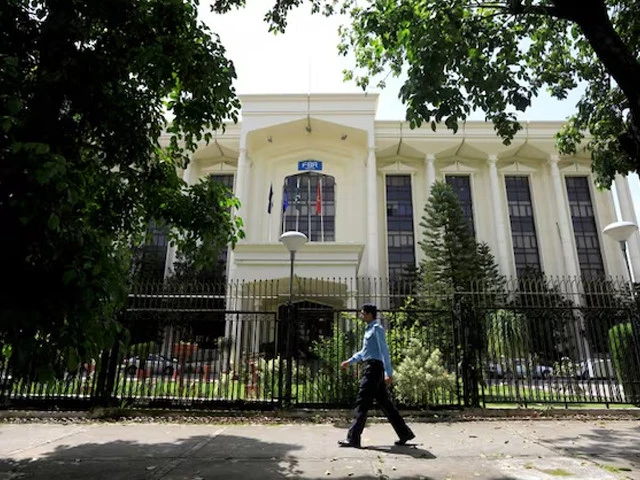
The Federal Board of Revenue (FBR) on Monday rejected reports of an extension in the deadline for filing income tax returns for Tax Year 2025, reiterating that September 30 remains the final date.
In a statement, the tax body said it had taken notice of unverified reports circulating on various media platforms suggesting the deadline would be extended.
“It is pointed out that a vast majority of taxpayers reside in areas unaffected by floods and have had ample time to discharge their national obligation of filing returns.”
“The reports suggesting that the IRIS system has slowed down are also unfounded,” the tax-collecting body further said, adding that FBR’s IRIS platform is fully operational, functioning smoothly, and taxpayers can easily file their returns using the new simplified income tax return form.
The tax authority also cautioned that failure to file returns by the due date will result in late-filer status and imposition of penalties under the law.
FBR also urged all eligible taxpayers to act responsibly and file their income tax returns with accuracy and honesty before the deadline of 30th September, 2025, to avoid any legal consequences.
“In case of extreme hardship, the taxpayers can avail an extension of return up to 15 days with payment of due taxes by 30th September, subject to approval by the relevant committee as per law,” the statement added.
Earlier, FBR removed the “estimated market value column” from the income tax return form 2025 on the directions of Prime Minister Shehbaz Sharif for the facilitation of taxpayers.
The prime minister constituted a committee, chaired by Federal Minister for Law Senator Azam Nazeer Tarar, to examine the new column introduced by FBR in the IRIS tax return requiring tax filers to declare the estimated fair market value of moveable and immovable assets, assess its implications for the tax filers, and recommend corrective measures or improvements, said a news release.
The committee comprised the petroleum minister, state minister for finance, attorney general for Pakistan, SAPM on Coordination of Office of DPM, Secretary Finance, Chairman FBR, and Member Customs FBR.





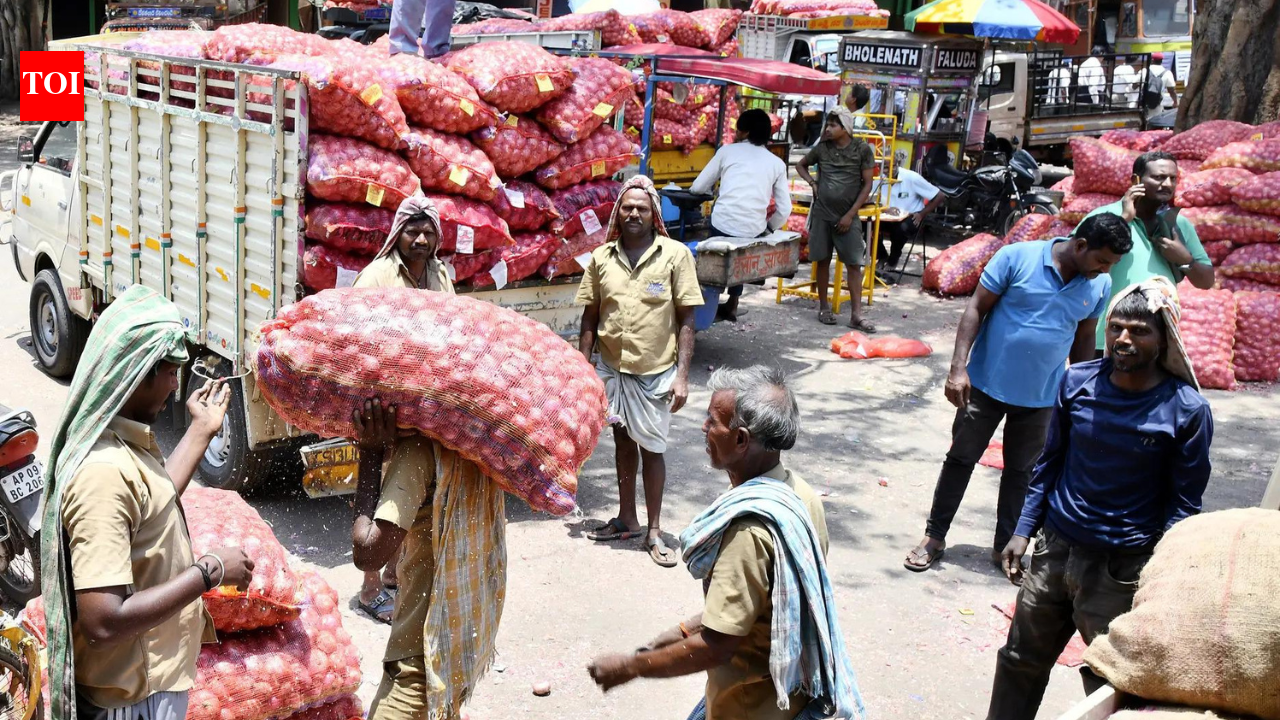
Rain clouds rolled over Maharashtra’s onion belt. Then came war winds from West Asia. Prices collapsed. Crops rotted. Farmers counted losses in rupees — and sold tears by the quintal. Across Nashik, Solapur and Chhatrapati Sambhajinagar, onion growers are reaping a bitter harvest this season as wholesale prices at agriculture produce market committees (APMCs) have crashed far below production costs.Prakash Galadhar, a farmer hailing from Paithan taluka in Chhatrapati Sambhajinagar, hauled 1,262kg of onions he had harvested to market last week. After deductions for labour, loading and transport, his final balance showed he owed the trader Re 1.In Satana APMC of Nashik district, farmer Jitendra Solanke brought 30 quintals hoping to recover at least part of his investment. Traders first offered Rs 50 a quintal. After he protested, rate climbed to Rs 175 a quintal — Rs 1.75 a kg.Still, numbers refused to add up. “I spent Rs 1,200 per quintal to grow crop. After sale, labour and transport charges, only Rs 500 remained. The loss mounted to Rs 36,000,” Solanke said.Inputs have become expensive — seeds, fertilisers, diesel, mechanised farming and labour costs have all risen sharply — while market prices have sunk into mud.“We sell onions at Rs 4 to Rs 5 per kg while production cost is over Rs 12,” said Bhausaheb Jagtap, a farmer from Pune district. “After paying everybody, nothing is left,” Jagtap said.Prices have been sliding since Feb this year. At Lasalgaon APMC in Nashik — country’s largest onion wholesale market and benchmark for national rates — the kitchen staple is currently selling between Rs 400 and Rs 1,600 a quintal. Nearly 80% of arrivals fetch less than Rs 800 a quintal.In Solapur APMC, arrivals on May 13 touched 14,756 quintals. Prices ranged from Rs 100 to Rs 1,700 a quintal, or Rs 1 to Rs 17 a kg. A year ago, onions sold there for Rs 2,500 to Rs 3,000 a quintal.Growers said break-even price stands near Rs 18 a kg. “Losses are massive because nearly 80% of onions are selling between Rs 400 and Rs 800 per quintal,” said Bharat Dighole, president of Maharashtra Onion Growers’ Association.Market experts blamed a perfect storm: bumper arrivals, weak domestic demand, export disruptions and rain-damaged produce flooding mandis.“Geopolitical tensions involving Iran, US and Israel disrupted export markets and reduced overseas demand,” said Vikas Singh, vice president of Horticulture Produce Exporters’ Association of India.Unseasonal rain between March 19 and 21 added another blow to the farmers. Showers lashed Nashik district just as summer onion harvest began, damaging ready crop and triggering rot during storage. “Only 30% of produce was grade-1 quality,” said Prakash Jadhav, head of onion department at Solapur APMC. “Rain damage and long storage hurt quality.”Farmers are demanding onions be brought under minimum support price, pegging at Rs 3,500 a quintal. Growers’ groups want Maharashtra govt to compensate farmers by Rs 1,500 a quintal for distress sales.(Inputs from Prasad Joshi)
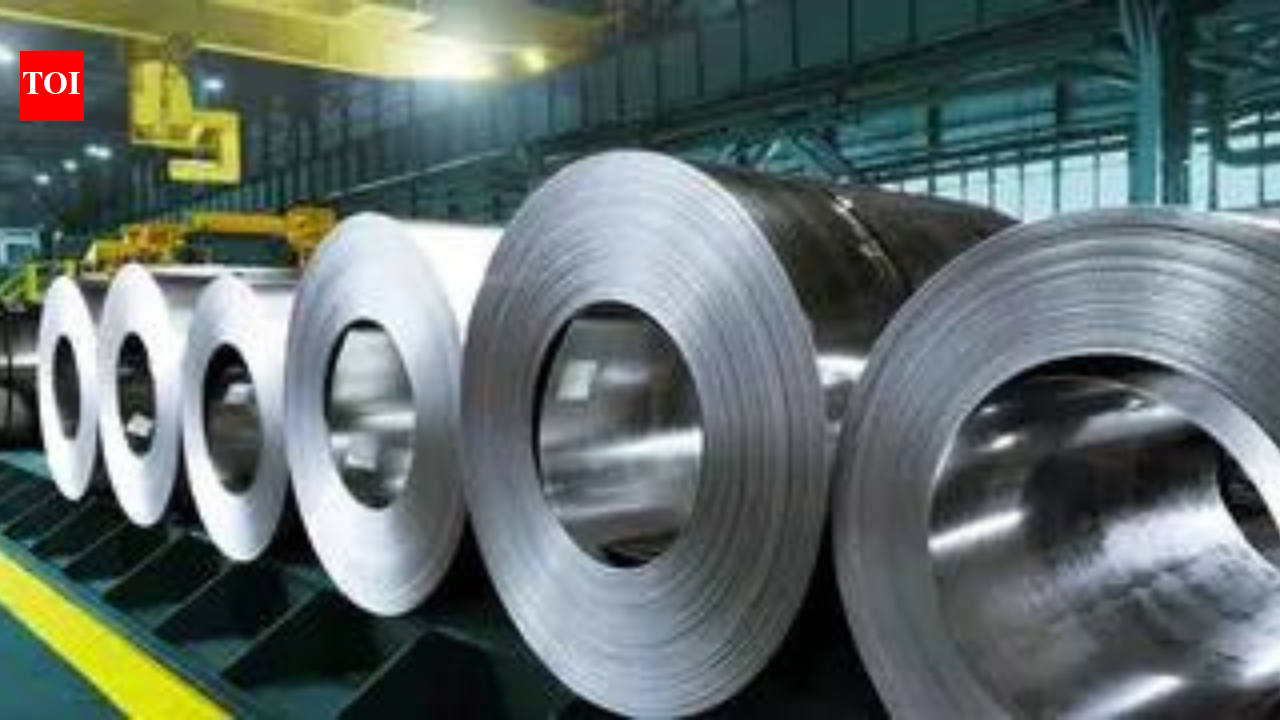
India emerged as one of the fastest-growing steel markets as global steel prices rose across major regions in April and early May, according to a Goldman Sachs report. In its “Global Steel: The Steel Market Barometer – May Update”, Goldman Sachs said average hot rolled coil (HRC) prices increased across nearly all major markets in April, led by Brazil with a 10 per cent month-on-month rise, followed by Japan at 6.5 per cent and China at 2.9 per cent. “On a YTD basis, Brazil’s HRC steel price performance has been the strongest in our sample (+21%), followed by the US (+15%) with other regions also showing price increases from 6%-13%,” the report said, as quoted by ANI.India continued to show strong rise within this global uptrend, with crude steel production rising 11 per cent year-on-year in March, compared with 10 per cent year-to-date growth and 7 per cent in February, the report said. Meanwhile, long steel prices also firmed in April across key regions, with Brazil recording a 12 per cent rise in rebar prices, followed by Europe at 6.9 per cent and the Black Sea region at 6.1 per cent. On the supply side, China’s steel output continued to contract, falling 3.2 per cent year-on-year in the first two weeks of May. Commenting on the sector, Goldman Sachs said, “On the industry level, while the anti-involution effort and long-term capacity cut plan for the Chinese steel sector remain intact, we see delayed execution in 2026E in terms of both capacity and production discipline.” Region-wise trends showed mixed performance across major producers. Europe’s crude steel output rose 16 per cent month-on-month in March, though it remained lower year-on-year and on a year-to-date basis. In the US, average weekly steel production increased 3 per cent in April, while utilisation rates averaged 79.6 per cent. Goldman Sachs added that infrastructure activity in China remained resilient despite weakness in the property sector, while manufacturing improved and construction softened. It projected broadly stable steel prices across major global markets through 2026, with US prices expected to remain stronger than those in Europe, China and Brazil.
Business
India jewellery exports fall 9.07 per cent in April to Rs 20.82 crore amid geopolitical tensions
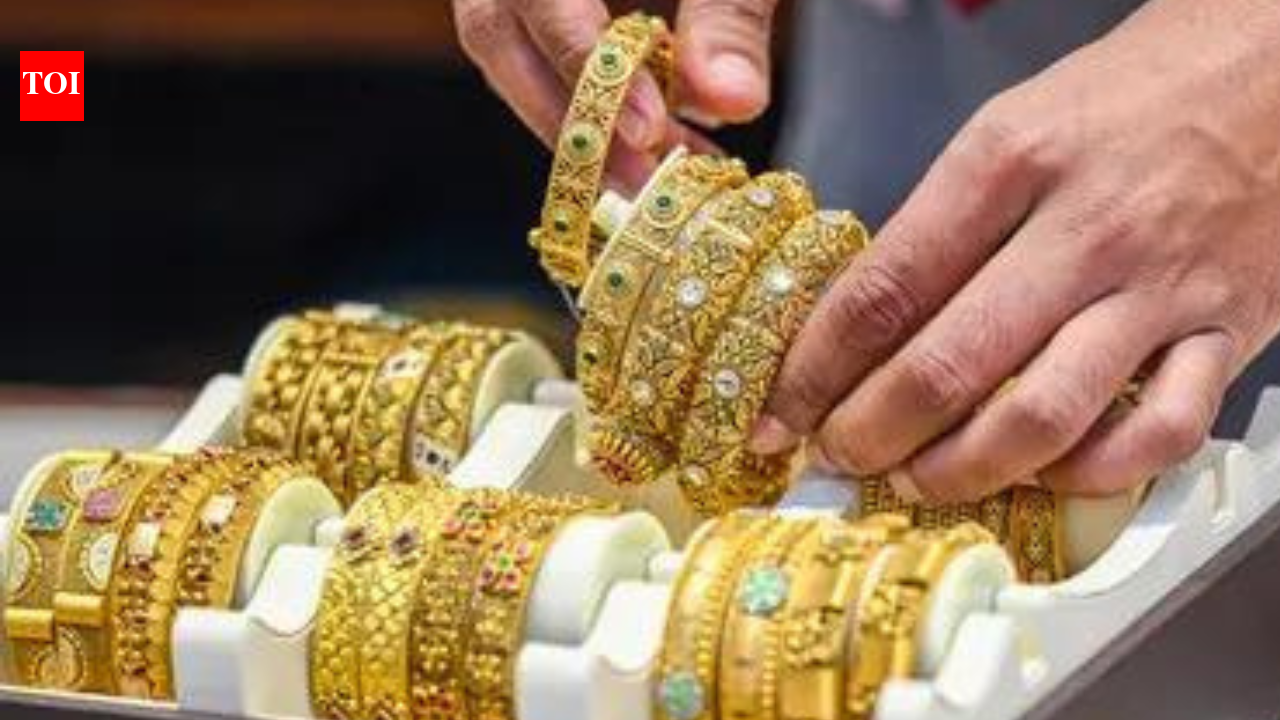
NEW DELHI: India’s exports of jewellery fell in April 9.07 per cent amid geopolitical tensions in Middle East and uncertainty in key markets, according to data from the Gem & Jewellery Exaport Promotion Council (GJEPC). The overall exports stood at $2,226.45 million (Rs 20,825.01 crore), down from $2,448.53 million (Rs 20,952.26 crore) in the same month last year.GJEPC Chairman Kirit Bhansali attributed the decline to external disruptions, saying, “Decline in exports is mainly due to the ongoing conflict in West Asia, which has caused worldwide disruptions affecting exports. Besides geopolitical tensions, exports to the US, a major export market for the gems and jewellery industry, were also affected because there is still no clarity on the tariffs,” he told PTI.Segment-wise, cut and polished diamond exports fell 19.65 per cent to $890.91 million from $1,108.74 million a year earlier. Polished lab-grown diamond exports also declined 15.53 per cent to $93.28 million compared to $110.43 million last year.Gold jewellery exports dropped 21.77 per cent to $841.54 million, compared to $1,075.67 million in the same period last year. Within this segment, plain gold jewellery exports saw a sharper fall of 47.06 per cent to $341.08 million from $644.33 million, while studded gold jewellery rose 16.02 per cent to $500.46 million from $431.35 million.In contrast, silver jewellery exports surged sharply, rising 444 per cent to $268.38 million compared to USD 49.33 million in the corresponding month last year.


Indy 500: Counting Down The 10 Best Finishes In Race History

“Call Her Daddy” podcast host Alex Cooper announces pregnancy with 1st child

Shania Twain wants to sing at Harry Styles, Zoe Kravitz wedding

-

 Entertainment5 days ago
Conan O’Brien hat tricks as Oscar host
-

 Tech1 week ago
Could Contact-Tracing Apps Help With the Hantavirus? Not Really
-

 Tech1 week ago
I Tried the Best Captioning Smart Glasses, and Only One Leads the Pack
-

 Fashion5 days ago
Italy’s Zegna Group’s Q1 growth boosted by strong organic performance
-

 Sports1 week ago
Bobby Cox, legendary Atlanta Braves manager who led 1995 World Series champions, dead at 84
-

 Entertainment1 week ago
Martin Short: Facing tragedy with joy
-

 Entertainment7 days ago
Tom Brady gets back at Kevin Hart during Netflix roast
-

 Entertainment1 week ago
Martha Stewart: How to make an omelet