

Sports
No vote on Big Ten capital deal; some urge caution

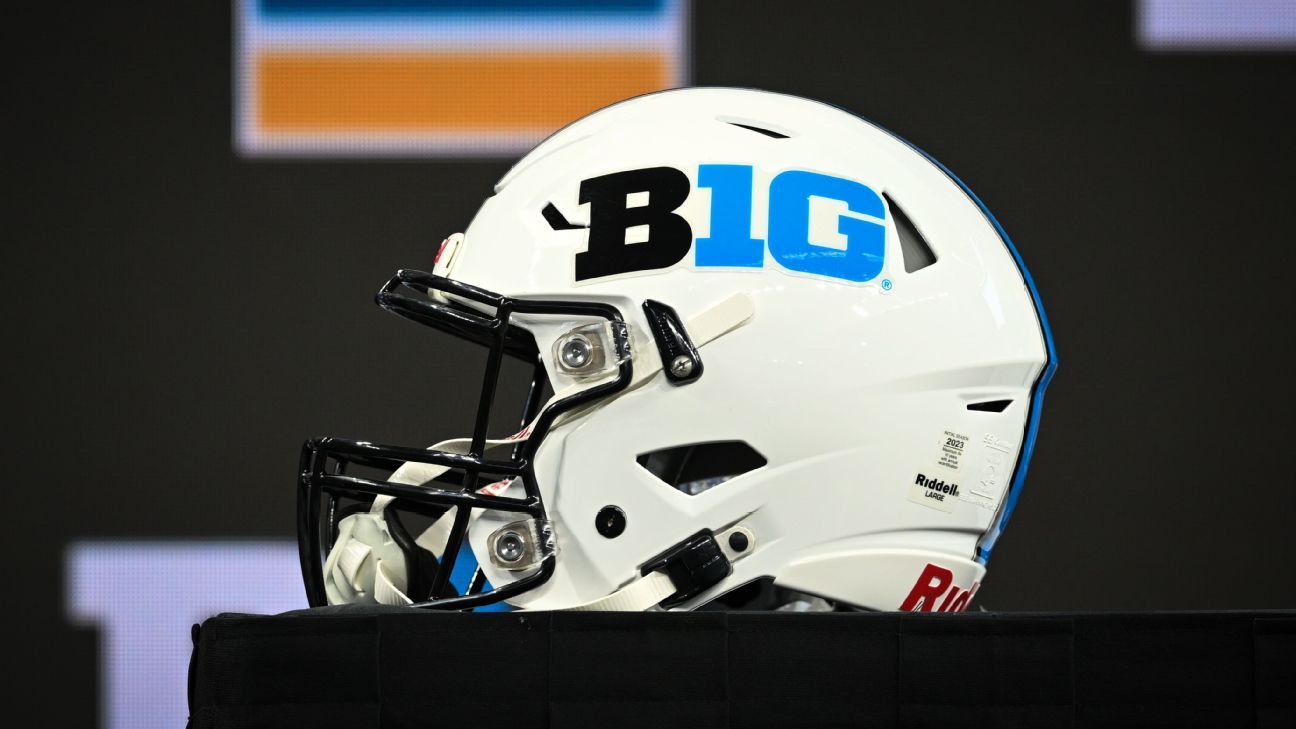
A decision on the Big Ten’s proposed private capital deal does not appear imminent in the wake of a Thursday meeting of the league’s presidents and chancellors.
No vote was taken on the conference call, as leagues rarely do so on any issue that won’t be unanimously approved.
The Big Ten said in a statement that conversations are ongoing.
Earlier Thursday, University of Michigan regents criticized the proposed deal, illustrating how tenuous completing it will be. Regent Mark Bernstein dubbed the deal “a payday loan.” Another regent, Jordan Acker, compared it to opening a new credit card to pay off debt.
The plan calls for the league to spin off a new entity, Big Ten Enterprises, that will house all leaguewide media rights and sponsorship deals. A University of California pension fund will receive a 10% stake in exchange for a cash infusion of over $2 billion to conference athletic departments. The deal also would extend the league’s grant of rights until 2046.
The Big Ten is in the middle of a seven-year, $7 billion media rights package that runs through 2030. Numerous schools, however, need money from soaring operational costs, revenue sharing with athletes and significant debt on stadium constructions and renovations.
Michigan and Southern California have emerged as opponents of the groundbreaking deal, details of which are still being negotiated. The deal does enjoy support among a majority of league schools, as well as from Big Ten commissioner Tony Petitti. Whether the deal can pass without unanimous support is unknown.
In its statement Thursday, the Big Ten said it “remains committed to modernizing the operations of our conference, strengthening conference stability, preserving Olympic and women’s sports, and enhancing the student-athlete experience.
“The conference has provided an option from a nonprofit partner — not private equity — that meets those objectives. Ultimately, it is the decision of the Big Ten member institutions’ presidents and chancellors to decide if it’s the right opportunity and those conversations are ongoing.”
At a previously scheduled meeting of Michigan trustees, multiple regents blasted the proposal as shortsighted and not addressing college athletics’ underlying spending problem. Acker said it was the latest short-term strategy to raise money. He noted the league has expanded four times since 2011 to generate more revenue but again is being told it has to rush into another deal.
“Now, we have to do this deal; giving away 10% of future media revenue for the next 21 years even though no one knows what college athletics or media will look like?” Acker said.
Acker brought up regrets inside the ACC for a 2013 deal that extended its grant of rights through 2036.
“The ACC once thought a long-term deal was a good idea,” he said. “Within a few years, they were suing each other.”
Acker said Michigan hired third-party “consultants and banks,” including the multinational financial institution Barclays, and all were “unequivocal in their opposition. They recommend different ways to address deficits and raise money. They say we can do it more efficiently without selling assets.”
“We understand the responsibility to lift all boats and to help schools that need money to get that money,” Acker said. “It just has to be on the best financial terms possible. The Big Ten doesn’t need to be sold to save college sports. It needs to lead to save college sports.”
Bernstein followed by criticizing the league for demanding quick action, claiming the “contrived urgency is mysterious.” He called the deal “reckless” and a “payday loan.”
“It is the job of the board to protect the future from the present,” he said.
Michigan Regent Sarah Hubbard said further study was needed, and noted that given the board’s mission to protect the assets of the university, it would not be pressured.
“We will not be rushed by false deadlines or pressure from those that do not hold the fiduciary responsibilities we do,” Hubbard said.
The framework of the groundbreaking Big Ten deal would send a significant infusion of money (a minimum of at least the $100 million range) to each of the league’s 18 schools. Shares of ownership in Big Ten Enterprises would fall to those schools, the conference office and the capital group — an investment fund that is tied to the University of California pension system. The UC pension fund would receive the 10% stake in Big Ten Enterprises and would hold typical minority investor rights but no direct control, according to sources.
The exact equity amounts per school in Big Ten Enterprises are still being negotiated. There is expected to be a small gap in the percentage of the remaining equity among the schools that would favor the league’s biggest athletic brands, but it’s likely to be less than a percentage point. There is also expected to be a tier system for initial payments, but with the lowest amount in the nine-figure range. Larger athletic departments could receive an amount above $150 million.
An extension of the Big Ten grant of rights through 2046 would provide long-term stability for the league and make both further expansion and any chance schools leave for the formation of a so-called “Super League” unlikely.
The pension fund is not a private equity firm, which has been attractive to the Big Ten and its schools. The UC fund valuation proved to be higher than other competing bids, sources told ESPN, and that made it attractive.
The money infusion is believed to be acutely needed at a number of Big Ten schools that are struggling paying down debt on new construction and budgeting for direct revenue ($20.5 million this year and expected to rise annually) to athletes.
In 2023-24, Illinois spent $20 million, or 11.8% of its expenditures, paying down debt, according to Sports Illustrated. Ohio State laid out $33.7 million, or 11.5% of its budget.
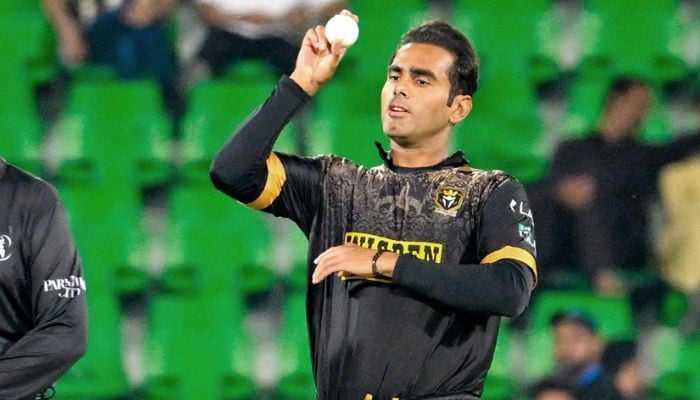
Hyderabad Kingsmen fast bowler Mohammad Ali has been fined 10% of his match fee after pleading guilty to a Level 1 breach of the HBL Pakistan Super League (PSL) Code of Conduct during Friday night’s Eliminator 2 against Islamabad United at Gaddafi Stadium in Lahore.
Ali was found to have violated Article 2.21 of the HBL PSL Code of Conduct for Players and Player Support Personnel, which relates to “conduct that brings the game into disrepute”.
According to officials, the incident took place in the 16th over of Islamabad United’s innings when Faheem Ashraf walked in to bat after the dismissal of Haider Ali.
The charge was levelled by on-field umpires Ahsan Raza and Shahid Saikat, while match referee Roshan Mahanama imposed the sanction.
The Kingsmen went on to beat Islamabad United by two runs to book their place in the PSL 11 final against table-toppers Peshawar Zalmi at the same venue on Sunday, ending United’s campaign in the tournament.
Chasing 187, Islamabad lost Sameer Minhas for six and Mohsin Riaz for five inside the first three overs with 15 runs on the board. Devon Conway and Shadab Khan then added 42 before Saim Ayub dismissed Conway for 30 off 25 balls in the eighth over.
Shadab made 22 off 24 deliveries before falling to Hassan Khan at the start of the 11th over, while Mark Chapman kept Islamabad in the hunt with 43 off 26 balls. Chapman added 64 runs with Haider Ali, who scored 31 off 16 before falling to Mohammad Ali in the 16th over.
Faheem Ashraf and Chris Green then smashed 22 runs off Ali in the penultimate over to leave Islamabad needing six from the last over, but Hunain Shah conceded only three to seal a two-run win. Ali and Hunain took two wickets each, while Akif Javed, Hassan Khan and Saim Ayub picked up one apiece.
Earlier, Hyderabad Kingsmen posted 186/5 after being put in to bat, driven by a 101-run fifth-wicket stand between Usman Khan and Kusal Perera.
Usman remained unbeaten on 61 off 30 balls, while Perera made 37 from 21 deliveries. Saim Ayub scored 38 and captain Marnus Labuschagne added 40, while Imad Wasim was Islamabad’s standout bowler with 2 for 16 in two overs.
MIAMI:
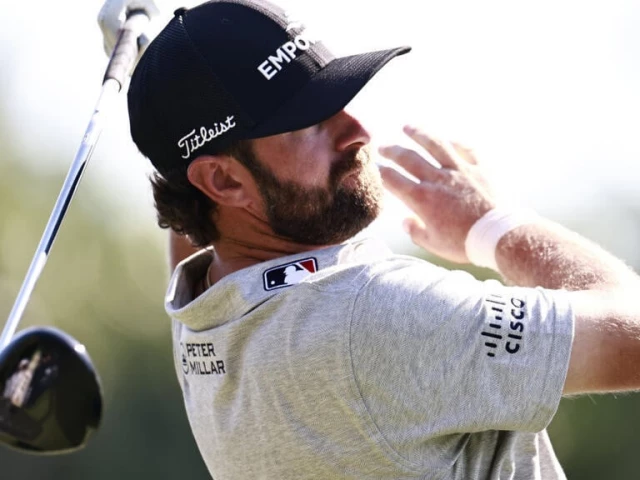
Fourth-ranked Cameron Young rode a hot start and surged to a five-stroke lead after Friday’s second round of the PGA Cadillac Championship.
Young birdied four of the first seven holes on his way to firing a five-under par 67 and stand on 13-under 131 after 36 holes at Trump National Doral in Florida.
“I’ve just putted really well,” Young said. “I’ve left myself in mostly doable spots when I’ve missed greens.
“But I haven’t driven it great and that’s something I hopefully look to return to normal over the next couple days.”
Three-time major winner Jordan Spieth, fellow American Alex Smalley and Canada’s Nick Taylor shared second on 136 with American Gary Woodland on 137.
Young, who won the Players Championship in March and captured his first PGA title last August at Greensboro, said he feels comfortable with a big lead, well aware it could vanish quickly on the weekend.
“I’ve been around the lead quite a bit and I’m not particularly uncomfortable. I’ve liked this golf course thus far,” Young said.
“There’s a lot of guys four or five back. I’m sure somebody will be four- or five-under tomorrow so you have to prepare for that.”
Young topped putting and scrambling statistics.
“I avoided the bad misses for the most part. It’s not like I drove it awful but I would love to play from the fairway a couple more times the next couple days,” he said.
“There’s a lot of golf to be played on a difficult golf course but so far I’ve played well. If I can drive it a little bit better, I feel like I can keep cruising and see what happens.”
Young reached the green in two and birdied the par-five first hole to grab the solo lead then stretched the margin with a 17-foot birdie putt at the third and a 27-foot birdie putt at the fifth.
The lead reached four strokes when Young sank a seven-foot birdie putt at the seventh.
Young’s approach at the par-five eighth was plugged in a bunker. He punched out into an adjacent bunker then blasted to five feet and rescued par.
At the par-three ninth, Young missed the green but rolled the ball just outside six feet and saved par again.
Young sank a 16-foot birdie putt at the par-three 13th, boosting his advantage to five, but then needed two shots to escape greenside rough at 14 and made his first bogey of the tournament.
Young drove the green at the par-four 16th and two-putted for birdie from 26 feet to restore his five-stroke margin.
NEWYou can now listen to Fox News articles!
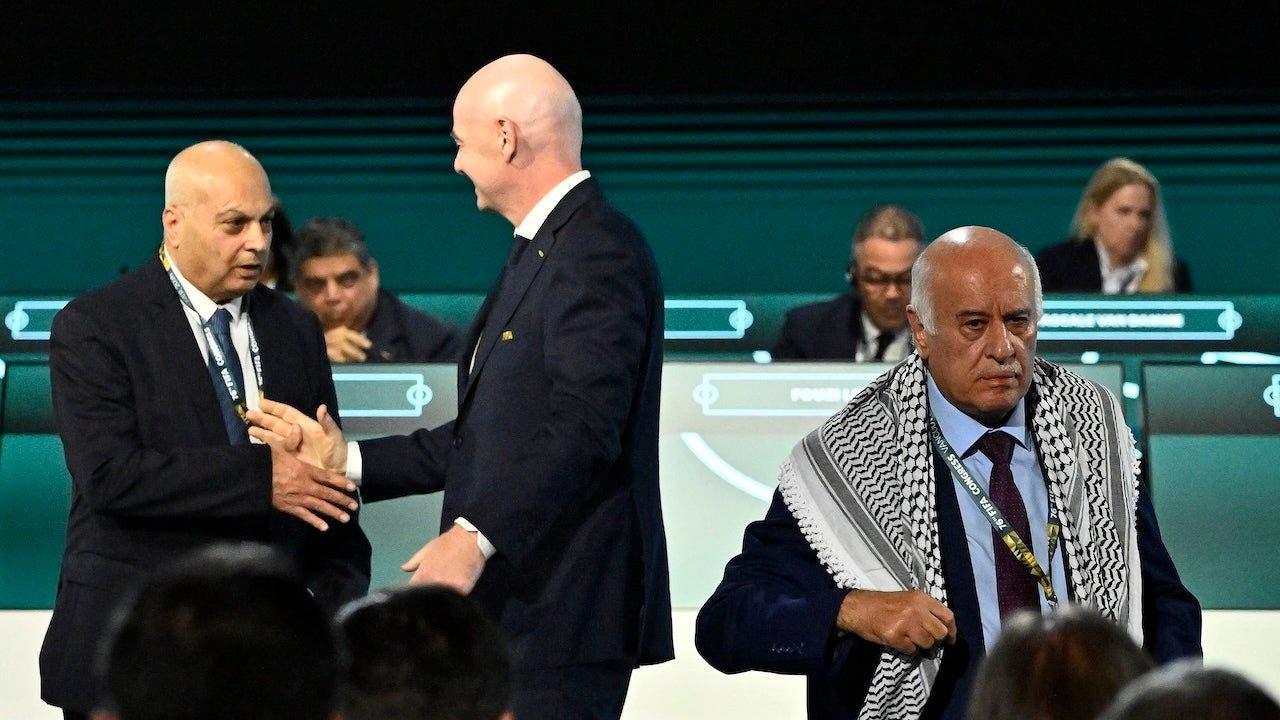
Palestinian Football Association President Jibril Rajoub refused to shake hands or even stand beside Israel Football Association Vice President Basim Sheikh Suliman during a tense exchange at the FIFA Congress Thursday.
Both officials were invited to the stage by FIFA President Gianni Infantino, but the Palestinian representative resisted efforts to bring him closer to his Israeli counterpart.
FIFA President Gianni Infantino shakes hands with Basim Sheikh Suliman (left), vice president of the Israeli Football Association, as Jibril Rajoub (right), president of the Palestine Football Association, leaves the stage at the 76th FIFA Congress in Vancouver, Canada, April 30, 2026. (Reuters/Jennifer Gauthier)
Infantino briefly placed a hand on Rajoub’s arm and gestured for him to step forward, but Rajoub did not comply.
CLICK HERE FOR MORE SPORTS COVERAGE ON FOXNEWS.COM
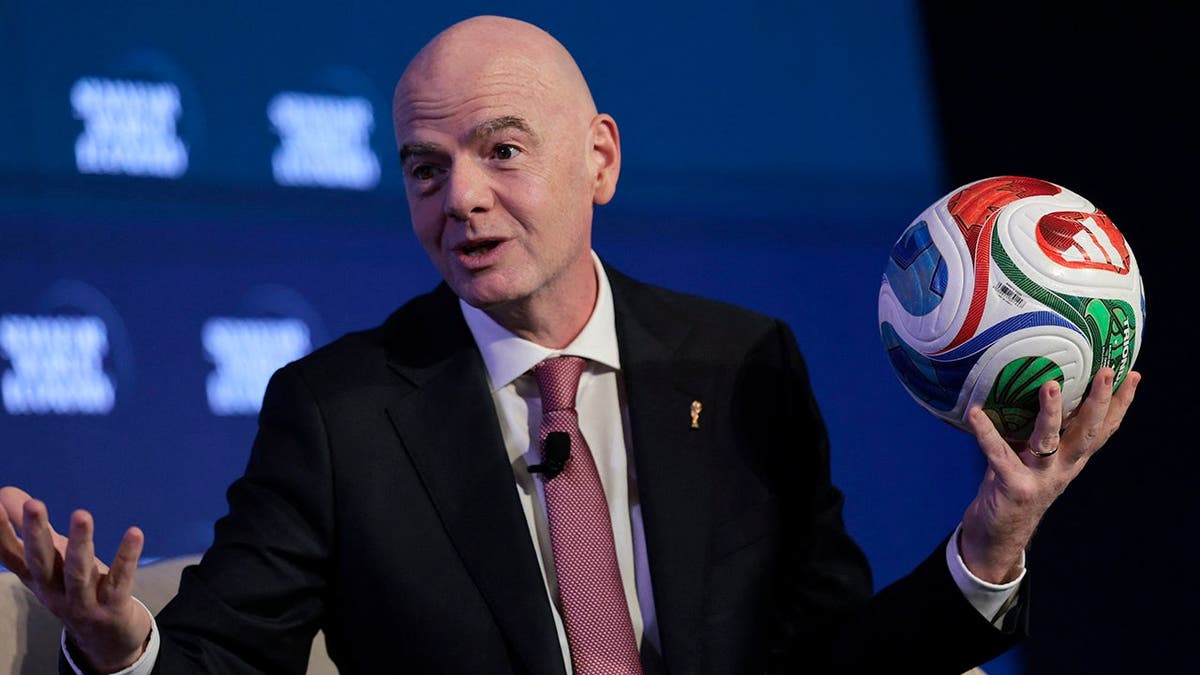
FIFA President Gianni Infantino speaks during the 2026 Semafor World Economy conference in Washington, D.C., on April 15, 2026. (Kent Nishimura/AFP)
The Palestinian FA, led by Rajoub, has long pushed for Israel to be suspended from international soccer competition.
Rajoub defended his decision, saying he remains committed to formal processes but believes stronger action is needed.
“I still respect and follow the legal procedure, but I think it’s time to understand that Israel should be sanctioned. The double-standard policy should stop,” Rajoub said, according to The Times of Israel.
“I refused to shake hands. Sport is sport. … For me, that should be respected, but if the other side is representing a criminal like Bibi [Prime Minister Benjamin Netanyahu] and speaking on behalf of Bibi as if Bibi is Mother Teresa, how can I shake hands or have a photo with such a man?
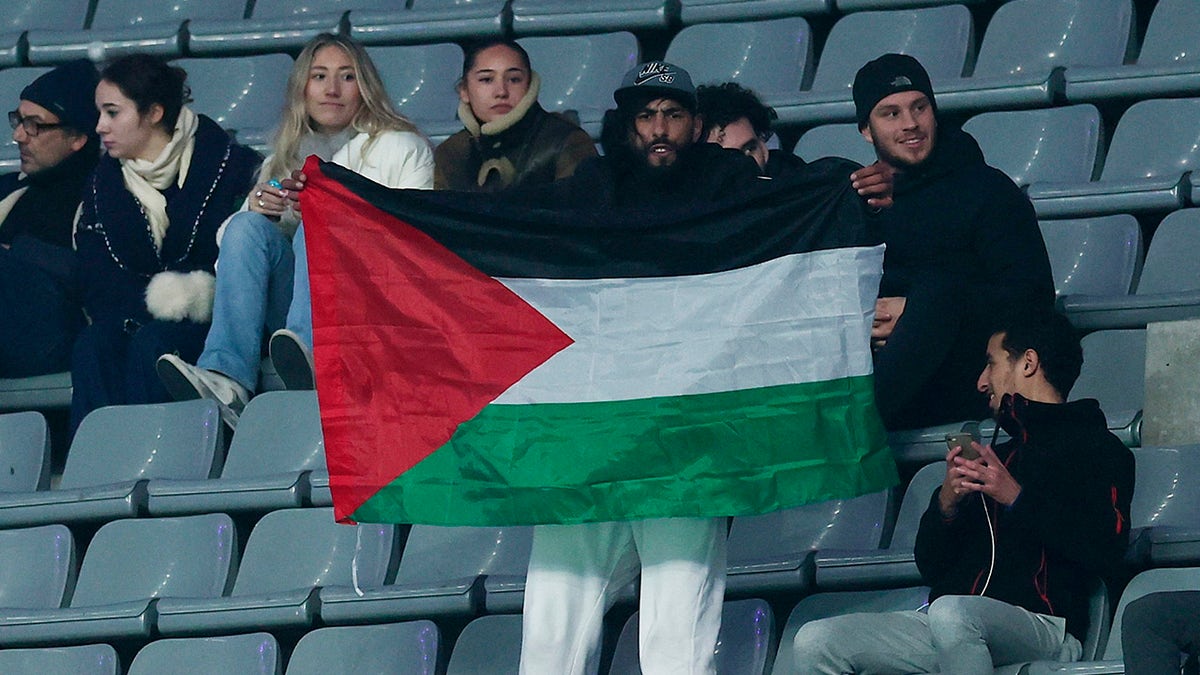
A fan displays a Palestinian flag during a Nations League group stage match between France and Israel Nov. 14, 2024. (Gonzalo Fuentes/Reuters)
“I think Gianni has the right to try to bridge gaps and bring people together, but I think maybe he does not understand or does not know the deep suffering of the Palestinian people.”
After the exchange, Infantino addressed the room, urging cooperation.
“We will work together, President Rajoub, Vice President Suliman. Let’s work together to give hope to the children. These are complex matters,” Infantino said.
Speaking just before the incident, Suliman emphasized the unifying role of the sport.
“In football, there is no place for politics,” Suliman said. “Everyone has the right to play and compete. We are teaching children values like respect, equality and love for others, and we hope that by the next time we meet, the situation will be better. We extend a hand to the Palestinian FA in the spirit of those shared values.”
CLICK HERE TO DOWNLOAD THE FOX NEWS APP
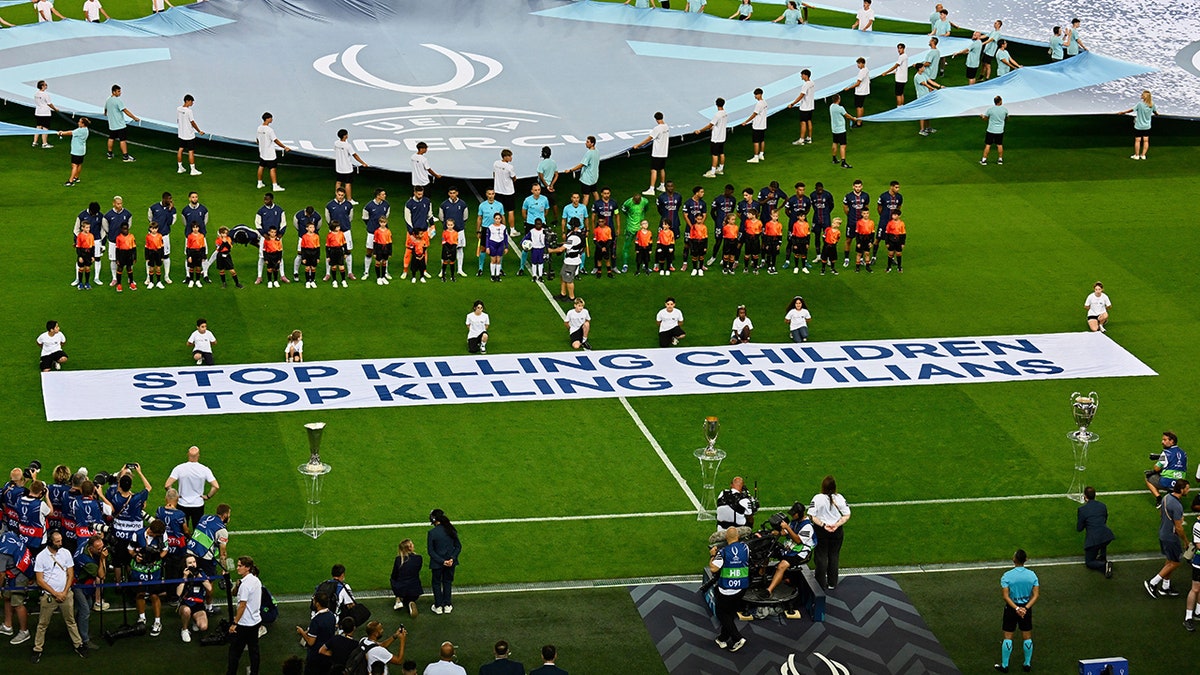
Players from Paris Saint-Germain and Tottenham Hotspur line up before the UEFA Super Cup soccer match in Udine, Italy, on Aug. 13, 2025. (Denes Erdos/AP)
UEFA was reportedly moving toward a vote to suspend Israel over the war in Gaza in September, but the motion was put on pause.
Infantino announced no action would be taken against the team on Oct. 3 after a historic peace proposal by President Donald Trump and Netanyahu.
However, even after the peace proposal, Israeli sports teams have faced opposition and exclusion.
Follow Fox News Digital’s sports coverage on X, and subscribe to the Fox News Sports Huddle newsletter.


Andy Serkis on making the animated version of "Animal Farm"

The Tovala Oven and Meal Kit Is Like a Robot Chef of Future Past

Harry Styles, Zoe Kravitz in major wedding planning mode after big step

-

 Tech5 days ago
A Brain Implant for Depression Is About to Be Tested in Humans
-

 Tech1 week ago
They Wanted to Join Raya. They’ve Been on the Waiting List for Years
-

 Tech1 week ago
Why Do I Like Dyson’s PencilVac So Much?
-

 Tech5 days ago
Almost 90% of women leave tech industry within 10 years | Computer Weekly
-

 Fashion1 week ago
North India cotton yarn steady despite continued push by spinners
-

 Entertainment1 week ago
Anne Hathaway makes shocking confession about Taylor Swift’s music
-

 Entertainment5 days ago
Norway joins Type 26 Frigate Programme to boost NATO naval power
-
 Sports1 week ago
US says Iran can play in Fifa World Cup but IRGC-linked individuals won’t be allowed