

Sports
Not a ‘lay-up’: USA clash could be the most hyped in Socceroos history

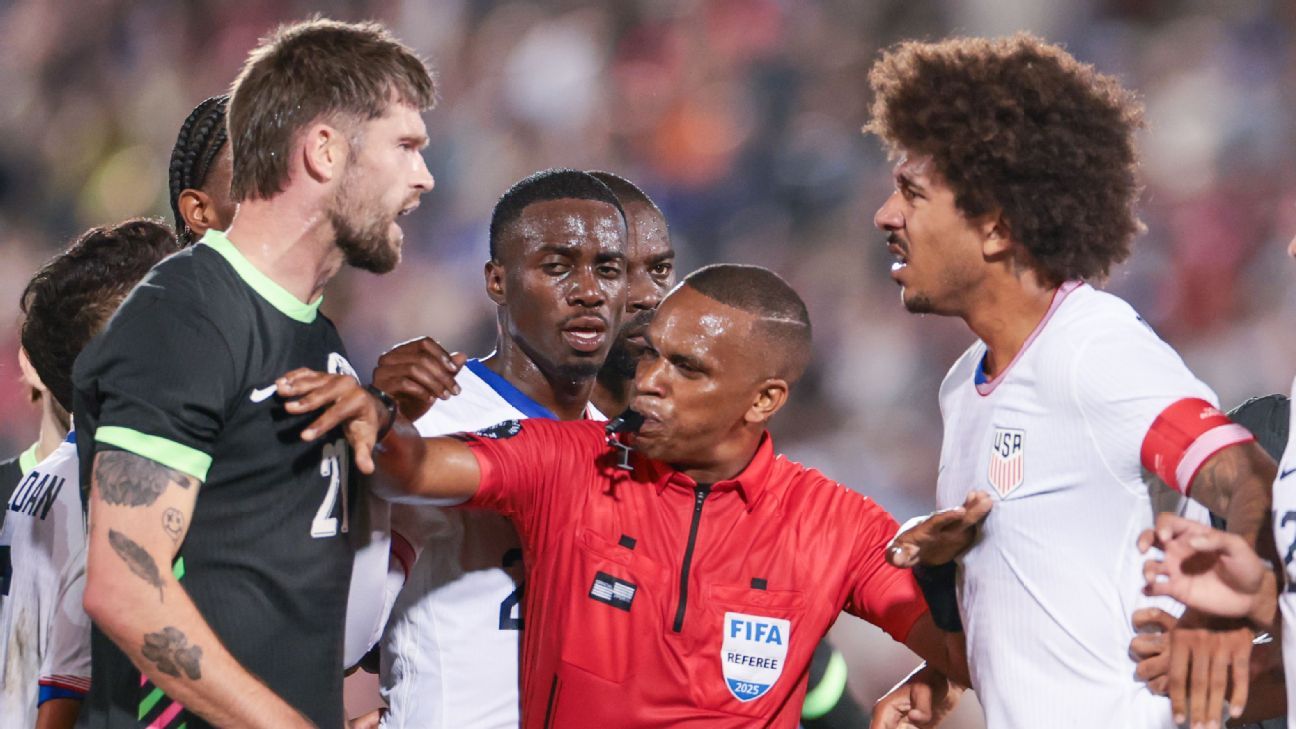
Australia‘s game against the United States at the 2026 FIFA World Cup won’t be the biggest game that the Socceroos have ever played at the global footballing showpiece.
In all honesty, between round-of-16 appearances against eventual champions Italy and Argentina, the drought-breaking win over Japan in 2006, the knockout-stage-securing win over Croatia in that same tournament, or group-stage games against defending champions such as France and Spain, it would struggle to break into the top 10. But when Tony Popovic’s side run out to face the Americans in Seattle on June 19, it might just be one of the most hyped games that the Socceroos have ever played.
Drawn into Group D at next year’s tournament alongside the co-hosts, as well as Paraguay and a European qualifier to be drawn from one of Slovakia, Kosovo, Türkiye, or Romania, Australia now, for the most part, knows what they’ll need to secure back-to-back appearances in the World Cup knockout stages. Supporters, meanwhile, can start to plan their journey alongside the Socceroos throughout the group and possibly beyond, trying to figure out how they’ll source tickets amongst high demand and significant prices, but also grapple with accommodation costs that a quick perusal of booking sites would suggest will run them back more than a grand for just a couple of nights.
– O’Hanlon: How the 2026 World Cup killed the ‘Group of Death’
– How travel will impact 2026 World Cup group stage, and why it matters
– 2026 World Cup Group D: How U.S. matches up against group-stage foes
Both cohorts also now know that their journey will begin on the West Coast of North America, with the Socceroos’ opening game against the European qualifier to take place in Vancouver, followed by the Seattle clash against the Americans and then a meeting with Paraguay in Santa Clara. Travel and logistics-wise, this should prove relatively simple for the team and travelling supporters alike, while the timezone also ensures favourable broadcast times for those watching at home. It also means that, for the most part, the sweltering heat of the North American summer will be dodged.
And while the progression of the eight best third-placed sides across a record 12 groups at the expanded 48-team World Cup somewhat reduces the jeopardy compared to previous 32-team tournaments, this also means that Popovic’s side’s knockout destiny likely rests upon their form in the Pacific Northwest.
Which brings us back to the United States. While Mauricio Pochettino’s side was placed in Pot 1 of the World Cup draw by virtue of their status as co-hosts (with Mexico in Group A and Canada in Group B afforded similar privileges), the USMNT’s FIFA ranking of 14 wasn’t too far off earning that right — only bettered in Pot 2 by Croatia, Morocco, and Colombia. In recent months, the side’s form, which had been stuttering and raising a few alarm bells, has taken a turn under their Argentine coach: unbeaten in five with wins over Japan, Uruguay, Paraguay and, back in September, Australia. And highlighted by the likes of Weston McKennie and Christian Pulisic, they field top-line talent playing at some of the best clubs in the world.
When you add the luxury of hosting the tournament, which, Qatar aside, generally correlates with improved performances, the Americans are the favourites to top Group D and should hold hopes of staging a deep run into the competition. Indeed, if they don’t achieve the former, it will have to be considered a letdown on their part. Even if, given how difficult Australia and Paraguay (who conceded just 10 goals across 18 South American qualifiers) have proven to be in competitive games, to say nothing of Türkiye potentially joining, topping the group will perhaps not be as comfortable as some of the more boisterous sections of their professional commentariat, one of whom described Australia as a “lay-up” suggest.
3:17
Should USMNT be happy with their World Cup draw?
The “Futbol Americas” crew react to USMNT’s 2026 FIFA World Cup group draw.
From an Australian perspective, this means that if they can take something from that game in Seattle, a point or even a win, they’ll go a long way towards the knockouts — being able to take points off the strongest team in your group, assuming that they go ahead and do the job against your other rivals, carries obvious benefits.
Further, heavy lies the crown of favoritism and expectation, and with the weight of anticipation on the Americans’ shoulders from an expectant home crowd, it’s very easy to envisage the game being played out in a manner that suits the Socceroos’ strengths and tests their opponents with something they’ve struggled with: the hosts taking the onus of possession as they seek to break down an Australian outfit comfortable in sitting back in a low block, who can then look to pick their moments and break through in transition. This feeling may only heighten if the United States are frustrated by the stout Paraguayans in their opening game.
Their recent fixtures may have exposed the perils of regression to the mean and heightened scrutiny of the side’s urgent need to improve in possession, but if the Socceroos can be clinical — as they did when they vastly outperformed their expected goals (xG) in World Cup qualifying and secured wins over Japan and Saudi Arabia — this approach can prove effective. It wouldn’t be pretty — by any stretch — nor probably fun to watch. But if it gets wins at a World Cup, Popovic, who has already engineered one unfancied run when he took an unheralded Western Sydney Wanderers to a 2014 Asian Champions League crown, wouldn’t mind too much.
Yet the footballing aspects of the game against the United States are only part of the picture of why it will likely be so big. For one, this will be the first time that Australia has played a host nation since 1974, when a team largely comprised of semiprofessionals captained by the legendary Johnny Warren were grouped with West Germany. This means that the spotlight will be well and truly on Lumen Field when kick-off arrives, and that the stands and build-up will be just that bit more circus-like than otherwise.
While there were inevitably plenty of hot takes about the quality of Australian sides that took on Germany, Brazil, and Spain before they played in previous tournaments, these weren’t written in English and easily consumed Down Under. Nor were they as readily available as they will be in 2026, where the ability to spew outrage and polarisation is not only available to anyone with an internet connection but boosted by algorithms and monetisation programs that ensure that even the most Johnny No-Mates or Becky Bad-Opinions amongst us, Aussie or American, can be seen by tens of thousands if they hit the timeline just right.
Combine this with more of the “lay-up”-esque analysis likely to ramp up as kick-off approaches and the hyper-online and prickly habits of Aussie footballing fans (observe their reaction to the late Grant Wahl’s suggestion that the Socceroos’ might not have been very good in 2018), Australian sporting fans (just look at Oscar Piastri’s online following), and there’s going to be a lot of kindling for the fire. Common sense? Goodwill? Touching grass? The actual human interaction being fun and friendly? Not on my internet!
On- and off-the-field, then, the Socceroos being drawn against the United States promises to be big, potentially defining both of their World Cup campaigns. Toxic, too. But big. And fun.
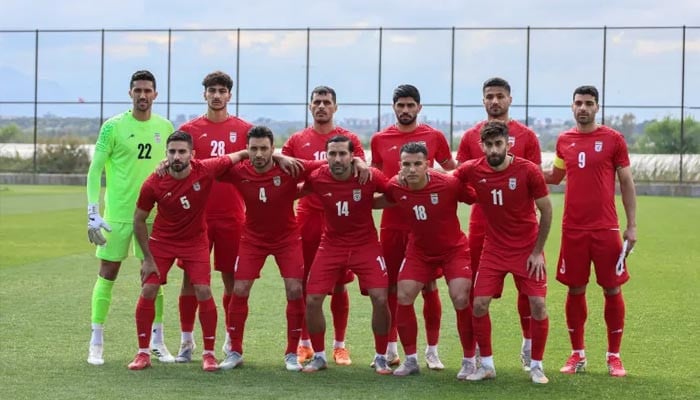
Iranian FA (FFIRI) chief Mehdi Taj said that FIfa must guarantee that the Islamic Revolutionary Guard Corps (IRGC) is not insulted by the United States if the national team is to travel to the country to play at the World Cup in June.
An FFIRI delegation, including Taj, turned back from the Canadian border last week because of what they said was disrespectful treatment at the hands of immigration officials as they tried to attend the Fifa Congress in Vancouver.
Taj said the decision to return home had been their own choice but Canada’s immigration minister later confirmed to parliament that the FFIRI president’s visa had been cancelled while he was in the air because of his links to the IRGC.
Canada listed the IRGC, an elite military force in Iran, as a “terrorist entity” in 2024, five years after the US did the same.
Fifa Secretary-General Mattias Grafstrom sent a letter expressing regret at the “inconvenience and disappointment” the Iranians had experienced in Canada and inviting FFIRI to Zurich on May 20 for a meeting about their World Cup preparations.
Taj told state broadcaster IRIB on Tuesday that he would be seeking assurances from the governing body about the treatment of the Iranian delegation in the US.
“We need a guarantee there, for our trip, that they have no right to insult the symbols of our system — especially the Islamic Revolutionary Guard Corps,” he said on the sidelines of a pro-government night rally in Tehran.
“This is something they must pay serious attention to. If there is such a guarantee and the responsibility is clearly assumed, then an incident like what happened in Canada will not happen again.”
‘Our host is Fifa’
The US, Canada and Mexico are co-hosting the June 11 to July 19 World Cup with Iran scheduled to play two group games in Los Angeles and one in Seattle.
US Secretary of State Marco Rubio said last week Washington had no objections to Iranian players participating in the tournament but no one with ties to the IRGC would be admitted to the country.
Taj, who served as a high-ranking official with the IRGC in Isfahan Province before moving into soccer administration, said anything short of cast-iron guarantees could result in the Iranian delegation turning back at the US border.
“We are going to the World Cup, for which we qualified, and our host is FIFA — not Mr Trump or America,” he added.
“If they accept hosting us, then they must also accept that they must not insult our military institutions in any way.
“Because if they do, then naturally it could create the same kind of situation that happened in Canada, where there was a possibility we might have to return.
“So there must be this kind of guarantee so that we can go with peace of mind.”
Iran’s participation in the World Cup has been in question since the US and Israel launched air strikes on the Islamic Republic in late February.
With Iranian top-flight football suspended, the home-based players have been in a training camp in Tehran preparing for the tournament.
Taj said the FFIRI were hoping to set up at least one friendly with a “very good team” in neighbouring Turkiye, where Iran played matches against Nigeria and Costa Rica in late March.
NEWYou can now listen to Fox News articles!
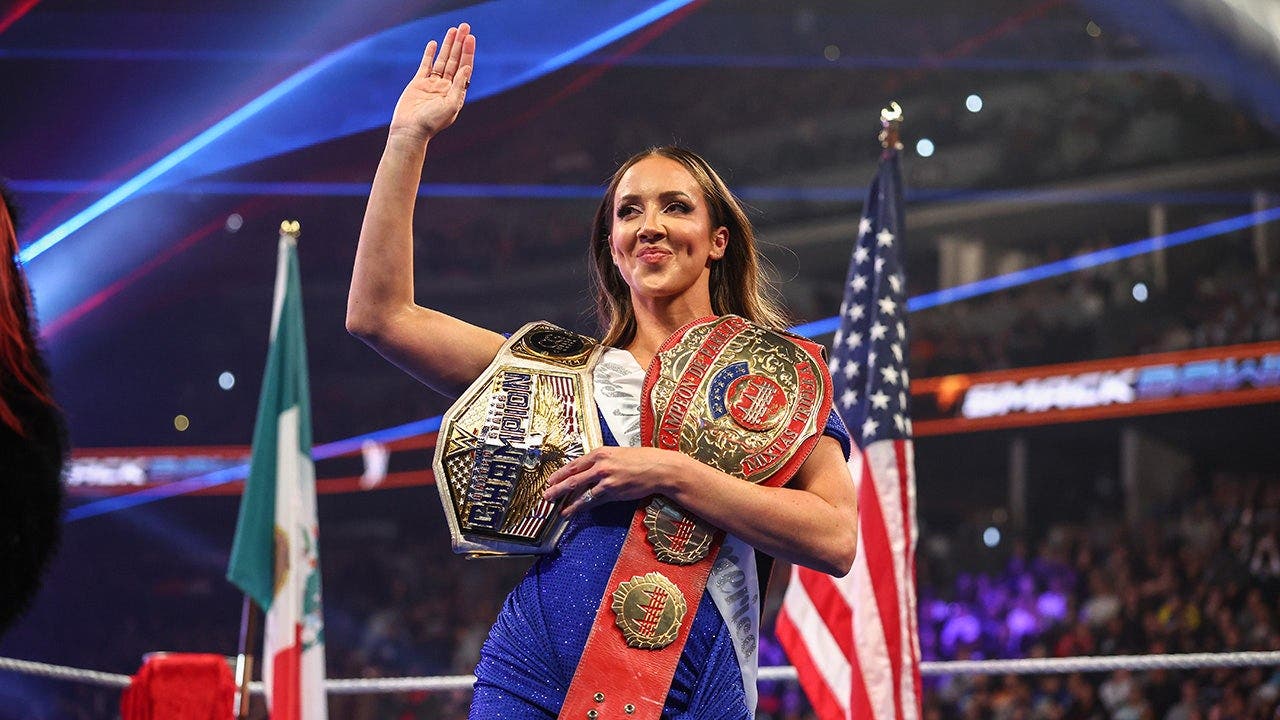
WWE star Chelsea Green revealed Monday she underwent a “heart procedure” as she shared photos of herself and husband Matt Cardona from her hospital bed.
Green said doctors caught her SVT. The Mayo Clinic says that SVT, or supraventricular tachycardia, is a “type of irregular heartbeat, also called an arrhythmia. It’s a very fast or erratic heartbeat that affects the heart’s upper chambers.”
ZERO BS. JUST DAKICH. TAKE THE DON’T @ ME PODCAST ON THE ROAD. DOWNLOAD NOW!
Chelsea Green enters the ring during Monday Night RAW at Little Caesars Arena in Detroit, Mich., on July 28, 2025. (Rich Freeda/WWE)
The two-time WWE women’s United States champion said she had been dealing with the issue for 10 years.
“After 10 years, doctors finally caught my SVT and I was able to get a heart procedure done! 3 hours later and I’m on the mend,” she wrote on Instagram.
On Tuesday, she added on X: “My latest episode during WrestleMania pushed my resting heart rate to 228 for almost 15 minutes. Yesterday, Dr. Girgis spent 3 hours working on me… and I had to be awake for the last hour of the procedure!! “
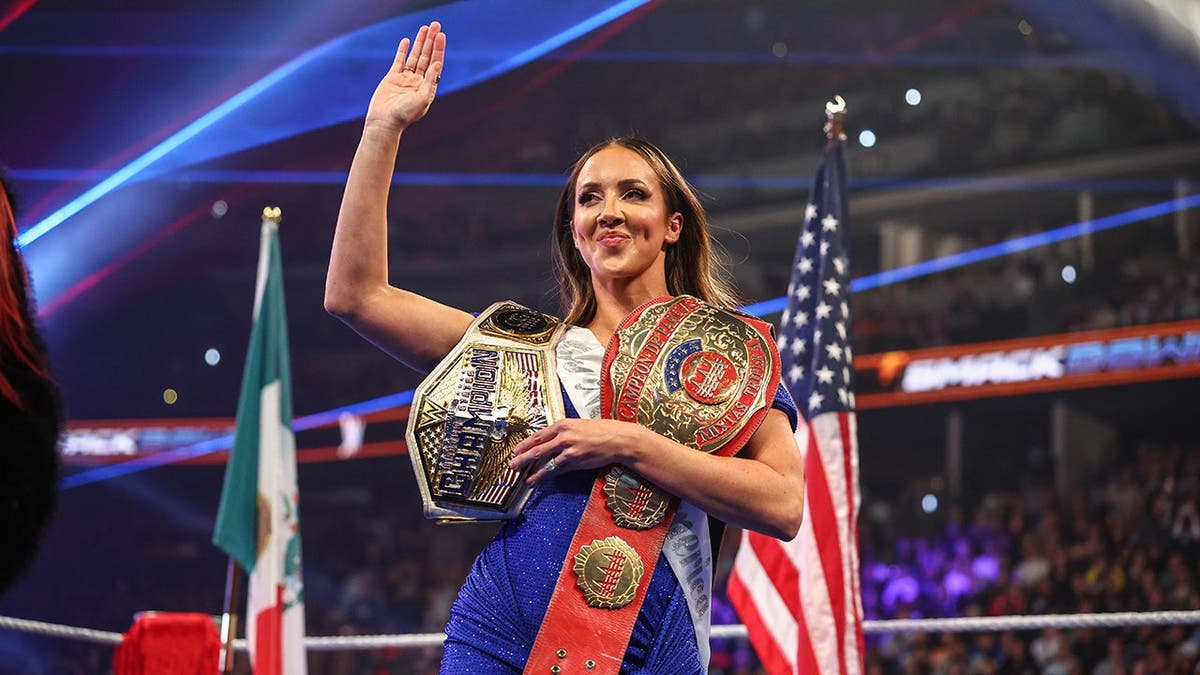
Chelsea Green waves during SmackDown at Ball Arena in Denver, Colo., on Nov. 28, 2025. (Michael Owens/WWE)
CLICK HERE FOR MORE SPORTS COVERAGE ON FOXNEWS.COM
She said the procedure was minimally invasive and expected to be back to work soon.
Green has had her share of bad luck over the last few months. She suffered an ankle injury that has kept her sidelined for several months, keeping her off the WrestleMania 42 card.
In February, Green and Ethan Page dropped the AAA World Mixed Tag Team Championship to Mr. Iguana and Lola Vice.
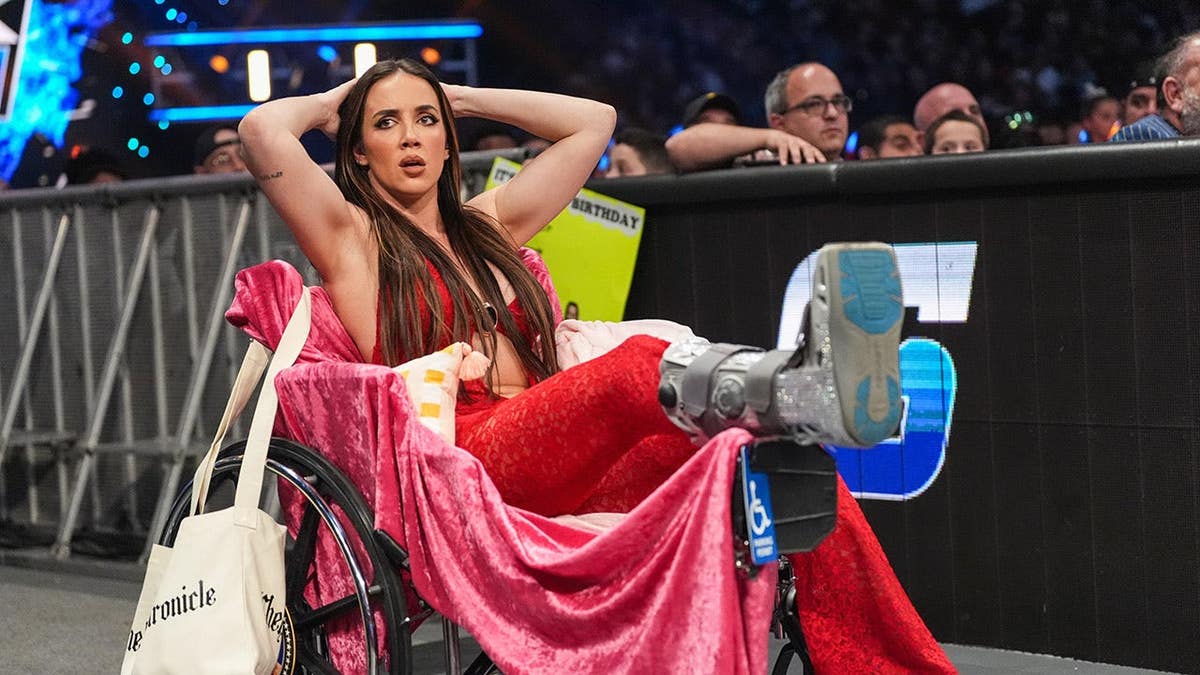
Chelsea Green looks on during SmackDown at FLA Live Arena in Sunrise, Fla., on Feb. 20, 2026. (Craig Ambrosio/WWE)
CLICK HERE TO DOWNLOAD THE FOX NEWS APP
Pro wrestling fans are eagerly awaiting her return to the ring.
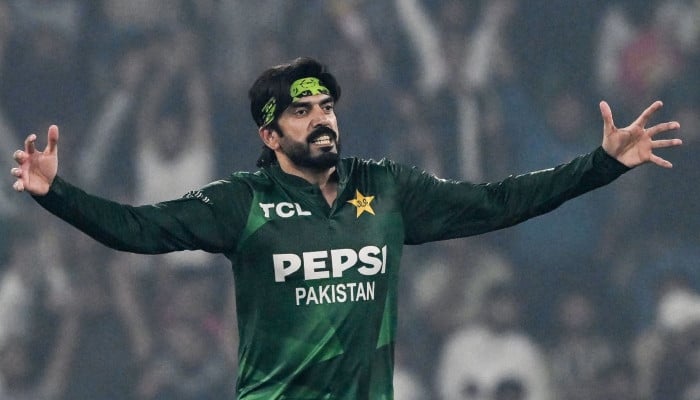
Pakistan’s mystery spinner Usman Tariq has been roped in by Warwickshire Bears for the Vitality T20 Blast, set to commence on May 22, the club announced on Tuesday.
In a statement, the club said that the 30-year-old spinner had offers to play franchise cricket in various leagues across the globe, but it won the competition to acquire his services.
As a result, Tariq will spend most of England’s summer season at the Edgbaston Stadium as his maiden Vitality Blast stint will be followed by The Hundred campaign with the Birmingham Phoenix, who signed him for £140,000 at the players’ draft in March.
Reacting to his allegiance with the Bears, Tariq termed it a great feeling before expressing his eagerness to bring energy to the squad, which he was impatiently looking forward to joining.
“I am very excited to bring more fun and energy to the Bears. I can’t wait to get involved with the squad, and it’s a great feeling to be part of this team. I hope to see as many people as possible at Edgbaston this summer,” Tariq was quoted as saying by the Bears.
Bears’ Performance Director James Thomas labelled Tariq “exactly the type of high-impact player” they were looking to bring in and thus expressed profound delight over securing his services for the upcoming tournament.
“Usman is exactly the type of high-impact player we want to bring into Warwickshire, so we’re delighted to get this deal completed,” Thomas said in a statement.
“His skill set and tactical awareness make him a genuine threat in modern white-ball cricket, but it’s his hunger to compete and continually improve that really stands out.
“What makes this signing particularly exciting is the alignment between Warwickshire and Birmingham Phoenix. Bringing Usman into the Bears for the Vitality Blast, before transitioning into The Hundred with the Phoenix, reflects the strength of our integrated model across club and franchise.
“It allows us to create continuity for the player, maximise performance impact across both competitions, and build stronger connections with our supporters in Birmingham and Warwickshire. Ultimately, this is about strengthening the team, the franchise, and our presence in the area, and we believe Usman can play a key role in that this summer.”

UK services industry faces ‘short-lived’ rebound as costs rise sharply

Moody’s raises Vietnam’s outlook to ‘positive’ from ‘stable’

Motorbikes, buses, rickshaws to use designated lanes on Karachi’s Sharea Faisal or face fines

A Brain Implant for Depression Is About to Be Tested in Humans

Pro wrestling star Steph De Lander reveals how colleague’s advice helped lead her to title triumph at ACW

‘I had £20,000 stolen and had to fight a 13-month fraud reporting rule to get it back’

-
 Tech1 week ago
A Brain Implant for Depression Is About to Be Tested in Humans
-
 Sports1 week ago
Pro wrestling star Steph De Lander reveals how colleague’s advice helped lead her to title triumph at ACW
-
Business1 week ago
‘I had £20,000 stolen and had to fight a 13-month fraud reporting rule to get it back’
-
 Entertainment1 week ago
Norway joins Type 26 Frigate Programme to boost NATO naval power
-

 Entertainment1 week ago
Melania Trump says ABC should ‘take a stand’ on late-night host Kimmel
-

 Tech1 week ago
Are tech leaders risking a cyber resourcing crisis? | Computer Weekly
-
 Business6 days ago
PSX plunges over 4,800 points | The Express Tribune
-
 Business1 week ago
Starmer says ‘tide could be turning’ on shoplifting epidemic