

Business
‘Not Moving Out Of Bengaluru’: BlackBuck CEO Clarifies After Heated Debate Over ‘Pothole’ Post


Last Updated:
BlackBuck CEO Rajesh Yabaji had earlier announced his decision to move out of its current location at Bellandur on Bengaluru’s Outer Ring Road (ORR) over commute problems.

BlackBuck CEO and co-founder Rajesh Yabaji. (Photo: X/@YABAJI)
Rajesh Yabaji, the co-founder of online trucking platform BlackBuck, clarified that he is not moving out of Bengaluru, after his social media post triggered a heated debate on the IT capital’s infrastructure and traffic issues.
“We unilaterally refute the claims made by some media outlets that we are considering moving out of the city. We are only relocating within the city to a different location, which will facilitate and easy commute for our employees,” he said on X. “As we do this, we want to reiterate that a large part of operations would still continue to happen on the ORR, and hence we will continue to seek help from the concerned authorities to enable infrastructure improvements to facilitate smooth business operations.”
Yabaji said the team moved to Bellandur in 2016 for larger office spaces and better-suited facilities and credited authorities in Karnataka and Bengaluru for providing the company with the needed resources to grow in the city. “As one of the biggest beneficiaries of the Karnataka tech-ecosystem over the last decade, we understand what the city of Bengaluru has helped us achieve and how it will be playing a major role in unlocking our potential ahead.”
“We will not only continue to remain in the city of Bengaluru, but will also expand our footprint here. Bengaluru is home for us and as always, we continue to remain committed to relay our needs and issues to the relevant government authorities and seek support to get them resolved,” he further said.
BlackBuck CEO’s Post & DK Shivakumar’s ‘Blackmail’ Jibe
Earlier, Yabaji on Tuesday announced through a social media post that the company has decided to move out of its current location at Bellandur on Bengaluru’s Outer Ring Road (ORR), citing “worsening infrastructure and commute issues” in the metropolis.
“ORR (Bellandur) has been our “office + home” for the last 9 years. But it’s now very-very hard to continue here. We have decided to move out,” Yabaji said on X, adding that the average commute for colleagues has increased over 1.5 hours and roads are full of potholes and dust.
His remarks caused renewed criticism of Bengaluru’s civic conditions. However, Karnataka Deputy CM DK Shivakumar responded by saying that the government is working to ensure that no company leaves the IT capital over infrastructure-related issues, but “blackmailing the government” will not work. He also said anyone is free to move out if they are not satisfied in Bengaluru.
Andhra Minister Offers Vizag For Relocation
Andhra Pradesh minister and TDP leader Nara Lokesh joined the conversation by offering BlackBuck to relocate to Vizag. “We are rated among top 5 cleanest cities in India, are building best-in-class infra, and have been rated the safest city for women. Please send me a DM,” the Andhra minister said on X.
In another post, Lokesh took a dig by saying that Andhra Pradesh does not dismiss the genuine grievances of people as “blackmail” and instead treats them with dignity and seriousness.

Aveek Banerjee is a Senior Sub Editor at News18. Based in Noida with a Master’s in Global Studies, Aveek has more than three years of experience in digital media and news curation, specialising in international…Read More
Aveek Banerjee is a Senior Sub Editor at News18. Based in Noida with a Master’s in Global Studies, Aveek has more than three years of experience in digital media and news curation, specialising in international… Read More
Click here to add News18 as your preferred news source on Google, News18’s viral page features trending stories, videos, and memes, covering quirky incidents, social media buzz from india and around the world, Also Download the News18 App to stay updated!
September 18, 2025, 19:57 IST
Read More
Business
‘Crisis worse than two 1970s oil shocks put together’: IEA chief’s big warning on Strait of Hormuz – The Times of India
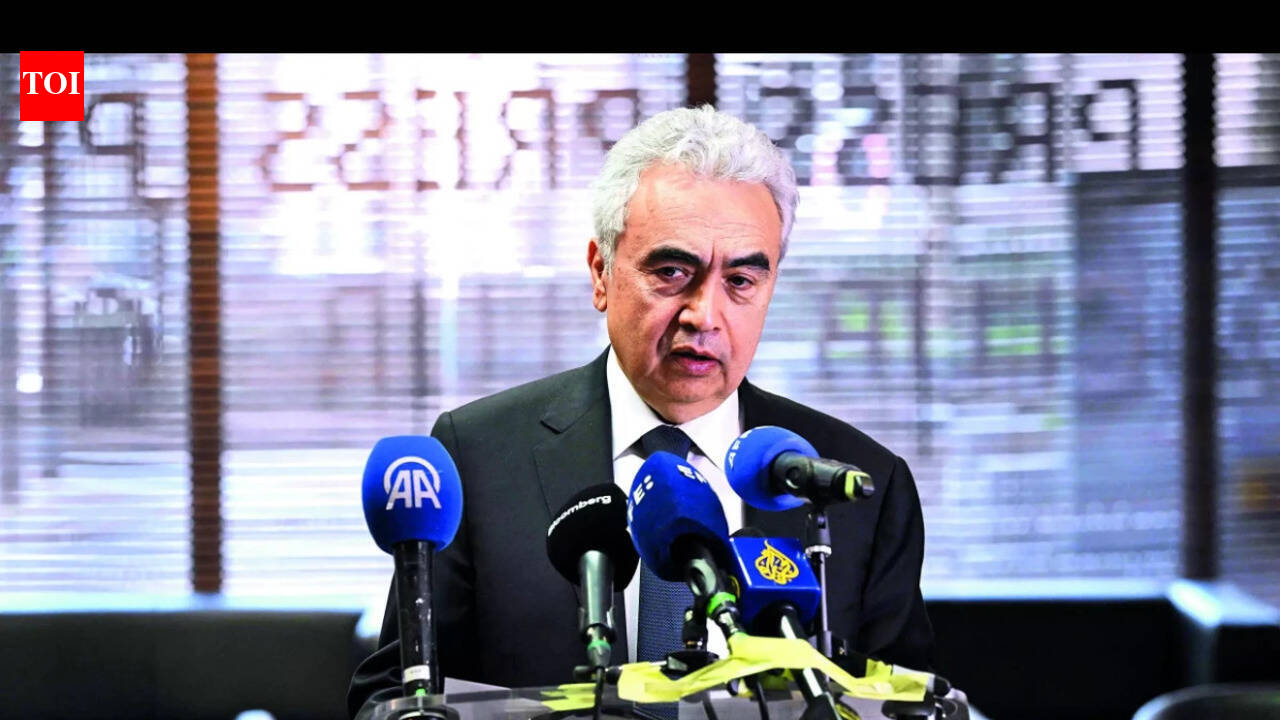
The ongoing war in the Middle East has triggered an energy crisis for the world and “no country is immune” to its shockwaves, the International Energy Agency (IEA) warned on Monday. Addressing the National Press Club in Australia’s capital, Birol said the current situation has evolved into an unprecedented disruption, combining multiple shocks to oil and gas supplies.“This crisis as things stand is now two oil crises and one gas crash put all together,” he said. He also drew comparisons with the oil shocks of the 1970s and the fallout from Russia’s 2022 invasion of Ukraine.Highlighting the broader economic risks, Birol said, “The global economy is facing a major, major threat today, and I very much hope that this issue will be resolved as soon as possible.”Commenting on the fallout of the energy crisis, Fatih Birol said, “no country will be immune to the effects of this crisis if it continues to go in this direction,” adding, “so there is a need for global efforts.”The conflict has already caused extensive damage to energy infrastructure, with Birol noting that at least forty facilities across nine countries in the region have been “severely or very severely damaged”.“At least forty… energy assets in the region are severely or very severely damaged across nine countries,” he said.The disruption was intensified by the near shutdown of the Strait of Hormuz, a key transit route for roughly one-fifth of global oil and gas shipments. The standoff has deepened as the war entered its fourth week, with Donald Trump and Tehran issuing repeated threats, including Washington’s demand for the reopening of the waterway.Birol identified the reopening of the Strait of Hormuz as the most critical step towards stabilising the situation, while also flagging rising fuel shortages in Asia as a growing concern. Oil markets reflected the strain, with US benchmark crude briefly touching the $100-per-barrel mark early on Monday. As fuel prices continue to rise, he added that there would not be any specific crude level to trigger another release.He added that the agency is currently consulting governments worldwide and remains prepared to release additional oil from emergency reserves if needed, though he clarified that no specific price level would automatically trigger such a move. Meanwhile, US President Donald Trump issued an ultimatum to Iran to reopen the strategically critical Strait of Hormuz within 48 hours, warning of military consequences if it failed to comply. He said, “If Iran doesn’t fully open, without threat, the Strait of Hormuz, within 48 hours from this exact point in time, the United States of America will hit and obliterate their various power plants, starting with the biggest one first! Thank you for your attention to this matter.” In response, Tehran warned, signalling that any attack on its energy infrastructure would prompt retaliation beyond conventional military targets. The message was conveyed by Ebrahim Zolfaghari and carried by Islamic Republic of Iran Broadcasting. He said any strike on Iran’s fuel and energy sector would trigger action against a broader range of targets linked to the United States and its regional allies.Earlier this month, 32 member nations of the IEA agreed to release 400 million barrels of oil from their emergency reserves to the market, to deal with the ongoing energy supply disruption.

A major beauty brand is enticing all its UK employees to earn a cut of any sales they drive on TikTok Shop in a bid to cash in on the rapid rise of the influencer-led beauty market.
MAC Cosmetics is kitting out shops with mini studios for its makeup artists to host live shopping shows when it launches on TikTok Shop on April 2.
It says it is the first major beauty brand in the UK to give every member of staff the opportunity to opt in as an affiliate and sell on the social media platform.
Those who become faces of the live channel will be offered a percentage of any sale that they drive on TikTok Shop.
The makeup artists will be encouraged to host tutorials and product demonstrations, with items available to buy directly through the app.
MAC, which is part of the Estee Lauder group of beauty brands, said the first live shopping show will stream from its Carnaby Street store in London.
It is hoping that tapping into social media shoppers will also bring more people into its more than 230 standalone shops and concessions.
TikTok Shop burst onto the UK’s retail scene in 2021 and, in recent years, has become a significant force in the world of e-commerce, reaching millions of people who use the video-sharing app and converting many into shoppers with a few taps.
Many content creators can earn a commission on products that they sell through the app when they co-operate with a brand or retailer.
Major retailers like Marks & Spencer and Sainsbury’s are now selling products on the marketplace alongside thousands of smaller businesses and brands.
The app has particularly been part of a boom for the beauty market, with beauty sales on the platform soaring by 60% year-on-year in 2025, fuelled by trends such as Korean skincare.
But the spread of in-app shopping has also prompted concerns about so-called impulse buying, particularly among younger consumers who are often targeted by influencer-led marketing.
Sara Staniford, the vice president and general manager of MAC in the UK and Ireland, said: “MAC has always been driven by our artists and the communities they create.
“TikTok Shop gives us an exciting new way to celebrate that creativity and connect with beauty lovers in real time.
“It puts our artists exactly where they belong, at the centre of the conversation.”

Tax systems designed primarily for extraction eventually undermine revenue due to weak economic growth
A flat tax would eliminate much of the inefficiency from Pakistan’s tax system by both broadening the tax base and significantly lowering the highest marginal tax rates. photo: file
ISLAMABAD:
The federal budget for next fiscal year (2026-27) will be under preparation after Eid holiday. Our policymakers would face an uphill task to balance the budget amidst the 37-month $7 billion Extended Fund Facility (EFF) of the International Monetary Fund (IMF) and shockwaves of the war imposed on Iran by the US and Israel in circumstances.
Regional war has intensified geopolitical risk, commodity markets remain volatile and global financial conditions continue to tighten. For a country already navigating fiscal consolidation under an IMF programme, the margin for policy error has become extremely narrow.
In such moments, governments often resort to familiar instruments: higher tax rates, new levies and additional withholding measures designed to secure immediate revenue. Pakistan’s experience over several decades suggests that this approach rarely produces durable fiscal stability. Slower investment, weaker economic activity and a shrinking tax base often follow temporary revenue gains.
A more sustainable framework for fiscal policy is outlined in the PIDE-PRIME Tax Reforms Commission report titled “Revenue with Growth”. The report argues that Pakistan’s tax system must move away from narrow revenue extraction towards a structure that supports economic expansion. Simplification of taxes, encouragement of investment, protection of exports and modernisation of tax administration form the central pillars of this approach. In the difficult environment facing the country today, this framework offers a practical guide for budget strategy.
Escaping high-tax, low-growth trap
Pakistan’s fiscal dilemma has long been structural. Revenues remain modest relative to the size of the economy while expenditures – particularly debt servicing and defence – continue to rise. Periods of geopolitical tension naturally intensify these pressures.
Historically, the response has been to increase taxes on existing taxpayers rather than expand the underlying economic base. This pattern has created a cycle in which weak growth leads to revenue shortfalls, tax rates are increased to meet fiscal targets, higher taxes suppress investment and economic activity, and slow growth again produces fiscal stress.
The PIDE-PRIME report challenges this cycle by emphasising a basic principle of public finance: tax systems designed primarily for extraction eventually undermine the revenue they seek to maximise. Breaking this pattern requires a shift towards policies that expand the productive economic activity.
Simplifying complex tax system
Pakistan’s tax structure has gradually evolved into a complicated web of withholding taxes, presumptive regimes and special levies such as super tax and turnover taxes. Such complexity raises compliance costs, increases litigation and discourages documentation of economic activity. Simplification therefore becomes the logical starting point for reform.
A tax structure with moderate rates applied to a broader base is more likely to encourage compliance while reducing administrative disputes. Predictability is particularly important in the present environment where businesses already face uncertainty from global geopolitical developments.
Encouraging investment and industrial expansion
Economic growth ultimately depends on investment. Yet Pakistan’s tax policy often raises the cost of investment through high duties on machinery and industrial inputs.
The PIDE-PRIME report recommends removing regulatory duties and additional customs duties and allowing zero-rating of plant, machinery and key intermediate goods. Such measures would reduce the cost of capital investment and support technological upgrading within industry.
For the upcoming budget, this principle carries special significance. Periods of regional instability often lead businesses to delay expansion plans. Clear policy signals encouraging industrial investment can counter that hesitation and strengthen confidence in the economy.
Protecting export competitiveness
Exports remain central to Pakistan’s economic resilience. Yet exporters frequently face liquidity constraints arising from withholding taxes, delayed refunds and administrative bottlenecks.
Budget policy should therefore focus on removing distortions affecting export sectors and ensuring efficient refund mechanisms. Strengthening export competitiveness improves foreign exchange earnings and reduces pressure on the balance of payments – an objective that becomes even more critical during periods of global economic turbulence.
Modernising tax administration
Tax reform cannot succeed without administrative reform. The PIDE-PRIME report emphasises the importance of digitisation, automation and reduced discretionary authority in tax administration.
Modern data-driven systems can minimise direct interaction between taxpayers and officials, reduce opportunities for rent seeking and improve voluntary compliance. Administrative credibility becomes especially important in times of economic stress when taxpayers already face higher costs and uncertainty.
Fiscal discipline and credibility
Credible fiscal management must accompany a growth-oriented tax system. Citizens are more willing to comply with taxation when public expenditures demonstrate discipline and transparency.
The upcoming budget should therefore combine tax reform with efforts to rationalise non-development spending and improve efficiency in public sector operations. Fiscal credibility strengthens the relationship between the state and taxpayers and supports long-term revenue mobilisation.
Turning crisis into reform
Pakistan’s economic history shows that periods of crisis often create the political space for structural reform. The present geopolitical and economic pressures therefore offer an opportunity to rethink fiscal strategy.
Instead of repeating the familiar pattern of incremental tax increases, policymakers could use the upcoming budget to initiate transition towards a growth-oriented tax system. Simplifying taxes, encouraging investment, strengthening exports and modernising administration would gradually expand the economic base and improve long-term fiscal stability.
In uncertain times, the most effective fiscal policy is not the one that extracts the largest revenue in the short term. It is the one that strengthens the productive capacity of the economy and ensures sustainable revenue in the years ahead.
The writer is the Advocate Supreme Court, Adjunct Faculty at LUMS, member Advisory Board, visiting Senior Fellow of Pakistan Institute of Development Economics and holds LLD in tax laws


Sri Lanka GDP grows 4.8% in Q4; full-year growth at 5%

Suparco rolls out Space4Climate initiative for climate monitoring
‘Crisis worse than two 1970s oil shocks put together’: IEA chief’s big warning on Strait of Hormuz – The Times of India

-

 Tech1 week ago
Tips and Advice for Buying Used or Refurbished Electronics
-
 Business1 week ago
UAE savings strategies 2026 explained: Best apps, tools, budget rules and smart money hacks to beat rising cost of living in emirates – The Times of India
-
 Entertainment1 week ago
Strategic oil stocks to be released ‘immediately’ in Asia and Oceania: IEA
-
 Entertainment1 week ago
Iran at war
-

 Sports1 week ago
Japan suffers shocking collapse to Venezuela in World Baseball Classic
-

 Politics1 week ago
How can US get out of Iran war?
-
 Entertainment1 week ago
Meet one of the last true paparazzi
-

 Sports1 week ago
College Basketball Invitational abruptly cancels 2026 tournament