

Politics
Numerous teenagers among the dead identified in Swiss bar blaze: police

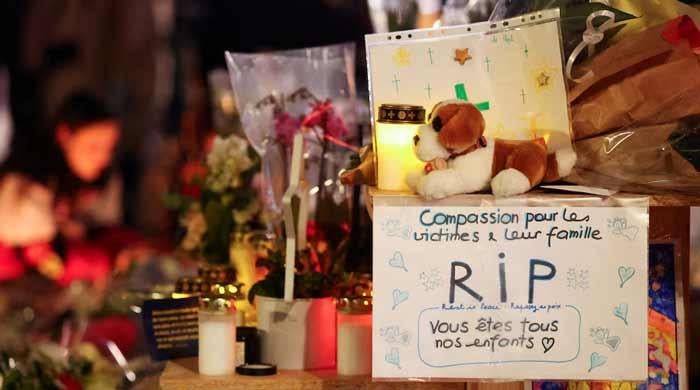
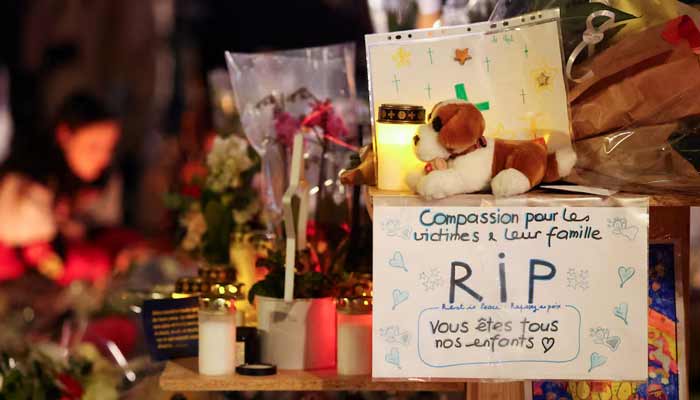
Teenagers — as young as 14 and 15 — were among those who died in the New Year’s Eve bar fire that killed 40 people in Switzerland, police said on Sunday, as the Pope offered his sympathies to the victims and their families.
Police in Valais said they had identified 16 more of those who died in the blaze in Crans-Montana, one of the worst disasters in recent Swiss history.
The newly identified victims included 10 Swiss nationals, two Italians, one person with Italian-Emirati citizenship, one Romanian, one person from France and one from Turkiye, Valais police said. No names were released.
Hundreds of mourners attended a church service in the town on Sunday morning, where Bishop Jean-Marie Lovey said condolences had poured in from around the world, including from the Pope.
“Countless people join us — people whose hearts are broken,” Lovey told the service. “Many expressions of sympathy and solidarity reach us.
“Pope Leo XIV joins in our sorrow,” he added. “In a moving message, he expresses his compassion and his care for the victims’ families and strengthens the courage of all who are suffering.”
More victims identified
The youngest person identified so far is a 14-year-old Swiss girl, while two 15-year-old girls, also from Switzerland, were among the dead.
Ten of the other bodies identified on Sunday were teenagers aged 16 to 18, police said. Also identified were two Swiss men aged 20 and 31, and a French national aged 39.
In total, police have identified 24 of those who died in the blaze in the mountain resort.
Late on Saturday, police said two Swiss women aged 24 and 22, along with two Swiss men aged 21 and 18, had been identified.
The mother of a 16-year-old Swiss boy Arthur Brodard confirmed overnight that he was among those killed.
“Our Arthur has departed to party in heaven,” Laetitia Brodard-Sitre said on her Facebook page.
“Now we can start our mourning, knowing he is in peace,” she said.
National day of mourning
Switzerland will hold a national day of mourning on Friday, national president Guy Parmelin said on Sunday, with church bells ringing across the country and a minute’s silence planned.
“In this moment of reflection, everyone in Switzerland can personally remember the victims of the disaster,” Parmelin told newspaper Sonntagsblick.
The fire likely started when “fountain candle” sparklers were held aloft too close to the ceiling at the Constellation bar, the region’s chief prosecutor has said.
Some 119 people were injured, including many with severe burns, and several were transferred to burn units in hospitals across Europe. Work on identifying the dead and injured is continuing, the police said.
Two people who ran the bar are under criminal investigation on suspicion of offences including homicide by negligence, prosecutors said on Saturday.
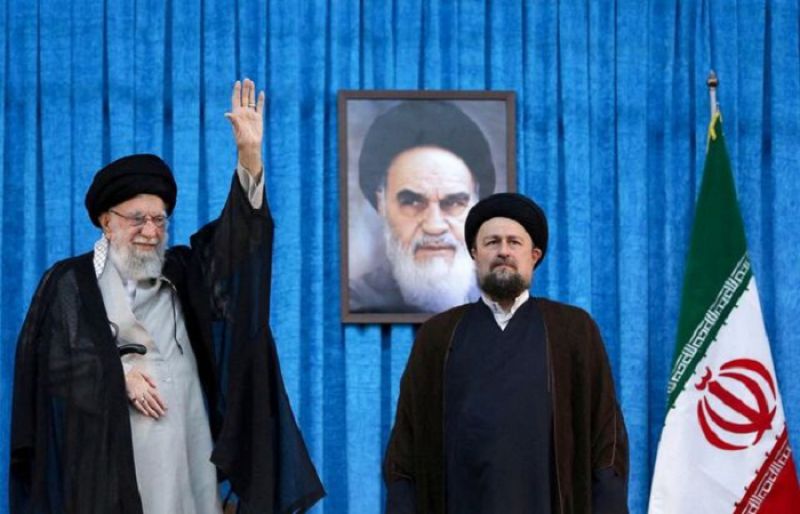

The death of Ali Khamenei has intensified debate over who will lead Iran next, with attention turning to Hassan Khomeini, grandson of the Islamic Republic’s founder.
Clerics in Iran’s powerful Assembly of Experts are responsible for appointing the next Supreme Leader, and Khamenei’s killing has accelerated what had long been a sensitive and unresolved succession question.
A Symbolic Heir
Hassan Khomeini, 53, is the grandson of Ruhollah Khomeini, the revolutionary leader who established the Islamic Republic in 1979.
He currently serves as custodian of his grandfather’s mausoleum in southern Tehran, a role that carries strong symbolic weight in Iranian politics.
Although he has never held formal government office, he is considered influential within clerical circles and maintains close ties with reformist figures.
Seen as a Relative Moderate
Hassan Khomeini is widely viewed as more moderate compared to hardline factions that consolidated power during Khamenei’s tenure.
He has publicly criticised the Guardian Council for disqualifying reformist candidates.
He called for accountability following the 2022 death of Mahsa Amini, which sparked nationwide protests.
He supported diplomatic engagement during the 2015 nuclear agreement negotiations.
However, he has also defended the Islamic Republic’s system and criticised anti-government unrest, underscoring his loyalty to the state structure.
Barred From Electoral Politics
In 2016, Hassan Khomeini attempted to run for the Assembly of Experts but was disqualified by the Guardian Council, reportedly over religious credential requirements. Many observers interpreted the move as an effort to prevent a reformist challenge.
Despite this setback, he remains a respected cleric with connections across political factions, including ties to the Islamic Revolutionary Guard Corps (IRGC).
Succession Uncertain
The selection of a new Supreme Leader will shape Iran’s domestic and foreign policy direction at a moment of heightened regional tension.
Some analysts argue that appointing a more moderate figure could help stabilise internal dissent and improve international positioning. Others believe hardliners may push for continuity.
The Assembly of Experts is expected to begin deliberations amid a 40-day national mourning period declared following Khamenei’s death.
- France to expand nuclear arsenal amid geopolitical risks.
- European allies to join French nuclear wargames.
- France-Germany nuclear steering group to start cooperation.
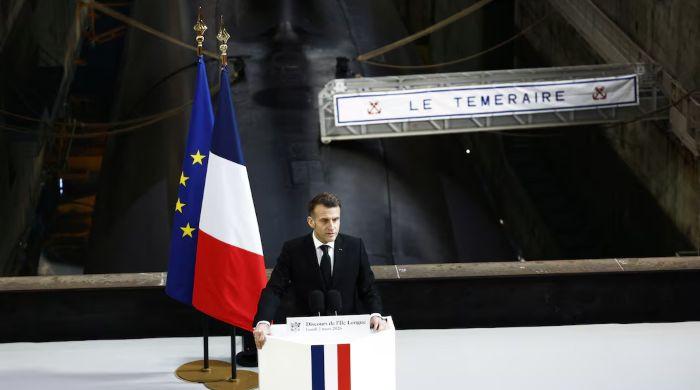
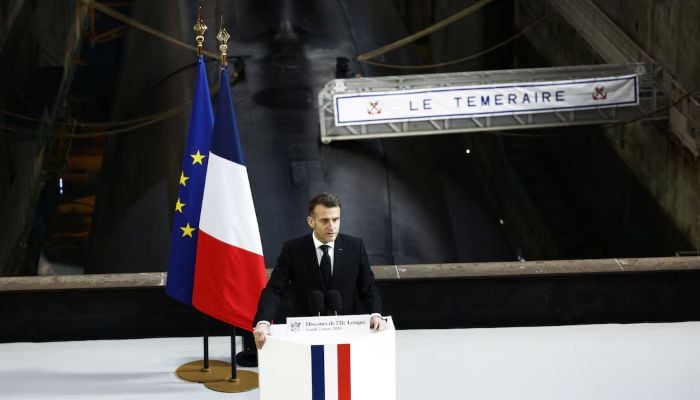
PARIS: France will expand its nuclear arsenal and will potentially allow European partners to host its aircraft on nuclear deterrence missions, President Emmanuel Macron said on Monday, signalling a major doctrine change for France and the continent.
Though France and Britain are both nuclear powers, most European countries have relied primarily on the United States for deterring any potential adversaries — a decades-old pillar of transatlantic security.
But Trump’s rapprochement with Russia on the Ukraine war and his harsher posture towards traditional allies have rattled European governments, and some countries have expressed interest in how Paris could protect them by extending its nuclear umbrella.
“We are currently experiencing a period of geopolitical upheaval fraught with risk,” Macron said in a speech delivered from a submarine base in Brittany, adding that a hardening of the French deterrence model was needed.
Unveiling the update to France’s nuclear doctrine, a once-per-term ritual for presidents, Macron promised more cooperation with European allies that have expressed interest.
Germany, but also Greece, Poland, the Netherlands, Belgium, Denmark and Sweden would be able to take part in French nuclear wargames.
“I believe I can say our partners are ready,” Macron said.
Still, Macron gave no details on how the enhanced nuclear drive would be funded, while making clear decision-making on nuclear strikes will remain solely in the hands of the French president.
Arming up together
German Chancellor Friedrich Merz said in a joint statement with Macron that France and Germany had established a nuclear steering group to discuss deterrence issues and would start concrete cooperation this year.
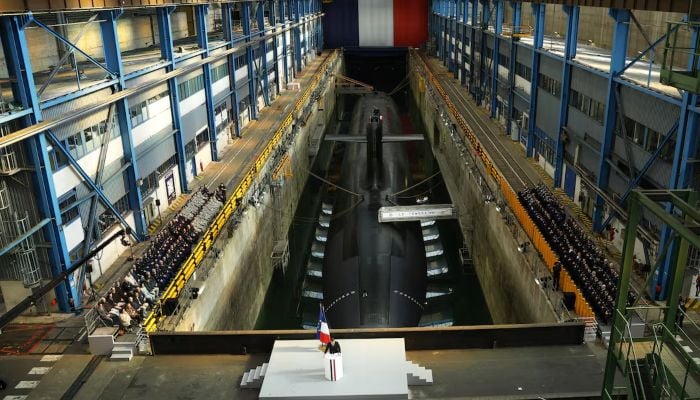
That would include participation by conventional German forces in French nuclear exercises and joint visits to strategic sites, as well as the development of non-nuclear capabilities with France and other European partners.
Polish Prime Minister Donald Tusk said on X Poland was in talks “with France and a group of closest European allies on the programme of advanced nuclear deterrence”.
“We are arming up together with our friends so that our enemies will never dare to attack us,” he added.
The French leader said it would be possible to establish, under unspecified circumstances, strategic assets in other European countries that would be part of what he called a new “forward deterrence” doctrine.
“Our strategic air forces could be spread deep into the European continent,” Macron said, without giving more details.
Although the size of France’s nuclear arsenal is based on a strategy of “strict sufficiency”, the number of French warheads will be increased, Macron said.
France spends roughly 5.6 billion euros ($6.04 billion) a year to maintain its stockpile of 290 submarine- and air-launched weapons — the world’s fourth-largest arsenal. Britain has 225 nuclear warheads. Russia and the United States have more than 5,000 each.
Macron said close ties on nuclear deterrence will continue with Britain. He also said the current rethink of French nuclear doctrine has been done in total transparency with Washington, and was complementary to Nato’s nuclear mission.
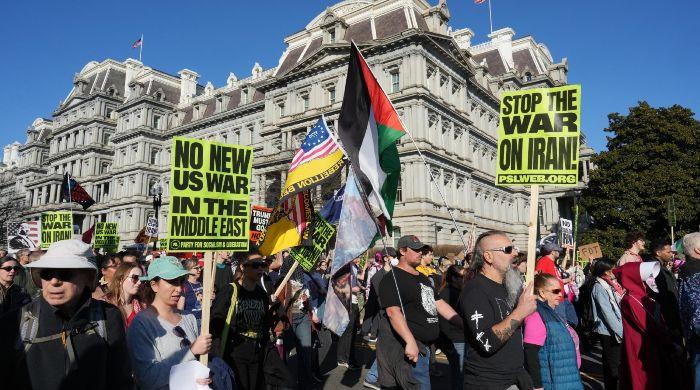
Nearly six in 10 Americans disapprove of the US decision to launch military action in Iran, with a majority also saying a long-term conflict between the two countries is likely, according to a new CNN poll conducted by SSRS.
The poll, fielded shortly after the US and Israeli attacks, finds broad scepticism about President Donald Trump’s handling of the situation: 60% say they do not think he has a clear plan, while 62% say he should seek congressional approval before any further military action.
Just 27% believe the US made enough of an effort at diplomacy before using force, compared with 39% who say it did not try hard enough, and 33% who are unsure.
Overall, 59% disapprove of the initial decision to strike Iran and 41% approve, with strong disapproval (31%) roughly double strong approval (16%). On escalation options, 44% say they favour the US trying to overthrow the Iranian government, while 56% oppose it.
Support for sending US ground troops is far lower: 12% favour deploying ground forces, 60% oppose, and 28% are unsure. A majority (56%) say a long-term military conflict is at least somewhat likely, including 24% who describe it as very likely.
Views split sharply by party. Republicans are far more likely to approve of the military action (77%) than independents (32%) or Democrats (18%), and more likely to say it will reduce the threat the US faces from Iran (58% of Republicans, 21% of independents and 9% of Democrats).
Within the Republican Party, CNN reports a pronounced MAGA and non-MAGA divide that appears closely linked to trust in Trump on the use of force.
Across the broader public, majorities disapprove across major demographic subgroups, including men and women, White, Black and Latino adults, and all age groups.
A separate Reuters/Ipsos poll that concluded Sunday found 27% approve of the strikes, 43% disapprove, and 29% are unsure.
It also found 56% believe Trump is too willing to use military force to advance US interests, including 87% of Democrats, 23% of Republicans and 60% of independents.
The poll surveyed 1,282 US adults online and had a margin of error of three percentage points.


T20 World Cup: Aleem Dar ‘expressed reservations’ over inclusion of Babar, Shadab

Best Buy’s holiday sales disappoint, but retailer shows progress in growing profits

Princess Anne to mark 25 year celebration after ‘outstanding’ honour

-

 Politics5 days ago
What are Iran’s ballistic missile capabilities?
-
 Business7 days ago
Households set for lower energy bills amid price cap shake-up
-

 Sports1 week ago
Top 50 USMNT players of 2026, ranked by club form: USMNT Player Performance Index returns
-

 Politics5 days ago
US arrests ex-Air Force pilot for ‘training’ Chinese military
-

 Sports5 days ago
Sri Lanka’s Shanaka says constant criticism has affected players’ mental health
-
 Business7 days ago
Lucid widely misses earnings expectations, forecasts continued EV growth in 2026
-

 Sports1 week ago
South Africa thrash India by 76 runs in T20 World Cup Super 8 – SUCH TV
-

 Fashion6 days ago
New Zealand’s apparel imports steady at $1.2 bn in 2025