

Business
Oil crosses $100 mark amid Iran war as violence erupts at petrol pumps in South Asia


Oil prices surged past $115 (£86.47) a barrel on Monday as fuel shortages sparked rationing and violence in South Asia, as the Iran war continues to choke the world’s most critical energy route.
Brent crude rose to $115.31 (£86.47) a barrel, up 24 per cent from Friday’s close and the highest since 2022, as the US–Israeli war with Iran entered its second week. The Strait of Hormuz remained effectively closed to most operators.
West Texas Intermediate crude hit $116.33 (£87.41), up 28 per cent. Brent has not traded at current levels since Russia invaded Ukraine in 2022.
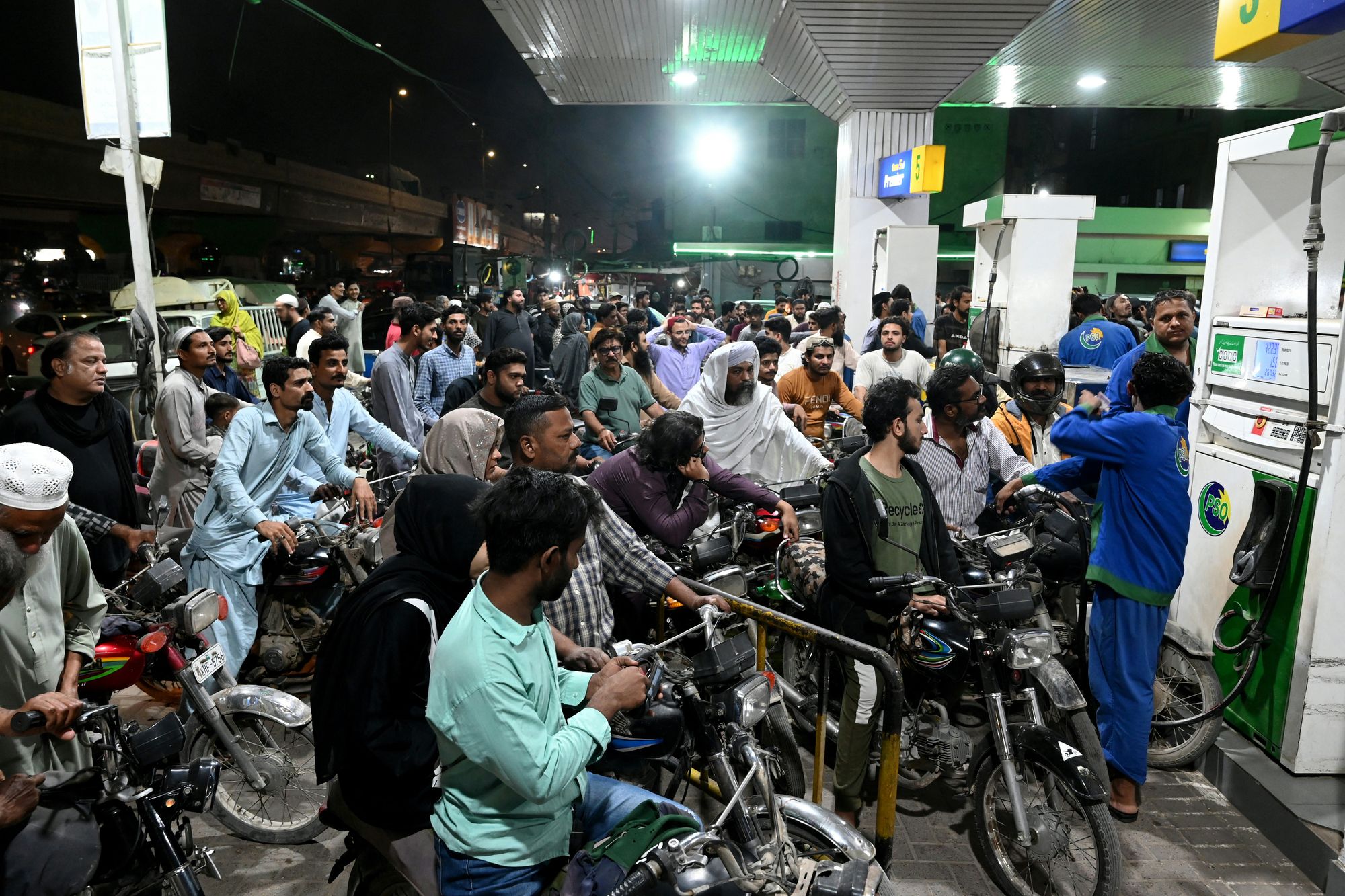
The surge in energy prices is causing rationing and closure of petrol stations in import-dependent South Asia.
In Sialkot, Pakistan, a man opened fire at a petrol station on Saturday after workers refused to fill jerry cans, killing one worker and critically injuring two others. Separately, a man was killed in Karachi in another fuel queue altercation.
Pakistan raised petrol prices by PKR55 (£0.15) per litre on Friday, the largest ever single increase, to PKR321 per litre, after weeks of warnings that its exposure to Hormuz-linked supply was among the highest of any emerging market.
In Bangladesh, authorities on Monday brought forward university Eid holidays as an emergency measure to cut electricity use and ease fuel pressure after Qatar suspended Liquefied natural gas (LNG) deliveries.
Officials said university campuses consume large amounts of electricity for residential halls, classrooms, laboratories and air conditioning, and the early closure would help ease pressure on the country’s strained power system.
Five of the country’s six fertiliser factories have also closed.
Bangladesh already imposed daily fuel limits last week – motorcyclists are capped at two litres, private cars at 10 – after panic buying emptied stations across the country.
“About 95 per cent of our fuel must be imported,” Bangladesh Petroleum Corporation said, urging consumers not to hoard.
Meanwhile, bigger economies are also affected. Japan said on Sunday it had instructed a national oil reserve storage site to prepare for a possible release of crude, the first such directive since 2022.
Japan holds 254 days of emergency reserves, one of the highest, but sources 95 per cent of its crude from the Middle East, with roughly 70 per cent shipped through the Strait.
India, which imports more than 88 per cent of its oil, sought to calm concerns. Oil minister Hardeep Puri said the country held “sufficient stocks” and directed all LPG (liquefied petroleum gas) refineries, public and private, to increase production.
Analysts are now warning that oil prices could exceed $150 a barrel – a level that could be catastrophic for the global economy.
“Oil prices have now gathered all the ingredients for a perfect storm,” Muyu Xu, senior oil analyst at Kpler, told Reuters. “If the disruption in the Strait of Hormuz persists for another one to two weeks, we could see prices move toward $130–150 a barrel.”
BMI, a unit of Fitch Solutions, said Pakistan and India are the most vulnerable major emerging markets, citing their energy import dependence and high exposure to Hormuz. Egypt and Turkey, it said, face the greatest risk outside the Gulf because of fragile external positions and large energy subsidies.
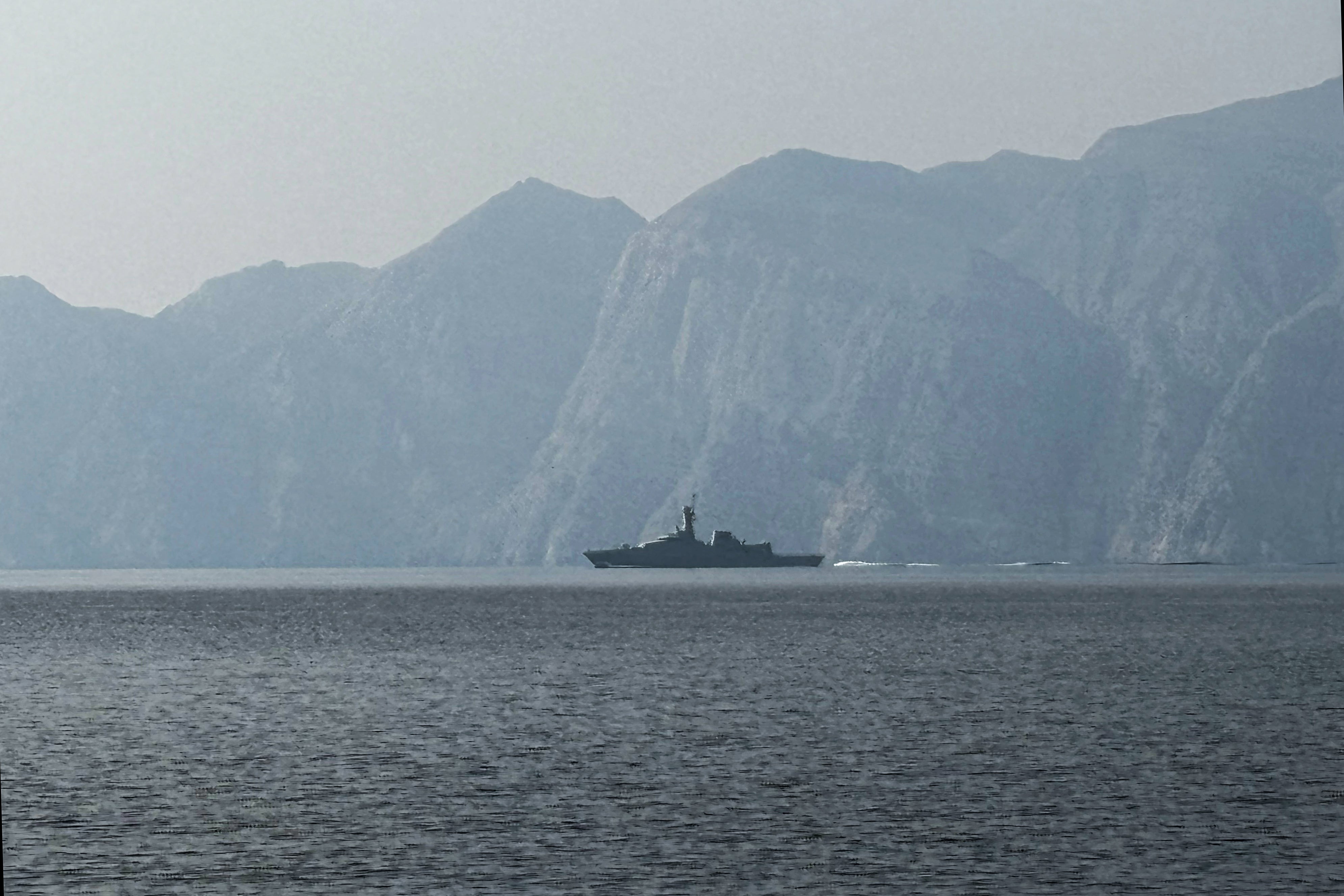
The shortages come as Iraq, Kuwait and the UAE cut oil production as storage tanks fill due to the reduced ability to export through the Strait.
Iran‘s parliament speaker, Mohammad Bagher Ghalibaf, warned that the war’s impact on the oil industry “would spiral” after Israeli strikes on oil depots in Tehran and a petroleum transfer terminal killed four people overnight.
Roughly 15 million barrels of crude oil, about 20 per cent of global supply, typically pass through the Strait each day, according to Rystad Energy.
The energy minister of Qatar, one of the world’s largest LNG producers, warned that it expects all Gulf energy producers to shut down exports within weeks if the Iran conflict continues.
“Everybody that has not called for force majeure we expect will do so in the next few days if this continues,” Saad al-Kaabi told FT on Friday. “All exporters in the Gulf region will have to call force majeure.”
US energy secretary Chris Wright told CNN on Sunday that gas prices would be back under $3 a gallon “before too long”, describing the spike as “a weeks, not a months thing”.
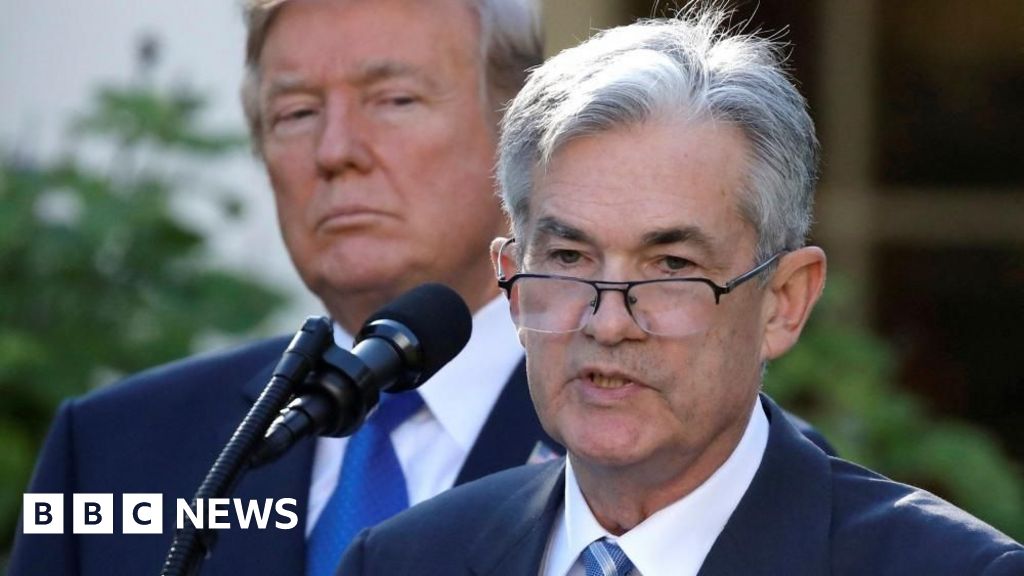
Powell’s term is nearing its end and the US Senate is considering Trump’s nominee for his replacement, Kevin Warsh. A key Republican, Thom Tillis, has withheld his support for Warsh unless the Trump administration would drop its investigation into Powell.
Business
Intel bags big gains! Chipmaker’s shares jump 26% on blockbuster results; how Trump admin benefits – The Times of India
Intel share price soared sharply on Friday after the chipmaker delivered a first-quarter performance that exceeded market expectations. And the win was not just for the chipmaker, but also the whole of US!The stock climbed 26.7% during trading on Friday, marking what could be its strongest single-day gain since 1987. Momentum continued after the closing bell, with shares rising a further 20% in after-hours trading as investors reacted to signs of a sustained turnaround driven by artificial intelligence.Intel reported revenue of $13.58 billion (€11.6bn) for the quarter, ahead of the $12.3 billion (€10.5 bn) forecast and up 7.2% from a year earlier. Adjusted earnings per share came in at $0.29, far exceeding expectations of $0.01.A key contributor to this performance was the company’s Data Centre and AI (DCAI) division, which delivered revenue of $5.05 billion (€4.2bn), up 22.4% year-on-year and well above analyst estimates of $4.41 billion (€3.77bn). The results indicate strong demand for Intel’s Xeon 6 processors and Gaudi 3 AI accelerators, particularly among enterprise clients and cloud service providers.Chief executive Lip-Bu Tan pointed to a broader shift in artificial intelligence usage as a major factor behind the growth. He said, “the next wave of AI will bring intelligence closer to the end user, moving from foundational models to inference to agentic.” He added, “This shift is significantly increasing the need for Intel’s CPUs and wafer and advanced packaging offerings.”The company also issued an upbeat outlook for the second quarter, forecasting revenue in the range of $13.8 billion (€11.8billion) to $14.8 billion (€12.6billion), surpassing investor expectations of $13 billion (€11.1billion).
But how is Washington winning?
The rally has had a direct impact on the US administration’s investment in Intel. In 2025, during a period of severe financial strain for the company, the administration of Donald Trump acquired a 9.9% stake in a move aimed at stabilising the business. The government invested $8.9 billion (€7.8bn) at a share price of $20.47 (€18.01), with $5.7 billion (€5bn) of that amount coming from previously approved but unpaid grants, according to the Euro News.At the time, Intel was facing multi-billion dollar losses and operational challenges, prompting concerns over its viability. As part of the intervention, the company cancelled planned factory projects in Germany and Poland, redirected focus towards US-based manufacturing, and reduced its global workforce by 25%, cutting around 25,000 jobs.Following the latest jump, Intel’s shares are now trading at $81.3 (€71.5), representing an increase of nearly 300% since the government first took its stake. The sharp rise highlights how the company’s improved financial performance has translated into substantial gains for the US administration.

Statistics Jersey says there have been “sharp increases” in some energy prices.
Source link


Charlie Sheen updates on relationship with old pal Jon Cryer

Iranian FM Abbas Araghchi lands in Pakistan ahead of renewed US talks

Mom’s Microwaved Coffee Won’t Stand a Chance With This Ember Smart Mug Deal

-

 Fashion1 week ago
France’s LVMH Q1 revenue falls 6%, shows resilience amid Iran war
-

 Tech1 week ago
CYBERUK ’26: UK lagging on legal protections for cyber pros | Computer Weekly
-

 Sports5 days ago
WWE WrestleMania 42 Night 2: Live match results and analysis
-

 Sports1 week ago
Faheem Ashraf backs Islamabad United’s push, calls league a ‘career-changing platform’
-

 Sports5 days ago
NCAA men’s gymnastics championship: All-time winners list
-
 Business1 week ago
PepsiCo earnings beat estimates as North American food business improves
-

 Tech1 week ago
Anthropic Plots Major London Expansion
-
 Business1 week ago
Oil prices fall again amid Middle East ceasefire hopes