

Business
Oil prices rise, stocks fall on worries over nascent Iran ceasefire – SUCH TV


Oil prices climbed and stocks fell Thursday on fears over the nascent US-Iran ceasefire after Tehran threatened to resume hostilities after Israel launched a major bombardment of Lebanon.
Equity markets across the globe soared and crude plunged Wednesday after US President Donald Trump announced the two-week halt in the war, and the Islamic republic said it would reopen the Strait of Hormuz as peace talks took place.
But with the deal less than a day old, cracks were already appearing as Tel Aviv said it did not include Israel’s fight against Iran-backed Hezbollah in Lebanon as it continued attacks on its northern neighbour.
That view was echoed by Vice President JD Vance, who said: “If Iran wants to let this negotiation fall apart… over Lebanon, which has nothing to do with them, and which the United States never once said was part of the ceasefire, that’s ultimately their choice.”
Iran said that broke terms of the deal as reports said the vital Hormuz waterway — through which a fifth of world oil and gas passes — was shut again.
However, that came as Tehran announced alternative routes for ships travelling through the Strait, citing the risk of sea mines.
The country’s parliament speaker Mohammad Bagher Ghalibaf posted on X that the “workable basis on which to negotiate” had already been violated, making further talks “unreasonable”.
He listed three alleged US violations of the truce plan: the continued attacks in Lebanon, a drone entering Iranian airspace and a denial of the country’s right to enrichment.
Hezbollah said Thursday it had fired rockets towards Israel in response to its “violation”.
Meanwhile, a senior US official said Tehran’s 10-point plan was not the same set of conditions the White House had agreed to.
Fears that the ceasefire could fall apart while crude remains stuck in Hormuz saw West Texas Intermediate oil jump around three percent Thursday, having plunged more than 16 percent the day before. Brent was up more than two percent following a 13 percent drop.
Equities also gave up some of their gains.
Tokyo, Hong Kong, Shanghai, Sydney, Singapore, Seoul and Taipei were all down.
Attention is also turning to crunch talks in Pakistan that are expected on Friday or Saturday, with Vance leading the US delegation.
“Many questions remain with the 10-point plan that Trump has received from Iran (which includes Iranian control of the Strait of Hormuz, US acceptance of Iran’s uranium enrichment programme, the end of all sanctions and withdrawal of the US military from the Gulf region) is at odds with Trump’s 15-point peace plan,” wrote National Australia Bank’s Skye Masters.
Still, observers warned that an end to the conflict would not see a quick return to normal, with crude prices still elevated and key regional infrastructure targeted that could take billions of dollars and at least months to repair.
Shipping journal Lloyd’s List estimated around 800 ships have been stuck in the Gulf since the end of February, when hostilities broke out.
Still, FOREX.com analyst Fawad Razaqzada said: “Investors are confident that oil prices could ease further and the Strait of Hormuz will re-open again and hopefully stay open beyond the two-week ceasefire period.”
– Key figures at around 0230 GMT –
West Texas Intermediate: UP 3.0 percent at $97.22 a barrel
Brent North Sea Crude: UP 2.5 percent at $97.11 a barrel
Tokyo – Nikkei 225: DOWN 0.6 percent at 55,997.18 (break)
Hong Kong – Hang Seng Index: DOWN 0.5 percent at 25,757.20
Shanghai – Composite: DOWN 0.6 percent at 3,972.21
Euro/dollar: DOWN at $1.1660 from $1.1667 on Wednesday
Pound/dollar: DOWN at $1.3390 from $1.3405
Dollar/yen: UP at 158.85 yen from 158.35 yen
Euro/pound: DOWN at 87.08 pence from 87.22 pence










The project was part of a package of tech investment promising the UK could become an AI superpower.
Source link

People gather at the Magic Kingdom theme park before the “Festival of Fantasy” parade at Walt Disney World in Orlando, Florida, U.S. July 30, 2022.
Octavio Jones | Reuters
Disney is planning to begin its next phase of cost cutting, which will include as many as 1,000 layoffs, according to a person familiar with the matter.
The cost-cutting initiative comes shortly after Josh D’Amaro took the helm as CEO in mid-March.
The layoffs are expected to mostly affect Disney’s marketing department, according to the person, who requested to speak anonymously because the moves had not yet been made public. That department was recently consolidated under Asad Ayaz, who was named chief marketing and brand officer in January.
Ayaz, who reports directly to D’Amaro and Dana Walden, Disney’s president and chief creative officer, oversees marketing for all of Disney’s divisions — entertainment, experiences and sports — in the newly created role. It’s the first time that Disney brought all of its units under one marketing chief.
Disney’s stock was slightly down in afternoon trading on Thursday. The layoffs were first reported by The Wall Street Journal.
The changes to the marketing department structure occurred in January, when Bob Iger was still CEO of the company. Disney announced shortly after that that D’Amaro would take take over the top job — a long-awaited decision for the company.
D’Amaro, who previously was chairman of Disney Experiences, succeeded Iger after a period of uncertainty for the media and theme park giant — which had included a succession race and recent reorganization and turnaround of the business.
Iger reclaimed the Disney CEO role in late 2022, about two years after his initial departure. He was immediately tasked with a turnaround of the business as its stock price had fallen and earnings began to miss expectations.
By February 2023, Disney had announced sweeping plans that reorganized the structure of the company, cut $5.5 billion in costs and eliminated 7,000 jobs from its workforce.
On D’Amaro’s first official day as CEO in March, he noted the work Iger had done to get the company past one of its most difficult periods.
“When Bob returned to the company a few years ago, his goal was to fortify our business and lay the groundwork for long-term growth, by reigniting creativity and improving performance at our studios, building a robust and profitable streaming business, transforming ESPN for a digital future, and turbocharging our parks and experiences,” D’Amaro said on stage at the company’s investor day.
“We’ve accomplished all of those things, and we’re operating from a place of strength, with ample opportunity for growth.”
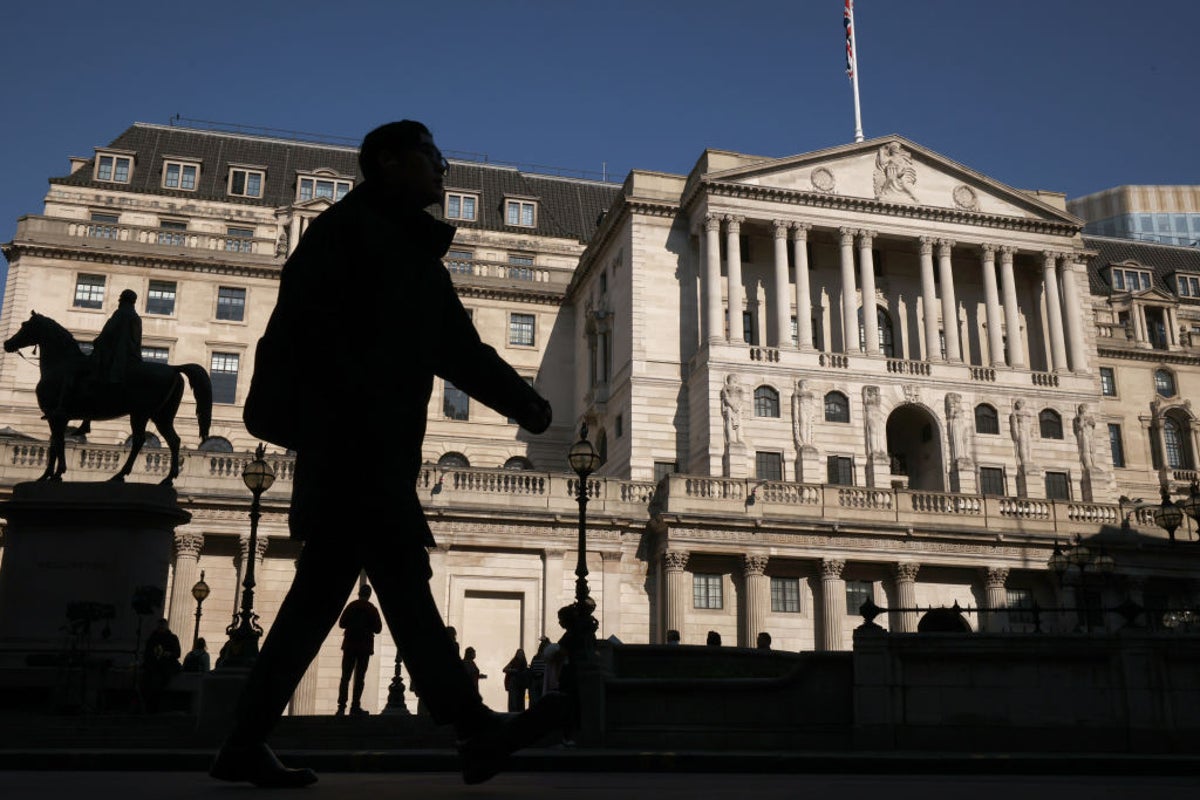
Loan default rates are rising, but the true impact on households is yet to come as consumers brace for price rises due to the Iran war, experts have warned.
The latest Credit Conditions Survey from the Bank of England, which measures demand for new borrowing, shows defaults on loans from January to March have risen to 6.2 per cent.
In the previous quarter, there were hardly any defaults on mortgage debt, say lenders. The figures suggest consumers were already feeling the squeeze even before the Iran war, as the economy flatlined.
Karim Haji, Global and UK Head of Financial Services at accountancy firm KPMG, said: “Rising default rates show that underlying pressure is building. The impact of the prolonged conflict on fuel prices is adding new pressure on household finances, and the full impact of higher costs and mortgage rates is still feeding through.”
But the mortgage and property market is still expected to see rising demand in the coming months, experts say.
For secured lending defaults, which include mortgages, the Bank recorded 6.2 per cent in the first quarter of 2026, the highest since the last three months of 2024 (7.8 per cent), when the UK had seen multiple hikes in interest rates. The data for the first three months of 2026 marked a reversal from the fall in defaults reported in the last six months of 2025.
For unsecured lending defaults, such as credit cards, the Bank reported a fourth consecutive quarter of rising defaults (18.6 per cent in the first quarter of 2026). This was the highest figure since the last quarter of 2023 (25.7 per cent).
According to the Bank, demand for home loans and other debt remained high in the run-up to the Iran war, as borrowing costs fell.
Get a free fractional share worth up to £100.
Capital at risk.
Terms and conditions apply.
ADVERTISEMENT

Get a free fractional share worth up to £100.
Capital at risk.
Terms and conditions apply.
ADVERTISEMENT
Lenders had expected demand to keep growing as interest rates came down, but that may now have changed as borrowers become less optimistic, or have to refinance mortgages at higher rates as fixed-rate deals came to a close.
Mr Haji added: “Stable demand for unsecured lending shows households turning to credit to manage their increasing day-to-day spend. While some borrowers are still able to access credit, others are beginning to struggle with repayments, pointing to possible early stages of credit deterioration.”
Bond yields, the amount the government pays in interest on its borrowing, which link to mortgage prices, have eased this week following the announcement of a ceasefire.
Aside from credit wobbles, the Bank of England’s Credit Conditions Survey finds that lenders expect mortgage demand to increase over the coming months.
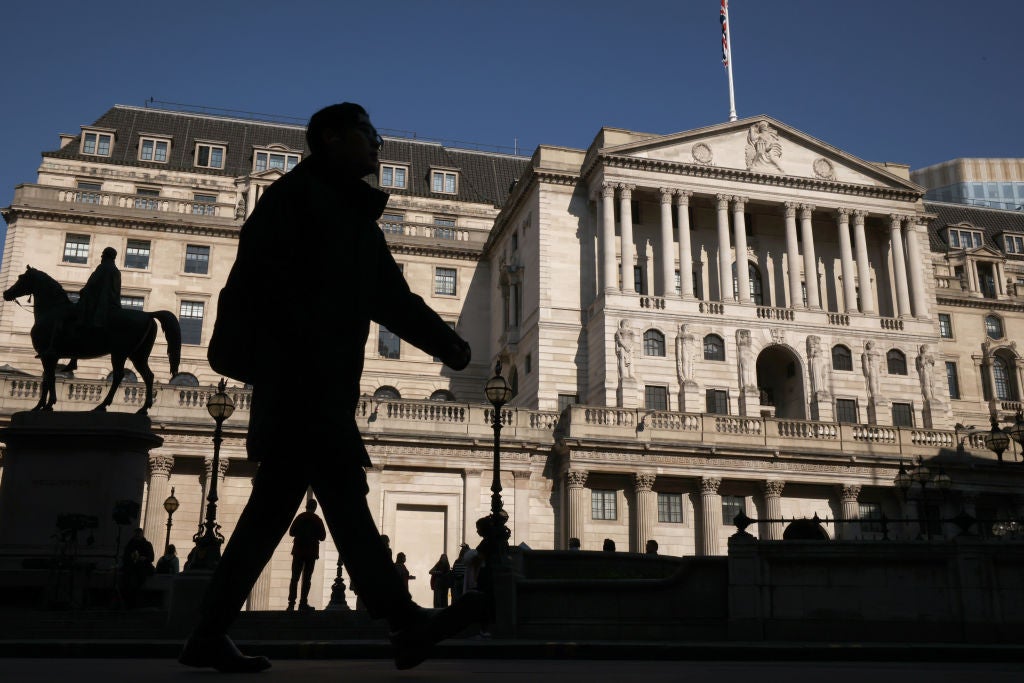
Damien Burke, Head of Regulatory Practice at consultancy Broadstone, said: “The latest Credit Conditions Survey suggests a cautiously improving outlook for the mortgage market at the start of the year, with lenders expecting demand to pick up in the coming months, particularly for house purchases and remortgaging. This reflects a degree of pent-up demand as home buyers awaited lower interest rates and a more certain fiscal landscape.”
But the survey was done just as the Middle East conflict began. The longer it continues, the worse the blow to borrower and lenders, brokers warn.
Raj Abrol, CEO of risk platform Galytix, said: “What started as a conflict in the Middle East is now showing up in borrowing costs right across the economy. Mortgage rates have jumped from 4.8 per cent to over 5.5 per cent — that’s an extra £1,000 a year on a typical £200,000 mortgage. The ongoing turmoil of the Iran crisis has spooked many of the big banks, leading to a surge in mortgage rates and increased pressure on homeowners. Against this complex backdrop, a rise in defaults could well continue for many months as inflation persists and cost-of-living crisis worsens. The longer this uncertainty continues, lenders will continue to remain risk-averse, making access to credit a bigger challenge for consumers.”
For companies, the cost of short-term borrowing has also jumped. When credit gets more expensive, it hurts businesses’ funding for payroll, small and medium-sized businesses refinance, and consumers whose credit cards and car loans quietly reset higher. With a million fixed-rate mortgage deals expiring by September and inflation heading towards 3.5 per cent, the longer this goes on, the more defaults move from a slow creep to something banks have to take seriously, risk experts warn.
Mr Burke adds: “The fall-out from the Ukraine conflict on inflation and mortgage rates remains fresh in the minds of households, and even short-term disruption to supply chains can have a long-term impact on the cost of goods. This further amplifies the need for understanding consumers’ individual affordability when assessing for credit products.”


Olympic gold winner dismisses athletes’ negative comments on representing US: ‘I think we’re the best country’
OpenAI pauses UK investment deal over energy costs and regulation
[CinePlex360] Please moderate: “Sensex gains fo

-
 Business1 week ago
Jaguar Land Rover sees sales recover after cyber attack
-
Uncategorized7 days ago
[CinePlex360] Please moderate: “Trump signals p
-

 Entertainment6 days ago
Joe Jonas shares candid glimpse into parenthood with Sophie Turner
-

 Tech6 days ago
Our Favorite iPad Is $50 Off
-

 Fashion1 week ago
China’s Anta Sports posts record $11.62 bn revenue in 2025
-

 Politics6 days ago
Iran can sustain Strait of Hormuz closure for years, will cut US military logistics: Official
-

 Sports6 days ago
UConn Final Four run could trigger a $50M furniture giveaway for Massachusetts-based Jordan’s Furniture
-
 Business7 days ago
Gold prices in Pakistan Today – April 3, 2026 | The Express Tribune