

Politics
On 4th anniversary of Russian invasion, envoy says Ukrainians defending Germany, Europe’s freedom

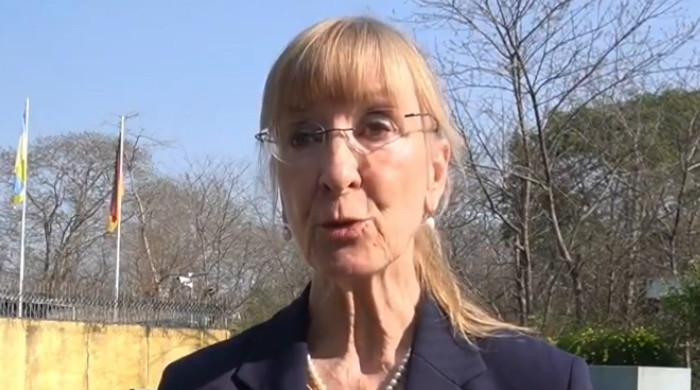
German Ambassador to Pakistan Ina Lepel has said that Ukrainians are defending the freedom not only of Germany but also of the entire of Europe.
In her message on the fourth anniversary of the Russian invasion, the ambassador said that four years ago, on February 24, 2022, Russia launched an unprovoked and full-scale invasion against Ukraine, which was a blatant violation of international law.
“Even four years later, Ukraine’s military and people are continuing their resistance against the invaders,” she said.
“Ukraine’s brave soldiers and citizens are defending their freedom and sovereignty against a ruthless enemy that wishes to revive the colonial system of the past.”
In this way, she said, they are also defending the freedom of Germany and Europe as a whole. Because we do not know who the next victim of the Russian President’s aggression will be.
“This is the reason why supporting the freedom-loving and brave people of Ukraine in their war of resistance against the colonial system is in our fundamental interest.”
Ukraine, on February 24 (today), marked the fourth anniversary of Russia’s full-scale invasion, with a show of solidarity from its staunchest allies and no immediate end in sight to Europe´s bloodiest conflict since World War II.
Tens of thousands of lives have been lost since the Kremlin ordered troops into Ukraine on February 24, 2022, confident of a quick victory but not expecting the fierce resistance that followed.
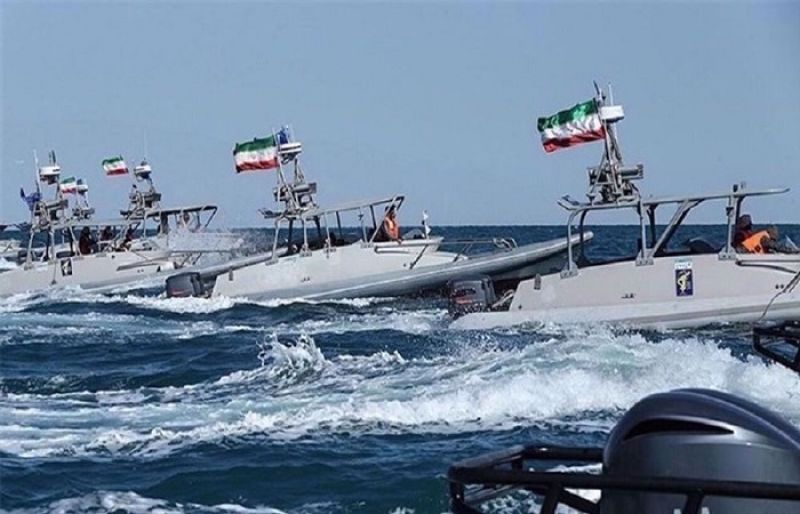
The Islamic Revolution Guards Corps (IRGC) Navy says the management of the Strait of Hormuz has entered a new stage.
The IRGC Navy made the announcement in a post on its social media account on Friday, two days after a temporary Pakistan-mediated ceasefire went into force between Tehran and Washington following the failure of the US and Israel to achieve their objectives after 40 days of war against the Iranian nation.
“The two days of silence in military battle clearly showed to friends and enemies that the management of the Strait of Hormuz has entered a new phase,” it said.
The announcement echoed Thursday’s remarks by Leader of the Islamic Revolution Ayatollah Seyyed Mojtaba Khamenei, who said Iran will “take the management of the Strait of Hormuz to a new stage.”
The United States and the Israeli regime launched their illegal act of aggression against Iran on February 28, but the Iranian armed forces responded by launching 100 waves of missile and drone operations targeting locations in the Israeli-occupied territories as well as US military bases and assets across the region.
Iranian forces also blocked the Strait of Hormuz to oil and gas tankers affiliated with the adversaries and those cooperating with them in an attempt to maintain security at the strategic waterway.
The US sought to form a coalition to open the strategic waterway, asking NATO countries to contribute naval and air assets. However, most of Washington’s allies have declined to commit forces.
Additionally, on Friday, South Korea’s Foreign Ministry said the country will send a special envoy to Iran to examine the situation in West Asia amid conflicting reports about the reopening of the Strait of Hormuz.
It added that the decision had been taken during a telephone conversation between top top Iranian and South Korean diplomats.
Meanwhile, Hamid Hosseini, spokesman for the association of Iranian oil product exporters said that the acceptance of Iran’s proposed provisions about the security and legal regime of the Strait of Hormuz as part of the truce agreement can be one of the most important diplomatic achievements in recent decades.
The strait was previously open, but now some international analysts believe that new conditions could benefit Iran, Hosseini noted.
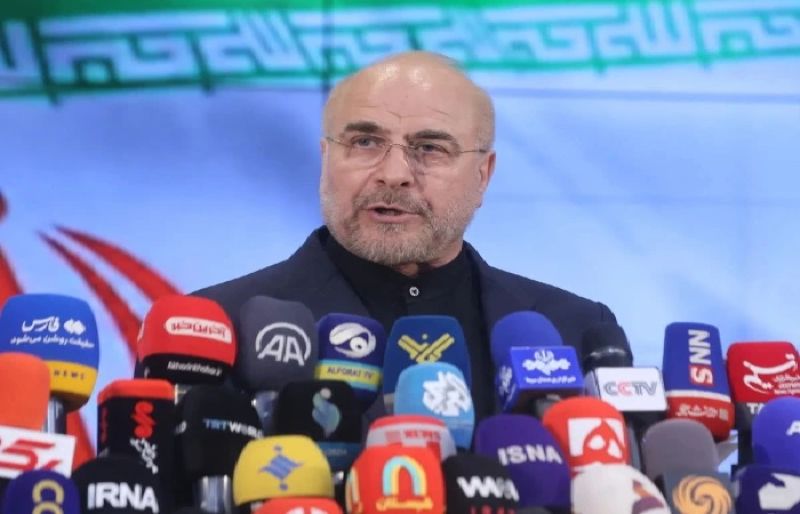
Iranian Parliament Speaker Mohammad Baqer Qalibaf says a ceasefire in Lebanon and the release of Iran’s blocked assets are requisite to the commencement of negotiations with the United States in the Pakistani capital of Islamabad.
Qalibaf made the remark in a post on his X account on Friday as Tehran and Washington are scheduled to hold a fresh round of talks in Islamabad on Saturday to effectively put an end to the war jointly launched by the US and Israel against the Islamic Republic late last month.
The negotiations come after the United States and Iran agreed on Wednesday to a Pakistan-brokered two-week ceasefire following Washington’s acceptance of a 10-point proposal from Tehran.
The top Iranian parliamentarian said there are two measures agreed upon by both sides which have not been implemented yet.
He emphasized that “a ceasefire in Lebanon and the release of Iran’s blocked assets” are conditions to the commencement of negotiations.
“These two matters must be fulfilled before negotiations begin,” Qalibaf pointed out.
Earlier on Friday, a high-ranking security source told Press TV that intense pressure and the threat to withdraw from talks with the United States in Islamabad from Tehran forced the Israeli regime to stop its military attacks on the Lebanese capital, Beirut.
According to the source, following the Zionist regime’s brutal aggression on Lebanon on Wednesday, Iran made the cessation of those attacks a firm precondition for its participation in temporary ceasefire negotiations with the United States.
He hastened to add that the travel of an Iranian delegation to Islamabad was delayed a few times, specifically due to the continued Israeli aggression against Lebanon.
The comments came after the Israeli regime carried out extensive attacks across Lebanon, killing at least 303 people and injuring more than 1,150. The regime said its aggression on Lebanon, which started concurrent with the joint US-Israeli aggression on Iran in late February, does not count as part of the ceasefire deal announced by Pakistan.
That comes as Pakistani Prime Minister Shahbaz Sharif said in a post on the X platform early on Wednesday that Iran and the US and their allies had agreed to “an immediate ceasefire everywhere including Lebanon and elsewhere”.
Meanwhile, Iranian Deputy Foreign Minister for Political Affairs Majid Takht Ravanchi also said on Friday that the upcoming negotiations with the United States in Pakistan will be based on the 10-point ceasefire plan proposed by Iran.
He added that Iran pursues a “responsible” approach to the declaration of the ceasefire, adding, “It has been agreed that Iran’s 10-article plan will be the basis for negotiations.”
- US VP Vance tells Iran not to ‘play’ US at Pakistan talks.
- Israeli strikes across southern Lebanon continue on Friday.
- Talks won’t start until US fulfil previous demands: Iran.
Iran said on Friday that blocked Iranian assets must be released and that a ceasefire must take hold in Lebanon before peace talks can proceed, throwing last-minute doubt over negotiations scheduled for Saturday in Pakistan.
Iran’s parliament speaker Mohammad Baqer Qalibaf said on X that the two measures had been previously agreed with the US and warned that negotiations would not start until they are fulfilled.
There was no immediate comment from the White House.
Earlier, Vice President JD Vance, who will lead the US delegation, set off for the talks in Pakistan saying he expected a positive outcome. But “if they’re going to try to play us, then they’re going to find the negotiating team is not that receptive”, Vance added.
Iran has been unable to obtain tens of billions of dollars of its assets in foreign banks, mainly from exports of oil and gas, due to US sanctions on its banking and energy sectors.
Tenuous truce
US President Donald Trump announced a two-week ceasefire in the six-week war on Tuesday, just hours before a deadline after which he had threatened to destroy Iran’s civilisation.
However, the truce is tenuous with Israel’s continuing bombardment of Lebanon and the ongoing closure of the Strait of Hormuz proving key sticking points for both sides.
The ceasefire has halted the campaign of US and Israeli air strikes on Iran. But it has so far done nothing to end the blockade of the strait, which has caused the biggest-ever disruption to global energy supplies, or to calm a parallel war waged by Israel against Iran’s Hezbollah allies in Lebanon.
Iran was doing a “very poor job” of letting oil through the strait, US President Donald Trump said in a social media post. He also warned Tehran against trying to collect fees from ships crossing it. “That is not the agreement we have!”
Israel has also said that its parallel campaign against Hezbollah in Lebanon was not part of the agreed ceasefire.
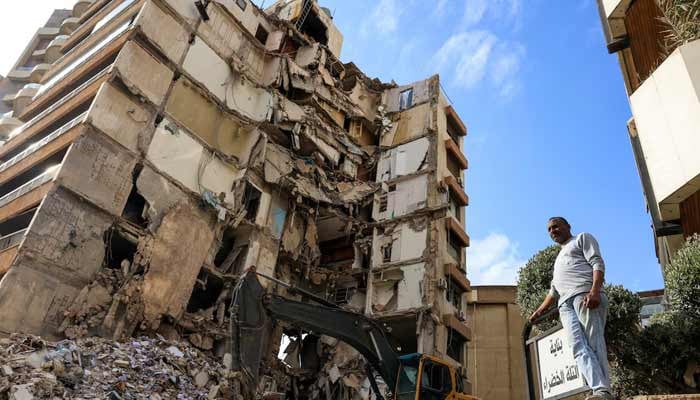
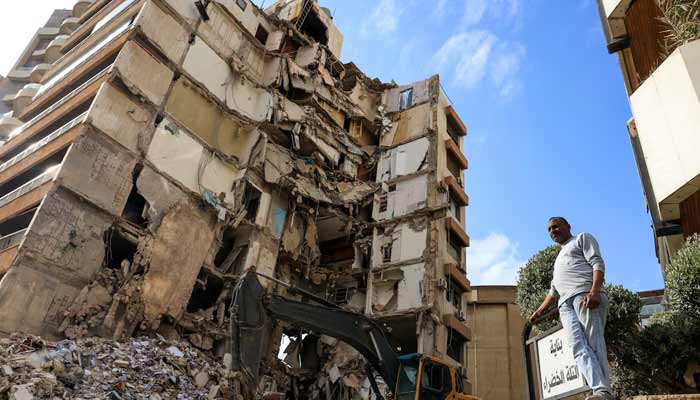
Israeli strikes continued across southern Lebanon on Friday, with more than a dozen people reported killed in various towns. One strike killed eight members of Lebanese state security forces, the country’s state media said.


Frankie Muniz remembers meeting Bryan Cranston for first time

Scottish golfer Robert MacIntyre flashes lewd gesture at Masters

How ‘Euphoria’ affected Zendaya, Jacob Elordi, Sydney Sweeney’s careers

-
 Business1 week ago
Jaguar Land Rover sees sales recover after cyber attack
-
Uncategorized1 week ago
[CinePlex360] Please moderate: “Trump signals p
-

 Entertainment1 week ago
Joe Jonas shares candid glimpse into parenthood with Sophie Turner
-

 Tech1 week ago
Our Favorite iPad Is $50 Off
-

 Sports7 days ago
UConn Final Four run could trigger a $50M furniture giveaway for Massachusetts-based Jordan’s Furniture
-
 Business1 week ago
Video: Why Is the Labor Market Stuck?
-

 Entertainment1 week ago
Blake Lively reacts to harassment claims dismissal against Justin Baldoni
-
 Politics1 week ago
Iran can sustain Strait of Hormuz closure for years, will cut US military logistics: Official