

Entertainment
Operation Epic Fury uses AI battlefield management to hit hundreds of targets in hours


A Pentagon AI programme called Project Maven is at the centre of the US strikes against Iran and potentially one of the most consequential transformations of modern warfare.
What is it?
Project Maven is the Pentagon’s flagship artificial intelligence program, launched in 2017 as a narrow experiment to help military analysts make sense of the torrent of drone footage pouring in from conflict zones.
Operators were drowning in imagery, searching frame by frame for objects of interest that might appear for only a moment before vanishing. Maven was built to find the needle in the haystack.
Eight years later, the program has evolved into something far more expansive: an AI-assisted targeting and battlefield management system that has vastly accelerated what is known in war-making as the kill chain — the process from initial detection to destruction.
How does it work?
Maven functions like both the air traffic control of battle and its cockpit.
Aalok Mehta, director of the CSIS Wadhwani AI Center, described the system as “essentially an overlay” that fuses sensor data, enemy troop intelligence, satellite imagery, and information on troop deployment.
In practice, that means rapidly scanning satellite feeds to detect troop movements or identify targets, while also “taking a snapshot of the operational theater” to determine the best course of action for striking a specific target.
In a recent demonstration posted online, a Pentagon official described how Maven “magically” turns an observed threat into a targeting workflow, weighing available assets and presenting a commander with options.
The emergence of ChatGPT was another leap forward, broadening the use of the technology to a far greater range of users who can interact with Maven in natural language.
For now, this capability is supplied by Anthropic’s Claude — though that arrangement is coming to a bitter end after the Pentagon bristled at the AI lab’s demand that its model not be used for fully automated strikes or the tracking of US citizens.
Why did Google say no?
The ethical question was a factor in Maven’s early years, when Google was the program’s original AI contractor.
In 2018, more than 3,000 employees signed an open letter protesting the company’s involvement, arguing that the contract crossed a line. Several engineers resigned.
Google declined to renew when the contract expired, and subsequently published AI principles explicitly ruling out participation in weapons systems.
The episode exposed a fault line in Silicon Valley between engineers who viewed autonomous targeting as an ethical red line and defense officials who saw it as essential.
More recently, Google removed its AI policy restrictions and said it is leaning further into national security work. The Pentagon has said that Google, along with xAI and OpenAI, are in the mix to replace Claude in Maven.
What is Palantir’s role?
In 2024, Palantir — founded in part with CIA seed funding and built from the start around government intelligence work — stepped into the space Google vacated.
The company has reportedly become Maven’s primary technology contractor, and its AI now forms the operational backbone of the program.
Palantir CEO Alex Karp frames the stakes explicitly.
“This is a have, have-not world,” he said at a recent Palantir event, arguing that it was important for the West to achieve capabilities the rest of the world lacked.
A system that compresses a kill chain from hours to seconds makes an adversary obsolete, he said.
How has it fared?
The Pentagon and Palantir declined to comment on Maven’s performance in the current war with Iran.
US strikes have been carried out at a sustained pace, and it can be assumed that Maven’s ability to speed up the targeting and firing process has played a central role.
According to the Centre for Strategic and International Studies, after three weeks, the US strike campaign settled into a pace of between 300 and 500 targets per day.
In the first 24 hours of Operation Epic Fury, US forces struck over 1,000 targets, including a school housed in a building previously used as a military complex, according to various media reports. Iran has said the attack killed 168 children aged seven to 12 and wounded many other people.

Jack Black has added another feather to his cap with his latest Saturday Night Live appearance.
Hitting a new milestone, the Kung Fu Panda star joined the show’s Five-Timers Club, an honour reserved for hosts who have appeared five times.
The newly minted five-timer was inducted into the aristocratic SNL club by a cavalcade of elites, with cameos from Jonah Hill, Tina Fey, Candice Bergen and Melissa McCarthy.
Moreover, the Jumanji: Welcome to the Jungle actor’s monologue turned into a surprise musical performance of Seven Nation Army as he teamed up with Jack White.
After Black’s successful induction, White entered the scene for a reworked rendition of the signature 2003 single by The White Stripes, featuring altered lyrics referencing the Five-Timers Club and the night’s episode, while maintaining the song’s iconic guitar riff.
The latest episode comes after the NBC comedy sketch series released a promo on Wednesday, April 1, with the 56-year-old actor and comedian filming a “Get Ready With Me” vertical video before hosting SNL.
“The musical guest is my brother from another color, Jack White,” the similarly named Grammy winner quips before breaking out into an air guitar solo. “And because I’m hosting the show for the one, two, three, four — count ’em — fifth time!”
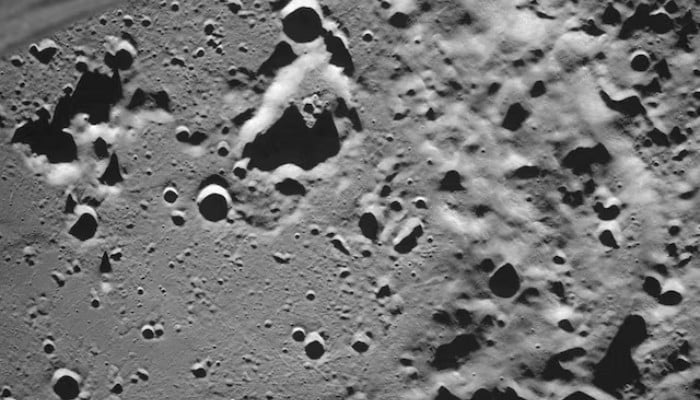
More than 50 years after humans first flew around the Moon, Artemis astronauts will repeat the feat on Monday and use the most basic instrument to study it: their eyes.
Despite the technological advancements since the Apollo missions, Nasa still relies on the eyesight of its astronauts to learn more about the Moon.
“The human eye is basically the best camera that could ever or will ever exist,” Kelsey Young, the lead scientist for the Artemis 2 mission, told AFP.
“The number of receptors in the human eye far outweighs what a camera is able to do.”
Although modern cameras may be superior to human eyesight in some respects, “the human eye is really good at color, and it’s really good at context, and it’s also really good at photometric observations,” Young said.
Humans can understand how lighting changes surface details, like how angled lighting reveals texture but reduces visible color.
In just the blink of an eye, humans can detect a subtle color shift and understand how lighting changes the contours of a landscape like the Moon’s surface, details which are scientifically useful but difficult to ascertain from photos or videos.
Artemis 2 astronaut Victor Glover, who pilots the Orion spacecraft, said before liftoff this week that eyes were a “magical instrument.”
Field scientists
To ensure they made the most of their proximity to the Moon, the four Artemis 2 crew members underwent more than two years of training.
Young said the goal was to turn the astronauts into “field scientists” via a combination of classroom lessons, geological expeditions to Iceland and Canada, and multiple simulated flybys of the Moon, just like the mission they are on.
The three American astronauts — commander Reid Wiseman, pilot Glover, and mission specialist Christina Koch — along with Canadian astronaut Jeremy Hansen, all had to memorise the Moon’s “Big 15,” or the 15 features of the Moon that will allow them to orient themselves.
Using an inflatable Moon globe, they practiced seeing how the angle of the sun changed the colors and textures of the lunar surface, honing their observation and note-taking skills for the big moment.
“I can tell you, they are excited and they are ready,” Young said with a smile.
‘About the size of a basketball’
The Artemis astronauts’ mission is to study certain lunar sites and phenomena as part of 10 objectives chosen by Nasa and ranked in priority order based on scientific interest.
During the Moon flyby, which will last for several hours, the crew will have to observe the celestial body with their naked eyes, along with cameras they have on board.
Noah Petro, head of Nasa’s planetary geology lab, told AFP that the Moon will look to the astronauts “about the size of a basketball held at arm’s length.”
“The question I’m most interested in is, are they going to be able to see color on the lunar surface,” Petro said.
“I don’t mean rainbow colors, but you know, dark browns or tan colors because that tells us something about the composition, and that tells us something about the history of the Moon.”
David Kring of the Lunar and Planetary Institute told AFP he is not expecting any earth-shattering discoveries because of the multiple lunar probes and high-resolution images of the Moon taken since the Apollo missions.
Nevertheless, “having astronauts describing what they’re seeing… That is an occurrence that at least two generations of people on Earth have never heard before,” he said.
The Artemis 2 flyby will be broadcast live by Nasa, save for a period for when the spacecraft is behind the moon.
“Just listening to their practice descriptions in the mission simulations… It brings chills up my arms,” Young said.
“I am absolutely confident that these four people are going to deliver some incredible descriptions.”
- Astronauts take photographs to document trip.
- Crew sees far side of Moon from new vantage.
- Mission could take humans farther than ever before.
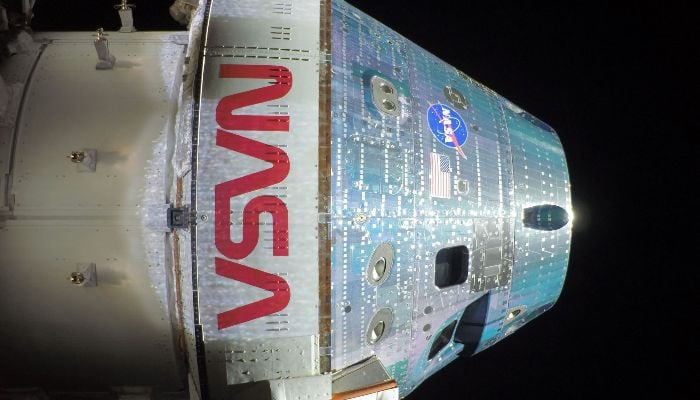
HOUSTON: The Artemis astronauts were gearing up Saturday for their long-anticipated lunar flyby, including reviewing the surface features they must analyse and photograph during their time circling the Moon.
Upon waking around 1635 GMT on Saturday, the astronauts were approximately 169,000 miles (271,979 kilometres) from Earth, and approaching the Moon at 110,700 miles (178,154 kilometres), according to Nasa.
The next major milestone of the approximately 10-day journey is expected overnight Sunday into Monday, at which point the astronauts will enter the “lunar sphere of influence” — when the Moon’s gravity will have stronger pull on the spacecraft than Earth’s.
If all proceeds smoothly, as Orion whips around the Moon the astronauts could set a record by venturing farther from Earth than any human before.
The astronauts kicked off their day with a meal that included scrambled eggs and coffee, Nasa said, and had woken up to the tune of Chappell Roan’s pop smash “Pink Pony Club.”
“Morale is high on board,” commander Reid Wiseman told Houston’s Mission Control Centre as the space crew’s work day began.
The father of two girls was in high spirits in part because he had the chance to speak with his daughters from space.
“We’re up here, we’re so far away, and for a moment, I was reunited with my little family,” he told a live press conference. “It was just the greatest moment of my entire life.”
Wiseman along with fellow Americans Christina Koch and Victor Glover as well as Canadian Jeremy Hansen are on a historic journey around the Moon, which they’re soon due to slingshot around.
It’s a feat Wiseman has dubbed “Herculean” and which humanity has not accomplished in more than half-a-century.
Later on Saturday, Glover was due to perform a manual piloting demonstration to provide Nasa with more data regarding the spacecraft’s performance in deep space.
After that, the crew was planning to go over their checklist for documenting their experience travelling around the Moon.
The astronauts have had geology training in order to be able to photograph and describe lunar features, including ancient lava flows and impact craters.
They’ll see the Moon from a unique vantage point compared with the Apollo missions of the 1960s and 70s.
Apollo flights flew some 70 miles above the lunar surface, but the Artemis 2 crew will be just over 4,000 miles at their closest approach, which will allow them to see the complete, circular surface of the Moon, including regions near both poles.
Never before seen
But the Artemis 2 astronauts have already seen brand-new perspectives.
“Last night, we did have our first view of the moon far side, and it was just absolutely spectacular,” Koch, the mission specialist, said during a live interview from space.
John Honeycutt, manager of Nasa’s SLS (Space Launch System) program, shared at a briefing Saturday a new image transmitted by the astronauts.
“On the far left, you can see features of the Moon that have never been seen by human eyes until yesterday,” Honeycutt said, explaining that only robotic imagers had previously “seen” that region.
The Artemis 2 crew has been busy taking photographs including with smartphones, devices Nasa recently approved to take aboard spaceflights.
The space agency had previously released images from Orion that included a full portrait of Earth, featuring its deep blue oceans and billowing clouds.
But the space toilet has remained a chronic problem, and the astronauts have on occasion been directed to use their back-up urinal bags.
An attempted wastewater dump to funnel urine into space failed, Nasa said, likely due to a blockage because of ice. Troubleshooting of the problem is ongoing.
The Artemis 2 mission is part of a longer-term plan to repeatedly return to the Moon, with the goal of establishing a permanent lunar base that will offer a platform for further exploration.
It’s a highly anticipated journey that demands exacting precision — but there’s still room for the astronauts to live out their childhood dreams of spaceflight.
“It just makes me feel like a little kid,” said Hansen recently, describing the joy of floating.


Transfer rumors, news: Fernandes to urge Man United to sign Portugal teammate

With One Million Displaced, Lebanon Turns to Digital Wallets for Aid

‘Humiliating defeat’: Iran destroys several US warplanes on mission to retrieve missing pilot

-
 Business1 week ago
How do you spot a fake online review?
-

 Sports1 week ago
USMNT handed reality check by Doku, Belgium ahead of World Cup
-

 Sports1 week ago
Illinois defense gets tough, ousts Houston to reach Elite Eight
-

 Entertainment1 week ago
Lee Sang-bo dies at 45: Funeral details revealed
-

 Sports1 week ago
2026 NCAA men’s hockey tournament: Schedule, results
-

 Fashion1 week ago
China rolls out tariff cuts on Congo imports from April 1
-

 Fashion1 week ago
EU apparel imports slump 15.48% YoY in Jan; Bangladesh hardest hit
-
Uncategorized6 days ago
[CinePlex360] Please moderate: “Further tariff