

Entertainment
Opportunity or missed moment?

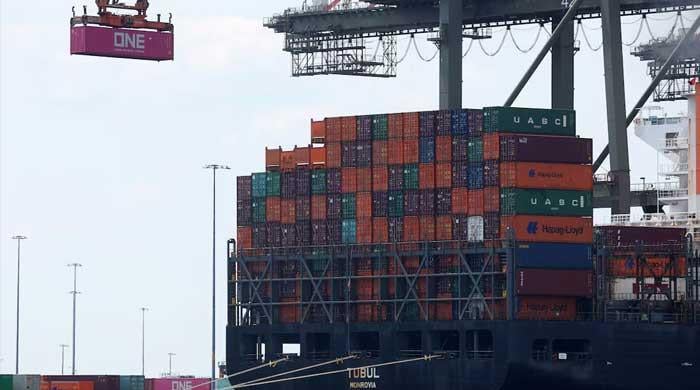
It is easy to forget that the European Union is not just a remote bloc of 27 countries but Pakistan’s second-largest trading partner and, by far, our single biggest export destination.
In 2023, bilateral trade between Pakistan and the EU hovered around 12 billion euros, with Pakistani exports benefitting from preferential access under the EU’s Generalised Scheme of Preferences Plus (GSP+). For many exporters in Sialkot, Faisalabad and Karachi, Europe is not a distant market but a lifeline.
Yet despite this heavy reliance, our economic relationship remains narrow and transactional. It is dominated by a handful of sectors and beset by compliance costs as European regulations on environment, labour and product safety become ever more stringent. Investment flows from Europe remain modest, and Pakistani companies have done little to integrate themselves into EU value chains beyond basic manufacturing.
If Pakistan is serious about diversifying its exports, attracting sustainable foreign direct investment and retaining its place in European markets, it must move beyond ad hoc lobbying and embrace a deeper, more structured conversation with Brussels and with European business. That is precisely what the EU-Pakistan Business Forum was conceived to do.
The forum, sometimes referred to as the EU-Pakistan Business Network or EU-PKBF, was designed as a high-level platform to bring together government, private sector, and institutional actors from both sides. Its goal: strengthen economic ties, stimulate investment and foster constructive dialogue on trade, regulatory and sectoral challenges.
The inaugural high-level edition was planned for May 2025 under the theme ‘Stronger Together’, with plenary sessions on trade and investment, sectoral breakouts on agribusiness, technology and green logistics, and direct B2B and B2G matchmaking. It also envisioned the launch of an EU-Pakistan Business Network to serve as a continuous bridge between European companies and their Pakistani counterparts. Although the event has been postponed due to geopolitical tensions, the concept behind it remains sound and urgent.
Why does this matter? Because such a forum can serve multiple functions simultaneously. First, it provides a structured policy interface where Pakistani exporters and European importers can voice real-time challenges around customs, standards, digital trade or sustainability requirements. This helps regulators on both sides prioritise reforms and align rules, rather than letting businesses bear the cost of misalignment.
Second, by pre-identifying bankable projects and investment opportunities, the forum can transition from discussion to actual deal-making and joint ventures. Third, through its proposed business network, it can institutionalise continuity, track progress and advocate for reforms long after the closing ceremony. And fourth, it offers a stage to showcase innovation and priority sectors, green technologies, digital services, logistics, agribusiness and the circular economy, where Pakistan can move up the value chain and plug into the EU’s future growth areas.
In other words, the forum is not just another conference; it is a potential fulcrum for turning a transactional relationship into a strategic partnership. But potential is not the same as impact. To realise these benefits, Pakistan must prepare seriously.
That preparation starts with substance. Bankable projects need to be packaged with clear financials, risk profiles and investor protections, ideally linked to EU instruments like Global Gateway or the European Fund for Sustainable Development. Our exporters must understand and plan for forthcoming EU regulations, from carbon border adjustments to due diligence requirements, and use the Forum to co-design transition pathways.
The government should set up a joint secretariat or task force with chambers of commerce and the EU delegation to ensure that recommendations are monitored and implemented. Participation must be inclusive, extending beyond big capital to SMEs, provinces and underserved regions, so that gains are broad-based rather than captured by a few.
We also need to reframe how we talk about Europe. Too often, Pakistani commentary on the EU is reactive, focusing on conditionalities attached to GSP+ or resolutions on human rights. Yet those conditionalities are not going away; in fact, they will intensify as Europe embeds sustainability and rights-based due diligence into its trade policy.
The question is whether Pakistan uses a forum like EU-PKBF to shape those expectations in a way that is realistic for our firms, or whether we allow ourselves to be blindsided by rule changes announced from Brussels. This is particularly relevant in sectors like textiles, where carbon accounting, chemical restrictions and circularity requirements are becoming the norm. If Pakistani firms cannot meet these evolving standards, they will be excluded despite preferential tariffs.
There are, of course, risks beyond regulation. Geopolitical volatility has already derailed one planned event. Implementation gaps, regulatory ambiguity and domestic instability could reduce the Forum to a talk shop. The EU has made it clear that GSP+ benefits hinge on continued progress in human rights, labour rights and media freedom; policy drift could jeopardize access to European markets. For Brussels, consistency on rights is now part of commercial policy. For Islamabad, that should be a cue to take reforms seriously, not an excuse to disengage.
None of these obstacles is insurmountable. In fact, they are precisely why a structured, high-profile platform matters. The EU-Pakistan Business Forum can help both sides confront uncomfortable truths in a businesslike setting: Europe needs stable, diversified suppliers in an era of geopolitical de-risking; Pakistan needs market access, investment and technology transfer to climb the value chain. If executed with strategic rigour and sustained follow-through, the Forum can elevate bilateral engagement from opportunistic trade to a genuine economic partnership, facilitate new investment flows and innovation linkages, help Pakistan diversify its exports and align with global sustainability norms, and provide a credible mechanism for structured public-private cooperation.
The opportunity is larger than commerce. A vibrant EU-Pakistan business corridor can serve as a counterweight to overdependence on a single geography, enhance our negotiating leverage with other partners and signal to investors that Pakistan is committed to reform and connectivity. It can also anchor dialogue on issues like digital trade, renewable energy, gender inclusion in supply chains and skills development, all areas where European firms bring experience and Pakistan brings scale.
But the keyword is ‘can’. Forums do not transform economies; people and policies do. To make the EU-Pakistan Business Forum more than a symbolic gesture, Islamabad will need to treat it not as a photo-op but as part of a larger economic statecraft strategy, one that links regulatory reform at home to market access abroad and embeds business diplomacy into our foreign policy. Brussels, for its part, will need to see Pakistan not merely as a compliance case but as a partner capable of contributing to European objectives on sustainability, connectivity and diversification.
In a period of economic uncertainty and geopolitical flux, Pakistan cannot afford to let this opportunity slip into symbolism. The EU-Pakistan Business Forum presents an opportunity to transform trade into a genuine partnership. If we seize it with preparation, openness and a clear narrative of reform, it can become a durable pillar of Pakistan’s economic diplomacy. If we treat it as yet another event on the calendar, it will fade into the long list of missed opportunities. The choice and the responsibility are ours.
Disclaimer: The viewpoints expressed in this piece are the writer’s own and don’t necessarily reflect Geo.tv’s editorial policy.
The writer is a public policy expert and leads the Country Partner Institute of the World Economic Forum in Pakistan. He tweets/posts @amirjahangir and can be reached at: [email protected]
Originally published in The News
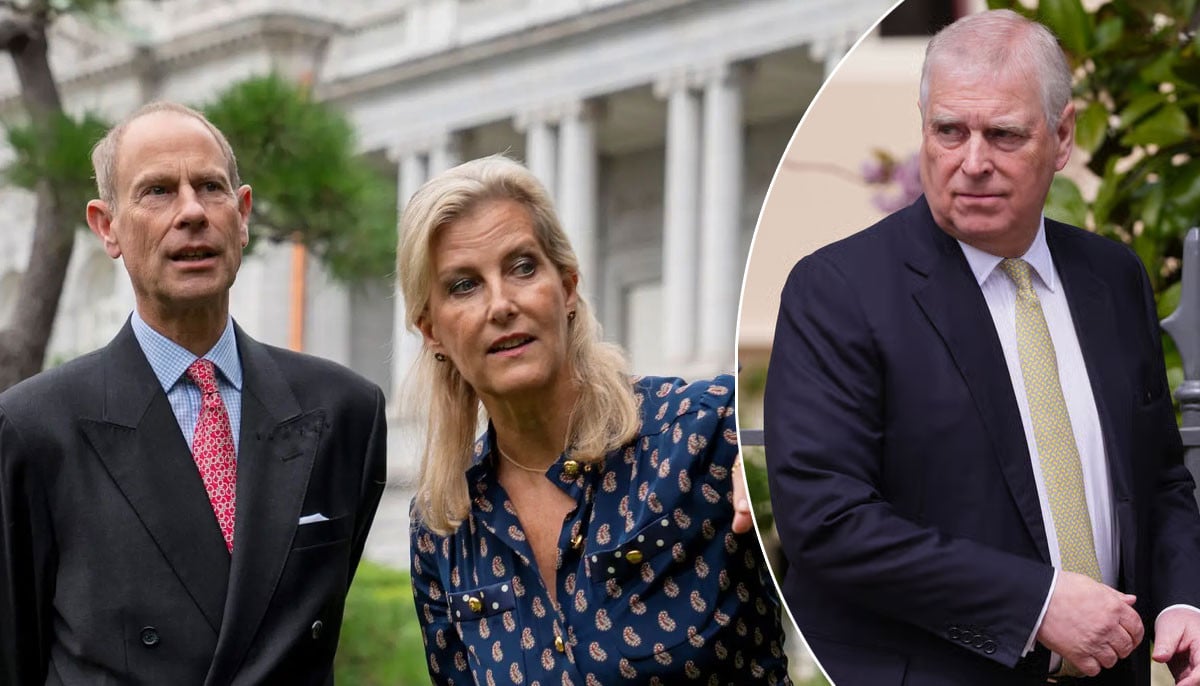
Andrew Mountbatten-Windsor have been living in exile for the past two months ever since he had been kicked out of his Windsor property, Royal Lodge, per King Charles’s orders.
Members of the royal family had publicly maintained their distance from the disgraced ex-prince, but in a surprising turn of events, Prince Edward and Duchess Sophie were the first ones to approach Andrew.
The former Duke of York has been living in Sandringham since it is a privately-owned estate by Charles, to avoid any further uproar from taxpayers. Before he officially moved into Marsh Farm, Sophie and Edward visited his temporary accommodation Wood Farm to do a “welfare check”.
It was previously reported that there were some grievances as the Duke and Duchess of Edinburgh were forced to stay at the main house since Andrew was occupying Wood Farm – the holiday let for royals during Easter and other key events.
However, royal sources dismissed to Daily Mail that there was any tension between Edward and Andrew over accommodation.
Duchess Sophie and Prince Edward reportedly had dinner with Andrew one night and talked things through. They “feel sorry” for him and how things have gone downhill for him. Moreover, they expressed concerns about Andrew’s “fragile state of mind” due to recent events.
“They do feel for him, but of course that doesn’t excuse his behaviour,” the source stressed. “It’s a difficult balancing act supporting him while not condoning what he has got involved with.”
Edward has tried to make tried to talk sense into him and has pointed out that Andrew can never return to the royal fold. Only time will tell if Andrew has understood everything briefed to him or if he remains in a delusion.
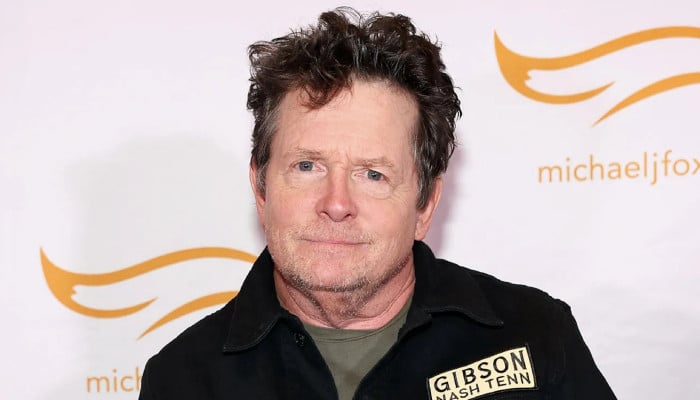
Michael J. Fox’s representative has been forced to shut down a false death rumour after a new outlet accidentally published a tribute video suggesting the actor had died.
“Michael is doing great,” his rep told TMZ on 8 April. “He was at PaleyFest yesterday. He was on stage and was giving interviews.”
CNN published a video titled “Remembering the life of actor Michael J. Fox” before quickly taking it down.
A spokesperson for the network confirmed the mistake, telling TMZ: “The package was published in error; we have removed it from our platforms and send our apologies to Michael J. Fox and his family.”
The 64-year-old had in fact been very much in the public eye the day before, attending the Shrinking season three finale screening at PaleyFest in Los Angeles on 7 April.
Fox, who was diagnosed with Parkinson’s disease in 1991 and has been open about his ongoing battle with the condition, spoke to PEOPLE in October about his approach to living with it.
“You take the good, and you seize it,” he said. “I wake up and get the message of what the day is gonna be like, and I try to adjust to it. I keep getting new challenges physically, and I get through it. I roll around in a wheelchair a lot, and it took some getting used to.”
He shares four children with his wife Tracy Pollan, 65.
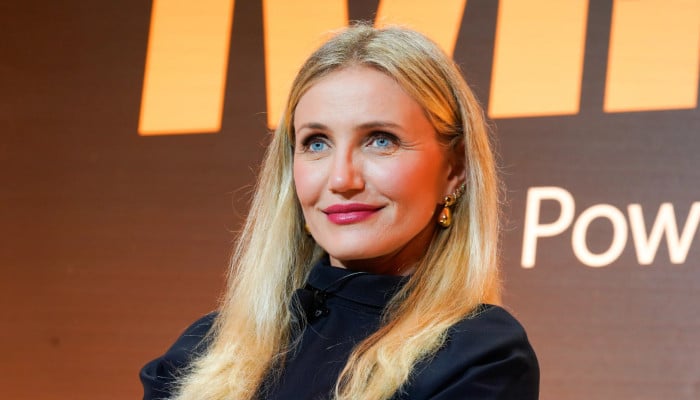
Cameron Diaz is adding another major project to her growing list of comeback roles, this time bringing a beloved 1989 cult comedy back to the big screen.
TriStar Pictures is developing a sequel to Troop Beverly Hills with Diaz, 53, attached and currently considering starring in the film.
Clea DuVall, 48, will direct and has written the screenplay.
DuVall is known for directing The Intervention and Happiest Season, and recently appeared on screen in last year’s Swiped.
The original Troop Beverly Hills starred Shelley Long as Phyllis, a wealthy Beverly Hills woman who takes over her daughter’s Girl Scout troop as a way of staying close to her during a divorce.
The film was not considered a success when it was released, but it has built a devoted following over the decades and is now widely regarded as a cult classic.
No plot details for the sequel have been shared.
The project adds to what has become a remarkably busy period for Diaz, who returned to screens in 2025 after a decade away with the Netflix action comedy Back in Action alongside Jamie Foxx.
She also stars with Keanu Reeves and Matt Bomer in Jonah Hill’s comedy Outcome, which begins streaming on Apple TV+ on 10 April, and was photographed filming a separate project in New York City in March.
A romantic comedy directed by Stephen Merchant is also in the works, as is an action-comedy titled Bad Day in which she plays a single mother having the worst day of her life.
She is additionally expected to reprise her role as Princess Fiona in Shrek 5 in 2027.


Transfer rumors, news: Liverpool, Real Madrid work on mega midfield swap deal

Apparel imports in France rise to $26.6 bn in 2025

UN attempt to open Strait of Hormuz fails at Security Council vote

-
Uncategorized7 days ago
[CinePlex360] Please moderate: “Trump signals p
-
 Business7 days ago
Jaguar Land Rover sees sales recover after cyber attack
-

 Entertainment6 days ago
Joe Jonas shares candid glimpse into parenthood with Sophie Turner
-

 Tech6 days ago
Our Favorite iPad Is $50 Off
-
 Fashion1 week ago
China’s Anta Sports posts record $11.62 bn revenue in 2025
-
 Politics6 days ago
Iran can sustain Strait of Hormuz closure for years, will cut US military logistics: Official
-

 Sports5 days ago
UConn Final Four run could trigger a $50M furniture giveaway for Massachusetts-based Jordan’s Furniture
-

 Entertainment5 days ago
Blake Lively reacts to harassment claims dismissal against Justin Baldoni