

Business
Over 700,000 graduates out of work and on benefits, analysis suggests


More than 700,000 university graduates are out of work and claiming welfare benefits, new analysis by a think tank suggests.
The Centre for Social Justice (CSJ) said 400,000 graduates were not in work and claiming Universal Credit, according to the latest statistics.
There were 240,000 graduates who said they could not work due to health reasons, the think tank said, with that figure having more than doubled since 2019.
The government says it is investing money in getting young people into work, and has commissioned a review into “what’s holding the younger generation back”.
The CSJ used the Office for National Statistics’ Labour Force Survey, in combination with data from the Department for Work and Pensions, to analyse figures from before and after the Covid pandemic.
It said 707,000 graduates aged 16 to 64 were out of work and claiming one or more benefits in 2024, an increase of more than 200,000 – or 46% – since 2019.
The number of those claiming Universal Credit was 400,000, while almost 240,000 of the 700,000 said they were off work due to sickness – a figure which has more than doubled from 117,000 since 2019, the CSJ said.
Universal Credit is a means-tested benefit and aims to help with living costs for people of working age who are on a low income, out of work, or unable to work.
About 8.3 million people claimed the benefit in October 2025, according to government figures.
The CSJ, which was founded by Conservative MP Sir Iain Duncan Smith, said about 110,000 graduates under the age of 30 now claim at least one benefit without being in work.
The latest graduate labour market statistics, published in June, suggest 88% of working-age graduates in England were in employment in 2024. The figure for non-graduates was 68%.
But Sir Iain said the out-of-work figures showed the consequences of an education system “obsessed” with university, which he said overlooked vocational training and a changing job market.
The CSJ said in its report that one in three British students on a university course receive vocational training.
It also said level four apprentices earn £5,000 more on average than university graduates after five years.
Daniel Lilley, a senior researcher with the CSJ, said young people needed to be given “the opportunity to succeed and fuel key industries with the domestic skills they need to grow”.
A government spokesperson said: “Graduate inactivity is at its lowest rate on record, but we’re determined to go further to support young people into work and gain the skills they need to succeed.
“Through our new Jobs Guarantee, we’re helping young people who are out of work find paid placements, with employers such as E.ON, JD Sports, Tesco and TUI having already pledged their support.
“We’re investing £1.5bn to get hundreds of thousands of young people earning or learning, including through an expansion of apprenticeships and training.
“We’ve also commissioned the former Health Secretary Alan Milburn to lead a review to get to the root of what’s holding the younger generation back, because we believe in tackling this complex issue with urgency.”

Prices of gold and silver witnessed a significant increase in both the global market and Pakistan’s local bullion market, reflecting continued volatility in precious metals.
According to market data, the price of one tola of gold surged by Rs15,200, reaching Rs479,262, while the rate for 10 grams of gold increased by Rs13,031 to settle at Rs410,889.
In the international market, gold prices also recorded a substantial rise, climbing by $152 to reach $4,565 per ounce, indicating strong global demand and investor interest in safe-haven assets.
Meanwhile, silver prices followed a similar upward trend, with one tola increasing by Rs370 to reach Rs7,824 in the local market.
Market analysts attribute the rise in prices to ongoing global economic uncertainties and increased demand for precious metals as a hedge against inflation and currency fluctuations.
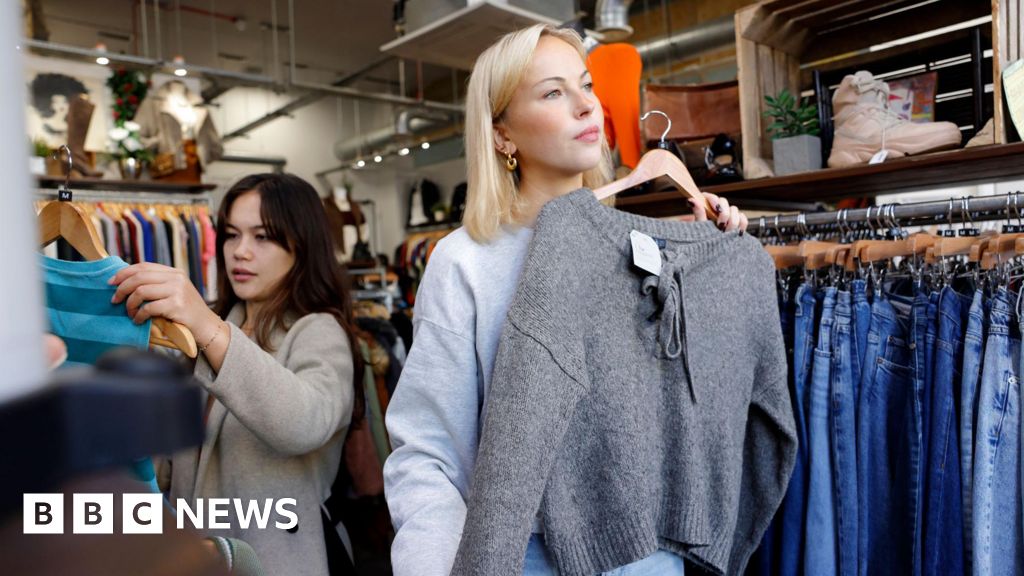
The speed of price rises in the UK has stayed the same, according to data which was collected before the US-Israel war with Iran began.
Source link

Buying continued at the Pakistan Stock Exchange (PSX), with the benchmark KSE-100 Index gaining over 1,700 points during the opening minutes of trading on Wednesday. At 10 am, the benchmark index was at 155,730.37, up 1,764.37 points (1.13%).
Buying interest was observed in key sectors, including automobile assemblers, cement, commercial banks, fertiliser, oil and gas exploration companies, OMCs, power generation, and refinery. Index-heavy stocks, including ARL, HUBCO, PSO, MARI, OGDC, POL, PPL, HBL, MCB, and MEBL traded in the green.
On Tuesday, PSX ended with moderate gains as thin volumes and profit-taking capped the upward momentum despite supportive global cues and easing geopolitical concerns.
The KSE-100 Index closed at 153,966.36 points, gaining 1,225.99 points or 0.80%.
K-Electric led trading volumes with over 35 million shares exchanged, coinciding with the company’s announcement of a new chief executive earlier in the day.
Market heavyweights, including Engro Holdings, Fauji Fertiliser Company, Lucky Cement, Systems Limited, and Hub Power Company, contributed significantly to the index gains, while banking and select industrial stocks weighed on overall performance.
Despite the rebound, analysts noted that the market remained cautious after last week’s decline, which was driven by geopolitical uncertainty, particularly tensions in the Middle East, and concerns over global energy prices.
Experts suggest that future market direction will depend on regional stability, energy policy developments, and progress in ongoing discussions with the International Monetary Fund.
Globally, stocks rose, and oil fell on Wednesday on reports the US is seeking a month-long ceasefire in its war on Iran, and had sent a 15-point plan to Iran for discussion, raising hopes for a resumption of oil exports out of the Persian Gulf.
S&P 500 futures rose 0.9% in the Asian morning, European futures lifted 1.2%, and Brent crude futures fell about 6% to $98.30 a barrel.


USMNT players speak up about what Pochettino the coach is like

Ho Chi Minh City bizs adjust production plans, seek new supply chains

Samsung’s 2 New Midrange Phones Get Price Hikes and Small Updates

-

 Fashion1 week ago
Sales at US apparel, clothing accessories stores up 4% YoY in Jan 2026
-
 Business1 week ago
Peloton is launching bikes and treadmills for gyms, accelerating commercial strategy
-

 Tech1 week ago
Justice Department Says Anthropic Can’t Be Trusted With Warfighting Systems
-

 Fashion1 week ago
Trump signs order to combat fraudulent ‘Made in America’ labels
-
 Business1 week ago
Stocks and pound rise as US rate call approaches
-

 Entertainment7 days ago
Val Kilmer revived 1 year after death through AI
-

 Sports1 week ago
PCB files complaint over allowing Bangladesh to take review on penultimate ball – SUCH TV
-

 Sports7 days ago
March Madness 2026 – How to watch in SA, start time, schedule, TV channel for NCAA championship basketball tournament