Business
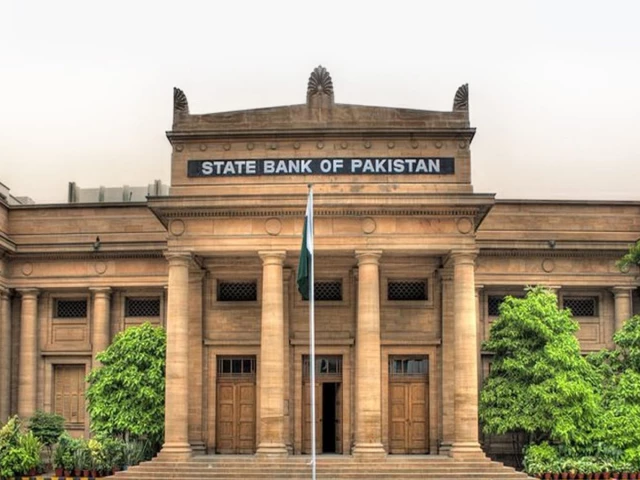
Pakistan gears for $1.3bn Eurobond payoff as IMF talks draw closer – SUCH TV
Pakistan is preparing to repay about $1.3 billion in principal and interest on a maturing Eurobond in April 2026, as negotiations with the International Monetary Fund (IMF) approach under the country’s $7 billion reform programme.
As the IMF review mission prepares to arrive in Pakistan later this month, officials said the delegation will stay in Karachi for a couple of days before moving to Islamabad around March 2, 2026, for key discussions under the $7 billion Extended Fund Facility (EFF).
These talks are expected to focus on fiscal reforms, external financing and progress on structural benchmarks agreed under the program.
Officials indicated that the Ministry of Finance plans to launch Panda bonds shortly after the end of holidays in China in an effort to raise the first tranche of $250 million.
According to sources, there are indications of strong investor interest, with expectations of oversubscription for the bond issuance.
The government, officials said, repaid a $700 million Chinese commercial loan ahead of schedule to demonstrate its repayment capacity, while Chinese banks have reportedly assured refinancing within the ongoing fiscal year.
Pakistan is also engaged in negotiations with international commercial banks to secure an additional $500 million in fresh financing during the current fiscal cycle.
Business
Live: UK inflation falls steeply to 10-mont low prompting hopes of interest rate cut
UK inflation has fallen to 3 per cent, its lowest since last March, prompting hopes that an interest rate cut will follow.
The fall in the Consumer Price Index (CPI) data, published by the Office of National Statistics, follows a surprise rise in December to 3.4 per cent.
It shows a return to the gradual downward trend seen at the end of last year, with analysts estimating it remains on course to hit the government’s 2 per cent target by April.
After this week’s rising unemployment and slowing wage growth data, and a continually weak economy, it is hoped the fall could spur the Bank of England (BoE) to cut interest rates next month when the Monetary Policy Committee convenes to vote on 19 March.
Inflation hit a high of more than 11 per cent in October 2022, and while it has returned to more manageable levels in the past year, the pace has been slower than businesses and households would have liked, resulting in interest rates staying higher for longer.
Falling household bills and the reduction of the energy price cap in April are expected to contribute to bringing CPI inflation back to 2 per cent by spring. Food inflation is also expected to moderate, having been a big contributor to high inflation last year.
Sharp falls in inflation and a cooling economy demands action from the Bank of England, says IPPR
Responding to the latest inflation statistics, William Ellis, senior economist at the Institute For Public Policy Research, said: “Inflation fell sharply to 3 per cent in January – led by slowing transport and food prices – as factors behind the temporary bump in December faded away.
“This is part of a longer-term trend, following a wider cooling in the economy. Inflation is down 0.8 percentage points since September, pay growth has slowed, and unemployment just reached its highest rate in nearly five years.
“Measures announced in the Autumn Budget, such as support on energy bills and fuel duty, will also help to keep inflation down over the coming months.
“Despite this, the Bank of England’s monetary policy stance is removing demand from the UK economy and lowering growth. A further cut to interest rates will be needed in March to improve sluggish economic growth and ensure that inflation doesn’t drop below target.”
Dan Haygarth18 February 2026 10:02
Deloitte: Figures ‘should create room for further interest rate cuts’
Commenting on today’s ONS inflation figures, Debapratim De, director of economic research at Deloitte, said: “The sharp slowing of price rises in January is consistent with expectations of inflation plummeting over the coming months.
“A substantial reduction in energy bills, much slower rises in regulated prices compared to last year, and a moderation in food price rises are set to bring headline inflation at or close to the Bank of England’s two per cent target in April.
“This, alongside a softening labour market, should create room for further interest rate cuts. Recent MPC voting patterns and today’s data point to an earlier easing than markets foresee.
“We expect two 25-basis-point cuts between now and autumn, with the first cut coming in April.”
Dan Haygarth18 February 2026 09:51
Starmer: ‘Cutting the cost of living is my number one priority’
The prime minister has said on X: “The choices this Labour government has made means inflation has fallen today to its lowest rate in a year.
“Lower food and petrol prices are helping ease the pressure on household budgets. I know there’s more to do, cutting the cost of living is my number one priority.”
Dan Haygarth18 February 2026 09:17
‘Doesn’t rule out a third cut later in the year’
Thomas Pugh, chief economist at tax and consultancy firm RSM UK said: “Today’s drop was just the start of a steep slide that should take inflation to 2 per cent in April, which will set the stage for another interest rate cut in the summer.
“Downward pressure on inflation was broad based, which will give policy makers more confidence that the disinflation trend is still intact.
“Food and non-alcoholic drink inflation as well as energy inflation, which are both key drivers of inflation expectations, slowed sharply, fuel inflation turned negative and December’s big increases in airfares unwound.
“However, given almost all the survey measures of prices suggest disinflation has slowed, the MPC will still have to be cautious this year, even as headline inflation drops. Indeed, services inflation is proving to be much stickier than headline inflation.
“It only marginally slowed to 4.4 per cent from 4.5 per cent in December and core inflation ticked down to 3.1 per cent from 3.2 per cent both above the MPC’s latest forecasts.
“That doesn’t rule out a third cut later in the year, especially if the labour market remains weak, but it means a third rate cut is a downside risk rather than the base case at the moment.”
Dan Haygarth18 February 2026 08:53
‘Softer inflation raises the prospect of further mortgage rate cuts’
Regarding the impact on mortgages, Alice Haine, personal finance analyst at BestInvest said: “Softer inflation raises the prospect of further mortgage rate cuts for homeowners and prospective buyers hoping for fresh respite from high borrowing costs.
“Lenders have upped mortgage rates in recent weeks amid shifting expectations on the interest rate path, so the possibility of renewed declines is likely to buoy the housing market.
“If we do see a rate cut next month, the impact on borrowers will depend on the timing of their current deal.
“Those on fixed-rate mortgages with several months or years left to run will see no change in their monthly repayments. Borrowers on tracker products, however, may see an almost immediate reduction.
“Homeowners emerging from short-term fixes secured at the peak of the mortgage rate cycle may find they can lock in a more favourable deal.
“Conversely, those nearing the end of ultra-low five-year fixes secured before the rate-hiking cycle began in late 2021 still face higher repayments, with monthly costs likely to rise unless they have made significant overpayments – though easing mortgage rates will at least soften the blow.”
Dan Haygarth18 February 2026 08:50
‘Prices are clearly moving in the right direction’
Scott Gardner, investment strategist at J.P. Morgan Personal Investing said: “Inflation fell sharply in January, providing some relief to UK consumers at the start of the year.
“Prices are clearly moving in the right direction, with closely watched core and services inflation continuing their downward trend from previous months.
“Behind the headline figure, motorists were helped as petrol pump prices continued to decline in January to their lowest level since summer 2021.
“Food inflation also fell after the Christmas period but is still a key area to watch in 2026 as it accounts for a large part of the UK’s everyday spending.
“Industry barometers suggest that weekly supermarket shops are still elevated with fresh produce prices rising over the month.
Dan Haygarth18 February 2026 08:40
Inflation remains a ‘real worry for household budgets’
Dr Liliana Danila, lead economist at the Food and Drink Federation said: “It’s positive to see a lower rate of food inflation in January, however it still remains a real worry for household budgets and above long-term averages.
“After many years of rising costs, businesses across the supply chain have had their margins eroded, leaving manufacturers particularly susceptible to the supply chain shocks caused by geopolitics or climate change.
“We’ve previously seen the impact that this can have on inflation, with prices of ingredients like cocoa and coffee skyrocketing, so the UK’s recent extreme wet weather flooding farms is a concern for the year ahead.
“To help stabilise food inflation in the long term and protect shoppers from future price spikes, government must incentivise investment in business resilience.”
Dan Haygarth18 February 2026 08:30
‘Should ease the pressure on the weekly shop’
Reacting to the budget, Holly Mackay, founder of Boring Money said: “Consumers can take comfort from lower inflation numbers which should ease the pressure on the weekly shop and also signal a strong likelihood of lower interest rates next month.
“The direction of travel is down which means mortgages are likely to come down as we head into summer and those with cash savings accounts should really shop around now and consider locking in a fixed rate if possible.
“The best fixes today are paying over 4% which looks pretty good to me given what is likely to happen to rates over the coming months.
“There is a sting in the tail. Slower inflation also comes with less growth and a difficult jobs market.
“As employers seek to keep costs low we should all make sure we build a cash buffer – ideally at least 3 months’ income – to cushion us in the event of redundancy.
“Homeowners coming off fixed rate mortgages should shop around. Passively accepting your lender’s standard variable rate which is offered at the end of a fixed term is almost always a bad idea so contacting an independent mortgage broker is a sensible move.”
Dan Haygarth18 February 2026 08:20
Motor fuels a big driver in fall of inflation
Data showed that motor fuels particularly contributed to the fall of inflation, with the average price of petrol falling by 3.1p per litre between December 2025 and January 2026.
The average price of petrol stood at 133.2p per litre in January, down from 137.1p per litre in the same month a year earlier.
Meanwhile, diesel prices also dropped, falling by 3.2p per litre compared with the previous month.
Dan Haygarth18 February 2026 08:10
Business
New Income Tax rules from 1 April 2026: 50% HRA exemption for Salaried employees in THESE cities may soon be a reality
New Delhi: Good news for salaried employees who are likely to benefit from a higher income tax exemption as the draft Income Tax Rules 2026 propose a major change in House Rent Allowance (HRA) deductions. If approved by Parliament, these changes may apply from April 1, 2026.
According to the draft Income-tax Rules, 2026, the government is proposing to expand the scope of higher HRA tax exemption under the old income-tax regime by extending it to more cities. The proposal aims to align tax relief with increased rental prices in rapidly expanding cities and evolving job trends.
New Income Tax: What is the proposed change?
Currently, salaried employees in Mumbai, Delhi, Kolkata and Chennai can claim an HRA tax exemption of up to 50 percent of their salary while those living in other cities can only claim an exemption of 40 percent. Under the draft rules, cities of Bengaluru, Hyderabad, Pune and Ahmedabad are proposed to be added to the 50 percent category.
New Income Tax: How will the exemption be determined?
According to the proposal, the method for computing HRA relief will remain the same. The exemption will be determined as the lowest of three figures which is the actual allowance received, the excess of rent paid over 10 percent of pay or a prescribed portion of salary linked to the employee’s city of residence.
New Income Tax: Why HRA matters?
HRA is a portion of an employee’s salary that an employer contributes to help cover house rent. Under the old tax regime, some part of HRA is not taxed which enables employees to save tax. HRA tax benefit is available only in the old tax regime and not in the new one. Even though the newer framework offers lower slab rates, only those employees who opt for the old system are eligible for the HRA exemption.
New Income Tax: What has govt proposed the changes?
The government has proposed the changes to update HRA norms in response to India’s changing economic landscape. In recent times, cities including Bengaluru, Hyderabad and Pune have drawn in a sizeable salaried population. The proposal also aims to align tax relief with higher rental prices in these rapidly expanding cities.
The final regulations will be forwarded to Parliament following assessment. If approved, these changes will apply from April 1, 2026.
Business
Yotta Bets Big On Nvidia’s Latest Chips To Build Asia’s Largest AI Supercluster
Last Updated:
Yotta Data Services to spend $2 billion to deploy Nvidia’s latest Blackwell chips in India, building one of Asia’s largest AI superclusters

Yotta Infrastructure’s Greater Noida data centre park (Photo Credit: Yotta’s website)
India’s data centre sector is entering a new era of scale. Yotta Data Services said Wednesday, February 18, that it will deploy Nvidia’s most-advanced artificial intelligence chips in a $2-billion project that will establish one of the largest AI computing hubs in Asia, positioning the country as a serious contender in the global race for AI infrastructure.
The investment centres on the first-ever deployment of Nvidia’s Blackwell B300 graphics processing units in India, to be housed at Yotta’s hyperscale campus in Noida, just outside New Delhi. The supercluster is expected to go live by August.
Anchoring the project is a four-year agreement with Nvidia valued at roughly $1 billion, under which the chipmaker will establish one of Asia-Pacific’s largest DGX Cloud clusters within Yotta’s infrastructure. Sunil Gupta, managing director and chief executive of Yotta, told The Economic Times that Nvidia will deploy approximately 10,300 GPUs through the arrangement to serve its global Asia-Pacific customers and run its own models and services. “Nvidia is creating one of Asia’s largest DGX Cloud clusters on our supercluster,” Gupta said.
The deal underscores a broader shift in how hyperscalers and chipmakers are approaching India. Global cloud providers, including Microsoft and Amazon, have been expanding AI data centre capacity in the country, drawn by surging demand for generative AI services and government pressure to localise advanced computing infrastructure, according to Reuters. Nvidia’s direct commitment within Yotta’s facility goes a step further, signalling confidence in India as a viable hub for serving enterprise AI workloads across the region.
A significant share of remaining capacity will be dedicated to India’s national AI Mission, which has received more than 500 applications from start-ups seeking affordable compute access. Gupta told The Economic Times that the expansion will increase the country’s compute capacity “by almost five to six times”, addressing what he described as enormous pressure on existing resources. The infrastructure will support state-backed Indian language model initiatives, including Bhashini, Sarvam, BharatGen and Soket, all aimed at building foundational AI models trained on Indian-language datasets.
Yotta currently holds around 10,000 advanced Nvidia GPUs, accounting for nearly 75% of India’s GPU compute capacity. With the new deployment, its total GPU count will rise from roughly 40,000 to more than 75,000 over the next two years.
The capital push is being funded through a combination of debt and equity. Speaking to CNBC-TV18, Gupta said the company is targeting a fundraise of close to $1 billion to support its current phase of GPU deployment. Yotta has already invested over $1.5 billion in infrastructure and expects to commit an additional $2 billion toward advanced chips. A pre-IPO equity round is underway, with the company aiming to enter public markets within the current financial year.
Yotta is part of Indian billionaire Niranjan Hiranandani’s real estate conglomerate and operates data centre campuses in Mumbai, Gujarat and near New Delhi. Additional capacity from its Mumbai facility will supplement the Noida supercluster.
The timing of the investment is notable. US export controls have reshaped global supply chains for advanced AI semiconductors, pushing technology firms to deepen partnerships in markets that remain accessible. India, which has cultivated strong ties with Washington and positioned itself as a neutral beneficiary of great-power competition in technology, has emerged as one of the cleaner plays for companies looking to expand AI compute outside China.
Speaking to CNBC-TV18, Gupta said that India’s AI ambitions are grounded in practical outcomes, with the goal of delivering impact across agriculture, healthcare, education and climate. He drew a comparison to the Unified Payments Interface, suggesting AI-led transformation could similarly reshape how services are delivered at scale across the country.
For Nvidia, the DGX Cloud anchor at Yotta is the latest in a string of sovereign and commercial AI infrastructure deals across Asia, as the company works to deepen its footprint ahead of any potential tightening of chip export restrictions.
Check JEE Mains Result 2026 Link Here
February 18, 2026, 11:30 IST
Read More
-
Business1 week agoAye Finance IPO Day 2: GMP Remains Zero; Apply Or Not? Check Price, GMP, Financials, Recommendations
-
Fashion1 week agoComment: Tariffs, capacity and timing reshape sourcing decisions
-
Business1 week agoGold price today: How much 18K, 22K and 24K gold costs in Delhi, Mumbai & more – Check rates for your city – The Times of India
-
Tech1 week agoRemoving barriers to tech careers
-
Fashion1 week agoSaint Laurent retains top spot as hottest brand in Q4 2025 Lyst Index
-
Business5 days agoTop stocks to buy today: Stock recommendations for February 13, 2026 – check list – The Times of India
-
Fashion5 days ago$10→ $12.10 FOB: The real price of zero-duty apparel
-
Fashion6 days agoIndia’s PDS Q3 revenue up 2% as margins remain under pressure