

Business
Pakistan retires $9.2 billion in domestic debt as fiscal discipline strengthens: official – SUCH TV


Pakistan has retired Rs2,600 billion ($9.2 billion) debt to central and commercial banks in less than one year, the country’s finance adviser said on Sunday, describing it as a “record achievement” amid improving fiscal discipline.
The Pakistani finance ministry early-retired Rs500 billion to the central bank on June 30, while the country’s Debt Management Office executed another repayment of Rs1,133 billion on August 29, according to Khurram Schehzad, adviser to Finance Minister Muhammad Aurangzeb.
The brought the total early retirement of the State Bank of Pakistan (SBP) debt to Rs1,633 billion.
Earlier this fiscal year, the finance ministry retired domestic commercial market debt of Rs1,000 billion, in the first such advanced debt retirement operation in Pakistan’s history.
“Including both the central bank and commercial portions, the total early debt retirement in less than one year now comes to over PKR 2,600 billion an unprecedented scale and decisive action in the country’s fiscal history,” Schehzad said on X.
Pakistan’s total domestic debt stood at Rs51,518 billion in March 2025, according to the central bank data.
Schehzad said the government had cut the SBP debt by nearly 30 percent to Rs3.8 trillion from Rs5.5 trillion well before its 2029 maturity.
“This action marks a decisive shift from past debt-heavy practices, where reliance on borrowing crowded out fiscal space and increased risks,” he said.
The development comes as the South Asian country treads a long, tricky path to economic recovery under a $7 billion International Monetary Fund (IMF) program.
Pakistan has struggled with boom-bust cycles for decades and secured 22 IMF bailouts since 1958.
The finance adviser said the improved fiscal discipline has eased the country’s 2029 refinancing burden, lowered rollover risks and created more room for development spending.
“The average maturity of domestic debt has risen to 3.8 years from 2.7 in FY24 the sharpest single-year improvement in history, and well ahead of the IMF target,” he shared.
“With falling rates and disciplined, early repayments, the government has already secured over PKR +800 billion in taxpayer savings (FY25).”
Schehzad said the move was part of “responsible, forward-looking financial governance.”
“By reversing the old cycle of unchecked borrowing and putting repayment at the center of fiscal management, Pakistan is restoring credibility, strengthening resilience, and building a more sustainable future,” he added.










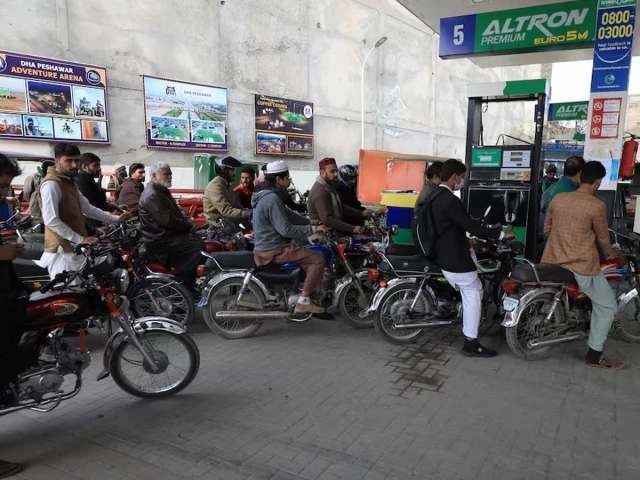

After the drop in gold price, Bitcoin price also fell.
Bitcoin fell below $77,000 in the global market, Bitcoin price fell by more than 13% in a week.
Bitcoin’s highest price in 6 months fell below $126,000, Bitcoin price has dropped by more than $49,000.
Last Updated:
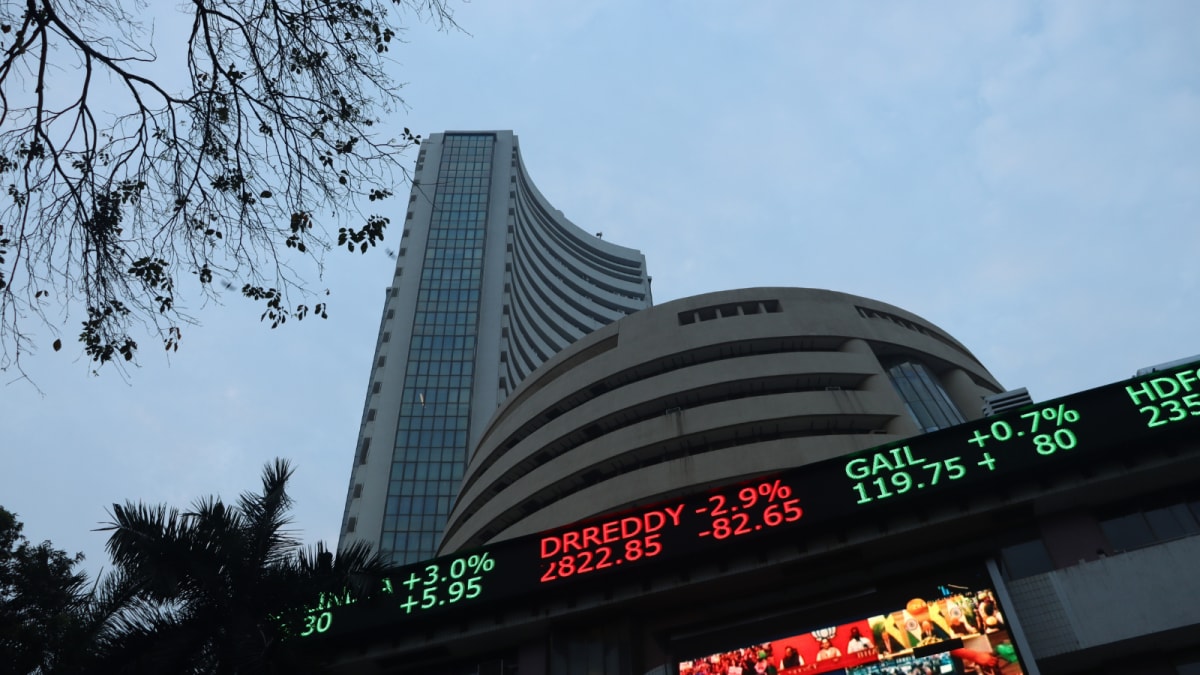
The BSE Sensex is trading higher by 371 points, or 0.47%, at 81,090.24, while the NSE Nifty rises by 70 points to trade above 24,850 at 24,889.25.



Stock Market Today.
Market Updates Today: A day after the market crash following the Budget’s provision to hike Securities Transaction Tax (STT), the domestic equity market on Monday saw heightened volatility. After opening nearly flat, the NSE Nifty rose to the day’s high, then touched the day’s low before sharply recovering to trade at the day’s high of 25,093.
As of 3:16 pm, the BSE Sensex surged by 932 points, or up 1.13%, to 81,641.87 in the afternoon trade and the NSE Nifty rose by 267 points, or up 1.07%, to trade above 25,000 at 25,093.27. After opening nearly flat, the NSE Nifty rose to the day’s high, then touched the day’s low before sharply recovering to trade at the day’s high of 25,093.27.
Among the 30 Sensex shares, 25 stocks were trading in the green. Among the top gainers were PowerGrid, Adani Ports, BEL, Reliance, Mahindra & Mahindra, Larsen & Toubro, and IndiGo, rising by up to 7.91%. The laggards were Axis Bank, Infosys, Titan, TCS, and Trent, falling by up to 1.97%.
After opening nearly flat, at around 9:30 am, the BSE Sensex jumped by 350 points to 81,112.03 in the opening trade, while the NSE Nifty rose 91 points to trade above the 24,900 level at 24,910.85. However, the benchmarks gave up all gains and declined to day’s low amid heavy volatility.
Aakash Shah, technical research analyst at Choice Equity Broking Private Ltd, said, “Near-term sentiment remains cautious despite some support from domestic technical indicators. The broader market direction will largely be influenced by global equity cues, crude oil price movements, and institutional fund flows.”
On Sunday, the Nifty saw an aggressive sell-off after the Budget 2026 announcement to hike STT, plunging nearly 870 points from 25,440 to an intraday low of 24,571, before staging a partial recovery to close at 24,825.
“A strong bearish candle was formed, with the index closing decisively below the 200-day EMA, indicating a deterioration in trend strength. Immediate resistance is placed at 24,950–25,000, while key support lies in the 24,650-24,700 zone. The RSI slipped to 31, reflecting oversold conditions, while India VIX surged 10.73% to 15.09, highlighting elevated market volatility,” Shah said.
On Sunday, February 1, foreign institutional investors (FIIs) sold equities worth Rs 588 crore, while domestic institutional investors (DIIs) also remained net sellers, offloading shares worth Rs 682 crore, adding to the pressure on the market.
V K Vijayakumar, chief investment strategist at Geojit Investments Ltd, said, “Yesterday’s market selloff resulting in 495 point crash in Nifty was a knee-jerk reaction to the sharp increase in STT on F&O trades. This was not a revenue-raising measure, but a decision to discourage retail traders from complex F&O trading, in which 92% of them were losing money. This decision is in the interest of retail investors. But this decision impacted the market sentiments, which were already impacted by the decision to make no changes in the LTCGs tax, which a section of the market was expecting rather unrealistically.”
It is important to understand that the Budget is a growth-oriented Budget with fiscal prudence. The 10% nominal GDP growth projected in the Budget is achievable and has the potential to deliver around 15% earnings growth in FY27. The market will soon start discounting this positive. But it is possible that FIIs may continue to sell impacting the market. Retail investors should keep their cool and remain invested and continue to invest systematically. A significant upturn in the market may take time; perhaps a retreat from AI trade globally. We don’t know when this will happen. But we know that an earnings rebound is imminent in response to this growth oriented Budget. That is a clear positive, he added.
February 02, 2026, 09:34 IST
Read More

Gold prices have fallen significantly in both local and international markets, with 10 grams now priced at Rs18,433 and a tola at Rs21,500.
The price per tola fell below Rs22,000, reaching Rs21,500, while 10 grams dropped to Rs18,433.
Internationally, gold also saw a decline, with prices falling by 215 dollars to 4,676 dollars per ounce.


US inks reciprocal trade agreement with Guatemala

World Bank President’s Visit to Gurdwara Punja Sahib Highlights Religious Harmony and Tourism Potential in Pakistan

Canada could lift GDP 7% by easing internal trade barriers

-

 Sports6 days ago
PSL 11: Local players’ category renewals unveiled ahead of auction
-

 Entertainment6 days ago
Claire Danes reveals how she reacted to pregnancy at 44
-

 Tech1 week ago
ICE Asks Companies About ‘Ad Tech and Big Data’ Tools It Could Use in Investigations
-
 Business6 days ago
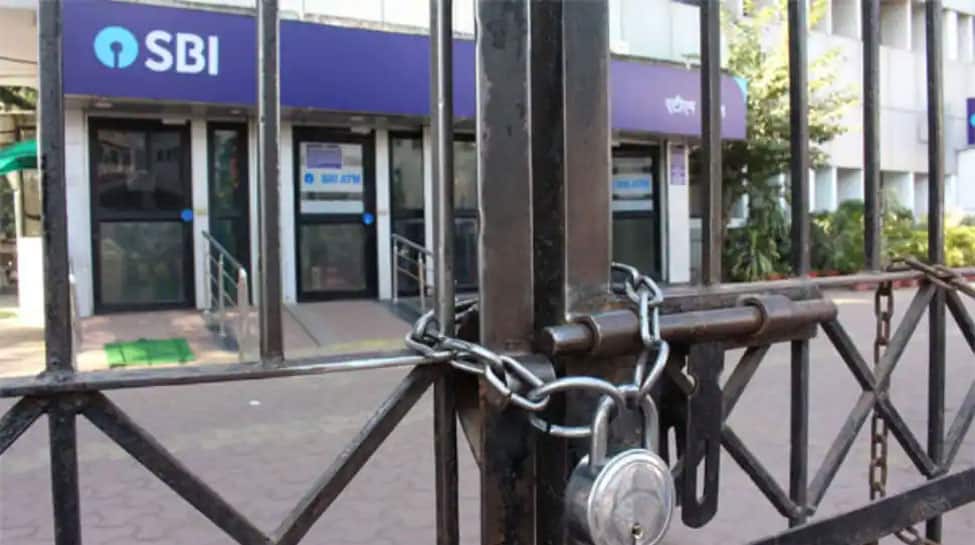
Banking services disrupted as bank employees go on nationwide strike demanding five-day work week
-

 Fashion1 week ago
Spain’s apparel imports up 7.10% in Jan-Oct as sourcing realigns
-

 Sports6 days ago
College football’s top 100 games of the 2025 season
-

 Politics1 week ago
Fresh protests after man shot dead in Minneapolis operation
-

 Politics6 days ago
Trump vows to ‘de-escalate’ after Minneapolis shootings