

Business
Pakistan, Saudi Arabia explore downstream projects | The Express Tribune

KARACHI:
A delegation from the Karachi Chamber of Commerce and Industry (KCCI) met with a Saudi business delegation, headed by Prince Mansour bin Mohammed Al Saud, Chairman of the Saudi-Pakistan Joint Business Council.
The meeting exchanged views on strengthening bilateral trade and investment ties, with a particular focus on downstream industrial projects, petrochemicals and sector-specific value-addition opportunities in Pakistan.
KCCI representatives stressed Pakistan’s urgent need for strategic downstream petrochemical capacity, including the establishment of a naphtha cracker facility, to reduce import dependence on polymers and petrochemical feedstock, create high-value jobs and stimulate local industries across textiles, plastics, packaging and chemicals.
KCCI noted that the naphtha cracker facility would be transformational for Pakistan’s manufacturing landscape and called on Saudi investors and the Joint Business Council to evaluate partnership models and financing structures for such a project.
Prince Mansour and the Saudi delegation expressed interest in exploring a broad pipeline of opportunities across energy, industrialisation, agriculture, textiles, information technology and academia-industry collaboration, underscoring Saudi Arabia’s continuing focus on deepening economic engagement with Pakistan.
Speakers on both sides discussed the scale and timelines that such downstream projects entail. Public reporting and industry studies put the capital requirement for naphtha cracker in billions of dollars.
The KCCI delegation, led by Chairman Businessmen Group Zubair Motiwala and Vice Chairmen Anjum Nisar, Jawed Bilwani and Mian Abrar Ahmed, emphasised the importance of firm feasibility studies, feedstock security, port and logistics planning, and clear regulatory and fiscal incentives to attract anchor investors and project finance.
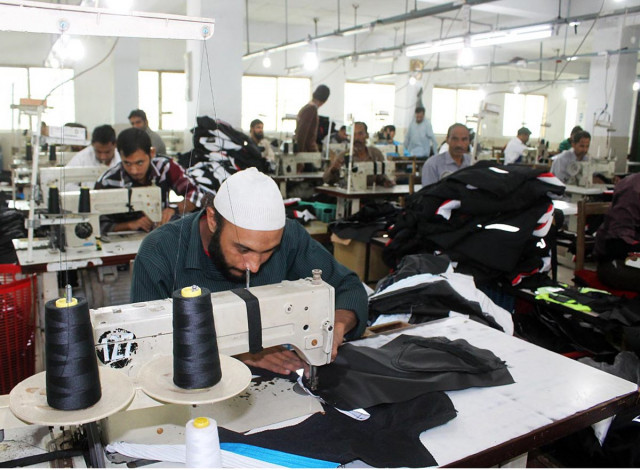
Beyond petrochemicals, the KCCI delegation highlighted opportunities for value-added textile investments (backward and forward linkages), agribusiness and food processing projects that can raise farmer incomes and increase exports, and for IT and academic partnerships to build human capital to support new industrial activity.
The two sides also explored joint ventures, technology transfer arrangements, and cooperation between Pakistani universities and Saudi industrial partners to foster applied research and skilled workforce development.




Restaurant group Various Eateries is poised for a significant expansion, announcing plans to rebrand as the Coppa Collective and venture into the pub sector. The company, known for its Coppa Club and Noci venues, confirmed the name change alongside a deal to acquire a portfolio of pubs with rooms from Grosvenor Pubs and Inns.
The acquisition of four initial sites is expected to be finalised on or around 23 March, with an additional agreement for a potential fifth location. The pubs joining the new collective are Wild Thyme & Honey in the Cotswolds, The Hare & Hounds in Berkshire, The Stag on the River in Surrey, and The Wellington Arms in Hampshire.
Furthermore, terms have been secured for the potential acquisition of The Queen’s Head, also situated in Surrey.
This venue is subject to an “asset of community value” process, meaning it can only be sold after the relevant statutory notification and moratorium period has expired, which could take up to six weeks.
The group, which was founded by Punch Pubs founder Hugh Osmond, will pay £11.25 million for the initial four pubs once the deal completes.
Various Eateries will create a third brand within its portfolio, called The Linwood Collection, after completing the deal.
The hospitality group currently runs 20 sites, including restaurant, club house and hotel venues.
The deal comes a month after the business said it was considering merger and acquisition opportunities in a bid to drive growth.
Mark Loughborough, chief executive of Various Eateries, said: “Linwood marks an important step in the evolution of the group.
“We are bringing into the business a small collection of premium pubs with rooms that have earned their reputations the right way, through great hospitality, careful attention to detail and a real sense of place.
“This is also a format we know well and rate highly in the current market.
“Premium pubs with rooms combine food and drink with accommodation and a broader, destination-led appeal.”

Last Updated:
The layoffs account for 3-4% of Flipkart’s workforce, which is higher than the company’s practice of letting go of 1-2% of employees in the lowest performance bracket every year.




Flipkart Layoffs 2026.
Flipkart Layoffs 2026: Flipkart, the Walmart-owned e-commerce giant, has reportedly asked around 400-500 employees to exit the company this year following its annual performance review process. According to a report by The Economic Times, the layoffs account for roughly 3-4% of Flipkart’s workforce, which is higher than the company’s usual practice of letting go of 1-2% of employees in the lowest performance bracket every year.
Why Has Flipkart Laid Off Employees?
Responding to queries, Flipkart said the move is part of its routine evaluation process. “Flipkart conducts regular performance reviews aligned with clearly defined expectations. As part of this process, a small percentage of employees may transition from the organisation. We are supporting affected employees with transition support,” the company said, according to Mint.
Layoffs Across Teams, Hiring Continues For Senior Roles
The job cuts have reportedly impacted employees across multiple departments and job levels. At the same time, the company continues to recruit senior executives as it prepares for a potential initial public offering (IPO).
According to a report by ANI, Flipkart has recently strengthened its leadership team with several senior appointments.
These include Somnath Das as vice-president (supply chain), Digbijay Mishra as vice-president (corporate communications), Vipin Kapooria as vice-president (business finance), Yogita Shanbhag as vice-president (human resources), and Amer Hussain as vice-president (supply chain for its grocery and quick-commerce businesses).
Flipkart Preparing For India IPO
In December 2025, Flipkart received approval from the National Company Law Tribunal to shift its legal domicile from Singapore to India, a key step ahead of a potential domestic listing.
The restructuring involved merging eight Singapore-based entities into Flipkart Internet Pvt Ltd, simplifying the group’s holding structure across businesses such as fashion, health and logistics.
Loss Widens Despite Revenue Growth
Financial data shows that Flipkart continues to expand its business, although losses have widened.
According to data from Tofler, Flipkart India reported a consolidated loss of Rs 5,189 crore in FY25, compared with Rs 4,248.3 crore in FY24.
However, revenue from operations rose 17.3% to Rs 82,787.3 crore, up from Rs 70,541.9 crore a year earlier.
Total expenses also increased 17.4% to Rs 88,121.4 crore, largely due to higher stock-in-trade purchases, which climbed to Rs 87,737.8 crore, compared with Rs 74,271.2 crore in the previous financial year.
 Click here to add News18 as your preferred news source on Google.
Follow News18 on Google. Join the fun, play games on News18. Stay updated with all the latest business news, including market trends, stock updates, tax, IPO, banking finance, real estate, savings and investments. To Get in-depth analysis, expert opinions, and real-time updates. Also Download the News18 App to stay updated.
March 07, 2026, 14:51 IST
Read More

Global businesses are feeling the impact of the escalating conflict between the United States, Israel, and Iran, as rising energy prices and disrupted trade routes create uncertainty across markets.
Oil and Energy Prices Surge
The conflict has triggered a sharp rise in global oil and gas prices. Brent crude prices have climbed close to $90 per barrel, raising concerns among businesses and policymakers about inflation and higher operating costs.
Industry leaders warn that prolonged price increases could affect nearly every sector of the global economy.
Higher fuel costs are already pushing up prices for transportation, manufacturing, and consumer goods.
Trade Routes Under Pressure
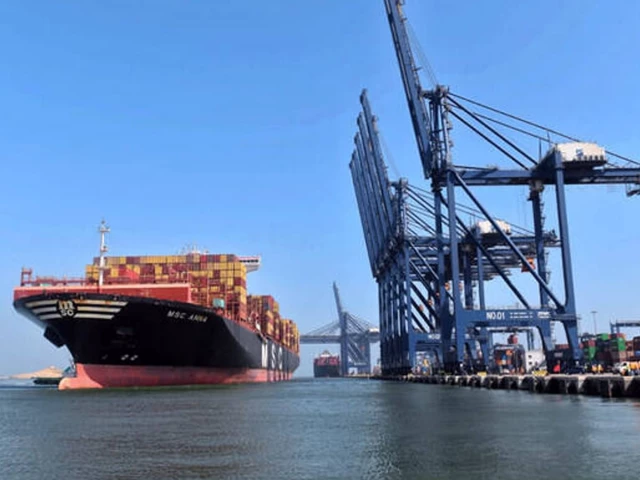
Shipping routes through the Strait of Hormuz, which handles about 20% of global oil supplies, have slowed significantly as tensions escalate.
Air travel routes across the Gulf have also been disrupted, creating delays for cargo shipments and international flights.
Industries Facing Supply Disruptions
Several industries are beginning to feel the effects:
Aluminium production has been disrupted as shipments through the Gulf face restrictions.
Helium supplies, crucial for semiconductor manufacturing, could also be affected.
Chemical and energy-intensive industries in Europe are already reducing production due to rising gas prices.
The Gulf region accounts for roughly 8% of global aluminium production, making any supply disruption a major concern for global manufacturing.
Businesses Prepare for Economic Impact
Major companies are now hedging energy costs and reviewing supply chains to manage the uncertainty.
Analysts warn that if oil prices reach $100 per barrel, global economic growth could slow significantly.
Some financial institutions estimate global growth could drop by 0.4 percentage points if the conflict persists.
Risk of Another Energy Crisis
Experts say the situation highlights how vulnerable global markets remain to geopolitical shocks.
Business leaders warn that energy volatility, supply chain disruption, and rising inflation could lead to a new global economic slowdown if the conflict continues for an extended period.


Harry Styles kicks off new era with ‘One Night Only’ comeback show

India let Iran warship dock the day US sank another off Sri Lanka, say officials
Restaurant group changes name after bid to buys pubs across the UK

Attock Cement’s acquisition approved | The Express Tribune

Policy easing drives Argentina’s garment import surge in 2025

India Us Trade Deal: Fresh look at India-US trade deal? May be ‘rebalanced’ if circumstances change, says Piyush Goyal – The Times of India

-
Business1 week ago
Attock Cement’s acquisition approved | The Express Tribune
-
Business1 week ago
India Us Trade Deal: Fresh look at India-US trade deal? May be ‘rebalanced’ if circumstances change, says Piyush Goyal – The Times of India
-
 Fashion1 week ago
Policy easing drives Argentina’s garment import surge in 2025
-

 Sports1 week ago
LPGA legend shares her feelings about US women’s Olympic wins: ‘Gets me really emotional’
-

 Fashion1 week ago
South Korea’s Misto Holdings completes planned leadership transition
-

 Entertainment1 week ago
Bobby J. Brown, “The Wire” and “Law & Order: SUV” actor, dies of smoke inhalation after reported fire
-

 Fashion1 week ago
Texwin Spinning showcasing premium cotton yarn range at VIATT 2026
-

 Entertainment1 week ago
Pakistan’s semi-final qualification scenario after England defeat New Zealand