

Entertainment
Palace issues sad statement as King mourns death of his sister

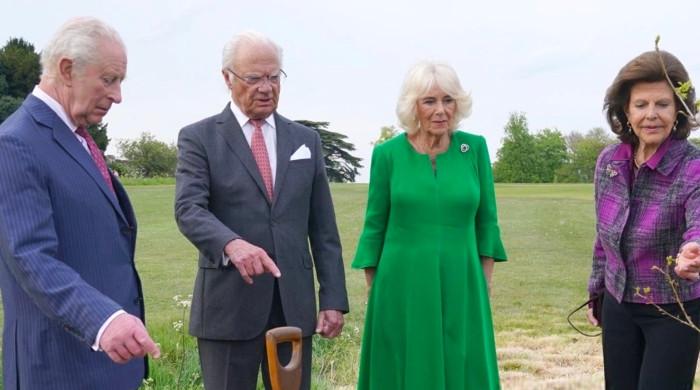
Royal family shared sad news about the passing of the King of Sweden’s sister in an emotional statement.
On January 21, it was reported that Princess Désirée, Baroness Silfverschiöld, had died “peacefully and quietly” at her home in Koberg in Västergötland.
The 87-year-old Princess was surrounded by her family and loved ones at the time of her death.
King Carl XVI Gustaf shared a heartfelt message, remembering his sister and the shared memories he had with her.
“It is with great sadness that I have received the information that my sister, Princess Désirée, has passed away.
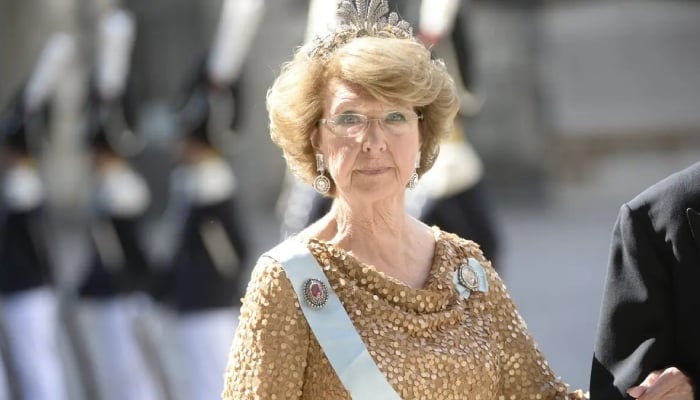
“Many are the warm family memories that have been created at the home of the Silfverschiöld family in Västergötland – a place in Sweden that came to mean a lot to my sister. My family and I today extend our condolences to Princess Désirée’s children and their families.”
It is important to note that Princess Désirée was the widow of Baron Niclas Silfverschiöld.
Tributes poured in on social media, with one fan commenting, “Rest in peace, warm thoughts to loved ones.”
“My sincere condolences to the entire family,” another penned.
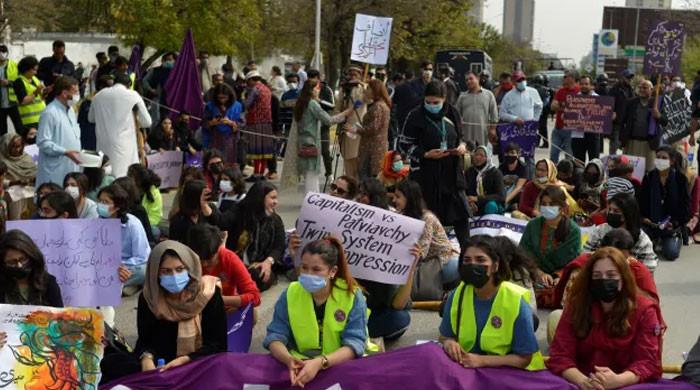
On International Women’s Day 2026, we are reminded that the future of Pakistan and Pakistani women is inseparable from the empowerment of its girls. When we invest in girls, we don’t just change individual lives; we shape the trajectory of economies, societies and nations.
Today, 54 million girls under the age of 18 live in Pakistan, and each day, around 9,200 girls are born into a world where survival, education and protection are far from guaranteed. For too many girls, the journey from vulnerability to opportunity is marked by systemic barriers that begin on day one.
Survival, especially in the early years, is the first barrier.
In Pakistan, 40% of children under five are stunted due to malnutrition, a condition that undermines brain development, weakens immunity and limits lifelong potential. Stunting is linked to nearly three out of four under-five deaths.
Anaemia — affecting over half of adolescent girls and most pregnant women — worsens the consequences of early marriage and pregnancy, increasing the risk of premature and low-birth-weight babies with long-term setbacks for children’s growth and cognitive development. Before many girls ever see the inside of a classroom, their futures are already at risk. The cost of under-investing in maternal and child health is not only measured in lives lost but in potential diminished.
Yet progress is possible. Shabira, a young girl born in Sindh during the devastating 2022 floods, became malnourished and dangerously ill. A mobile health team arrived in her village, screened her and provided essential treatment.
Within two months, her health dramatically improved. Her recovery is proof that timely intervention works. Investing in early childhood health and nutrition is not only lifesaving but also the foundation of human capital and future success.
Once survival is ensured, education becomes the next key to unlocking girls’ futures. Yet, 25 million children in Pakistan remain out of school, half of them are girls, one of the highest rates of educational exclusion in the world.
Even among those who attend, nearly 80% of children cannot read or understand age-appropriate texts by age 10, and many lack opportunities to advance their studies beyond grade 8. This gap reflects entrenched barriers like poverty, gender bias, and underfunded education systems that discourage adolescent girls from attending school.
During a visit to Khyber Pakhtunkhwa, I saw a drawing by an Afghan child: “Let me learn, let me fly”, alongside a white dove of peace. This plea for opportunity resonated deeply as I listened to children, adolescents and parents, all emphasising the central role that education plays in shaping their lives.
Education is not just a right; it is a multiplier. It drives economic growth, creates healthier communities and transforms societies. For Pakistani girls, each additional year of schooling increases their future earnings by up to 10%.
Educated girls marry later, have healthier children, and contribute significantly to their families and communities. Yet, many girls are still denied this fundamental right. Through informal setups, we can expand access to education for those excluded from formal schooling. These flexible, community-based pathways can allow girls to continue their education despite the odds.
But learning alone is not enough. Protection is equally vital.
Nearly one in five girls in Pakistan is married before the age of 18, three times the rate for boys. Early marriage cuts short education, limits economic prospects and traps girls in cycles of poverty.
Adolescence is a critical phase; the right investment can propel girls forward; neglect can leave them permanently behind. Currently, 56% of girls aged 15 to 24 are not in education, employment, or training, a stark contrast to the much lower figure for boys. This disparity represents lost potential at the national level.
The economic case for empowering girls is undeniable. Inclusion is not charity; it is smart economics. As Pakistan’s population is projected to exceed 340 million by 2050, investing in girls is essential to unlocking Pakistan’s demographic dividend. Aligning our policies, budgets and institutions around girls’ health, education and protection is not optional – it is essential for sustainable growth.
Let this decade be remembered not for incremental progress, but for catalytic transformation — systemic, social and sustained. Investing in girls and women is among the most strategic decisions Pakistan can make. It yields returns across generations.
As we mark International Women’s Day, we must move beyond celebration to commitment. The real measure of our resolve will not be in speeches delivered, but in policies enacted, resources allocated, and barriers dismantled. Every girl, regardless of her birthplace or background, deserves the chance to survive, learn, thrive, and lead.
There is reason for hope. Evidence shows that despite systemic barriers, increasing numbers of girls are reaching tertiary education — outperforming expectations and, in many contexts, their male peers. Imagine what would be possible if their potential were matched by equitable investment.
Girls are not born lacking potential; they are born with wings. Too often, it is society that chooses to clip them — through discrimination, neglect and underinvestment. Our task is not to give girls power; it is to remove the barriers that prevent them from using the power they already possess.
The future of Pakistan will be written by the opportunities we choose to create and collectively sustain for girls today. When we give girls the space to soar, we do more than uplift individuals — we elevate a nation.
The writer is the Unicef representative in Pakistan.
Disclaimer: The viewpoints expressed in this piece are the writer’s own and don’t necessarily reflect Geo.tv’s editorial policy.
Originally published in The News
- UK government hit with last-minute ‘wobble’ over US tour
- Source involved in planning reveals surprising details about tensions
- Government officials cite key reason for delay, next phase of plans
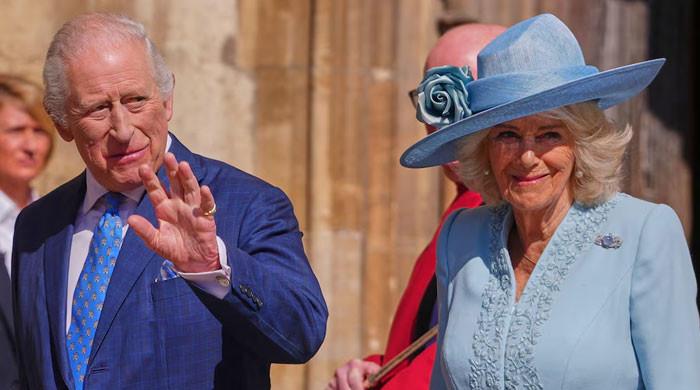
King Charles and Queen Camilla had reportedly had been preparing for an important trip across the pond when an unexpected turn of events brought it all to a sudden halt last-minute.
Last year, the royal family had hosted US President Donald Trump for an unprecedented second state visit, with full pomp and circumstance, as per the request of the UK government.
There had been reports that preparations were already underway as the White House had sent an official invite to Buckingham Palace. Charles and Camilla were due to fly to Washington D.C. at the end of the month for a three-day visit, which would have coincided with the 250th anniversary celebrations for America.
However, now according to a DailyMail report, the trip is being delayed after the US-Iran conflict broke out last week.
The UK government is responsible to sign off the plans, there had been a last-minute “wobble”, per a Whitehall source involved with the planning of the trip.
“The plans were first put on pause in early February. Apart from everything else, there has been a noticeable lack of progress on the technology-related trade deals which were agreed during Trump’s visit,” the source said.
Trump had described Keir Starmer as ‘not Winston Churchill’ for initially refusing to get involved in the conflict, which led to the latest setback. Senior government officials believe that the trip should be postponed until the tensions have subsided.
The source also noted that the “pomp and ceremony” would feel “incongruous and insensitive” during such a critical time.
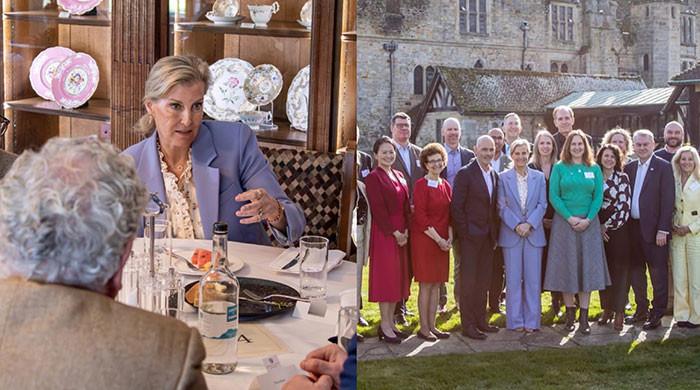
Duchess Sophie brought her royal presence on on March 5, to Hever Castle Ltd for a pivotal DEBRA UK event tackling epidermolysis bullosa (EB).
EB is a rare skin condition where even the gentlest touch can cause the skin to blister and tear.
As Patron of the charity, the Duchess joined 25 of the world’s leading specialists in EB, dermatology, paediatrics, pharmacology, and reconstructive surgery for the inaugural two-day EB Global Taskforce.
The gathering focused on accelerating the development of groundbreaking treatments and shaping the charity’s forthcoming Global EB Strategy, set for release in April 2026.
Speaking to the assembled experts, Sophie in lilac coat praised their dedication and vision.
“There is the passion and drive evident in the expertise in this room to truly make a difference,” she said.
“It will take innovative thinking, bold ideas, and strategic creativity that can be the catalyst for the change that is so desperately needed.”
DEBRA UK shared highlights from the historic event on Instagram, thanking the Duchess for her guidance and support.
“Yesterday at the historic @hever_castle, The Duchess of Edinburgh GCVO, our Charity Patron, joined medical experts for our inaugural two-day EB Global Taskforce,” the post read with a heart emoji.


India forms inter-ministerial group to assess export disruptions

Special loan facility for Feb wages in Bangladesh’s export units

Let girls fly

India Us Trade Deal: Fresh look at India-US trade deal? May be ‘rebalanced’ if circumstances change, says Piyush Goyal – The Times of India

LPGA legend shares her feelings about US women’s Olympic wins: ‘Gets me really emotional’

South Korea’s Misto Holdings completes planned leadership transition

-
Business1 week ago
India Us Trade Deal: Fresh look at India-US trade deal? May be ‘rebalanced’ if circumstances change, says Piyush Goyal – The Times of India
-
 Sports1 week ago
LPGA legend shares her feelings about US women’s Olympic wins: ‘Gets me really emotional’
-
 Fashion1 week ago
South Korea’s Misto Holdings completes planned leadership transition
-

 Entertainment1 week ago
Pakistan’s semi-final qualification scenario after England defeat New Zealand
-

 Entertainment1 week ago
Bobby J. Brown, “The Wire” and “Law & Order: SUV” actor, dies of smoke inhalation after reported fire
-
 Business1 week ago
Greggs to reveal trading amid pressure from cost of living and weight loss drugs
-
 Business1 week ago
CNBC To Merge TV And Digital News Operations, Nearly A Dozen Jobs To Be Cut: Report
-
 Entertainment1 week ago
What’s new in Pokémon? Every game, update, surprise from 30th anniversary event