

Tech
Paw Patrol: How AI and IoT are driving preventative pet care | Computer Weekly

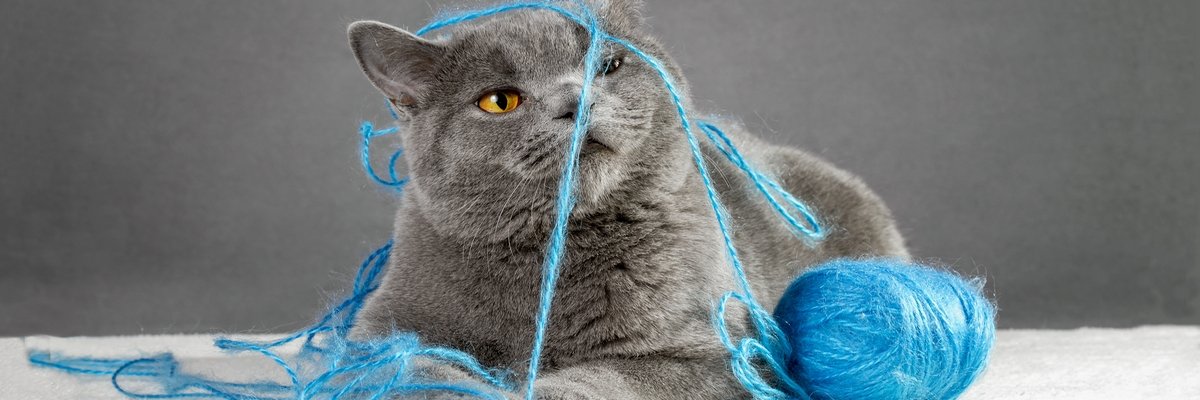
PDSA, the vet charity for pets in need, has estimated that there are 11.1 million dogs in the UK and 10.5 million cats. More than half (51%) of the 5,387 pet owners surveyed for the PDSA Animal Wellbeing (PAW) report say they are worried about being able to afford the cost of veterinary care for their pet.
Such statistics illustrate that there is a market opportunity in pet care, which technology firms are looking to address. Some of the innovation draws on work that is being done in human healthcare.
Through its Unleashed Network, a number of startups were invited by the accelerator initiative run by pet food company Purina to showcase their technology at the London Vet Show that ran November 19-20 at Excel. The companies demonstrating in the Unleashed startup village supported by Purina accelerator lab included AI for Pet, Sylvester.ai and VEA.
Pet health technology company AI for Pet is using advanced vision artificial intelligence (AI) to transform simple smartphone images and videos into real-time health insights.
Ronnie Hyun, vice-president at AI for Pet, said: “We are using vision AI. People take a picture using a mobile phone and we then analyse the image.”
The application identifies clinical signals based on images of eyes, skin and teeth, as well as gait analysis. Hyun said the clinical signals provide differential diagnostic information, which can be used to provide guidance for specific optimised pet care. The company is also able to provide veterinary clinics with data-driven pet care, which offers recommendations and personalisation.
Sylvester.ai specialises in an AI model that reads the visual facial cues of domestic short-haired cats. Discussing the technology, Rachel Fisher, operators and product lead at Sylvester.ai, said: “The company has been working on a model that can assess if a cat is in pain or in anxiety or in distress.”
Aimed primarily at cat owners and cat sitters, the web version of the application launched in July and the company is now distributing a mobile app version. The company’s goal is to grow usage – to date, around 10,000 people use Sylvester.ai, but Fisher wants the app to be widely used to increase the quality of the dataset.
“We have data licence agreements with multiple shelters where we have access to medicalised cats with their disease states, ages and pain levels and we’re really working on building this,” said Fisher, who believes that a data set of this kind has never been built before. “None of this research is as prevalent as it needs to be for the amount of cats that are owned by people.”
VEA has built a system that integrates patient data with AI to automate notes and diagnostics, streamlining diagnostic suggestions and customising treatment plans for wellness, prevention and therapeutic care.
Sylveser.ai, VEA and AI for Pet are examples of how artificial intelligence is making big inroads into pet healthcare.
Data protection for pets
Discussing the AI revolution in pet health, Kim Bill, head of Nestlé Purina accelerator lab, said: “Startups used to use a lot of simple algorithms and decision trees in their workflow. But in the last couple of years, we are seeing more AI and GenAI (generative AI) playing a very big role. I think that almost every startup uses GenAI in one way or another to improve the quality of its offerings.”
But as Bill points out, they are all using AI in different ways. Among the areas startups need to navigate is personally identifiable information. While the pets themselves are not strictly covered by data protection laws, their owners are, which, in Europe, means engaging with the General Data Protection Regulation.
“Animal data is linked to the owner,” Bill said. Among the topics being discussed at a pre-show event was GDPR and compliance. “The startup world and veterinary clinics are very wary of personally identifiable data. Everybody wants to be in compliance and it being taken very seriously. But I don’t think this is an area they cannot work through because it’s just like human health.”
Beyond AI, another growing area of interest in pet healthcare is the use of internet of things (IoT) devices. Tracking devices that fit around dog collars are readily available, and Purina accelerator Lab lead Jeanne Chatelle said the technology is now being applied to track health symptoms as well, making it applicable in the proactive pet health sector.
She said there are also other connected devices which, for example, help pet owners to understand how much the pet is drinking or eating, adding: “We see the emergence of different IiT devices here and there.”
One such device, VetChip, is a smart version of the microchip used to identify cats and dogs. VetChip said the device works as a biosensor, which is placed under the skin and provides animal health information similar to wearable human health monitors such as FitBit. Pet owners and vets are provided with access to real-time health analytics and alerts via the cloud using the VetChip app.
What is clear from the conversations Computer Weekly had during the London Vet Show is that AI and IoT are set to revolutionise people’s ability to understand how their pets are feeling and the overall health of their pets. Such insights could help pet owners to take preventative measures to ensure their pets remain healthy, and so help to reduce costly vet bills.
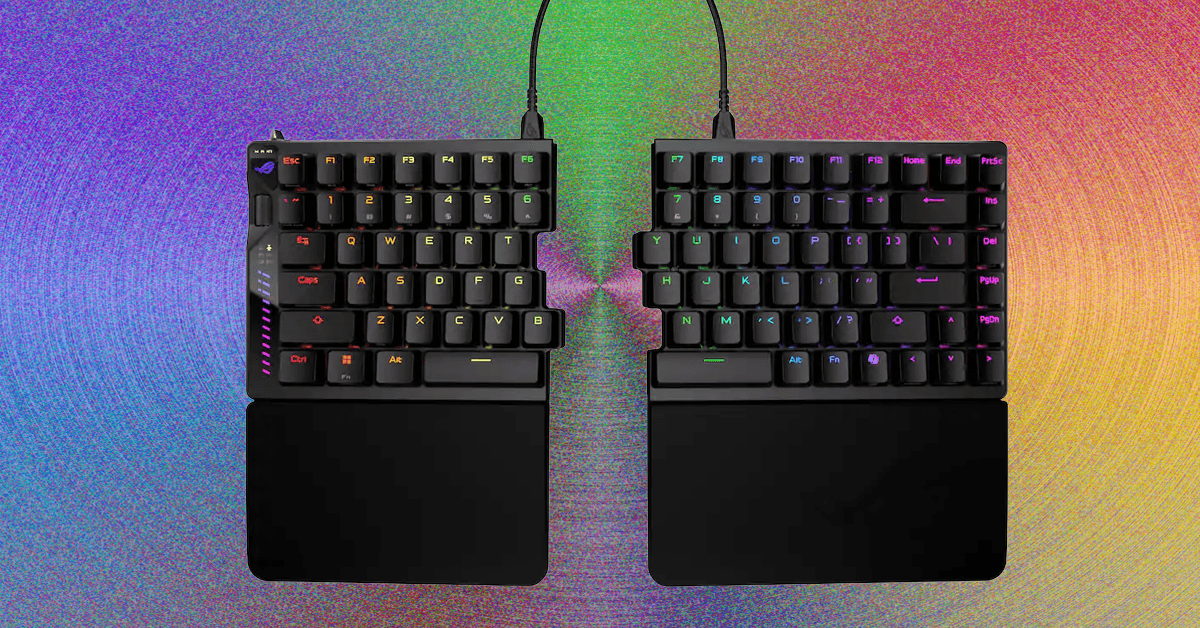
The wheel on the left side has options to adjust actuation distance, rapid-trigger sensitivity, and RGB brightness. You can also adjust volume and media playback, and turn it into a scroll wheel. The LED matrix below it is designed to display adjustments to actuation distance but feels a bit awkward: Each 0.1 mm of adjustment fills its own bar, and it only uses the bottom nine bars, so the screen will roll over four times when adjusting (the top three bars, with dots next to them, illuminate to show how many times the screen has rolled over during the adjustment). The saving grace of this is that, when adjusting the actuation distance, you can press down any switch to see a visualization of how far you’re pressing it, then tweak the actuation distance to match.
Alongside all of this, the Falcata (and, by extension, the Falchion) now has an aftermarket switch option: TTC Gold magnetic switches. While this is still only two switches, it’s an improvement over the singular switch option of most Hall effect keyboards.
Split Apart
Photograph: Henri Robbins
The internal assembly of this keyboard is straightforward yet interesting. Instead of a standard tray mount, where the PCB and plate bolt directly into the bottom half of the shell, the Falcata is more comparable to a bottom-mount. The PCB screws into the plate from underneath, and the plate is screwed onto the bottom half of the case along the edges. While the difference between the two mounting methods is minimal, it does improve typing experience by eliminating the “dead zones” caused by a post in the middle of the keyboard, along with slightly isolating typing from the case (which creates fewer vibrations when typing).
The top and bottom halves can easily be split apart by removing the screws on the plate (no breakable plastic clips here!), but on the left half, four cables connect the top and bottom halves of the keyboard, all of which need to be disconnected before fully separating the two sections. Once this is done, the internal silicone sound-dampening can easily be removed. The foam dampening, however, was adhered strongly enough that removing it left chunks of foam stuck to the PCB, making it impossible to readhere without using new adhesive. This wasn’t a huge issue, since the foam could simply be placed into the keyboard, but it is still frustrating to see when most manufacturers have figured this out.
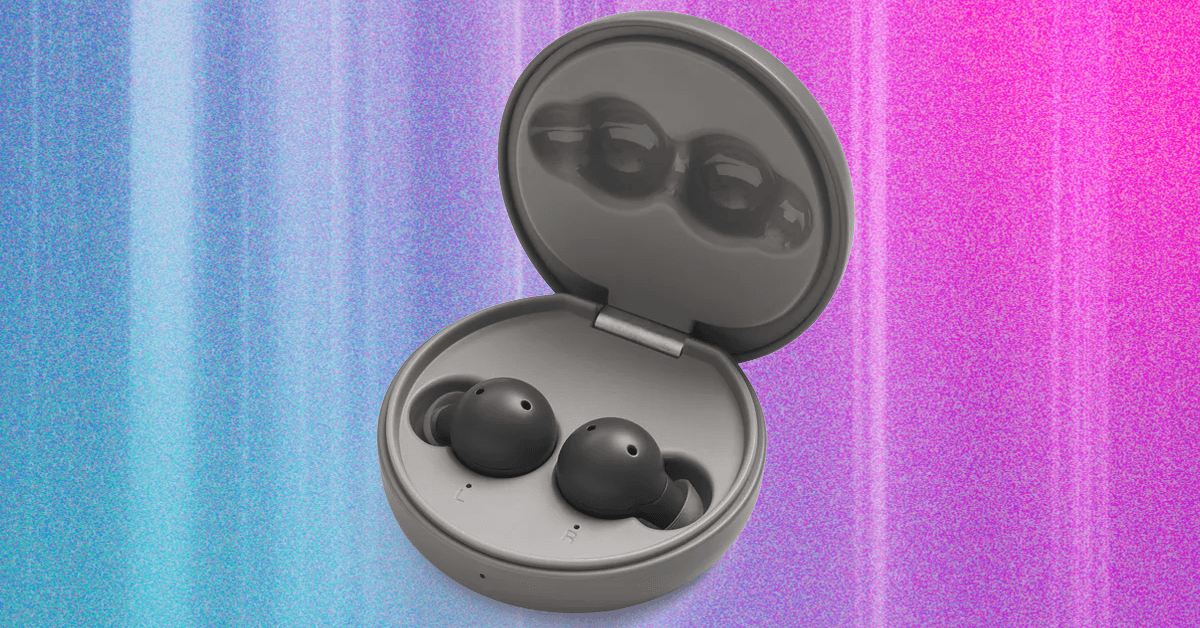
Don’t call them hearing aids. They’re hearpieces, intended as a blurring of the lines between hearing aid and earbuds—or “earpieces” in the parlance of Lizn, a Danish operation.
The company was founded in 2015, and it haltingly developed its launch product through the 2010s, only to scrap it in 2020 when, according to Lizn’s history page, the hearing aid/earbud combo idea didn’t work out. But the company is seemingly nothing if not persistent, and four years later, a new Lizn was born. The revamped Hearpieces finally made it to US shores in the last couple of weeks.
Half Domes
Photograph: Chris Null
Lizn Hearpieces are the company’s only product, and their inspiration from the pro audio world is instantly palpable. Out of the box, these look nothing like any other hearing aids on the market, with a bulbous design that, while self-contained within the ear, is far from unobtrusive—particularly if you opt for the graphite or ruby red color scheme. (I received the relatively innocuous sand-hued devices.)
At 4.58 grams per bud, they’re as heavy as they look; within the in-the-ear space, few other models are more weighty, including the Kingwell Melodia and Apple AirPods Pro 3. The units come with four sets of ear tips in different sizes; the default mediums worked well for me.
The bigger issue isn’t how the tip of the device fits into your ear, though; it’s how the rest of the unit does. Lizn Hearpieces need to be delicately twisted into the ear canal so that one edge of the unit fits snugly behind the tragus, filling the concha. My ears may be tighter than others, but I found this no easy feat, as the device is so large that I really had to work at it to wedge it into place. As you might have guessed, over time, this became rather painful, especially because the unit has no hardware controls. All functions are performed by various combinations of taps on the outside of either of the Hearpieces, and the more I smacked the side of my head, the more uncomfortable things got.

Thinking Machines cofounders Barret Zoph and Luke Metz are leaving the fledgling AI lab and rejoining OpenAI, the ChatGPT-maker announced on Thursday. OpenAI’s CEO of applications, Fidji Simo, shared the news in a memo to staff Thursday afternoon.
The news was first reported on X by technology reporter Kylie Robison, who wrote that Zoph was fired for “unethical conduct.”
A source close to Thinking Machines said that Zoph had shared confidential company information with competitors. WIRED was unable to verify this information with Zoph, who did not immediately respond to WIRED’s request for comment.
Zoph told Thinking Machines CEO Mira Murati on Monday he was considering leaving, then was fired today, according to the memo from Simo. She goes on to write that OpenAI doesn’t share the same concerns about Zoph as Murati.
The personnel shake-up is a major win for OpenAI, which recently lost its VP of research, Jerry Tworek.
Another Thinking Machines Lab staffer, Sam Schoenholz, is also rejoining OpenAI, the source said.
Zoph and Metz left OpenAI in late 2024 to start Thinking Machines with Murati, who had been the ChatGPT-maker’s chief technology officer.
This is a developing story. Please check back for updates.


Burberry celebrates Year of the Horse 2026 with Shanghai campaign

Chanel emerges as fastest-growing luxury fashion brand in 2025: Report
His starting job slipped away, but this goalie is never going to complain

-

 Politics1 week ago
UK says provided assistance in US-led tanker seizure
-

 Entertainment1 week ago
Does new US food pyramid put too much steak on your plate?
-

 Entertainment1 week ago
Why did Nick Reiner’s lawyer Alan Jackson withdraw from case?
-
 Business1 week ago
Trump moves to ban home purchases by institutional investors
-

 Sports1 week ago
PGA of America CEO steps down after one year to take care of mother and mother-in-law
-

 Sports4 days ago
Clock is ticking for Frank at Spurs, with dwindling evidence he deserves extra time
-
 Business1 week ago
Bulls dominate as KSE-100 breaks past 186,000 mark – SUCH TV
-
 Business1 week ago
Gold prices declined in the local market – SUCH TV