Connect with us

Sports

PCB to move ICC against ‘provocation’ by Indian players in Asia Cup final

Published

on

PCB to move ICC against ‘provocation’ by Indian players in Asia Cup final
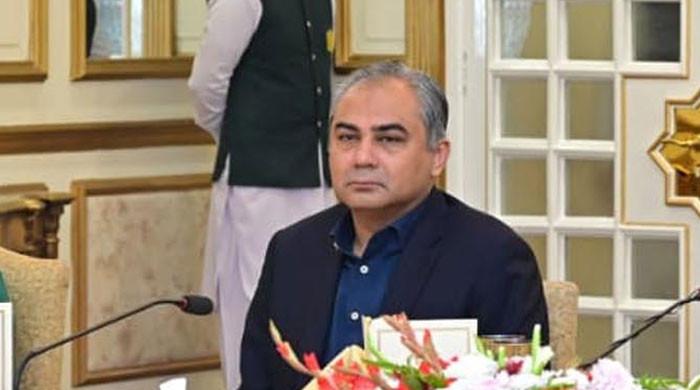

Pakistan Cricket Board (PCB) Chairman Mohsin Naqvi address a banquet ceremony hosted by Prime Minister Shehbaz Sharif in honour of the under-19 Pakistan Cricket team, which won the U19 Asia Cup 2025, on December 22, 2025 in Islamabad. — PID
  • Indian players kept provoking Pakistani cricketers in final: Naqvi.
  • PCB chairman says Pakistan will inform ICC about incident.
  • Sarfaraz also criticises India over “unethical conduct” during final.

Pakistan Cricket Board (PCB) Chairman Mohsin Naqvi on Monday announced that they would approach the International Cricket Council (ICC) over the “provocation” by Indian players against Pakistan during the ACC Men’s Asia Cup 2025 final.

The Green Shirts crushed their arch-rivals, securing a resounding 191-run victory, in the blockbuster final at the ICC Academy on Sunday.

Speaking at the reception hosted by Prime Minister Shehbaz Sharif in honour of the Asian Under-19 champion team, PCB Chairman Naqvi said: “Indian players kept provoking Pakistani players in the U19 Asia Cup final.”

“Pakistan will inform the ICC about the incident,” he said, adding that politics and sports should be kept separate.

Cricketing relations between the two neighbouring countries have remained tense due to geopolitical tensions.

Speaking on the occasion, Pakistan U19 cricket team mentor and former national captain Sarfaraz Ahmed criticised India over “unethical conduct” during the final.

“India’s behaviour regarding the game was not good, and the Indian team’s conduct in cricket was unethical,” he said.

Sarfaraz said: “But we celebrated the victory with sportsmanship, because there should always be sportsmanship in cricket; what India did is their own action.”

In September, India’s Suryakumar Yadav snubbed customary handshakes with Pakistani captain Salman Ali Agha and players during their three Asia Cup 2025 games, including the final.

The absence of the traditional handshake at the conclusion of the matches drew global attention, with observers pointing to a lack of sportsmanship and game spirit from India.

The Indian team also refused to collect the Asia Cup 2025 trophy from Asian Cricket Council (ACC) President Mohsin Naqvi after defeating Pakistan in the final by five wickets.

The move reportedly came on the directives of the Board of Control for Cricket in India (BCCI).


Source link

Continue Reading
Click to comment

Leave a Reply

Your email address will not be published. Required fields are marked *

Sports

Our reporters make sense of Week 16: Statement wins for Patriots, Jaguars, Panthers, Steelers, Bears

Published

on

Our reporters make sense of Week 16: Statement wins for Patriots, Jaguars, Panthers, Steelers, Bears


Week 16 of the 2025 NFL season began with a Thursday night contest between the Rams and Seahawks that had major playoff implications. Seattle converted two 2-point conversions in an overtime win, ascending to the NFC’s No. 1 seed before the final two weeks of the season.

In the first game Saturday, the Eagles started slowly, then poured it on against the Commanders to win their second straight NFC East crown. Saturday’s nightcap featured one of the best comebacks of the season, as the Bears pulled out an OT win over the Packers, who suffered the loss of QB Jordan Love to a concussion.

In the early window Sunday, the Panthers moved into first place in the NFC South by beating the Bucs. The Bills kept their chances at the AFC East title alive with a narrow win over the Browns, while the Giants stayed in pole position for the No. 1 pick after a loss to the Vikings.

The Bengals and Chargers won convincingly with masterclass performances from quarterbacks Joe Burrow and Justin Herbert, respectively. Saints rookie quarterback Tyler Shough threw for more than 300 yards against the Jets. Meanwhile, the Chiefs were blown out by the Titans in Kansas City’s first game without Patrick Mahomes, losing quarterback Gardner Minshew three plays into the game because of a knee injury.

In the late window, Falcons cornerback C.J. Henderson intercepted a pass from Cardinals quarterback Jacoby Brissett in the final minute of regulation to seal a win. The Texans rebounded from a rough first half to defeat the Raiders, and the Jaguars stunned the Broncos’ defense with four touchdowns from quarterback Trevor Lawrence. The Steelers maintained their AFC North lead when a penalty erased the Lions’ winning touchdown on fourth-and-goal.

The action wrapped up with the Patriots erasing a late deficit against the Ravens on “Sunday Night Football.”

Our NFL Nation reporters reacted to all the action, answering lingering questions coming out of each game and detailing everything you need to know for every team. Let’s get to it.

Jump to:
NE-BAL | PIT-DET | JAX-DEN
LV-HOU | ATL-ARI | NYJ-NO
MIN-NYG | BUF-CLE | TB-CAR
KC-TEN | LAC-DAL | CIN-MIA
GB-CHI | PHI-WSH | SEA-LAR

Catch up on the action: Box score | Recap

Patriots

How will injuries affect the Patriots in the final two games? The Patriots had seven players visit the medical tent, headlined by rookie running back TreVeyon Henderson, who left the game in the second quarter to be evaluated for a concussion before being ruled out. The Patriots have only two other running backs on the roster — Rhamondre Stevenson and D’Ernest Johnson — and are a different offense without Henderson’s big-play ability. Meanwhile, WR DeMario Douglas (hamstring), DT Joshua Farmer (hamstring), DT Khyiris Tonga (foot) and CB Charles Woods (ankle) didn’t finish the game, while OTs Morgan Moses (knee) and Thayer Munford Jr. (knee) missed time before returning.

What to make of the QB performance: The Patriots were one-dimensional on offense, favoring the pass, and Maye was mostly up to the task to record his first career 300-yard passing game (380) despite facing heavy pressure. He led a fourth-quarter comeback one week after failing to do so against the Bills, which he called the elephant in the room. But Maye had two turnovers — an interception that ended the team’s first drive, when WR Kayshon Boutte wasn’t competitive at the top of the route, and a lost fumble that cost the team a chance at a field goal before halftime. The Patriots entered Sunday 1-6 in games in which Maye had two turnovers. — Mike Reiss

Next game: at Jets (Sunday, 1 p.m. ET)


Ravens

How does Lamar Jackson‘s health impact Ravens’ playoff chances? Significantly. It’s uncertain whether Jackson will return for Saturday’s game at Green Bay after being sidelined for the entire second half because of a back injury. Tyler Huntley couldn’t lead a winning drive late in the fourth quarter, dropping the Ravens two games back of the Steelers with two weeks remaining. If Baltimore loses to the Packers, the Steelers clinch the AFC North.

The Ravens have a history of struggling without Jackson. During his time as Baltimore’s starting quarterback (midway through the 2018 season), the Ravens are 76-29 (.724) with him and 5-11 (.313) without him. The Ravens’ average points per game with Jackson as the starter is 28.4, but that drops to 16.2 points without him. Whether Baltimore can win out — with victories at Green Bay and at Pittsburgh — likely depends more on running back Derrick Henry than Huntley. The Ravens are 12-3 (.800) when Henry has run for more than 100 yards, including his 128-yard performance Sunday night.

Trend to watch: Wide receiver Zay Flowers sealed the loss by fumbling with 1:48 left in the game. This was a team-record sixth home loss this season, and turnovers have been the major issue. In addition to Henry’s fumble Sunday night, Baltimore has committed 15 turnovers at home this season — the second most in the NFL behind the Seattle Seahawks (17). — Jamison Hensley

Next game: at Packers (Saturday, 8 p.m. ET)

Catch up on the action: Box score | Recap

Steelers

What could the consequences be for DK Metcalf‘s in-game altercation with a fan? Metcalf wasn’t ejected for throwing a punch at a fan who hung over the rail from the first row of the seats at Ford Field and engaged with the wide receiver, but that doesn’t mean a punishment won’t be handed down in the near future. By league rule, players cannot be punished or ejected during the game for such an interaction if officials don’t throw a flag. Metcalf wasn’t flagged and returned when the Steelers’ offense retook the field. It wasn’t immediately clear what prompted Metcalf’s actions. Earlier this season, a fan was ejected and banned from Highmark Stadium after slapping Lamar Jackson on the helmet following a Ravens score. Jackson retaliated by shoving him, but he wasn’t punished by the league for the incident.

Turning point: Do the safety dance, Kyle Dugger. The Steelers prefer to “double-dip” halftime — scoring a touchdown on either side of the break — but Sunday they had to settle for a scoop and a half. Kenneth Gainwell took care of the first half, scoring an improbable touchdown just before halftime. The Steelers reached the red zone on the first series of the third quarter, but Darnell Washington‘s fumble at the 3-yard line ended their hopes of bracketing halftime with a pair of touchdowns. Three plays later though, Dugger slung Lions quarterback Jared Goff to the blue turf in the end zone for a safety and a 12-10 lead. — Brooke Pryor

Best quote from the locker room: Kenneth Gainwell discussed the Steelers’ 230-yard rushing performance — the most by Pittsburgh in a game since 2016 Week 14 (240 at Buffalo), saying: “This running back room is special. I talked about that a lot, and I mean, I don’t think we get the credit that we need to.” Sunday’s performance also marks the Steelers’ third-most rushing yards in a game under coach Mike Tomlin (since 2007), trailing 2014 Week 3 at the Panthers (264) and 2016 Week 14 at the Bills (240): “We haven’t been doing what we need to do early on in the season, but it don’t matter. It takes us doing what we have to do now, and here in December, and then going into the playoffs and being real strong in there,” Gainwell said.

Next game: at Browns (Sunday, 1 p.m. ET)

play

0:34

Steelers prevail after offensive pass interference on dramatic final play

The Steelers hold on to win after Jared Goff’s last-gasp touchdown is wiped away because of an offensive pass interference penalty as time expires.


Lions

With two games left against division foes, what is the Lions’ biggest concern? The ground game. It is extremely alarming that the Lions’ ground game was held to 12 carries for 15 rushing yards. Both Detroit running backs Jahmyr Gibbs (2 rush yards) and David Montgomery (14) were bottled up by the Steelers’ defense. With the loss, the Lions’ odds of making the postseason are slim.

Biggest hole in the game plan: The Lions’ interior offensive line. Starting center Graham Glasgow was ruled inactive ahead of the kickoff because of a knee injury and Detroit’s interior O-Line struggled to protect Goff, allowing three sacks as it consistently faced heavy pressure. There was a lack of experience within the unit, and it showed: Left guard Christian Mahogany was activated from injured reserve Saturday, rookie right guard Tate Ratledge is still learning the ropes, and Kingsley Eguakun made his first NFL start at center. — Eric Woodyard

Best quote from the locker room: Quarterback Jared Goff revealed how difficult it has been with the run game struggling after the Lions’ past two games: “Yeah, it makes it hard. I mean, that’s a big part of who we want to be,” he said. The Lions have leaned on Jahmyr Gibbs and David Montgomery all season, but Sunday’s game saw both players limited in yards gained. “We’ve got two really good backs that we need to find a way to get them going and be able to create some holes and get them moving,” Goff said.

Next game: at Vikings (Thursday, 4:30 p.m. ET)

Catch up on the action: Box score | Recap

Jaguars

Can quarterback Trevor Lawrence keep up his touchdown pace? Lawrence has 18 touchdowns (16 passing, two rushing) during the Jaguars’ six-game winning streak, including 10 in the past two games. He has 26 passing touchdowns this season, making him the only player in franchise history to throw 25 or more touchdowns twice. Lawrence had four against the Broncos (three passing) in what was arguably the most impressive victory by any AFC team this season. That’s a pretty aggressive pace. With games against the Colts and Titans remaining, he could easily continue adding to that total. The offense has scored at least 34 points in each of the Jaguars past three games.

Most surprising performance: Wide receiver Parker Washington shattered his previous career high for receiving (103 yards) with 145 yards on six catches. He set up a touchdown with a 63-yard catch-and-run and also caught a 12-yard touchdown pass while fighting off contact in the end zone. He drew a pass interference call in the end zone that helped set up another touchdown, too. On a day when the Broncos limited Jakobi Meyers (four catches, 45 yards) and Brian Thomas Jr. (two catches, 18 yards), Washington came up big. — Mike DiRocco

Best quote from the locker room: Jaguars edge Travon Walker on bandwagon fans after the Jaguars defeated the top team in the AFC. “Everybody in this locker room on the Jaguars team, even upstairs, we know everybody’s probably going to try to hop on this bandwagon now, but we don’t want anybody,” Walker said. “They can stay where they’re at. It’s us. It’s all about the Jags. “F— everybody but us. Excuse my language, dad, grandmamma, but f— everybody but us.”

Next game: at Colts (Sunday, 1 p.m. ET)

play

0:24

Trevor Lawrence and Parker Washington connect for 12-yard TD

Parker Washington makes an amazing catch in the end zone to give the Jaguars an early lead.


Broncos

Did this loss raise concerns for the Broncos’ defense? The Broncos last gave up over 30 points in their Week 7 win over the Giants. The Jaguars were able to handle Denver’s pass rush more consistently on high-stress downs and found plenty of open space in the middle of the field. The Broncos miss safety Brandon Jones (IR) in those areas of the field. There were too many missed tackles and ill-timed penalties, and they let Washington get too open too often. Trevor Lawrence is on a roll, but any postseason run for Denver — who had linebacker Dre Greenlaw leave the game late because of a hamstring injury — will include offenses as good or better than Jacksonville’s.

Biggest hole in the game plan: The Broncos found some early cracks in Jacksonville’s top ranked run defense but didn’t keep at it. Running back Jaleel McLaughlin had a 16-yard run on his first carry and 9 yards on his second. But he was handed the ball only three more times the rest of the day. RJ Harvey had a 38-yard touchdown run but had six carries through three quarters. While a failed trick play in the third robbed the Broncos of their mojo on offense, they also fell into the trap other teams have with Jaguars — Denver was the sixth Jags opponent to have fewer than 20 carries (17). — Jeff Legwold

Best quote from the locker room: Broncos coach Sean Payton reflected on what went wrong versus the Jaguars: “All the things that were important or are important to winning, we didn’t do a good enough job with, and that starts with me. They were better on third downs. They won the turnover battle, and they won the kicking battle. So now we have a short week to digest it. You can’t spit it out. You’ve got to swallow it. That starts with every one of us.”

Next game: at Chiefs (Thursday, 8:15 p.m. ET)

Catch up on the action: Box score | Recap

Texans

Any concerns for Houston after this close game? The Texans didn’t score an offensive touchdown until 7:41 remaining in the fourth quarter, and their defense allowed 21 points to the last-ranked scoring (14 points per game entering Sunday) and total offense (244). Quarterback C.J. Stroud was also off target on 7 of 20 attempts (37%) in the first half, per ESPN Research. But a win is a win, even if it means the Texans will have a lot to correct before facing the 11-4 Chargers.

Turning point: With all the momentum trending in the Raiders’ direction, the Texans faced a third-and-20 with 4:06 remaining in the fourth quarter. Stroud threw a deep pass to wideout Nico Collins that resulted in pass interference to extend the drive, and the Raiders never got the ball back. — DJ Bien-Aime

Next game: at Chargers (Saturday, 4:30 p.m. ET)

play

0:30

Ashton Jeanty hauls in 60-yard TD for Raiders

Ashton Jeanty break a tackle on his way to the Raiders’ second touchdown vs. the Texans.


Raiders

Was this running back Ashton Jeanty‘s best performance of the season? Most definitely. Against Houston, the league’s best defense, Jeanty once again showed why he still has a high ceiling despite an underwhelming rookie campaign. Jeanty recorded 188 total yards — 128 on the ground — and a touchdown on 26 touches. He became the first player with a 50-yard rushing touchdown and 50-yard receiving touchdown in the same game since Lamar Miller in 2015, per ESPN Research.

Most surprising performance: Outside of quarterback Geno Smith throwing a pick-six in the first quarter, he played very well. Smith completed 16 of 23 passes for 201 yards, two touchdowns and an interception. He made a pair of big plays in the passing game, completing a 60-yard touchdown pass to Jeanty and a 37-yard pass to rookie wideout Jack Bech. — Ryan McFadden

Next game: vs. Giants (Sunday, 4:05 p.m. ET)

Catch up on the action: Box score | Recap

Falcons

Has running back Bijan Robinson sewn up his first All-Pro selection? If there are better running backs in the NFL, the list is not a long one. Robinson had his fifth game this season with 150 or more yards from scrimmage — 76 rushing, 92 receiving — and a touchdown. No one else has more than three such games. Robinson also went over 2,000 yards from scrimmage for the season, becoming only the third player in Falcons history to achieve it. The third-year RB is leading the NFL in yards from scrimmage. He is the first player with 1,000 rushing yards and 750 receiving yards since Christian McCaffrey in 2019.

Trend to watch: Star wide receiver Drake London made his return after missing four weeks because of a strained left PCL, but he did not look himself. He was visibly limping and threw his helmet once during the second half in frustration. The Falcons kept him in for a limited amount of snaps. He finished with three catches for 27 yards. — Marc Raimondi

Next game: vs. Rams (Monday, 8:15 p.m. ET)

play

0:26

Kirk Cousins and Kyle Pitts connect for Falcons TD

Kirk Cousins finds an open Kyle Pitts for a 5-yard Falcons touchdown.


Cardinals

Has Michael Carter earned the right to be a part of Arizona’s running game next season? It seems that Carter makes plays every time he’s given an opportunity. Getting those opportunities has been the problem. Carter was part of Arizona’s preseason cuts and then signed to its practice squad. But when called upon, especially in the wake of injuries to Arizona’s RB1, RB2 and RB3, he proved that he should’ve been on the roster to start the season. Sunday was the latest example, as he had a season-high 65 rushing yards. He was the primary ball carrier and stepped up. At some point, another team will become wise and snag Carter off the practice squad if he’s there again.

Stat to know: On Sunday, at 39 years and 111 days old, defensive tackle Calais Campbell became the oldest player in the NFL to block a field goal and extra point in the same season. Since 2000, the previous oldest player to accomplish that feat in the same season was Denico Autry in 2023 at 33 years and 149 days old at the time of the second block. — Josh Weinfuss

Next game: at Bengals (Sunday, 1 p.m. ET)

Catch up on the action: Box score | Recap

Saints

Was that the last home game for defensive end Cameron Jordan and linebacker Demario Davis? The two longtime Saints defenders certainly looked ageless in a game that was dominated by the Saints defense. But Davis and Jordan, both of whom turn 37 in 2026, have contracts that void in the offseason. That means a future in New Orleans isn’t certain next season. However, each proved his case for another year, with Jordan’s two sacks pushing him to 8.5 for the season, his highest total since 2022.

What to make of the QB performance: It has been a rough couple of years for Saints quarterbacks, but rookie Tyler Shough became the first 300-yard passer since Dec. 21, 2023. He did it despite missing the team’s top three running backs. While wide receiver Chris Olave had his second 100-yard receiving game of the season (10-148-2), the wideout room was a cast of backups as well. — Katherine Terrell

Next game: at Titans (Sunday, 1 p.m. ET)

play

0:23

Chris Olave gives the Saints the first TD of the game

Late in the third quarter, Tyler Shough throws a 23-yard touchdown pass to Chris Olave to increase the Saints’ lead.


Jets

Did the defensive coordinator change make any difference for the Jets? Yes, for a little bit. Under interim DC Chris Harris, who replaced the fired Steve Wilks, the Jets played with more passion than they did in the previous two games — both blowout losses. Harris dialed back the blitzing a lot, opting for a bend-but-don’t-break approach against Shough. Eventually, the defense caved. One thing didn’t change — no interceptions. That makes 15 straight games without a pick, a new NFL record. Let’s face it: No matter who’s coaching, the Jets need a talent upgrade.

What to make of the QB performance: This was another rough outing for rookie Brady Cook, who had two turnovers and completed only one pass longer than 9 air yards. He has six interceptions in three games and struggled against the blitz, taking eight sacks. Is it time to end the Cook experiment? Tyrod Taylor or even Justin Fields gave the Jets a better chance to win, but they’re in evaluation mode as they play out the remainder of the season. — Rich Cimini

Next game: vs. Patriots (Sunday, 1 p.m. ET)

Catch up on the action: Box score | Recap

Vikings

Did Sunday clarify or muddy the Vikings’ future? Both. Quarterback J.J. McCarthy suffered an injury (throwing hand) that cost him playing time for the third time this season. Regardless of its severity, the Vikings will have to take into account McCarthy’s struggles to stay on the field as they plan for 2026. His frenetic playing style sometimes leads to big plays, such as his 12-yard touchdown run Sunday. But it leaves him taking far too many hits, whether it be on opposing players’ helmets in the pocket or via open-field tackles outside of it. Meanwhile, center Ryan Kelly‘s concussion — his third of the season, and sixth of his career — calls into question whether he should continue playing at all.

Stat to know: The Giants didn’t hire Brian Flores as their head coach after interviewing him in 2022, but they paid the Vikings defensive coordinator a massive compliment Sunday. Knowing that rookie quarterback Jaxson Dart would likely struggle to identify Flores’ complex coverages and schemes, the Giants did not attempt a pass until their 17th offensive play. That hadn’t happened in the NFL since 2017, per ESPN Research, and even that was a reaction to lake effect snow in Buffalo. — Kevin Seifert

Next game: vs. Lions (Thursday, 4:30 p.m. ET)

play

0:16

Will Reichard drills go-ahead FG for Vikings

Will Reichard’s field goal is good to give the Vikings a narrow lead late over the Giants.


Giants

What does this mean for the first overall pick? The Giants are still in the pole position for the No. 1 pick. In fact, their chances to land the top pick in the 2026 NFL draft only increased with their ninth straight defeat, coupled with the Titans getting their third win. The Giants’ latest loss only amplifies the importance of next week’s matchup in Las Vegas. That game will go a long way to determining the top pick in next year’s draft.

Biggest hole in the game plan: The pass game never got going. After not throwing a pass until the 17th offensive play, Dart ultimately went 7-of-13 passing for 33 yards with an interception — and only threw for 2 yards in the first half. The last Giants quarterback with fewer than 2 yards passing in a first half with a minimum of five attempts was Daniel Jones in 2024’s Week 9 loss to Washington. He was 4-of-6 for 0 yards with a touchdown.

Best quote from the locker room: “Just not let it happen again,” Dart said on what he takes from Sunday’s performance. — Jordan Raanan

Next game: at Raiders (Sunday, 4:05 p.m. ET)

Catch up on the action: Box score | Recap

Bills

How concerning was the Bills’ defensive performance? Very. This has been an ongoing issue, as the Bills sit at 28th in third-down conversion percentage allowed (43.4%) and the Browns converted 8 of 14. Against Buffalo, Cleveland rushed for 160 yards, its highest total since 2023. The Bills allowed the Browns to stay in the game for far longer than they should have, and that was partially due to the offense stalling out in the second half. The Bills defense came up with two big stops late, but keeping the ball in the hands of Josh Allen and James Cook III is the team’s best recipe for success. Getting off the field more consistently with the playoffs around the corner is imperative.

Stat to know: Cook had multiple rushing touchdowns in consecutive games for the first time in his career. Sunday marked his sixth career game with at least 100 rushing yards and two rushing touchdowns, tying Thurman Thomas for the second-most such games in Bills history (O.J. Simpson, eight), per ESPN Research. The 26-year-old running back also took the NFL lead in rushing with 1,532 yards (Colts star Jonathan Taylor has 1,443 rushing yards before Indianapolis’ Monday night game).

Best quote from the locker room: Defensive end Greg Rousseau generated nine pressures and a season-high 2.5 sacks on 28 pass rushes and had a 32.1% pressure rate — his highest in a game this season, per NFL Next Gen Stats. Fellow defensive end Joey Bosa said: “I’m proud of the guys. Thought Greg had a heck of a game. He’s been playing well all season, just things don’t always fall your way as a rusher, and I’m happy that that kind of happened today for him.” — Alaina Getzenberg

Next game: vs. Eagles (Sunday, 4:25 p.m. ET)

play

0:26

James Cook powers in for his 2nd TD of the half

James Cook extends the Bills’ lead with a 3-yard rushing touchdown, his second of the game.


Browns

How did quarterback Shedeur Sanders respond a week after his worst game as a pro? After throwing three interceptions against the Bears, Sanders delivered a performance that mixed moments of magic with mistakes. He managed Sunday’s game well in the first half, taking checkdowns and using his legs. He also threw a pair of interceptions and took back-breaking sacks on a potential game-winning drive. Sanders continues to show flashes, but the Browns also continue to inch closer to the No. 1 pick in the 2026 draft — which could be used on a quarterback.

Trend to watch: Defensive end Myles Garrett inched closer to the single-season sack record with a half-sack, giving him 22 on the season. With two games left, he is one sack away from breaking the NFL’s single-season sack record shared by Michael Strahan and T.J. Watt. — Daniel Oyefusi

Next game: vs. Steelers (Sunday, 1 p.m. ET)

Catch up on the action: Box score | Recap

Panthers

What does this win mean for the Panthers’ playoff hopes? This was the biggest win in seemingly … forever. Last week’s scapegoat, safety Lathan Ransom — whose unnecessary roughness penalty set up the Saints’ game-winning field goal — had an interception with under 40 seconds left to seal the game and help give the Panthers (8-7) a one-game lead in the NFC South over the Bucs (7-8). Their clearest path to ending a seven-year playoff drought is to beat Tampa Bay in the regular-season finale, but they also would win the division with a victory against Seattle and a Tampa loss to Miami. Regardless, this was huge.

What to make of the QB performance: Bryce Young has 12 game-winning drives in the fourth quarter or overtime — the most since entering the league in 2023 — but this was the biggest one. On the day, he made plays with his legs and arm despite having his injured right ankle stepped on early. Best example: On his second touchdown pass, he avoided a sack, moved around the left side and found Ja’Tavion Sanders in the end zone. On his first touchdown, he beat the blitz. He also engineered the game-winning field goal drive.

Best quote from the locker room: “Everything,” guard Austin Corbett said of being in position to make the playoffs. “It’s everything that we work for when we come in during the offseason. It’s everything you always talk about, the goals that you have, to be in the position to win the division.” — David Newton

Next game: vs. Seahawks (Sunday, 1 p.m. ET)

play

0:16

Bryce Young scrambles, throws TD pass to Ja’Tavion Sanders

Bryce Young escapes Buccaneers defenders and finds Ja’Tavion Sanders in the end zone for a Panthers touchdown.


Buccaneers

Did the Bucs lose their grip of the NFC South crown? With Sunday’s loss, the Bucs’ chances of winning the NFC South dropped from 74.7% to 51.9% (independent of other games), according to ESPN Research. So, technically they’re still in this, but a loss in Miami could mean the end. It feels like all that magic the Bucs seemed to possess with game-winning drives early in the season is gone. This was their third straight loss, all in games decided by four points or less. There was very little in the downfield passing game — a sign that quarterback Baker Mayfield may not be healthy, and he has missed time on task with his receivers. On defense, there was little to no pressure up front, and when they were able to rattle Young, they struggled to defend broken-down plays.

Turning point: With 3:16 to go in a tie ballgame, Young connected with Jalen Coker on a 34-yard pass, beating Benjamin Morrison in coverage to set up a 48-yard field goal by Panthers kicker Ryan Fitzgerald to make it 23-20. Still, the Bucs had a chance to go downfield and win it with 2:20 to go, but Mayfield was picked off on the seventh play of the drive. — Jenna Laine

Next game: at Dolphins (Sunday, 1 p.m. ET)

Catch up on the action: Box score | Recap

Titans

Is this game a sign of improvement for rookie quarterback Cam Ward? He seemed a lot more comfortable under pressure in the pocket. His decisiveness while defenders closed in on him was on display, as he regularly manipulated the pocket to buy time and get rid of the football rather than getting sacked. Ward even scrambled 11 yards for a first down. He posted his third straight multiple-touchdown performance after failing to do it once in his first 12 games. Ward has six passing touchdowns in the past three games after posting only seven in the first 12.

Stat to know: Defensive tackle Jeffery Simmons started the day for the Titans by taking down running back Kareem Hunt in Kansas City’s end zone for a safety. Simmons is the first Titans defensive player to register a safety and score a touchdown in the same season since Rocky Boiman did it in 2003. Boiman’s TD was a pick-six, while Simmons’ was a receiving touchdown after his strip sack gave Tennessee the ball last week against the 49ers. The safety was the Titans’ third safety in the past two seasons, tying them with the Cardinals for the most over that span.

Best quote from the locker room: After Tennessee’s win over the Browns last week to begin their now two-game win streak, Simmons spoke to Ward about being overly excited. “I was like, ‘Don’t be the Grinch today.’ Cam has the right mindset. That’s the reason why I don’t want to go nowhere. I see the competitive nature and the growth as a rookie of Cam. I could see where he could take this franchise.” — Turron Davenport

Next game: vs. Saints (Sunday, 1 p.m. ET)

play

0:19

Cam Ward links up with Chimere Dike for a TD

Cam Ward finds a wide-open Chimere Dike for a 1-yard touchdown to extend the Titans’ lead.


Chiefs

Without quarterback Patrick Mahomes, did this loss greater expose issues with the Chiefs’ roster? It sure seems like it did. Even against the rebuilding Titans, the Chiefs couldn’t get consistent pressure on Ward and the secondary struggled for much of the day in coverage. On offense, the Chiefs gained just 133 yards on 43 plays. The playcalling from coach Andy Reid and offensive coordinator Matt Nagy was puzzling at times, allowing the Titans to collect four sacks. The offense converted only one third-down play on nine attempts.

Biggest hole in the game plan: Despite the Chiefs already being out of the postseason, Reid still decided to play more veterans than rookies or inexperienced players. Safety Mike Edwards, a six-year veteran, was on the field more than Jaden Hicks, a second-year player. Rookies such as receiver Jalen Royals, linebacker Jeffrey Bassa and running back Brashard Smith rarely saw the field. Why not let the youngsters get more game experience to help their development? — Nate Taylor

Next game: vs. Broncos (Thursday, 8:15 p.m. ET)

Catch up on the action: Box score | Recap

Chargers

Is the Chargers offense back? L.A.’s offense was abysmal the previous two weeks, as receivers struggled to get open and quarterback Justin Herbert navigated playing with a broken left hand. But on Sunday, the Chargers ran and passed the ball seamlessly. The star was wide receiver Quentin Johnston, who had four catches for 104 yards and a one-handed touchdown reception after missing last week with a groin injury. Still, the offensive performance doesn’t prove the Chargers’ offense is back in the long term. The team took advantage of one of the league’s worst defenses in Dallas. Next week’s game against a stingy Houston defense will be a better indicator of whether this offensive improvement is for real.

What to make of the QB performance: Herbert finished 23-of-29 passing for 300 yards and two touchdowns, while adding 45 rushing yards and another score. It was his 31st career 300-yard passing game, tying him for second with Bills quarterback Josh Allen since Herbert entered the NFL in 2020. In a season that has fluctuated between bad and good for Herbert, his performance Sunday shows why the Chargers believe he can lead them to a championship. — Kris Rhim

Next game: vs. Texans (Saturday, 4:30 p.m. ET)

play

0:22

Justin Herbert connects with Ladd McConkey for a touchdown

Justin Herbert drops a 25-yard pass right into the hands of Ladd McConkey for a Chargers touchdown.


Cowboys

Should the Cowboys make a defensive coordinator change with two games to play? Matt Eberflus hoped a change of scenery from the sideline to the coaches’ booth would help — it didn’t. The Chargers scored on three of their first four possessions (three touchdowns) and punted only once Sunday. Herbert entered the game as the NFL’s most-sacked quarterback, but he was not taken down once. The Cowboys blitzed early, bringing pressure 41% of the time in the first half, but didn’t get home. Only two games remain in a playoff-less season, so maybe it wouldn’t make that much of a difference, but when the 2026 season kicks off, it is likely the Cowboys will be employing their fourth defensive coordinator in as many years.

Turning point: If the Cowboys had any faith in their defense, then Brian Schottenheimer likely would have attempted a field goal to cut the Chargers’ seven-point lead late in the third quarter. Instead, he opted to go for it on fourth-and-1 from the Los Angeles 16. Fullback Hunter Luepke was stopped short, and the Chargers went on a 14-play drive that ended with a field goal and a 10-point lead. — Todd Archer

Next game: at Commanders (Thursday, 1 p.m. ET)

Catch up on the action: Box score | Recap

Bengals

What does this performance say about Cincinnati’s defense? It reinforces the belief inside the building that their defense has the potential to be improved in 2026. Miami was on the verge of running roughshod over Cincinnati before coordinator Al Golden’s unit buckled down in the second half. In the third quarter, Cincinnati produced four stops on four Miami drives — two interceptions, a fumble and a turnover on downs. It’s a good sign for a unit that needs to be much improved next season.

Trend to watch: Cincinnati defensive end Myles Murphy continues his strong close to the season. The 2023 first-round pick had a tackle for loss and a fumble recovery against Miami. With defensive end Trey Hendrickson on IR (hip/pelvis), Murphy has received ample playing time. And he has made the most of it, playing with a lot of confidence as he approaches the end of his third NFL season. — Ben Baby

Next game: vs. Cardinals (Sunday, 1 p.m. ET)

play

0:18

Chase Brown spins and dives for Bengals TD

Joe Burrow finds Chase Brown who fights his way into the endzone for a Bengals TD.


Dolphins

How did rookie Quinn Ewers look in his first NFL start? He was efficient in the first half, completing 10 of 12 passes for 109 yards. His play didn’t jump off the stat sheet, but he was calm and composed. Ewers took a few risks in the second half and was intercepted on a pair of impressive plays by the Bengals’ defensive backs — but it never looked like the game was too big for him. Obviously, there have been better games by rookie quarterbacks, but Miami’s signal-callers outside of Tua Tagovailoa have largely struggled in coach Mike McDaniel’s system. Ewers’ day was far from the worst performance we’ve seen here. He should get another start next week.

Most surprising performance: Miami’s defense was thoroughly beaten by quarterback Joe Burrow and the Bengals. Granted, Cincinnati benefited from short field position during its 21-0 run in the third quarter. But without safety Minkah Fitzpatrick, the Dolphins couldn’t contain Burrow and allowed season highs in points and passing yards (309). To their credit, Sunday marked the first time that the Dolphins’ allowed a 300-yard passer this season. — Marcel Louis-Jacques

Next game: vs. Buccaneers (Sunday, 1 p.m. ET)

Catch up on the action: Box score | Recap

Bears

What did the Bears prove with the win? If the Bears have proven one thing this season, it’s that they’re a resilient group. The Bears have six wins after trailing in the final two minutes of the fourth quarter, the most such wins in a season since the 1970 merger. Saturday’s win gives them a 96% chance to make the postseason for the first time in five years. Josh Blackwell recovered an onside kick after the Bears made it a one-score affair ahead of the two-minute warning, and that gave Chicago one last opportunity for its offense to come alive after a stagnant three quarters. Undrafted rookie Jahdae Walker came through in the biggest moment of the game with a late touchdown to send the game into overtime, and that’s where Caleb Williams finished it with a 46-yard touchdown pass to DJ Moore.

Most surprising performance: Without receivers Rome Odunze (foot) and Luther Burden III (ankle), Walker was given an opportunity and proved how important it is to stay ready. Walker’s first career catch went for a first down, and it was his touchdown late in the fourth quarter that forced overtime. Walker is the only rookie undrafted free agent on the Bears’ 53-man roster. His performance highlights how vital the Bears’ depth is on offense.

Troubling trend: The Bears were their own worst enemy at times with 10 penalties for 105 yards. It was the first time since 2000 that the Bears had two roughing-the-passer penalties and two unnecessary roughness penalties in the same game, according to ESPN Research. Late in the fourth, Jaquan Brisker dove onto Malik Willis after the quarterback slid, giving the Packers 15 yards to move into Chicago territory for a field goal that made it 16-6 with 5:03 left. — Courtney Cronin

Next game: vs. 49ers (Sunday, 8:20 p.m. ET)

play

1:08

Bears stun Packers in OT to grab NFC North lead

Chicago erases a 10-point fourth-quarter deficit to beat the Packers in overtime and jump into first place in the NFC North.


Packers

How deflating was this loss for the Packers? Not only did the Packers lose a game they controlled until the final minutes of the fourth quarter, they don’t know if they’ll have starting quarterback Jordan Love for the all-important final two games of the regular season. Love left in the first half because of a concussion, and his status going forward is unknown. While Willis filled in admirably for Love — until a fumbled snap in overtime — it wasn’t enough as the Packers melted down in the late stages of the fourth quarter. At 9-5-1, the Packers trail the Bears (11-4) in the NFC North, and the season series ends in a split.

Turning point: If Warren Brinson got a clean sack on Williams with 3:11 left in regulation, the game might have been over. It was third-and-20 from the Packers’ 46-yard line when the rookie defensive lineman sacked Williams. But he grabbed the quarterback’s facemask and the ensuing penalty gave the Bears a fresh set of downs, which led to a field goal that cut the Packers’ lead to 16-9 with 1:59 to play. The Bears then recovered the ensuing onside kick and scored a tying touchdown to force overtime, where they finished the game.

Most surprising performance: Only six teams were better at scoring touchdowns from inside the red zone than the Packers entering Week 16. Their touchdown percentage inside the 20 was at 64.7%. Yet they failed on all five trips inside the Bears’ 20-yard line Saturday. The first four of them were inside the Bears’ 9-yard line. The Packers managed a pair of field goals sandwiched around a turnover on downs on a failed fourth-and-1 from the Bears’ 7 and Josh Jacobs‘ fumble on first-and-goal from the 4. — Rob Demovsky

Next game: vs. Ravens (Saturday, 8 p.m. ET)

Catch up on the action: Box score | Recap

Eagles

What is the significance of this win? The Eagles clinched the NFC East, becoming the first team to win the division in back-to-back seasons since 2004. It hasn’t been the easiest road for the defending champs, but they’ve beaten up on lesser opponents over the past couple of weeks and appear closer to establishing an offensive identity. A big part of that is a commitment to the ground game, with Saquon Barkley having 84 rush yards after contact, his most in a game since 2019. With the ground game beginning to click and the defense continuing to dominate, Philadelphia looks to be in pretty good form with the playoffs fast approaching.

Turning point: Eagles defensive back Cooper DeJean intercepted Josh Johnson‘s pass late in the third quarter, setting up a Barkley touchdown run that pushed the lead to double digits. Johnson entered the game in the second half for an injured Marcus Mariota and made a critical miscue when he threw across the field on third-and-long. DeJean swooped in for the interception, and the Eagles reached the end zone seven plays later.

Stat to know: Dallas Goedert‘s third-quarter score was his 10th receiving TD of the season, tying Pete Retzlaff (1965) for the most by a tight end in Eagles history. Goedert, who is scheduled to be a free agent at the end of the season, had never had more than five receiving TDs in a season. — Tim McManus

Next game: at Bills (Sunday, 4:25 p.m. ET)

play

0:27

Saquon Barkley stays on his feet for an Eagles TD

Saquon Barkley powers into the end zone to pad the Eagles’ lead vs. the Commanders.


Commanders

What else could go wrong? Washington was playing a strong game vs. the Eagles when yet another injury doomed the Commanders. With 14:18 left in the third quarter, quarterback Marcus Mariota injured his passing hand with Washington leading 10-7, and he did not return. The loss — at least until late in the fourth quarter — showed that though the Commanders still care about winning, they just don’t have the firepower on either side of the ball to beat the Eagles. Washington has had 13 starters miss at least one game this season, and nine have missed at least seven — eight more than all of last season. Washington also had two offensive linemen exit early because of undisclosed injuries: reserve tackle Brandon Coleman and starting right guard Sam Cosmi.

Biggest hole in the game plan: Washington’s pass defense consistently allowed key plays when it needed a stop, partly because of the unit’s lack of pressure, a weeks-long issue that won’t be resolved this season. At times, the four-man rushes left running lanes for quarterback Jalen Hurts, who took advantage of man coverage for good runs. The Commanders were also called for illegal contact and defensive pass interference on a key Eagles touchdown drive.

QB performance: Washington couldn’t muster any offense once Mariota exited, with the result still in doubt. Josh Johnson, who hasn’t played since August, threw an interception that changed the game, passing across the field off his back foot with no zip. In his first three series, Washington gained one first down. If Mariota can’t play on a short week, Washington will need to either elevate Sam Bradford off the practice squad or sign another quarterback — or both. — John Keim

Next game: vs. Cowboys (Thursday, 1 p.m. ET)

Catch up on the action: Box score | Recap

Seahawks

What are the playoff implications of the Seahawks’ win? They secured their postseason berth. Now, it’s a matter of whether they can hang on to their one-game lead in the NFC West and the conference’s No. 1 seed, which they’d be assured of by winning their final two games at Carolina and San Francisco. The first NFC team to 12 wins, Seattle still has to hold off the Rams and 49ers to win the division. Los Angeles finishes with winnable games against the Falcons and Cardinals, and the 49ers already have one win over Seattle. This could come down to the season finale at Levi’s Stadium.

Biggest hole in the game plan: Despite not having to worry about Rams wide receiver Davante Adams (knee and hamstring injury), the Seahawks’ defense gave up 225 yards and two touchdowns to Puka Nacua. Los Angeles gashed Mike Macdonald’s unit in a way you rarely see, racking up 581 yards with a ton of damage on explosive passing plays. The Seahawks got the stops when they needed them, and they did so despite losing Coby Bryant, Nick Emmanwori and Riq Woolen to injuries in the fourth quarter.

Best quote from the locker room: In addition to a lousy day by their defense, the Seahawks overcame two interceptions by Sam Darnold, who then threw a pair of touchdown passes late in the win. “Just shows a true competitor,” Jaxon Smith-Njigba said of the quarterback. “A lot of guys would get down on themselves and give up, lay down, but that’s not what we do, that’s not what he is. That goes around to the whole team. Excited to have a leader in Sam.” — Brady Henderson

Next game: at Panthers (Sunday, 1 p.m. ET)


Rams

What does the loss to the Seahawks mean for the Rams’ NFC West chances? The Rams entered the game with a 62% chance to win the NFC West, but those odds dropped to 25% after the OT loss (independent of other games), according to ESPN Analytics. The 10-4 Rams fell to the No. 5 seed in the NFC, and they could drop to No. 6 if the 49ers win Monday night. The Rams had a win probability of 97% in the fourth quarter, and had they won, ESPN Analytics would have given them a 91% chance to win the NFC West. Instead, the Rams no longer control their own destiny in the division race.

Trend to watch: Puka Nacua has 573 receiving yards in his past three games. It’s the most in a three-game span since Josh Gordon had 649 for the Browns in 2013. With Davante Adams injured, Matthew Stafford relied even more on Nacua, whose 225 receiving yards are the most by a Rams player since Isaac Bruce in 1997. — Sarah Barshop

Next game: at Falcons (Monday, 8:15 p.m. ET)


Source link

Continue Reading

Sports

Ranking the FBS coaching hires: How all 30 moves grade out

Published

on

Ranking the FBS coaching hires: How all 30 moves grade out


After compiling a perfect coaching pedigree — he played for Bill Walsh, Tom Osborne and Bill Belichick and coached for Frank Solich and Chip Kelly — and going unbeaten at UCF in 2017, former Nebraska quarterback Scott Frost returned to Lincoln to save a flailing Cornhuskers program. It was perfect timing, and it seemed as if there were approximately a 100% chance of things working out beautifully.

Frost went 16-31 and was fired early in his fifth season.

After leading Cincinnati to extended success (53-10 from 2018 to 2022, including making the 2021 College Football Playoff), former Ohio State player and longtime Buckeyes assistant Luke Fickell took the Wisconsin head coaching job. He had a great résumé, had proved his player development chops and had modern ideas but was grounded in Big Ten physicality. It was a perfect hire.

Three years in, Fickell is 17-21. During the season, speculation swirled about his job status, and when the school announced he was returning for 2026, the Badgers actually perked up and played well down the stretch. But they still went 4-8, their worst record in 35 years.

The two most perfectly logical college football hires of the past decade either didn’t work out or haven’t to date, proving that the process of grading coaching hires immediately after they’re made is almost completely pointless. We never know how coaches will handle their new surroundings, and so much is determined by the school doing the hiring (or, in some cases, plain old luck).

Grading hires is also fun, however. And in this moment in college football’s transition to becoming a player-compensation sport, it’s a particularly interesting thought exercise. So we’re going to do it anyway.

Though a few vacancies are still on the board, we’ve seen 30 FBS head coaches hired thus far in the 2025-26 coaching carousel. Some schools sought a proven winner and committed the type of big-money (and guaranteed) contracts for which the sport has become increasingly known. Others opted for up-and-coming assistants, potentially choosing to invest some of those savings into player talent.

We don’t yet know who will be rewarded for their moves, and we know we’re going to be wrong with about half of our opinions. But let’s grade this year’s hires based purely on the logic at hand. I’m honestly a pretty easy grader — I just need to understand (and, preferably, agree with) the thought process. Therefore, a hire ranking into the 20s might still land a pretty good grade. But in theory, the higher the grade, the more likely the hire will succeed.

Grade: A+ (probably the best job available, filled by the best available coach)

1. Lane Kiffin, LSU. We won’t overthink this one. Everything about the run-up to Kiffin’s departure from Ole Miss was dramatic and strung out, and it will forever be part of his coaching biography that he left an active playoff team for a school he had beaten weeks earlier. But in his past nine years as a head coach, he has won double-digit games six times (at schools without much, or any, recent history of doing that), and he engineered the Rebels’ best three-year run in 60-plus years. He checks almost every box for a school that can afford to hire a guy who checks lots of boxes.


Grade: A (this just makes all the sense in the world)

2. James Franklin, Virginia Tech. Last summer, I used stats to look at which coaches have done the best job of overachieving against their school’s recent history. Granted, Franklin’s average will go down once I’ve added this year’s Penn State team to the mix, but heading into 2025 he was No. 8 among all long-term coaches of the past 20 years.

Vanderbilt had averaged 3.1 wins per season over a 35-year period, and he won 24 games in three seasons there. Penn State had enjoyed four top-10 finishes in 19 years and was still dealing with sanctions when he arrived in 2014, and he oversaw five top-10 finishes in a nine-year run. No matter how the run at PSU ended, for Tech to land someone with that type of résumé was an absolute coup.

3. Eric Morris, Oklahoma State. OSU was at its best under Mike Gundy when it was lighting up the scoreboard with an innovative offense. Morris teams do that. He was Texas Tech’s offensive coordinator as Patrick Mahomes transitioned from high-three-star recruit into Patrick Mahomes. Morris took on an unrecruited option quarterback named Cam Ward at Incarnate Word in 2020, and five years later Ward became the No. 1 pick in the draft. At North Texas, Morris took a walk-on (and high school backup) named Drew Mestemaker and turned him into a 4,000-yard passer. Morris might have the best quarterback-development track record in the sport at the moment, and in both of his head coaching stops he led historically unsuccessful programs to new heights. It’s hard to ask for much more.

4. Jon Sumrall, Florida. The dirty little secret about Tulane this season is, the Green Wave weren’t actually great at anything. Sumrall had to rebuild a healthy portion of his depth chart after last season’s nine-win campaign, and he ended up starting a quarterback (Jake Retzlaff) who arrived in July. But through sheer will and adaptability, his team won 11 games and an American Conference title. That’s three conference titles for Sumrall in four years as a head coach. He can put together teams and units with outstanding talent, but even when he doesn’t, he finds a way to win.

5. Jim Mora, Colorado State. CSU sure seemed to make a logical hire in Jay Norvell four years ago, but the former Nevada coach could never generate traction, and now the Rams are on an extended run of dreadful play: one winning season and an average SP+ ranking of 105.5 in the past eight years. But they aren’t in as much of a funk as UConn was in when it hired Jim Mora, and after a couple of iffy seasons he produced something brilliant: The Huskies won 18 games in 2024 and 2025 after winning just 19 in the previous seven seasons.

6. Mark Carney, Kent State. The best Kent State could have hoped for when firing Kenni Burns in mid-April — maybe the single most awkward time on the calendar, at least when there was a spring portal window — was that Carney, the offensive coordinator and new interim head coach, would do enough to earn the job permanently. Man, did he do so. The Golden Flashes were 1-23 under Burns but perked up to 5-7 this fall. Were they actually good? Not really. Do we have any idea how Carney will navigate an ever-tricky offseason? Nope. The challenges are just beginning, but Carney earned the right to take them on.

7. Matt Campbell, Penn State. When Campbell took over at Iowa State in 2016, the Cyclones had enjoyed two ranked finishes ever, none higher than 19th. He engineered a No. 9 finish in 2020 and a No. 15 showing in 2024, succeeding enough that going 8-4 in 2025 almost seemed disappointing. He had eight winning seasons in nine years after ISU had just seven between 1981 and 2016. The problem for almost anyone Penn State hired was going to be that he wouldn’t have a résumé that stacked up with that of the guy it just fired (Franklin). Campbell comes about as close as one can get.

8. Charles Huff, Memphis. Huff was an assistant for Nick Saban and James Franklin, he went to four bowls and won a Sun Belt title in four years at Marshall, and he inspired enough loyalty with his players that, when the Thundering Herd let him leave for Southern Miss a year ago, more than 20 followed him to Hattiesburg and helped the Golden Eagles surge from 1-11 to 7-5. He has built teams around potent offenses and strong defenses. Another hire who checks lots of boxes.


Grade: A- or B+ (perfectly sensible)

9. Bob Chesney, UCLA. Chesney took Assumption University to the Division II quarterfinals. He took Holy Cross to the FCS quarterfinals. He took James Madison to the College Football Playoff. Chesney is 132-51 as a head coach, and while he took over a great situation at JMU, he handled the jump in competition with as much ease as one could have hoped for. The reason this isn’t an outright A grade is that he has coached only in the East and Northeast, and UCLA is about as far away from there as possible. But in a world with such transient rosters, I’m not sure that actually matters.

10. Will Stein, Kentucky. Of the teams in the current AP top 10, six are led by first-time head coaches. Hiring a known entity is great, but I was curious which schools would attempt to land the next Dan Lanning instead of a known (and expensive) winner. What better candidate for that title might there be than Stein, the guy who has operated a ruthlessly efficient offense for Lanning for three years and has ties to the state of Kentucky as well (albeit, mostly at Louisville)?

11. Collin Klein, Kansas State. When Chris Klieman suddenly announced his retirement in early December, K-State clearly had a succession plan ready to go. Not that it was hard to piece together. Klein quarterbacked the Wildcats to a Big 12 title under Bill Snyder in 2012 and produced the No. 7 offense in the country (per SP+) as Klieman’s coordinator in 2023 before moving on to Texas A&M. It’s as if he were produced in a lab to be K-State’s head coach one day. (Granted, you could have said the same about Frost and Nebraska.)

12. Alex Golesh, Auburn. Golesh inherited a program that had gone just 8-37 over the previous four seasons, and he immediately went 7-6 twice, then finished his run with a 9-3 team that was just six points away from 11-1. We’ll see if he can craft advantages from heavy tempo in a conference that has already seen plenty of it from Josh Heupel’s Tennessee and Lane Kiffin’s Ole Miss, but if you can win nine games at USF, you can win nine games at Auburn.

13. Jimmy Rogers, Iowa State. Rogers went 27-3 with an FCS national title in two seasons at South Dakota State, and although he had inherited a brilliantly crafted culture in Brookings, he went to Washington State last season and immediately put together an exciting team there too. Built around defense, the Cougars nearly beat Ole Miss, Virginia and James Madison on the road down the stretch. Now he inherits a pretty good culture from Matt Campbell. This seems like a “Chris Klieman to Kansas State” type of hire — only Rogers is just 38 — and, well, that was a great hire.


Grade: B (don’t absolutely love it but won’t be surprised if it works out)

14. Mike Jacobs, Toledo. Jacobs is basically Bob Chesney from two years ago. He brought the now-closed Notre Dame College to the Division II semifinals, then did the same for Lenoir-Rhyne. He went to Mercer and immediately built on what Drew Cronic had started, going 20-6 and reaching the playoffs twice. Jacobs is 94-23 as a head coach at two levels and three diverse schools. It’s a big jump to the FBS, but we’ve seen plenty of guys do it well.

He’s also an Ohio guy. Bonus points for that.

15. Pete Golding, Ole Miss. Put in the ridiculously tough spot of trying to ensure continuity when Lane Kiffin left before the school’s first playoff run, Golding’s promotion makes plenty of sense. And I enjoyed his selection of East Carolina coordinator John David Baker to run the offense next year, so that’s one hurdle cleared. It seems that continuity hires have lower ceilings in general, so I’m at least a smidgen skeptical, but he obviously cleared his first hurdle with aplomb thanks to Ole Miss’ CFP blowout of Tulane.

16. Morgan Scalley, Utah. Scalley worked for the departing Kyle Whittingham for 19 seasons, and he was named Utah’s head coach in waiting 18 months ago, so he has had plenty of time to prepare for the job. His history isn’t pristine, and succession plans often fail, but the logic here is pretty easy to understand.

17. Tosh Lupoi, California. With obvious exceptions, most of the best active and recent coaches have come from the offensive side of the ball, so right or wrong, I tend to look at defensive coordinator-to-head coach hires with a bit more scrutiny. Or at least, I wait to see if said former DC makes an offensive coordinator hire that doesn’t seem either hostile to recent offensive trends (the Will Muschamp special) or focused too heavily on a “pro-style” approach that often lacks identity.

Long known as an elite recruiter, Lupoi has spent the past four seasons slowly building Oregon’s defense into a wrecking ball. It was beyond time for him to get a head coaching opportunity, and he aced his first test in making sure quarterback Jaron-Keawe Sagapolutele stays in Berkeley. But his first offensive coordinator is a young former Oregon staffer who spent the past three seasons as assistant QBs coach in the very pro-style pros.

Maybe Jordan Somerville will turn out to be a genius hire, but I don’t love the logic there. It produces a slight point deduction, at least.

18. Kirby Moore, Washington State. The former Mizzou offensive coordinator was worshipped by Tigers fans in his first year on the job and jeered in his third year when the points tapered off after a quarterback change and quarterback injury. That tends to be the way it goes. But he has the pedigree — he played for Boise State’s Chris Petersen, and he’s Kellen Moore’s brother — and honestly, when your track record of hires is as strong as Washington State’s of late, you get the benefit of the doubt.

19. Billy Napier, James Madison. Napier was able to build major talent advantages at Louisiana and went 33-5 in his last three seasons there. That seems like extremely relevant experience now that he’s returning to the Sun Belt at a school that is building a strong infrastructure.

I don’t absolutely love this hire, but the reasons are mostly aesthetic. First, we saw him run a sloppy and mistake-prone program at Florida for 3½ seasons, and even if Florida isn’t anything like JMU, that’s still a data point. Plus, I don’t like when schools stray from a model that works. JMU had done the “Hire an FCS overachiever” thing for three straight hires and was rewarded beautifully for it. I just assumed the school would go after someone like Lehigh’s Kevin Cahill.

20. Neal Brown, North Texas. Last we saw Brown at the mid-major level, he was leading Troy to 32 wins and a Sun Belt title (plus a win over LSU) in his final three seasons there. As with Napier, that might be all the experience that matters. He went just 37-35 in six seasons at West Virginia after that, though, which muddies the waters at least a bit. His offensive identity has muddied, too, through the years, which is at least a slight concern considering UNT just enjoyed its best season ever with a specific identity.

21. JaMarcus Shephard, Oregon State. I’d love to have seen some solo coordinator experience on the résumé, as jumping straight from position coach (or even co-coordinator) can be tricky. But if you’re looking for a potential overachiever for a school that desperately needs a shot in the arm, hiring someone who has coached for Bobby Petrino, Jeff Brohm, Mike Leach and Kalen DeBoer — and has a bit of experience in the Pacific Northwest (plus a reputation as a strong recruiter) — seems like a great place to start. And getting a guy who can answer a question like this at his introductory news conference is even better.

22. Brian Hartline, South Florida. Like Lupoi, Hartline is regarded as a masterful recruiter, and at USF he might be able to build at least some of the talent advantages that he was used to at Ohio State. He hasn’t yet hired a defensive coordinator — that could impact my thoughts quite a bit — and he went with a trusted old friend, former Ohio State co-coordinator Tim Beck, as his OC. None of this screams “tactical advantages,” but if Hartline recruits well enough, maybe it won’t matter.

23. Jason Candle, UConn. A Mount Union product like Campbell, Candle won 81 games, two MAC titles and three division crowns (plus two MAC Coach of the Year awards) in 10 seasons at Toledo. He’s the school’s winningest coach — he’s clearly good. But with the talent advantages he was able to compile at UT, it always seemed that his Rockets should have won more than they did. That waft of disappointment makes it hard to evaluate him.

24. Ryan Silverfield, Arkansas. Like Candle, Silverfield was able to build an excellent base of talent and score some big wins over teams such as Arkansas, Florida State, West Virginia, Iowa State and Mississippi State. But that made the letdown losses that followed — like a ghastly defeat against UAB this season — even more disappointing. Silverfield is clearly solid, but he won’t have many athleticism advantages in the SEC.

25. Ryan Beard, Coastal Carolina. Bobby Petrino’s defensive coordinator at Missouri State for three seasons (and also his son-in-law), Beard has been regarded as a solid up-and-comer for a while. He took over the Bears in 2023 and went 19-16, and while that’s more impressive than it sounds — it includes a solid 7-5 debut and No. 99 SP+ ranking in MSU’s 2025 FBS debut — it’s still a pretty light résumé.


Grade: B- or C+ (I understand, but I’m not totally sure I agree)

26. Tavita Pritchard, Stanford. There’s a certain poetry to general manager Andrew Luck hiring Pritchard, the quarterback before him at Stanford and the player who led the upset of USC that put Stanford’s late-2000s rise into motion. Pritchard has plenty of coaching experience too, including 13 seasons at Stanford. But the Cardinal averaged an offensive SP+ ranking of 84.0 in his five years as OC. He did oversee Jayden Daniels‘ excellent rookie season in the pros, and he has witnessed what it takes to build Stanford up. But that run as OC is hard for me to look past.

27. Alex Mortensen, UAB. Mortensen was the fired Trent Dilfer’s offensive coordinator, and offense was definitely the Blazers’ stronger unit. UAB pulled a huge upset of Memphis after Mortensen took over as the interim coach, so you can probably see the hiring logic here. But the Blazers otherwise played to projections under Mortensen, and this seems a bit like settling to me.

28. Will Hall, Tulane. Hall led West Georgia to the Division II semifinals in 2014 and 2015, he knows Tulane well (three years as an assistant), and he enjoyed brief success as Southern Miss’ head coach, going 7-6 in 2022. But while Southern Miss has become an awfully hard job, his Golden Eagles collapsed to 4-20 in 2023 and 2024. I’d love to have seen him take on a longer coaching rehab stint before getting the keys to such a high-profile Group of 5 job.


Grade: C (are you sure about this?)

29. Blake Anderson, Southern Miss. Southern Miss caught a bad break of sorts, making such a good hire (Charles Huff) that he left for a higher-rung job after just one season. But hiring Anderson, who had one winning season in his past four head coaching seasons (one at Arkansas State, three at Utah State) and was fired by USU for failing to adhere to reporting requirements regarding “investigating issues of sexual misconduct, including domestic violence” and failing to “manage the team in a manner that reflects USU’s academic values” is questionable for any number of reasons.


30. Pat Fitzgerald, Michigan State. At first glance, this seems right. Fitzgerald, still only 51, won 110 games at Northwestern with a pair of division titles and three seasons of double-digit wins. Who better than a known Big Ten overachiever to take over a program that has fallen into quite an underachieving rut?

That logic falls apart pretty quickly, however. Even including his success during the 2020 Covid season, a year in which lots of teams and coaches saw success they couldn’t maintain under normal circumstances, Fitzgerald went 14-31 in his last four seasons at Northwestern. Its average offensive SP+ ranking over these four years was a ghastly 108.5, and perhaps more worrisome is that, following the retirement of longtime defensive coordinator Mike Hankwitz after 2020, his last two teams sank to 49th and then 62nd in defensive SP+. The Wildcats fell to 3-9 in 2021 and 1-11 in 2022.

Simply put: If Michigan State had employed Fitzgerald from 2019 to 2022, the school would have fired him. Jonathan Smith was just fired for going 4-15 in part of two seasons, and instead of embarking on a thorough replacement search, the school replaced him the very next day with a guy who went 4-20 in his past two years. Fitzgerald has no track record of success in the NIL-and-transfers era either, and while it might turn out that he has all the right answers, why would you pay $6 million a year to find out?

(Plus, while Fitzgerald was found to have not known about or encouraged the hazing and sexual abuse that was allegedly occurring during his time at NU, that’s only so much of an exoneration for a the-buck-stops-here type of coach.)

This is the one power-conference hire I just don’t like. Again: Maybe things will work out great. Our guts are wrong about hires all the time. Fitzgerald is still pretty young, and no one simply forgets how to coach. But with so little recent success and with so much recent change in the sport, I assumed he would need to prove himself at the G5 level before being handed the keys to a big-time program again. State is taking a massive risk.


Source link

Continue Reading

Sports

Wetzel: Is this the last straw for NCAA enforcement?

Published

on

Wetzel: Is this the last straw for NCAA enforcement?


Whatever remaining power the NCAA still has to enforce whatever rules are remaining might be in serious trouble after a ruling last week in an Alabama state court.

Judge Andrew J. Hairston of the circuit court of DeKalb County, Alabama, on Monday granted a preliminary injunction to former Tennessee football coach Jeremy Pruitt that for now prohibits the NCAA’s enforcement of a six-year “show cause” penalty. The NCAA sanction effectively made Pruitt unemployable in college athletics for that time period.

Pruitt coached the Vols from 2018 to ’20, but he was fired after the school uncovered recruiting violations. In 2023, the NCAA’s committee on infractions [COI] concluded the program committed 18 Level I violations, mostly related to paying prospects and their families (back when this was illegal).

The NCAA summarily ruled that Pruitt was directly involved, leading to his individual punishment in addition to the program receiving a reduction of 28 scholarships and a $9 million fine. Pruitt spent one year with the New York Giants before becoming a teacher and coach at Plainview High School in Alabama.

The show cause is one of the few NCAA punishments that still have teeth; essentially a banishment from college athletics that, at least theoretically, deters coaches and administrators from violating various rules.

College sports, like any sports entity, needs an effective rule enforcement process.

The significance of the Pruitt injunction is that it wasn’t based on the merits of Pruitt’s claim of innocence (which, if true, would limit the NCAA’s scope to one case) but rather the unfairness of a process that, Judge Hairston ruled, made it impossible for Pruitt to even mount a defense.

“Pruitt has a reasonable likelihood of proving that, had he been given the opportunity for an objective, impartial, fact-finding process, the COI would have imposed a less-restrictive punishment, if one at all,” the order reads.

Hairston noted, for example, that the NCAA system doesn’t allow for basic legal abilities, such as the right to cross-examine witnesses or compel records from third parties.

He additionally wrote that the COI, by accepting Tennessee’s admission of guilt, didn’t properly consider Pruitt’s case, which Hairston said includes an “overwhelming degree of conflicting and incomplete statements” from witnesses that could have helped him.

Tennessee was also financially incentivized to deem Pruitt guilty because it allowed a “for cause” firing of a coach who was just 16-19 in three seasons. While the NCAA’s $9 million fine was significant, it spared the school from paying Pruitt a $12.7 million buyout for a performance-based firing.

“So UT saved $3.7 million and the NCAA got $9 million,” said David Holt, of the Loftin Holt Hill & Hargett law firm out of Huntsville, Alabama, which represented Pruitt.

That deal set the tone, the court said, for how Pruitt could fight the charges.

“That the COI accepted UT’s version of the events, disallowed Pruitt the opportunity to adequately present and/or defend his case, and levied disproportionate penalties against Pruitt,” Hairston wrote. “… A reasonable-minded juror could conclude that the COI’s infractions process was procedurally and substantively deficient.”

Pruitt and the NCAA were ordered into mediation, for now. The NCAA did not respond to a request for comment.

This is a single preliminary injunction in a single case in a single state circuit court, not a federal one. The decision is open to appeal. Yet longtime NCAA observers believe it could serve as the groundwork for anyone looking to challenge any NCAA penalty, including show causes.

“This can become an existential threat to the enforcement system,” said Arkansas-based lawyer Tom Mars, who has a long history of trying college sports-related cases but wasn’t involved in this one.

Said Mars: “The rules on their face are inconsistent with how justice is administered everywhere else in the United States.”

NCAA enforcement was already struggling with penalties written for a bygone era in the rapidly changing landscape of college athletics.

What were once bedrock sanctions such as scholarship reductions are largely moot and easily worked around in an era where direct revenue-sharing or NIL deals can allow for a star player to just pay his own tuition as a “walk-on,” for example.

The show cause was still effective at keeping rule-breaking coaches out of the college game. Now, perhaps, even that is at risk due to the NCAA’s own infractions structure.

“The system is not designed to reach the truth or give the accused due process,” said Brantley Loftin III, another of Pruitt’s attorneys.

Considering the NCAA’s abysmal legal record of late, it’s not hard to see how this might snowball.

It was, after all, a single federal court ruling out of West Virginia in 2023 that prohibited the NCAA from forcing transfers from sitting out a year, causing the transfer portal to spin and alter how teams are built.

And it was a single federal court ruling out of Tennessee in 2024 that prohibited the NCAA from punishing any athlete or booster from making a NIL deal during the recruiting process, leading to the current “pay for play” era. And then another in 2024 that stopped the NCAA from counting junior college seasons against eligibility, clearing the way for Vanderbilt’s Diego Pavia, among others, to continue playing.

All of the above were once unthinkable developments.

“We’ve all seen the sea change that has been ongoing the last five years,” Holt said. “[The enforcement process] is the next domino set to fall.”

The times keep changing; the NCAA might have been caught flat-footed again.


Source link

Continue Reading

Trending