

Fashion
Pharrell-backed Tokyo streetwear label seeks growth overseas after IPO

By
Bloomberg
Published
November 27, 2025
By midmorning, Human Made Inc.’s Harajuku flagship is humming with a quiet churn of tourists speaking Mandarin, English and Korean over an upbeat ‘80s pop soundtrack. Inside, white walls and exposed pipes frame racks of duck-print sweatshirts above storage crates stamped with Human Made’s retro graphics. Staff in sweatshirts and Converse sneakers keep the flow brisk, keeping with the rhythm of a brand whose shares are about to start trading after a blockbuster Tokyo debut.
The man behind it all once said he “couldn’t do business.” Now, Tomoaki “Nigo” Nagao, who made camouflage hoodies a global status symbol, is at the helm of a streetwear IPO so hot it’s 60 times oversubscribed, according to people familiar with the deal, and a valuation that places him in fashion’s new moneyed elite.
Human Made began trading on the Tokyo Stock Exchange on Thursday, after pricing last week in a debut that valued it at $460 million. The listing marks a rare moment when streetwear, once a subcultural rebellion against luxury, has matured into one of its most valuable commodities. Nigo’s stake amounted to nearly $285 million, marking his ascent from underground fashion icon to publicly listed mogul. He has already cashed in about $56 million worth of stock.
”This is a symbolic moment when a creative business rooted in Japanese street culture is being recognized as a valuable entity in the capital market,” said Kaori Nakano, visiting professor at Aoyama Gakuin University and a fashion historian. “I expect this to boost expectations of more investments into Japanese brands.”
Institutional investors sought more than 35 times the number of shares available to them, while demand from Japanese retail buyers was about 80 times, according to the people who declined to be named because the details aren’t public. At its IPO price, the stock trades at a valuation multiple far higher than Japan’s listed fashion peers. Human Made’s latest earnings show expansion, projecting about 20% growth in both revenue and profit for the current fiscal year.
“Its high multiple won’t be justified unless revenue and profit expansion look realistic,” said Ikuo Mitsui, a fund manager at Aizawa Securities Co. “But if the market comes to see Human Made as a growth stock, it wouldn’t be surprising for it to trade at around 50 times earnings going forward.”
The stock debut vaults Nigo into a new class of fashion wealth that’s distinct from old guard billionaires like Ralph Lauren, Miuccia Prada and Donatella Versace, who have dominated fashion for decades.
“In recent years, younger consumers have started to find that old idea of luxury offputting,” said Nakano. “They want something that feels fairer, where owning a product connects you to a community, not a hierarchy.”
Appetite for the listing has been intense. Among the biggest beneficiaries is Pharrell Williams — musician, producer and longtime collaborator who now serves as Louis Vuitton’s menswear creative director — with a 25.7% stake worth about $117 million. He sold about $33 million of that upon listing. Institutional investors included Sumitomo Mitsui DS Asset Management, MY.Alpha Management HK Advisors Ltd. and Asset Management One Co..
“What investors liked most is its growth,” said Takamasa Ikeda, a senior portfolio manager at GCI Asset Management who bid for shares in the IPO but didn’t receive any due to outsize demand. “It’s an outstanding pace for a company of this size.”
Human Made’s revenue and profit have risen more than fivefold since 2020, but sustaining that momentum will be a challenge, he added. “The company needs to broaden its offerings to maintain 20% revenue growth,” Ikeda said of the brand that has partnered with Nike Inc., Levi Strauss & Co. and Pokémon. “Expanding product lineups and collaborating with more global brands could be one solution. Investors are now watching to see whether Human Made can strike new tie-ups.”
Behind the business stands a seasoned executive team: CEO Rei Matsunuma, who spent 16 years at Fast Retailing’s Uniqlo, and Rehito Hatoyama, a former executive at Sanrio Co., the $9 billion company behind Hello Kitty, where he led the brand’s global expansion strategy.
Born in December 1970 in Maebashi, Japan, Nigo grew up in a modest household: his mother a nurse, his father a metalworker. His fascination with Western style was sparked by the men’s magazine Popeye, which introduced postwar Japanese youth to the Ivy League look of 1950s America. That curiosity led him to Bunka Fashion College, where he studied fashion editing, and where his distinct mix of design, branding and storytelling began to take shape.
For a generation that came of age in the 1990s, Nigo was already a bit of a legend. His brand A Bathing Ape (BAPE) defined Tokyo’s Harajuku scene, blending hip-hop, skate and Japanese pop-culture influences long before “streetwear” became a global currency. His clothes appeared on stars like The Notorious B.I.G., Pharrell and Kanye West, who helped transform the label from a local secret into an international symbol of exclusivity.
In 1993, the same year that Japanese-French designer Kenzo Takada moved to LVMH with his eponymous brand, bringing Japanese prints to the world, Nigo launched A Bathing Ape — fusing Tokyo youth culture with a global sensibility. Nearly two decades later in 2011, the fashion designer walked away from the loss-making label that had made him famous, selling it to a Hong Kong conglomerate.
But even after BAPE’s fall, Nigo remained an enduring influence. In 2003, he co-founded luxury streetwear label Billionaire Boys Club and Ice Cream with Pharrell. In 2021, he was appointed artistic director of LVMH’s Maison Kenzo — the first Japanese person in the role since Takada himself. Virgil Abloh, the late American designer, once called him “the Yves Saint Laurent or Balenciaga of streetwear.”
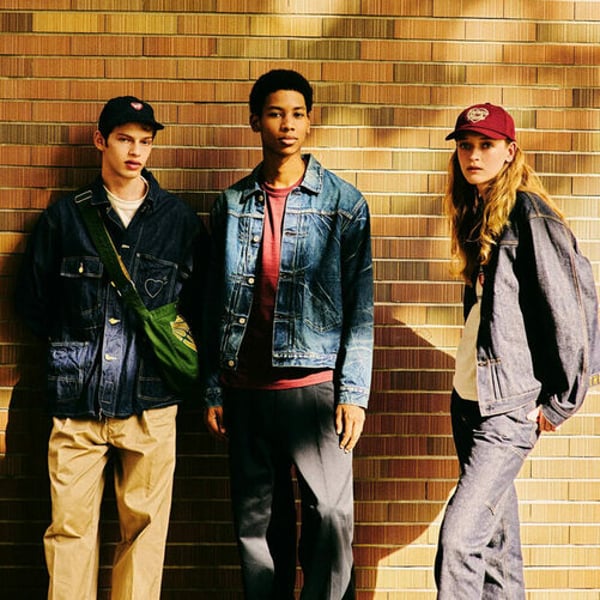
Founded in 2010, Human Made reflects the same mix of nostalgia, craftsmanship and pop-culture savvy that defined Nigo’s earlier work — but with a more mature approach. While BAPE captured the chaotic energy of 1990s Tokyo street culture, Human Made channels a quieter reverence for American heritage style, blending vintage workwear with preppy aesthetics.
With Human Made’s blockbuster IPO, the industry is watching whether Nigo’s next move could be to reclaim the brand that made him famous. In 2021, BAPE’s parent company, I.T Group, was taken private in a deal led by CVC Capital Partners leaving open the possibility that the designer who once walked away from his creation may one day buy it back.
Human Made, which sells through aggregator stores in China, South Korea and Hong Kong, is now pushing to expand overseas. In China, the company has built a following among younger consumers drawn to its retro designs and ties to global pop culture. But Japan’s fashion brands have historically struggled to scale in its fast-moving market, where trends shift quickly and local labels dominate e-commerce platforms. Japanese brands like Beams and United Arrows have name recognition but remain niche.
In its IPO prospectus, Human Made describes China as its “main battlefield,” prioritizing staffing and investment there and calling it “the biggest untapped market.” It also plans to expand in the US to balance its exposure to China, and grow across Southeast Asia and Europe through partnerships and placements in high-end department stores. This happens to come at a time of political and economic strains between China and Japan, which could add uncertainty to cross-border retail growth.
The IPO is just one piece of a broader empire. Beyond fashion, Nigo has become a prolific investor and collector. He serves as a creative advisor and investor in NOT A HOTEL, a Japanese hospitality startup that has drawn attention for turning luxury vacation homes into shareable assets. The company has more than 1,000 property owners. Among its flagship properties is the NIGO House, a concrete retreat built into a cliff overlooking Tokyo Bay with panoramic views of Mount Fuji.
In his 2014 Sotheby’s auction “NIGO Only Lives Twice,” he sold 250 lots of art, toys and furniture, including KAWS sculptures and bespoke Louis Vuitton blankets, fetching $4.5 million, about twice the presale estimate. A decade later, that ability to turn cultural influence into financial value is being tested again with Human Made’s market debut.
“Human Made embodies the energy and freedom of Tokyo’s backstreets, the blend of craftsmanship and playfulness, and a kind of Otaku culture layered in there too,” said Nakano, referring to a detail-obsessed pop-culture fandom.
”It’s less about a street fashion brand going public, and more about this market value being attached to Japanese-born culture,” she said. “It’s a groundbreaking event.”








Regional adjustments are anticipated to drive the contraction. Cotton acreage across the southern United States is expected to transition towards soybeans amid improved profitability prospects, while irrigated cotton areas in the Plains are likely to shift towards corn production as producers rebalance crop rotations and manage input cost pressures, CoBank said in an article by Tanner Ehmke and Emmie Noyes.
Slower US cotton export momentum to China, intensifying competition from Brazil and Australia in global markets, and continued substitution by manmade fibres have collectively restrained price recovery, limiting growers’ willingness to expand cotton area.
US cotton planted area is forecast to decline for a second straight year to about 9 million acres in 2026, down 3 per cent year on year, reflecting weak price competitiveness.
Acreage shifts towards soybeans and corn, slower exports to China, rising competition and fibre substitution are weighing on plantings.
Meanwhile, farm support payments are expected to stabilise the overall acreage decline.
Despite the projected decline, policy mechanisms are expected to provide a degree of support. Base acreage payments under farm support programmes are likely to cushion the adjustment, helping stabilise cotton plantings and preventing a sharper contraction in the 2026 season.
Fibre2Fashion News Desk (SG)
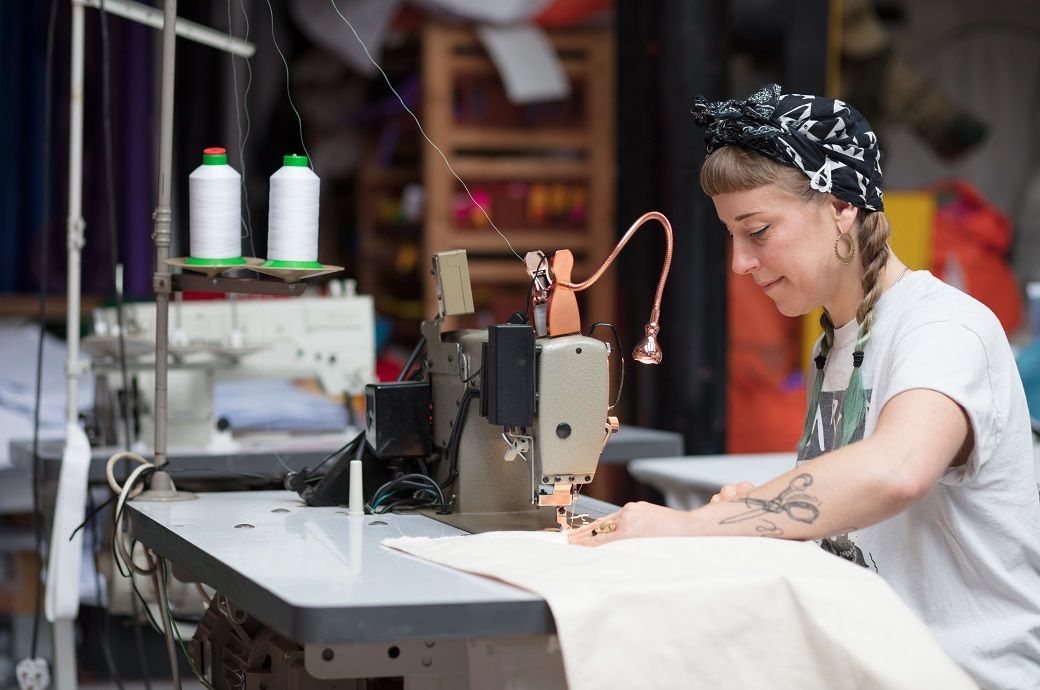
The recommendation follows a survey analysed by researchers from the University of Nottingham and the University of Leicester in collaboration with trade justice charity Transform Trade, which found systemic late payments, last-minute order changes without compensation and post-contract price reductions. Manufacturers reported that such practices shift financial risk from brands and retailers onto suppliers and ultimately workers.
Among respondents, 31 per cent reported order cancellations, while 78 per cent said brands failed to cover costs of last-minute changes to confirmed orders. A further 75 per cent stated prices were not adjusted to reflect minimum wage increases. Additionally, 67 per cent experienced order volumes being reduced without corresponding revisions to unit costs, and 44 per cent faced repeated payment extension requests. Ten per cent reported payments delayed by more than three months beyond agreed terms.
Researchers are urging the UK government to establish a Garment Trading Adjudicator after a survey by the University of Nottingham, University of Leicester and Transform Trade found widespread unfair purchasing practices in UK garment manufacturing.
The study highlights systemic late payments, cancellations and cost pressures affecting manufacturers and workers.
Manufacturers said these pressures had direct workforce consequences, including increased overtime to meet sudden order spikes for 73 per cent of workers, reduced hours following cancellations for 58 per cent, and job terminations for 29 per cent.
The survey also revealed limited confidence in formal dispute mechanisms. Only 22 per cent viewed the legal system as a viable route for redress, and none considered government or multistakeholder initiatives effective. Respondents cited financial and legal barriers, stating that pursuing action against brands was often unaffordable.
Dr Sabina Lawreniuk of the University of Nottingham’s School of Geography said, “Our research shows that current brand purchasing practices directly impact workers, resulting in precarious and insecure work across UK factories. Voluntary codes have proven insufficient. If we are serious about protecting workers and supporting a sustainable UK fashion industry, we need a Garment Trading Adjudicator to enforce fair practices across the sector.”
She added that the findings emphasise the need to rebalance relationships between brands and fashion manufacturers in the UK to support domestic manufacturing, sustainable business models, investment strategies, and to strengthen work and employment in the sector.
Professor Nikolaus Hammer of the University of Leicester also highlighted the importance of rebalancing these relationships to ensure sustainable UK production.
The researchers and Transform Trade said a sector regulator, like the Groceries Code Adjudicator, could help curb unfair purchasing practices and create greater accountability across fashion supply chains.
Fibre2Fashion News Desk (CG)
New Zealand’s apparel imports (HS ** and ** combined) declined to NZ$***.** million (~$***.* million) in January **** from NZ$***.** million in January ****, representing a *.* per cent year-on-year decrease. In volume terms, shipments fell to **.** million units from **.** million units, reflecting softer sourcing activity and continued inventory discipline among retailers.
Knitted apparel (HS **) imports declined to NZ$**.** million (~$**.* million) in January **** from NZ$**.** million in January ****, down *.* per cent year on year. Volumes also fell to **.** million units from **.** million units, suggesting weaker replenishment demand and continued emphasis on controlled inventory cycles across the retail segment.


One in five UK grocery trips involves at least one missing item – report

USA 2-0 Argentina (Mar 1, 2026) Game Analysis – ESPN

Shree Ram Twistex IPO Lists At 30% Discount, Clean Max Falls 20% In Debut Trade: Should You Buy, Sell Or Hold?

Eye-popping rise in one year: Betting on just gold and silver for long-term wealth creation? Think again! – The Times of India

Pakistan carries out precision strikes on seven militant hideouts in Afghanistan

These Cheap Noise-Cancelling Sony Headphones Are Even Cheaper Right Now

-
 Politics1 week ago
Pakistan carries out precision strikes on seven militant hideouts in Afghanistan
-
Business1 week ago
Eye-popping rise in one year: Betting on just gold and silver for long-term wealth creation? Think again! – The Times of India
-
 Tech1 week ago
These Cheap Noise-Cancelling Sony Headphones Are Even Cheaper Right Now
-

 Sports1 week ago
Kansas’ Darryn Peterson misses most of 2nd half with cramping
-

 Entertainment1 week ago
Viral monkey Punch makes IKEA toy global sensation: Here’s what it costs
-

 Sports1 week ago
How James Milner broke Premier League’s appearances record
-

 Entertainment1 week ago
Saturday Sessions: Say She She performs "Under the Sun"
-
Sports1 week ago
Mike Eruzione and the ‘Miracle on Ice’ team are looking for some company