

Fashion
Pharrell-backed Tokyo streetwear label seeks growth overseas after IPO

By
Bloomberg
Published
November 27, 2025
By midmorning, Human Made Inc.’s Harajuku flagship is humming with a quiet churn of tourists speaking Mandarin, English and Korean over an upbeat ‘80s pop soundtrack. Inside, white walls and exposed pipes frame racks of duck-print sweatshirts above storage crates stamped with Human Made’s retro graphics. Staff in sweatshirts and Converse sneakers keep the flow brisk, keeping with the rhythm of a brand whose shares are about to start trading after a blockbuster Tokyo debut.
The man behind it all once said he “couldn’t do business.” Now, Tomoaki “Nigo” Nagao, who made camouflage hoodies a global status symbol, is at the helm of a streetwear IPO so hot it’s 60 times oversubscribed, according to people familiar with the deal, and a valuation that places him in fashion’s new moneyed elite.
Human Made began trading on the Tokyo Stock Exchange on Thursday, after pricing last week in a debut that valued it at $460 million. The listing marks a rare moment when streetwear, once a subcultural rebellion against luxury, has matured into one of its most valuable commodities. Nigo’s stake amounted to nearly $285 million, marking his ascent from underground fashion icon to publicly listed mogul. He has already cashed in about $56 million worth of stock.
”This is a symbolic moment when a creative business rooted in Japanese street culture is being recognized as a valuable entity in the capital market,” said Kaori Nakano, visiting professor at Aoyama Gakuin University and a fashion historian. “I expect this to boost expectations of more investments into Japanese brands.”
Institutional investors sought more than 35 times the number of shares available to them, while demand from Japanese retail buyers was about 80 times, according to the people who declined to be named because the details aren’t public. At its IPO price, the stock trades at a valuation multiple far higher than Japan’s listed fashion peers. Human Made’s latest earnings show expansion, projecting about 20% growth in both revenue and profit for the current fiscal year.
“Its high multiple won’t be justified unless revenue and profit expansion look realistic,” said Ikuo Mitsui, a fund manager at Aizawa Securities Co. “But if the market comes to see Human Made as a growth stock, it wouldn’t be surprising for it to trade at around 50 times earnings going forward.”
The stock debut vaults Nigo into a new class of fashion wealth that’s distinct from old guard billionaires like Ralph Lauren, Miuccia Prada and Donatella Versace, who have dominated fashion for decades.
“In recent years, younger consumers have started to find that old idea of luxury offputting,” said Nakano. “They want something that feels fairer, where owning a product connects you to a community, not a hierarchy.”
Appetite for the listing has been intense. Among the biggest beneficiaries is Pharrell Williams — musician, producer and longtime collaborator who now serves as Louis Vuitton’s menswear creative director — with a 25.7% stake worth about $117 million. He sold about $33 million of that upon listing. Institutional investors included Sumitomo Mitsui DS Asset Management, MY.Alpha Management HK Advisors Ltd. and Asset Management One Co..
“What investors liked most is its growth,” said Takamasa Ikeda, a senior portfolio manager at GCI Asset Management who bid for shares in the IPO but didn’t receive any due to outsize demand. “It’s an outstanding pace for a company of this size.”
Human Made’s revenue and profit have risen more than fivefold since 2020, but sustaining that momentum will be a challenge, he added. “The company needs to broaden its offerings to maintain 20% revenue growth,” Ikeda said of the brand that has partnered with Nike Inc., Levi Strauss & Co. and Pokémon. “Expanding product lineups and collaborating with more global brands could be one solution. Investors are now watching to see whether Human Made can strike new tie-ups.”
Behind the business stands a seasoned executive team: CEO Rei Matsunuma, who spent 16 years at Fast Retailing’s Uniqlo, and Rehito Hatoyama, a former executive at Sanrio Co., the $9 billion company behind Hello Kitty, where he led the brand’s global expansion strategy.
Born in December 1970 in Maebashi, Japan, Nigo grew up in a modest household: his mother a nurse, his father a metalworker. His fascination with Western style was sparked by the men’s magazine Popeye, which introduced postwar Japanese youth to the Ivy League look of 1950s America. That curiosity led him to Bunka Fashion College, where he studied fashion editing, and where his distinct mix of design, branding and storytelling began to take shape.
For a generation that came of age in the 1990s, Nigo was already a bit of a legend. His brand A Bathing Ape (BAPE) defined Tokyo’s Harajuku scene, blending hip-hop, skate and Japanese pop-culture influences long before “streetwear” became a global currency. His clothes appeared on stars like The Notorious B.I.G., Pharrell and Kanye West, who helped transform the label from a local secret into an international symbol of exclusivity.
In 1993, the same year that Japanese-French designer Kenzo Takada moved to LVMH with his eponymous brand, bringing Japanese prints to the world, Nigo launched A Bathing Ape — fusing Tokyo youth culture with a global sensibility. Nearly two decades later in 2011, the fashion designer walked away from the loss-making label that had made him famous, selling it to a Hong Kong conglomerate.
But even after BAPE’s fall, Nigo remained an enduring influence. In 2003, he co-founded luxury streetwear label Billionaire Boys Club and Ice Cream with Pharrell. In 2021, he was appointed artistic director of LVMH’s Maison Kenzo — the first Japanese person in the role since Takada himself. Virgil Abloh, the late American designer, once called him “the Yves Saint Laurent or Balenciaga of streetwear.”
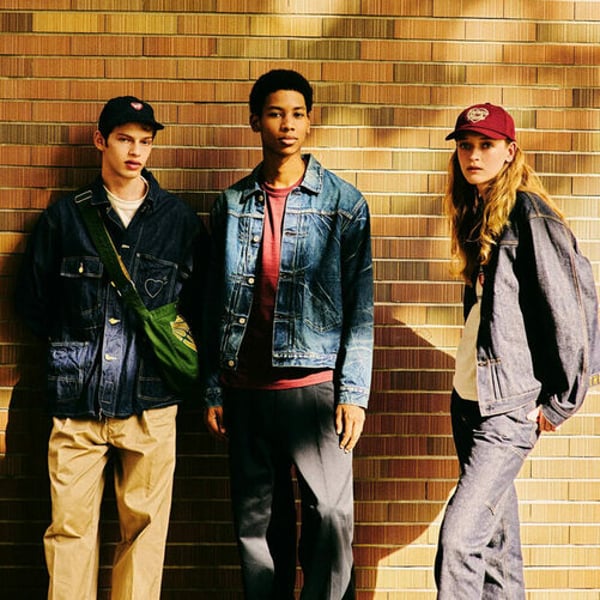
Founded in 2010, Human Made reflects the same mix of nostalgia, craftsmanship and pop-culture savvy that defined Nigo’s earlier work — but with a more mature approach. While BAPE captured the chaotic energy of 1990s Tokyo street culture, Human Made channels a quieter reverence for American heritage style, blending vintage workwear with preppy aesthetics.
With Human Made’s blockbuster IPO, the industry is watching whether Nigo’s next move could be to reclaim the brand that made him famous. In 2021, BAPE’s parent company, I.T Group, was taken private in a deal led by CVC Capital Partners leaving open the possibility that the designer who once walked away from his creation may one day buy it back.
Human Made, which sells through aggregator stores in China, South Korea and Hong Kong, is now pushing to expand overseas. In China, the company has built a following among younger consumers drawn to its retro designs and ties to global pop culture. But Japan’s fashion brands have historically struggled to scale in its fast-moving market, where trends shift quickly and local labels dominate e-commerce platforms. Japanese brands like Beams and United Arrows have name recognition but remain niche.
In its IPO prospectus, Human Made describes China as its “main battlefield,” prioritizing staffing and investment there and calling it “the biggest untapped market.” It also plans to expand in the US to balance its exposure to China, and grow across Southeast Asia and Europe through partnerships and placements in high-end department stores. This happens to come at a time of political and economic strains between China and Japan, which could add uncertainty to cross-border retail growth.
The IPO is just one piece of a broader empire. Beyond fashion, Nigo has become a prolific investor and collector. He serves as a creative advisor and investor in NOT A HOTEL, a Japanese hospitality startup that has drawn attention for turning luxury vacation homes into shareable assets. The company has more than 1,000 property owners. Among its flagship properties is the NIGO House, a concrete retreat built into a cliff overlooking Tokyo Bay with panoramic views of Mount Fuji.
In his 2014 Sotheby’s auction “NIGO Only Lives Twice,” he sold 250 lots of art, toys and furniture, including KAWS sculptures and bespoke Louis Vuitton blankets, fetching $4.5 million, about twice the presale estimate. A decade later, that ability to turn cultural influence into financial value is being tested again with Human Made’s market debut.
“Human Made embodies the energy and freedom of Tokyo’s backstreets, the blend of craftsmanship and playfulness, and a kind of Otaku culture layered in there too,” said Nakano, referring to a detail-obsessed pop-culture fandom.
”It’s less about a street fashion brand going public, and more about this market value being attached to Japanese-born culture,” she said. “It’s a groundbreaking event.”












“We are thrilled to welcome Erinn Murphy to Kontoor Brands,” said executive vice president, chief financial officer & global head of operations, Joe Alkire. “Having led investor relations and corporate strategy from within a high-growth consumer brand and nearly twenty years of experience covering global lifestyle brands as a respected senior equity analyst, she understands what drives long-term value creation from every angle. Her perspective will expand the operational and strategic depth of the Helly Hansen leadership team as we focus on accelerating growth and expanding the brand’s global reach, while also strengthening how Kontoor engages with the investment community.”
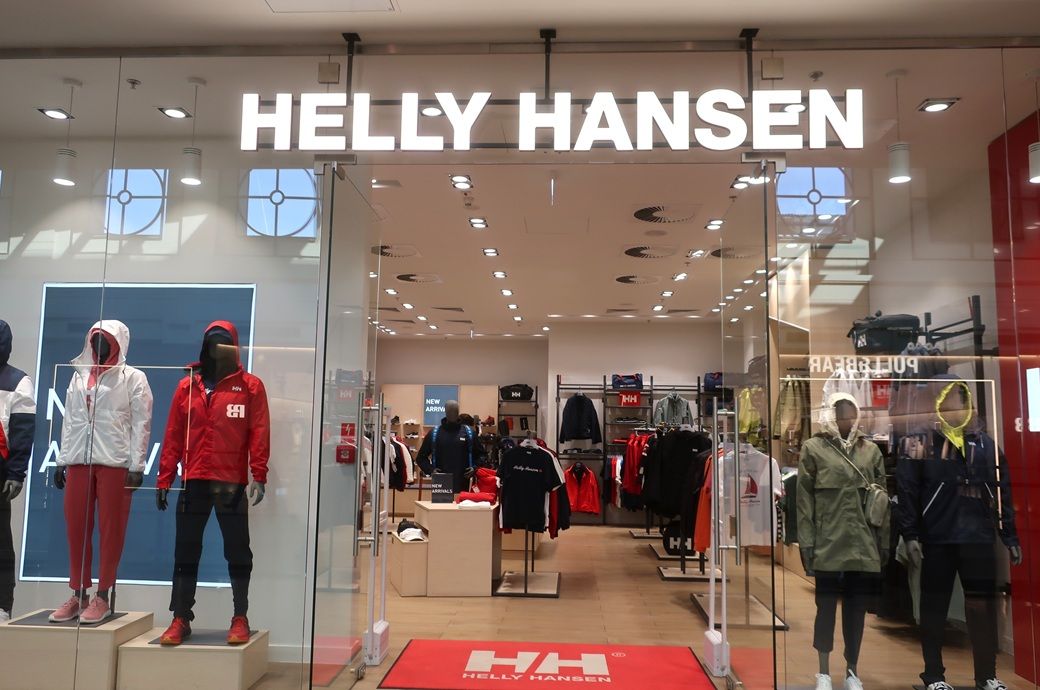
Kontoor Brands has named Erinn Murphy VP, global head of finance & operations for Helly Hansen and Corporate Investor Relations, starting May in Oslo.
She joins from Crocs, Inc., bringing nearly two decades of experience across investor relations, strategy and equity research.
Michael Karapetian will expand his role and return in Q3 2026 to support transition and investor engagement.
Murphy joins Kontoor from Crocs, Inc., a global leader in innovative casual footwear, where she served as Senior Vice President, Investor Relations and Corporate Strategy. Prior to that, she served as Managing Director of Consumer Equity Capital Markets for leading investment bank, Piper Sandler. She was recently appointed as a member of the board of directors for Revolve Group, Inc. (NYSE: RVLV).
Murphy’s appointment coincides with an expanded role for Michael Karapetian, who will serve as Vice President, Global Brand & Operations Finance and Corporate Investor Relations, with responsibility for all aspects of global brand and supply chain finance and corporate investor relations. Karapetian will return from his international assignment at Helly Hansen in the third quarter of 2026 to allow for a transition period.
Note: The headline, insights, and image of this press release may have been refined by the Fibre2Fashion staff; the rest of the content remains unchanged.
Fibre2Fashion News Desk (RM)
The group reported first-quarter (Q1) 2026 revenue of €3,568 million (~$4,210.24 million), down 6 per cent year-over-year (YoY) on a reported basis but stable on a comparable basis, signalling early signs of recovery despite geopolitical pressures.
Kering’s Q1 2026 revenue reached €3,568 million (~$4,210.24 million), down 6 per cent YoY but stable comparably, signalling early recovery.
Retail fell 2 per cent, while wholesale rose 6 per cent.
Fashion & Leather Goods sales went down 9 per cent.
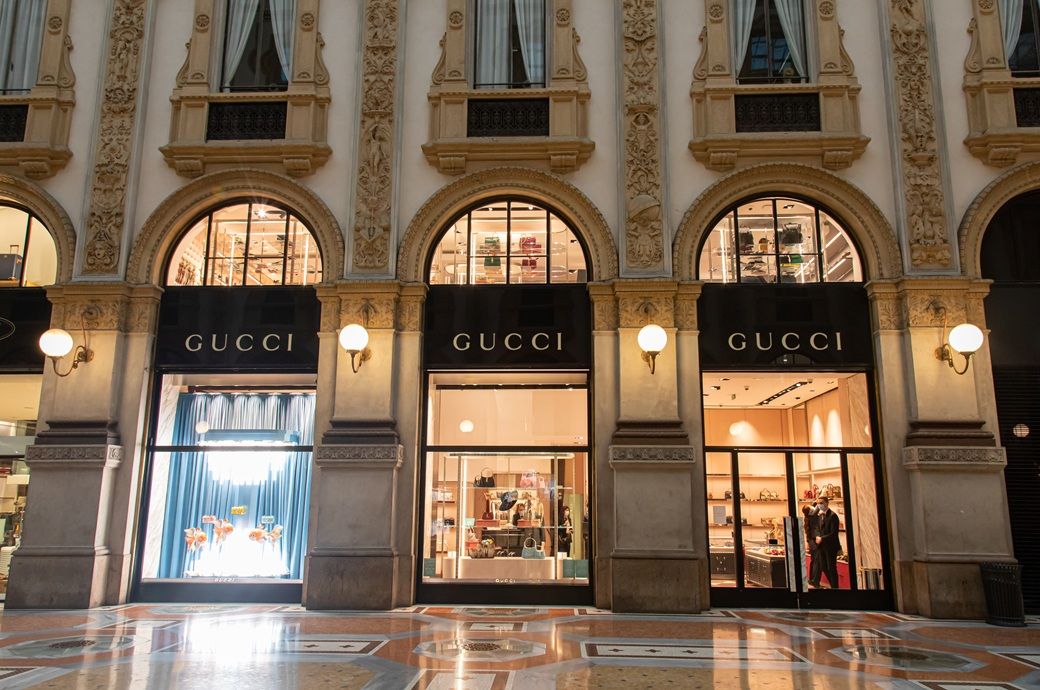
Gucci declined 14 per cent to €1,347 million (~$1,589.46 million).
Middle East retail dropped 11 per cent, contributing 5 per cent of sales.
“In the first quarter of 2026, group revenue stabilised, marking an important first step in our recovery and a further sequential improvement. This performance reflects the first tangible effects of our actions, despite a challenging geopolitical environment,” said Luca de Meo, CEO of Kering.
Retail sales, including e-commerce, declined 2 per cent on a comparable basis, reflecting uneven regional demand. Wholesale revenue rose 6 per cent, Kering said in a press release.
Kering’s Fashion & Leather Goods posted a revenue of €2,852 million, down 9 per cent reported and 3 per cent comparable. Direct retail sales fell 4 per cent. Growth was driven by Saint Laurent, Bottega Veneta, Balenciaga and Brioni, particularly in North America.
Saint Laurent saw strong traction in shoes and ready-to-wear, while Bottega Veneta performed well in Asia-Pacific. Balenciaga continued to benefit from leather goods demand, and Brioni maintained positive momentum. Wholesale revenue for the segment increased 2 per cent.
Gucci posted €1,347 million (~$1,589.46 million) in revenue, down 14 per cent reported and 8 per cent comparable. Retail sales declined 9 per cent. North America grew 8 per cent, but this was offset by declines in Asia-Pacific and Western Europe.
“Gucci remains our top priority. A comprehensive turnaround is underway, with decisive actions across client, distribution and, above all, the offer,” added de Meo. “We have reset the product architecture and strengthened category focus, with new collections rolling out progressively in stores throughout the year.”
Regionally, the Middle East remains a key area of focus, contributing around 5 per cent of retail revenue. The Group operates 79 stores and employs approximately 1,100 people in the region. Retail revenue there declined 11 per cent in Q1 following earlier growth, amid geopolitical tensions. However, all stores are currently operational.
Kering continued to strengthen its operational structure and growth platforms during the quarter.
“The first quarter of 2026 marked continued progress, as we executed with pace and focus. We have launched a Group platform designed to support the growth of our Houses and enhance efficiency,” said de Meo.
Kering remains focused on restoring growth and improving margins in 2026 through disciplined execution and strategic repositioning.
Fibre2Fashion News Desk (SG)
The May 2026 contract settled at 75.11 cents per pound, up 0.77 cent or 1 per cent. The most traded contract of July 2026 rallied 0.90 cent or 1.20 per cent to settle at 77.42 cents per pound. It had touched an intraday high of 77.75 cents, marking its highest level since July 2024. Other contracts also rose to reach a high level.
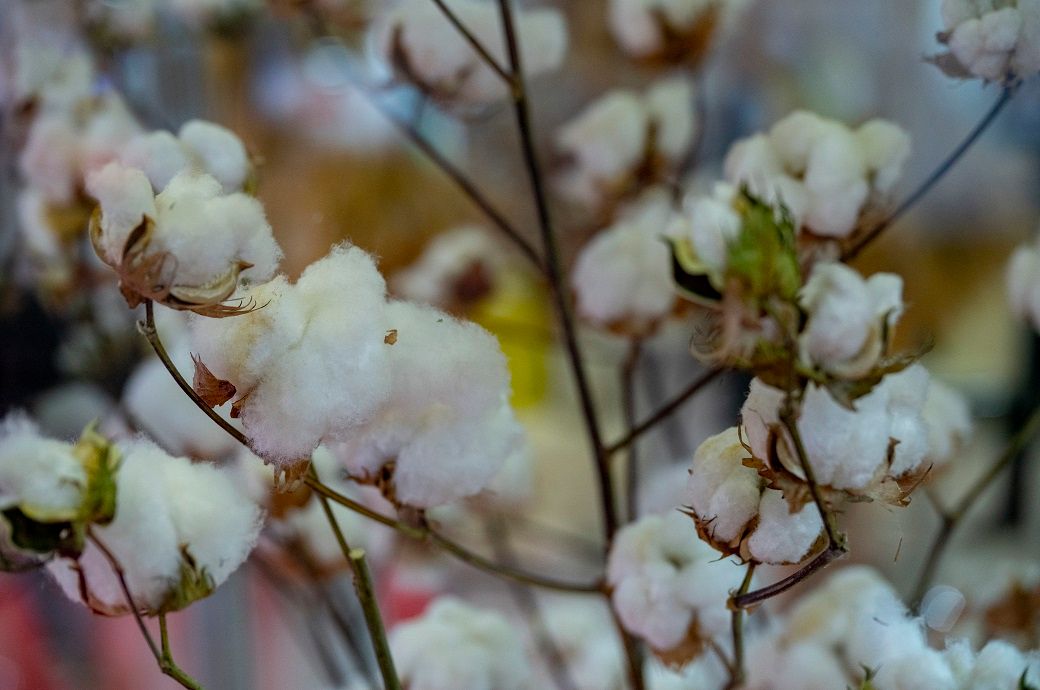
ICE cotton surged to a 22-month high, led by a weaker US dollar, firm crude oil and drought concerns in key US regions.
The July 2026 contract hit its highest since July 2024.
Strong trading volumes and rising synthetic fibre costs supported demand, while weather risks and macro factors kept market sentiment firmly bullish.
Deliverable stocks remained unchanged, signalling tight supply conditions.
Total trading volume was recorded at 98,489 contracts, reflecting strong participation and sustained buying interest.
Crude oil prices remained firm as supply disruption concerns persisted due to ongoing geopolitical tensions involving Iran. Markets reacted to mixed signals after statements indicating a possible end to the US-Iran conflict, but uncertainty kept oil prices supported. The conflict has effectively disrupted flows through the Strait of Hormuz, which handles nearly 20 per cent of global oil and gas shipments along with key commodities like fertilisers. Elevated crude oil prices are increasing polyester fibre production costs, thereby supporting cotton demand as a substitute fibre.
The US dollar index edged lower and traded in a narrow range as investors assessed the likelihood of renewed US-Iran negotiations. A weaker dollar made US cotton more competitive in global markets, providing additional support to export demand.
According to market analysts, high crude oil prices and rising synthetic fibre costs are key drivers supporting the cotton market, along with the impact of a weaker dollar.
The ongoing drought conditions in the United States also continued to pose risks to crop development unless weather conditions improve. Weather conditions in major US cotton-producing regions remain dry, reinforcing concerns over crop health, yield potential, and overall supply outlook.
ICE data showed that deliverable No. 2 cotton futures stocks remained unchanged at 159,512 bales as of April 14.
Broader financial markets showed strength, with the S&P 500 and Nasdaq closing at record highs driven by strong corporate earnings and optimism around geopolitical developments. CBOT wheat futures rose for the third consecutive session and have gained nearly 4 per cent so far this week due to drought conditions in the US Plains impacting crop prospects.
Cotton futures remain in a strong bullish phase with prices at multi-month highs, supported by macroeconomic factors such as a weaker dollar and firm crude oil, along with fundamental support from adverse US weather conditions. Market sentiment continues to favour further upside in the near term.
This morning (Indian Standard Time), ICE cotton for May 2026 was trading at 75.98 cents per pound (up 0.87 cent), cash cotton at 73.11 cents (up 0.77 cent), the July 2026 contract at 78.32 cents (up 0.90 cent), the October 2026 contract at 78.94 cents (up 1.37 cent), the December 2026 contract at 79.10 cents (up 0.75 cent) and the March 2027 contract at 79.85 cents (up 0.66 cent). A few contracts remained at their previous closing levels, with no trading recorded so far today.
Fibre2Fashion News Desk (KUL)


Spoiler alert! Surprise twist in “Survivor 50” elimination

Layla Banaras: Bridging two worlds, building Pakistan’s women’s football future

Kane hails ‘special night’ as Bayern finally gets past old rivals Madrid

-

 Entertainment1 week ago
Queen Elizabeth II emotional message for Archie, Lilibet sparks speculation
-

 Tech1 week ago
Azure customers up in arms over ‘full’ UK South region | Computer Weekly
-

 Tech1 week ago
As the Strait of Hormuz Reopens, Global Shipping Will Take Months to Recover
-

 Fashion1 week ago
CII submits 20-pt agenda to Indian govt to back firms hit by Iran war
-

 Tech1 week ago
This AI Button Wearable From Ex-Apple Engineers Looks Like an iPod Shuffle
-

 Politics6 days ago
Indian airlines hit hardest after Dubai limits foreign flights until May 31
-

 Entertainment4 days ago
Palace left in shock as Prince William cancels grand ceremony
-

 Politics6 days ago
Chinese, Taiwanese will unite, Xi tells Taiwan opposition leader