

Business
PM Shehbaz to address the nation tonight | The Express Tribune

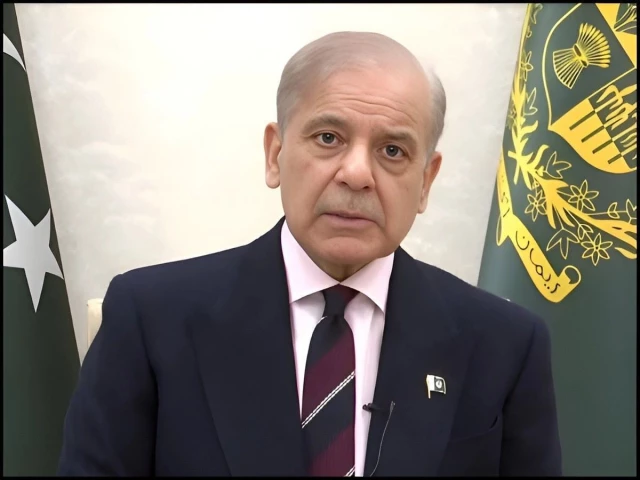
Prime Minister Shehbaz Sharif addresses the nation on Friday. SCREENGRAB
Prime Minister Shehbaz Sharif on Friday announced a reduction of Rs135 per litre in the price of high-speed diesel and a cut of Rs12 per litre for petrol.
Addressing the nation late on Friday night, the prime minister said he was speaking “at such a historic moment when, by the grace of Allah, there is talk of peace in the Middle East instead of war,” and that parties which “were until yesterday facing each other in war, and the region presenting a scene of devastation, are now ready to resolve the crisis through talks.”
He thanked the Iranian and United States leadership for accepting his offer and agreeing not only to a temporary ceasefire but also coming to Islamabad on his invitation, where he said dialogues would be held to establish peace.
He categorically thanked Field Marshal Asim Munir and Deputy Prime Minister and Foreign Minister Ishaq Dar for playing a key and historic role in extinguishing the flames of war and persuading the parties to agree to negotiations. “In this regard, Field Marshal Asim Munir’s services will be remembered in history in golden words,” he added.
The prime minister said that a temporary ceasefire had been announced, but a more difficult phase now lay ahead — a lasting ceasefire and resolving the outstanding issues through negotiations — calling it a “make or break” situation. He appealed to the public to pray that Allah, in His infinite mercy, may make these negotiations successful, saying this would save many innocent lives and help establish peace in the world.
He added that the leadership of both countries would be present in Islamabad the following day, and that the Pakistani leadership would make every possible sincere effort to ensure the success of the talks, leaving the outcome to Allah Almighty.
“For this purpose, the leadership of both countries will be present in Islamabad the following day, and the Pakistani leadership will make every possible sincere effort to ensure the success of these talks,” he said, while adding that the outcome of the talks is left to Allah Almighty.
“For this purpose, the leadership of both countries will be present in Islamabad the following day, and the Pakistani leadership will make every possible sincere effort to ensure the success of these talks,” he said, adding that the outcome of the talks would be left to Allah Almighty.
He said that since the “storm of unprecedented inflation” had begun, he had promised the public that as soon as international fuel prices declined, the benefit would be passed on to them immediately.
He said that today there had been some reduction in fuel prices in the international market, and he was advised that, to offset the Rs129 billion spent by the government in recent weeks to shield the public from rising prices, part of the relief could be passed on to consumers while retaining some portion to reduce those expenditures.
“I rejected this proposal without a moment’s delay,” he said, adding that when prices were “touching the sky” and the burden of inflation had fallen on the public, he had witnessed their patience in bearing the hardship.
He said that now that prices had declined, he considered it his moral and political responsibility to pass on the full benefit to the people.
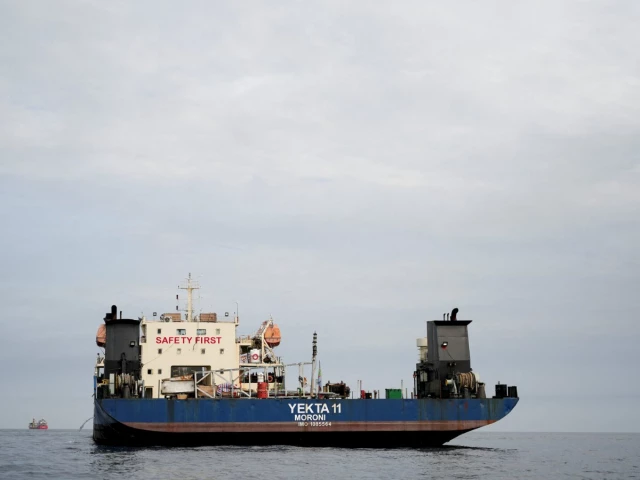
Last month, the government increased the prices of petroleum products by Rs55 per litre, citing a rise in international market rates amid the US-Iran war in the Middle East.
Officials said that for the next three weeks, the government refrained from further price increases, with the prime minister bearing the brunt of the adjustment by providing a subsidy of Rs129 billion.
However, on April 2, the government raised the petrol price by Rs137 per litre, taking it to a record Rs458.4, while also increasing the price of high-speed diesel to Rs520.35 per litre — an increase of Rs185 per litre or 55 per cent.
Shortly after the announcement, within 24 hours, PM Shehbaz reduced the petroleum levy on petrol by Rs80 per litre, bringing the petrol price down to Rs378 per litre.



Business
Gold prices today (April 14, 2026): MCX gold jumps over 1%; June, August contracts extend gains – The Times of India
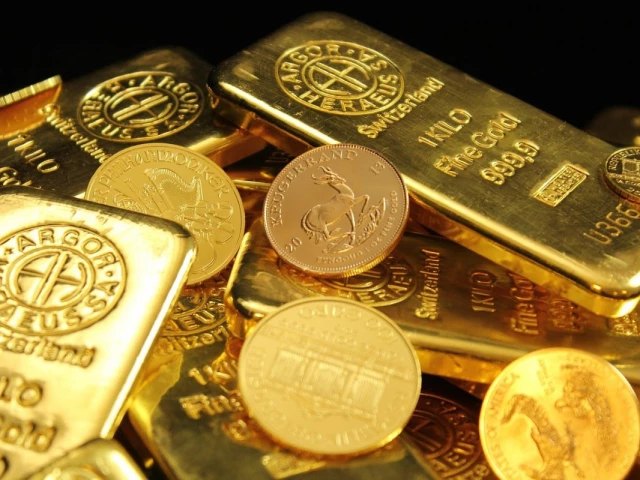
Gold prices traded higher in the domestic futures market on Tuesday, tracking firm global cues and improved sentiment amid easing dollar pressure and hopes of renewed geopolitical talks.On the Multi Commodity Exchange (MCX), gold futures for the June 2026 contract rose Rs 1,981, or 1.30%, to Rs 1,54,053 per 10 grams. The contract touched a high of Rs 1,54,170 and a low of Rs 1,52,700 during the session.The August 2026 contract also gained Rs 2,024, or 1.31%, to trade at Rs 1,56,645 per 10 grams, after hitting an intraday high of Rs 1,56,855.Meanwhile, the October 2026 contract edged higher by Rs 1,231, or 0.78%, to Rs 1,58,401 per 10 grams.Separately, in international market, spot gold rose 1.5% to $4,808.69 per ounce by 11:31 a.m. ET, while US gold futures gained 1.4% to $4,833.10, Reuters reported.Market sentiment improved after reports that negotiating teams from the US and Iran could return to Islamabad this week to restart talks, following the collapse of weekend discussions that led Washington to impose a blockade on Iranian ports.“The direction of the gold market will depend on how the talks go in Pakistan and what kind of progress is made heading into the weekend. If we see positive news, metals will continue higher,” said Bob Haberkorn, senior market strategist at RJO Futures, Reuters quoted.“Lower dollar, lower oil right now is helping gold out, being that when the war started, there was a rush to cash and a concern about being able to accumulate energy supplies,” he added.The US dollar drifted lower while oil prices also eased, making dollar-denominated bullion more affordable for holders of other currencies.Data showed US producer prices increased less than expected in March as the cost of services remained unchanged, although rising energy prices linked to the Iran war continued to fuel inflation pressures.Despite being seen as an inflation hedge, gold tends to lose appeal in a higher interest rate environment since it does not offer yield.Traders are now pricing in a 28% probability of a US rate cut this year, compared with expectations of two rate cuts before the conflict began.“As long as the market does not begin to seriously consider a rate hike by the US Federal Reserve – there are no signs of this so far – the gold price is unlikely to fall much further,” analysts at Commerzbank said.Among other precious metals, spot silver surged 4.7% to $79.12 per ounce, platinum rose 0.9% to $2,088.13, while palladium edged 0.2% lower to $1,571.02.
Business
US wholesale inflation data: Producer prices rise 4% as Iran war fuels energy surge, Fed faces policy dilemma – The Times of India
US wholesale prices rose sharply in March as the Iran war drove up energy costs, adding to inflation pressures and complicating the Federal Reserve’s policy outlook.Producer prices, which measure inflation at the wholesale level before it reaches consumers, rose 0.5% from February and 4% from March 2025, marking the biggest annual increase in more than three years, AP reported.Energy prices surged 8.5% month-on-month, reflecting the impact of the Middle East conflict on global oil markets.However, core producer prices –which exclude volatile food and energy components- rose a modest 0.1% from February and 3.8% year-on-year, indicating relatively contained underlying inflation.The rise in wholesale inflation adds to challenges for the US Federal Reserve, which has been under pressure from President Donald Trump to cut interest rates, even as some policymakers lean toward tightening due to persistent price pressures.Food prices, a politically sensitive component ahead of next year’s midterm elections, declined 0.3% in March after rising 2.4% in February.Economists track wholesale inflation closely as it provides early signals on consumer prices, with components such as healthcare and financial services feeding into the Fed’s preferred gauge — the personal consumption expenditures (PCE) index.“The decline in food prices is overdue, and welcome news for everyone,” Carl Weinberg, chief economist at High Frequency Economics, said. “Food price increases are at the core of political arguments over affordability.”The latest data follows a sharp rise in consumer inflation, with gasoline prices pushing the consumer price index up 3.3% year-on-year in March — the biggest increase since May 2024 — and 0.9% month-on-month, the steepest gain in nearly four years.Meanwhile, the International Energy Agency (IEA) warned that the Iran war could lead to an annual decline in global oil demand for the first time since the pandemic.The agency said oil demand is expected to fall by an average of 80,000 barrels per day this year, a sharp reversal from its earlier forecast of an increase of 850,000 barrels per day.The drop in demand has been driven by attacks on energy infrastructure and the shutdown of the Strait of Hormuz, with the IEA projecting a decline of 1.5 million barrels per day in the current quarter.While the initial impact has been concentrated in the Middle East and Asia-Pacific, demand destruction is expected to spread as oil prices rise and supply constraints persist.
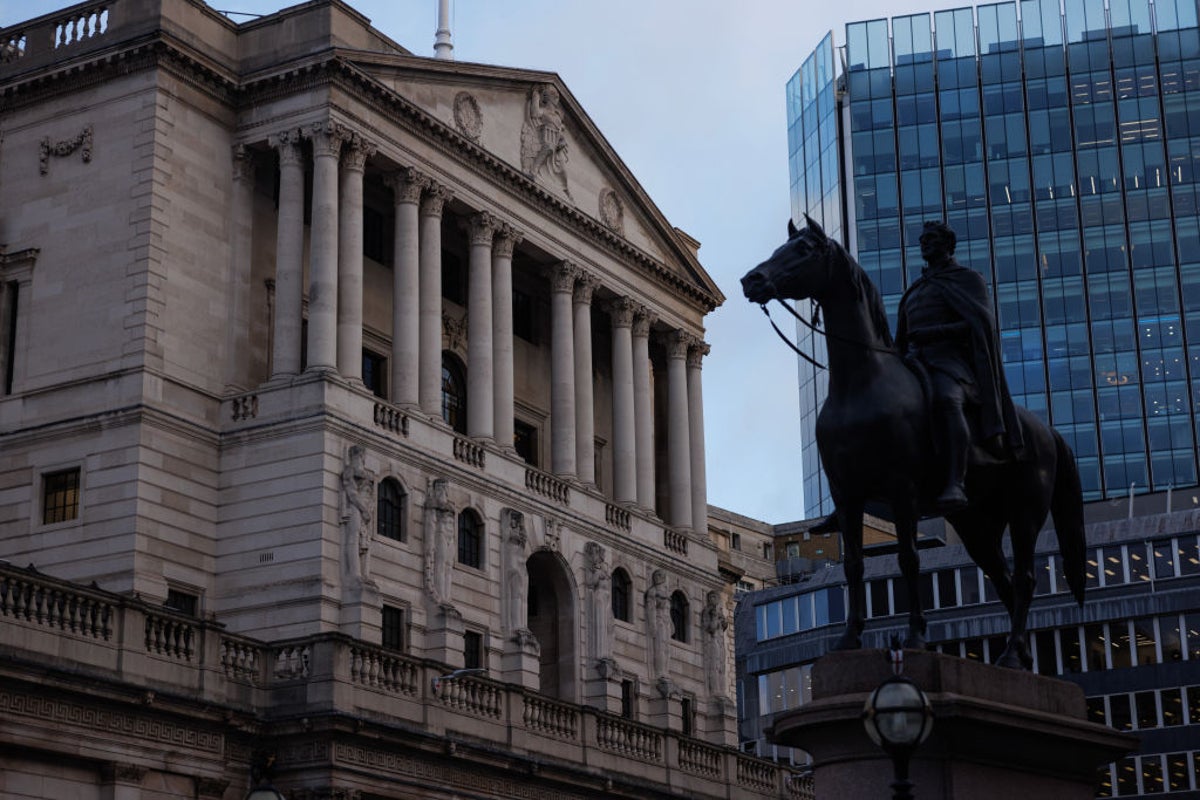
Britain is heading for “stagflation”, according to at least one gloomy forecast, as energy prices bite and inflation jumps as a result of the Iran war.
Stagflation – a combination of rising inflation, higher unemployment and low or zero economic growth – is seen as a “worst of both worlds” scenario because it is hard for policymakers to make clear choices.
If they boost employment, that only adds to inflation. If they fight inflation, that hurts growth.
Thomas Pugh, chief economist at RSM UK, said: “President Trump’s announcement of a naval blockade of the Strait of Hormuz has shifted the focus back to the risks of higher energy prices and recession. It’s now looking inevitable that the UK is in for another bout of stagflation, even if inflation won’t go as high as in 2023.
“Further constraining supply leaving the region pushes energy prices to levels that would trigger demand destruction in Europe, the UK and Asia. That would tip the UK into recession and potentially force the Bank of England to raise interest rates.”
Inflation hit 12.8 per cent in 2023. It is now at 3.3 per cent, according to official March figures.
Last time the Bank of England met to discuss rates, it held them at 3.75 per cent. Before the war, the strong expectation was that rates could come down two or three times this year, cutting borrowing costs for homeowners and businesses.
Economists still say the Bank can resume its original path as long as the Iran conflict doesn’t drag out past the summer. Inflation, the Bank thought, was coming down prior to the first attack.
Not all City economists are so pessimistic. None thinks the economy is about to boom, but they doubt a recession looms.
Paul Dales, chief UK economist at Capital Economics, said: “While acknowledging the huge uncertainty, we think it is more likely that the UK economy will stagnate rather than contract significantly. And because the labour market is much weaker now than in 2021-22, this bout of inflation will probably be milder and shorter, perhaps with inflation rising from 3 per cent in February to a peak of 4 per cent around the turn of the year. And with interest rates already reasonably high, I doubt the Bank of England will raise interest rates in response.”
However, Mr Pugh said the UK will suffer stagflation even if the ceasefire is resumed because of the damage done to consumer confidence by higher fuel and mortgage costs.
He added: “Energy prices at current levels are still enough to push inflation above 3 per cent by the end of the year. Once we add in higher shipping and raw material costs and supply chain disruptions, it’s easy to get to inflation of around 3.5 per cent/4 per cent by the end of the year. That’s significantly higher than the 2 per cent to 2.5 per cent we were expecting back in February.”
Meanwhile, business bosses are also concerned. HSBC CEO Georges Elhedery told Bloomberg: “We’re saddened and concerned with what’s happening in the Middle East, and we’re concerned not just with what’s happened, but also with how long this will take. Unfortunately, some of these uncertainties have initially started to weigh on general confidence.”

Gold prices today (April 14, 2026): MCX gold jumps over 1%; June, August contracts extend gains – The Times of India

WNBA draft: Mystics, Storm, Lynx and Wings get top marks

Trade bodies call for moving HR 4930 forward in US legislative process

-

 Fashion1 week ago
India’s exports face reset as EU links trade to carbon metrics: EY
-

 Entertainment6 days ago
Queen Elizabeth II emotional message for Archie, Lilibet sparks speculation
-

 Tech6 days ago
As the Strait of Hormuz Reopens, Global Shipping Will Take Months to Recover
-

 Tech6 days ago
Azure customers up in arms over ‘full’ UK South region | Computer Weekly
-

 Entertainment1 week ago
Lamar Odom shocking response to Khloé Kardashian account of his overdose
-

 Sports1 week ago
With Messi goal, Inter Miami open new stadium with dream moment
-

 Tech5 days ago
This AI Button Wearable From Ex-Apple Engineers Looks Like an iPod Shuffle
-

 Fashion6 days ago
CII submits 20-pt agenda to Indian govt to back firms hit by Iran war