

Politics
Poland downs drones in its airspace, becoming first Nato member to fire during Ukraine war

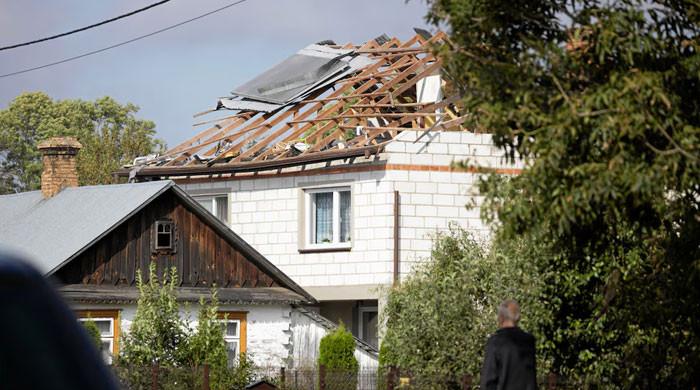
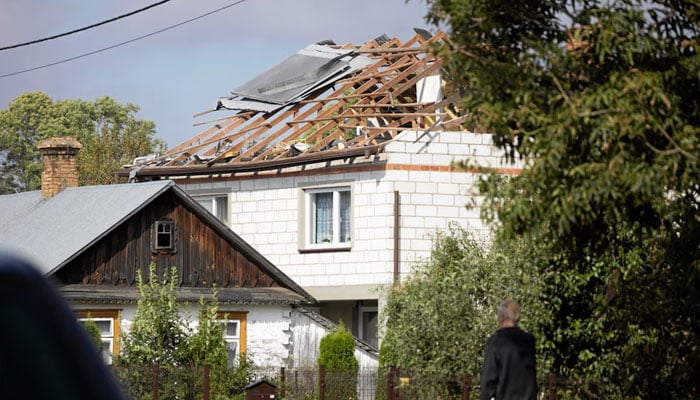
- Drone crashes into pensioner’s house in eastern Polish village.
- Polish premier says it was closest they’ve been to open conflict.
- Nato chief calls incident absolutely reckless, dangerous.
Poland shot down suspected Russian drones in its airspace on Wednesday with the backing of military aircraft from its Nato allies, the first time a member of the Western military alliance is known to have fired shots during Russia’s war in Ukraine.
Polish Prime Minister Donald Tusk told parliament it was “the closest we have been to open conflict since World War Two”, although he also said he had “no reason to believe we’re on the brink of war”.
Polish F-16 fighter jets, Dutch F-35s, Italian AWACS surveillance planes and Nato mid-air refuelling aircraft scrambled in an operation to shoot down drones that began entering Polish airspace on Tuesday evening and kept coming until morning, officials said.
One drone smashed into Tomasz Wesolowski’s two-storey brick house in the eastern Polish village of Wyryki-Wola at 6:30am while he was downstairs watching news about the incursion on TV.
The roof was destroyed and debris was strewn across the bedroom. Wesolowski told Reuters the house “needs to be demolished”.
A blackened spot in a black field elsewhere in southeastern Poland showed where other drones had fallen.
Moscow denied responsibility for the incident, with a senior diplomat in Poland saying the drones had come from the direction of Ukraine. Russia’s defence ministry said its drones had carried out a major attack on military facilities in western Ukraine but it had not planned to hit any targets in Poland.
The leaders of France, Britain, Germany and Canada were among Nato leaders to condemn the Russian incursion in strong terms.
There was no immediate statement from Washington. The US Air Force general serving as the top Nato commander, Alexus Grynkewich, said the alliance had “responded quickly and decisively to the situation, demonstrating our capability and resolve to defend allied territory”.
European leaders, who have lately been trying to persuade US President Donald Trump to join them in tightening sanctions on Russia and boosting support for Kyiv, said it justified a collective response.
Poland said 19 objects had entered its airspace during a large Russian air attack on Ukraine, and that it had shot down those that posed a threat.
Tusk called the incident a “large-scale provocation” and said he had activated Article Four of Nato’s treaty, under which alliance members can demand consultations with their allies.
Andrey Ordash, Russia’s charge d’affaires in Poland, was cited by RIA state news agency as calling accusations of an incursion “groundless” and said Poland had not given any evidence that the drones shot down were of Russian origin.
The Kremlin declined to comment directly on the incident but spokesperson Dmitry Peskov said the EU and Nato “accuse Russia of provocations on a daily basis. Most of the time without even trying to present at least some kind of argument.”
During the incident, the Operational Command of the Polish Armed Forces urged residents to stay at home, with three eastern regions at particular risk.
Several Polish airports were temporarily closed, including one that has been used as the main access point for Western officials and supplies travelling to Ukraine over land.
Nato chief Mark Rutte said that a full assessment of the incident had not yet been made but added that, “whether it was intentionally or not, it is absolutely reckless, it is absolutely dangerous.”
Countries bordering Ukraine have reported occasional Russian missiles or drones entering their airspace in the past during the war, but not on such a large scale, and they are not known to have shot them down. Two people were killed in Poland in 2022 by a Ukrainian air defence missile that went astray.
Since Nato’s creation in 1949, Article 4 has been invoked seven times, most recently in February 2022 following Russia’s invasion of Ukraine.
EU calls for action
“Russia’s war is escalating, not ending. We must raise the cost on Moscow, strengthen support for Ukraine, and invest in Europe’s defence,” the EU’s top diplomat Kaja Kallas said.
Early indications suggested the entry of Russian drones into European airspace was intentional, not accidental, she added in her post on X.
Ukrainian President Volodymyr Zelenskiy said Russia used 415 drones and 40 missiles in attacks on Ukraine overnight, adding that at least eight Iranian-made shahed drones had been aimed towards Poland.
“An extremely dangerous precedent for Europe,” he said. “A strong response is needed – and it can only be a joint response by all partners: Ukraine, Poland, all Europeans, the United States.”
Russia has long said it has no intention of stoking a war with Nato and that Western European countries suggesting it is a threat were trying to worsen relations.
European Commission President Ursula von der Leyen called for more sanctions on Russia, and said the EU was preparing sanctions on ‘shadow fleet’ tankers that transport its oil and third countries that buy it.
Trump, who warmly welcomed Putin in Alaska at a summit in August, said over the weekend he was ready to move to a second phase of sanctioning Russia after months of talks about a peace deal.
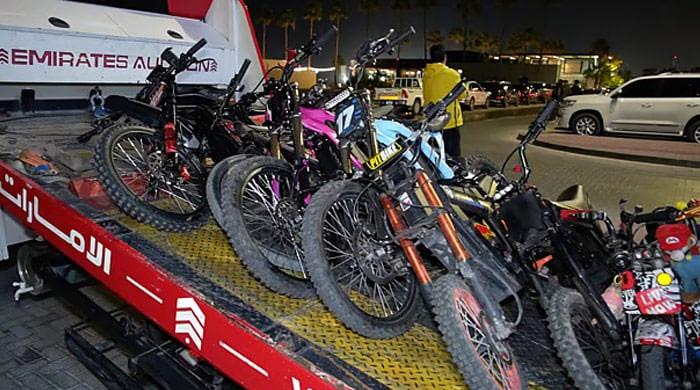
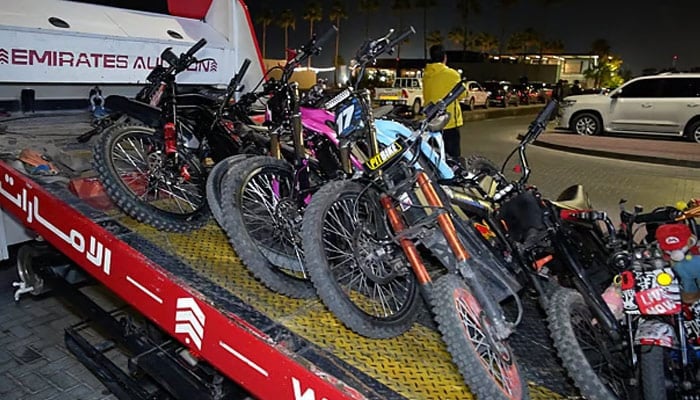
DUBAI: Dubai Police have seized several motorbikes after groups of young riders were reported performing dangerous stunts and causing disturbance in residential neighbourhoods following iftar during Ramadan.
Authorities said residents complained about loud noise, reckless riding and youths using motorbikes and quad bikes to carry out risky manoeuvres on public roads.
Police summoned the parents of the minors involved and took legal action, stressing that such behaviour poses a serious risk not only to the riders themselves but also to other road users and pedestrians.
“Reckless driving and stunts endanger lives and disturb community safety,” Dubai Police said, urging the public to report similar violations through the 901 helpline or via the Dubai Police mobile app.
A video shared by Dubai Police on social media showed some of the confiscated bikes and officers addressing the issue as part of ongoing efforts to ensure road safety during the holy month.
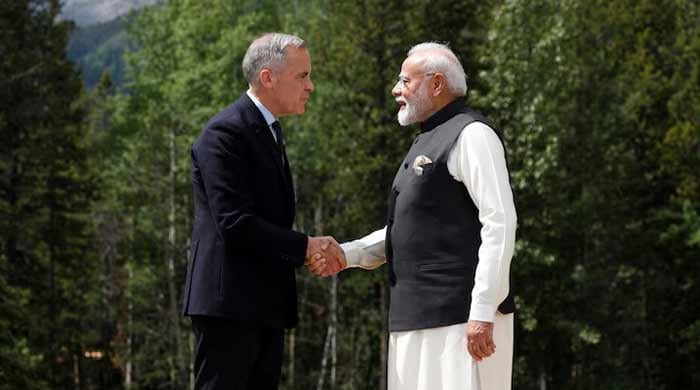
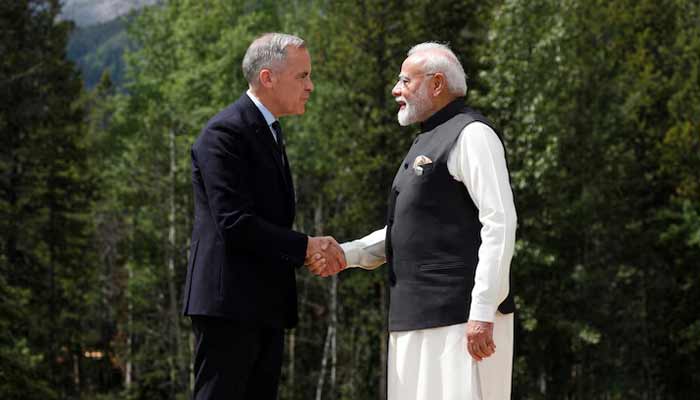
- Canadian PM to address finance leaders before meeting Indian PM.
- Carney wants more than double two-way trade with India by 2030.
- India hopes Canada to support to expand nuclear power capacity.
Canada PM begins key India visit, seeking to boost trade
Canadian Prime Minister Mark Carney landed in India on Friday for a visit he hopes would reset ties and double trade, offsetting the damage from his country’s fracturing relations with the United States.
Carney’s visit is a key step forward in ties that effectively collapsed in 2023 after Ottawa accused New Delhi of orchestrating a deadly campaign against Sikh activists in Canada.
He arrived in the financial hub of Mumbai, where he is expected to address business leaders before travelling to the capital and meeting with Prime Minister Narendra Modi on Monday, the final day of his visit.
Indian broadcasters showed a police convoy as Carney was whisked through Mumbai.
Carney’s office said discussions would focus on “ambitious new partnerships in trade, energy, technology and artificial intelligence (AI), talent and culture, and defence”.
Last year, the two countries agreed to resume negotiations on a proposed free-trade agreement.
Carney has said he wanted to more than double two-way trade with India by 2030, eyeing an annual target of $51 billion.
Before Carney took office last year, Ottawa accused Modi’s government of direct involvement in the 2023 killing of Hardeep Singh Nijjar, a naturalised Canadian citizen who was part of a fringe group that advocated for an independent Sikh state called Khalistan.
Khalistan members have been blamed for the assassination of an Indian prime minister and the bombing of a passenger jet.
Former prime minister Justin Trudeau’s government further alleged India had directed a campaign of intimidation against Sikh activists across Canada.
India has repeatedly dismissed the allegations, which sent diplomatic relations into freefall, with both nations expelling a string of top diplomats in 2024.
Ties improved after Carney took office in March 2025, and envoys have since been restored.
Asked whether Canadian concerns about transnational repression would feature at the New Delhi talks, Foreign Minister Anita Anand told reporters: “That is always at the forefront of our minds.”
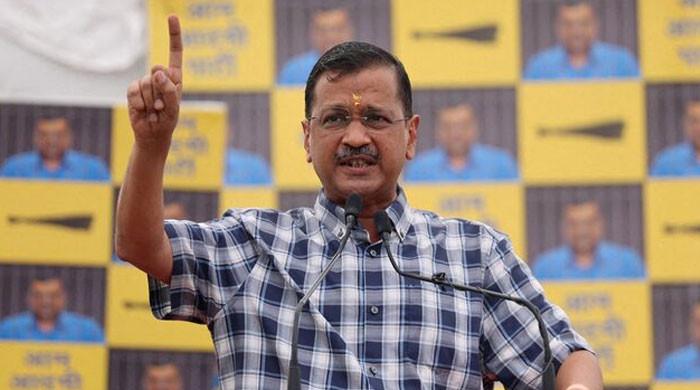
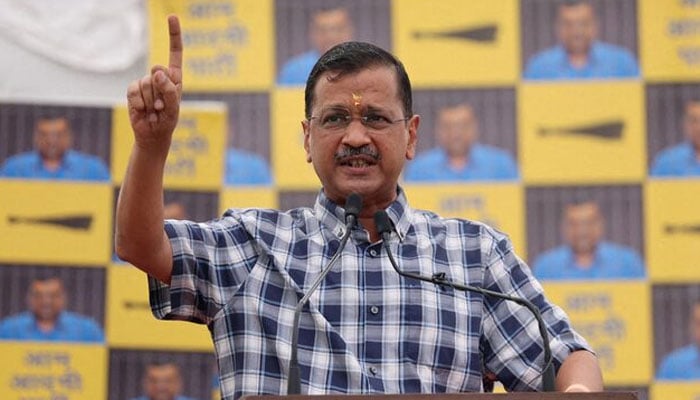
An Indian court acquitted the former chief minister of the capital Delhi on Friday in a long-running corruption probe the man had called a “political conspiracy” by the ruling party.
Opposition Aam Aadmi Party (AAP) leader Arvind Kejriwal was Delhi’s chief minister before losing elections in 2025 in the midst of the judicial proceedings.
Kejriwal, 57, who spent several months in jail after he was arrested in March 2024 on accusations that his administration received kickbacks from the allocation of liquor licenses, wept as he left court.
“Truth has won,” Kejriwal told reporters after the verdict, accusing Prime Minister Narendra Modi and Home Minister Amit Shah of using a “political conspiracy” to finish AAP.
On Friday, a Delhi court cleared him, his former deputy Manish Sisodia and 21 others of all charges.
A key opponent to Modi, he had consistently denied wrongdoing.
Rekha Gupta, a member of Modi’s Hindu-nationalist Bharatiya Janata Party, was elected as chief minister of the sprawling megacity of more than 30 million people in February 2025.
Kejriwal began his career as a tax collector but quit his civil service job to become an anti-corruption crusader, bringing him national fame.
Several of Modi’s opponents have faced criminal investigation or trial in recent years, including two state chief ministers.
In August 2025, the government introduced a bill to remove politicians if they are arrested and detained for 30 days, which opponents called a “chilling” bid to crush constitutional safeguards.


Just in Time for Spring, Don’t Miss These Electric Scooter Deals

Haaland, Rice, Semenyo: Who is your Premier League Player of the Year?

What the Warner Bros deal could mean for streaming, cinemas and news

-

 Tech1 week ago
A $10K Bounty Awaits Anyone Who Can Hack Ring Cameras to Stop Sharing Data With Amazon
-
 Business1 week ago
US Top Court Blocks Trump’s Tariff Orders: Does It Mean Zero Duties For Indian Goods?
-

 Fashion1 week ago
ICE cotton ticks higher on crude oil rally
-
 Business6 days ago
Eye-popping rise in one year: Betting on just gold and silver for long-term wealth creation? Think again! – The Times of India
-
 Tech1 week ago
Donald Trump Jr.’s Private DC Club Has Mysterious Ties to an Ex-Cop With a Controversial Past
-
 Sports1 week ago
Brett Favre blasts NFL for no longer appealing to ‘true’ fans: ‘There’s been a slight shift’
-

 Entertainment1 week ago
The White Lotus” creator Mike White reflects on his time on “Survivor
-
 Politics6 days ago
Pakistan carries out precision strikes on seven militant hideouts in Afghanistan