

Politics
Trump seeks trade war truce with China’s Xi in key South Korea talks

Both sides escalated trade threats for leverage.
Fentanyl issue is a key topic for Trump in talks.
Taiwan tensions loom over US-China discussions.
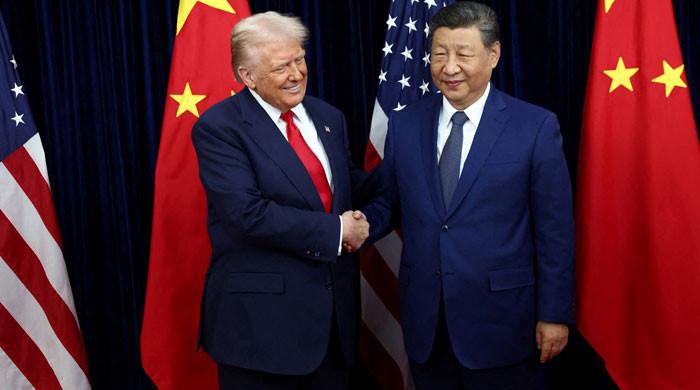
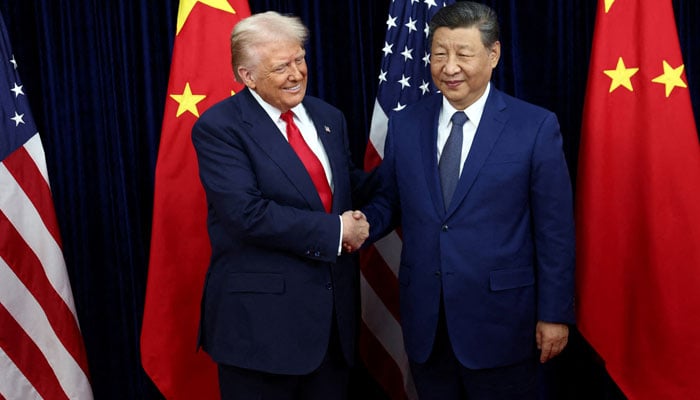
US President Donald Trump met with China’s leader Xi Jinping at a South Korean air base on Thursday for discussions on a possible trade war truce between the world’s two largest economies.
The meeting in the southern port city of Busan, the first between the leaders since Trump returned to office in January, caps off the US president’s whirlwind trip around Asia.
“We are going to have a very successful meeting, I have no doubt. But he is a very tough negotiator,” Trump said as he shook hands with Xi, who showed little expression.
Trump has repeatedly expressed optimism about reaching an agreement with Xi during the talks, taking place on the sidelines of the Asia-Pacific Economic Cooperation (APEC) summit, buoyed by a breakthrough in trade talks with South Korea on Wednesday.
But with both countries increasingly willing to play hardball over areas of economic and geopolitical competition – which analysts see as a new Cold War – many questions remain about how long any trade detente may last.
The trade war reignited this month after Beijing proposed dramatically expanding curbs on exports of rare-earth minerals vital for high-tech applications, a sector China dominates.
Trump vowed to retaliate with additional 100% tariffs on Chinese exports, and with other steps, including potential curbs on exports to China made with US software – moves that could have upended the global economy.
“THE G2 WILL BE CONVENING SHORTLY,” Trump posted on Truth Social shortly before landing in Busan to meet Xi at a South Korean air force base at Gimhae airport.
In a separate post, he said the US would step up testing of nuclear weapons immediately, noting China’s growing arsenal.
US expects Beijing to delay rare earth controls
After a weekend scramble between top trade negotiators, US Treasury Secretary Scott Bessent said he expected Beijing to delay the rare earth controls for a year and revive purchases of US soybeans critical to American farmers, as part of a “substantial framework” to be agreed by the leaders.
Ahead of the summit, China bought its first cargoes of US soybeans in several months, Reuters reported exclusively on Wednesday.
The White House has signalled it hopes the summit will be the first of several between Trump and Xi in the coming year, including possible leader visits to each country, indicating a protracted negotiation process.
But Trump wants some quick progress in talks being closely watched by businesses worldwide.
Trump said on Wednesday he expects to reduce US tariffs on Chinese goods in exchange for Beijing’s commitment to curb the flow of precursor chemicals to make fentanyl, a deadly synthetic opioid that is the leading cause of American overdose deaths.
Trump has also said he might sign a final deal with Xi on TikTok, the social media app that faces a US ban unless its Chinese owners divest their US operations.
Beijing is willing to work together for “positive results”, foreign ministry spokesperson Guo Jiakun said on Wednesday.
Prior deals on tariffs and rare earths due to expire
Previous deals, which brought down retaliatory tariffs sharply to about 55% on the US side and 10% on the Chinese side and restarted the flow of rare earth magnets from China, are due to expire on November 10.
Bessent said China had agreed to help curb the flow of fentanyl precursors, but did not say whether the US had made any concessions in return.
Beijing has sought the lifting of 20% tariffs over fentanyl, an easing of export controls on sensitive US technology, and a rollback of new US port fees on Chinese vessels aimed at combating China’s global dominance in shipbuilding, ocean freight and logistics.
Trump’s meeting with Xi comes at the end of a five-day trip to Asia in which he signed pacts with Japan and Southeast Asian nations on rare earths, seeking to blunt China’s stranglehold on minerals used in everything from cars to fighter jets.
Tensions over Taiwan
Regional strategic tensions, particularly over Beijing-claimed Taiwan, a US partner and high-tech powerhouse, are an ominous backdrop to the summit.
On Sunday, Chinese state media said Chinese H-6K bombers recently flew near Taiwan to practise “confrontation drills.”
US Secretary of State Marco Rubio said Taiwan should not be concerned about the US-China talks, despite some experts expressing fears that Trump might offer concessions over the island. Washington is required under US law to provide Taiwan with the means to defend itself.
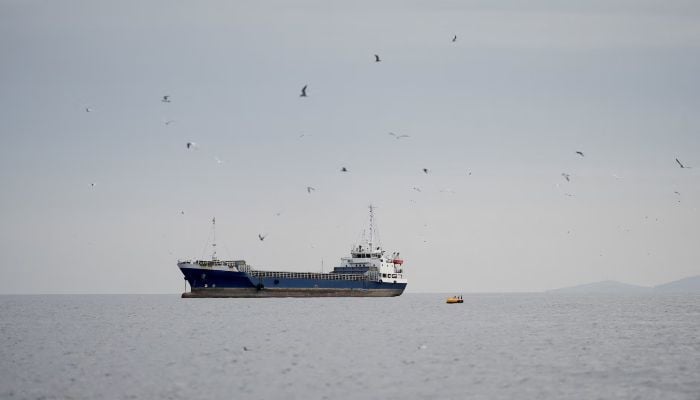
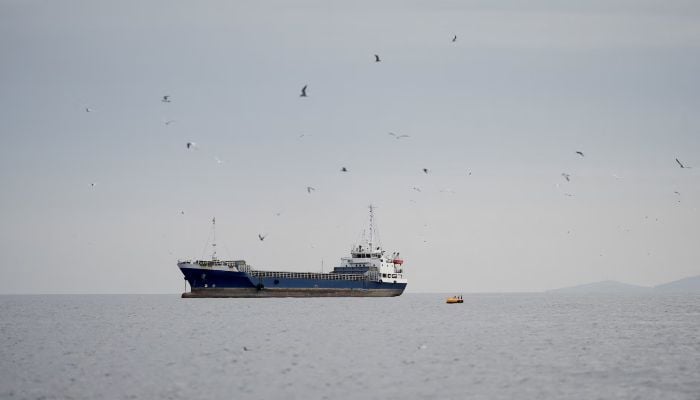
ATHENS: Fraudulent messages promising safe passage through the Strait of Hormuz in exchange for cryptocurrency have been sent to some shipping companies whose vessels are stranded west of the waterway, Greek maritime risk management firm MARISKS has warned.
The US has maintained its blockade of Iranian ports, while Iran has lifted and then re-imposed its blockade of the Strait of Hormuz, through which roughly a fifth of the world’s oil and liquefied natural gas passed before war broke out in the Middle East.
Amid ceasefire talks, Tehran, which controls the chokepoint, has proposed tolls on vessels to safely transit.
MARISKS on Monday issued an alert warning shipowners that unknown actors, claiming to represent Iranian authorities, had sent some shipping companies a message demanding transit fees in cryptocurrencies, Bitcoin or Tether, for “clearance”.
“These specific messages are a scam,” the firm said, adding the message was not sent by Iranian authorities.
There was no immediate comment from Tehran.
Hundreds of ships and about 20,000 seafarers remain stranded in the Gulf.
On April 18, when Iran briefly opened the strait subject to checks, ships tried to pass but at least two of them, including a tanker, reported that Iranian boats had fired shots at them, forcing the vessels to turn around.
MARISKS said that it believed that at least one of the vessels, which tried to exit the strait on Saturday and was hit by gunfire, was a victim of the fraud.
Reuters was not able to verify the information or track companies that had received the message.
“After providing the documents and assessing your eligibility by the Iranian Security Services, we will be able to determine the fee to be paid in cryptocurrency (BTC or USDT). Only then will your vessel be able to transit the strait unimpeded at the pre-agreed time,” said the message cited by MARISKS.
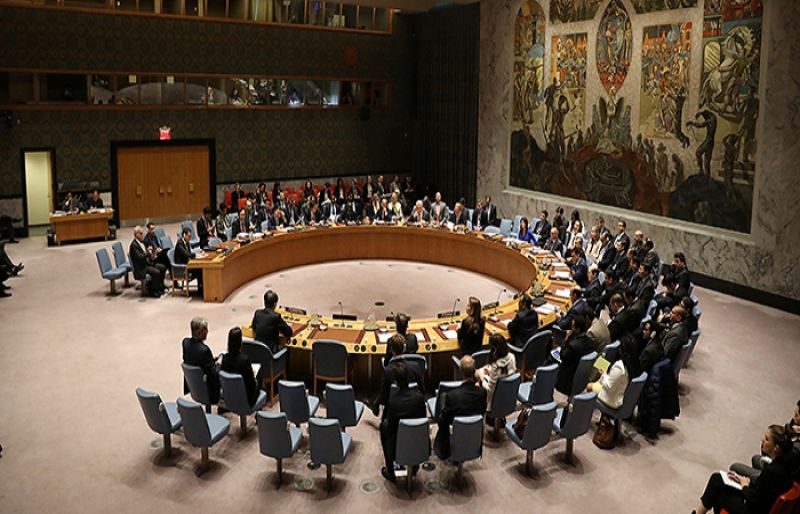
The UN Security Council on Monday condemned the recent killing of a French peacekeeper in Lebanon, whose death France has blamed on Hezbollah.
The Frenchman was killed and three others wounded when their unit was ambushed on Saturday as it headed to a UN Interim Force in Lebanon (UNIFIL) outpost cut off from the fighting between Hezbollah and Israel.
“The members of the Security Council condemned in the strongest terms the attack…(and) reaffirmed their full support for UNIFIL” a statement from the UN body said.
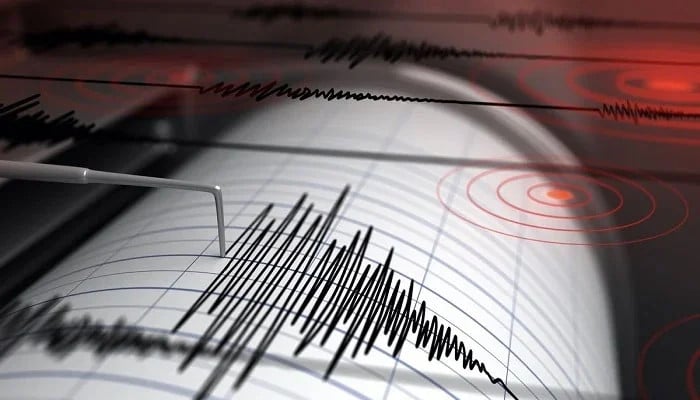
TOKYO: At least six people were reported injured on Tuesday, a day after a powerful quake rattled northern Japan, but there appeared to be no major damage from the tremor that also triggered tsunami waves up to 80 centimetres (31 inches).
However, the Japan Meteorological Agency (JMA) also warned of an increased risk of a megaquake — a tremor with a magnitude of 8.0 or stronger — hours after Monday’s 7.7 magnitude quake in Pacific waters off northern Iwate prefecture.
The jolt was so intense that it shook large buildings in the capital Tokyo, hundreds of kilometres from the epicentre.
Six people were reported injured by 8am (2300 GMT Monday), two seriously, the Fire and Disaster Management Agency (FDMA) said in a statement.
There were no reported fire outbreaks or damage to important facilities, it said.
Japan issued a warning for tsunami waves of up to three metres (10 feet) but it was lifted hours after an 80-centimetre (31-inch) wave hit a port in Kuji in Iwate, one among a series of small waves that hit elsewhere in northern Japan.
The JMA said that “the likelihood of a new, huge earthquake occurring is relatively higher than during normal times”.
Municipalities in the affected region issued non-compulsory evacuation directives to more than 182,000 residents, the FDMA said.
Japan is one of the world’s most seismically active countries, sitting on top of four major tectonic plates along the western edge of the Pacific “Ring of Fire”.
The archipelago, home to around 125 million people, typically experiences around 1,500 jolts every year and accounts for about 18 percent of the world´s earthquakes.
The vast majority are mild, although the damage they cause varies according to their location and the depth below the Earth´s surface at which they strike.
Japan is haunted by the memory of a massive 9.0 magnitude undersea quake in 2011, which triggered a tsunami that killed or left missing around 18,500 people and caused a devastating meltdown at the Fukushima nuclear plant.


War-linked energy shock pushing inflation higher in Europe: IMF expert

Scam messages offering ships safe transit through Hormuz, warns security firm
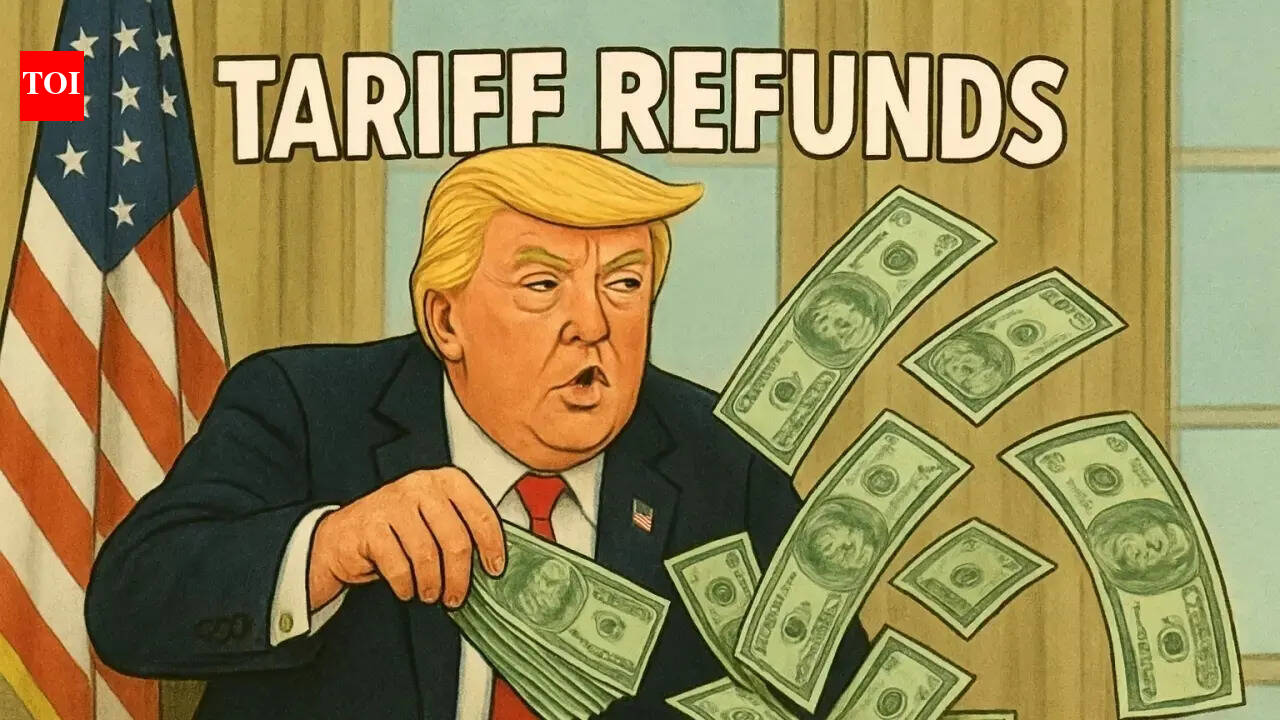
Billions to be paid! US starts refund process for Trump tariffs: Can Indian exporters claim? – The Times of India

-

 Fashion5 days ago
France’s LVMH Q1 revenue falls 6%, shows resilience amid Iran war
-

 Sports1 week ago
The case for Man United’s Fernandes as Premier League’s best
-

 Entertainment1 week ago
Palace left in shock as Prince William cancels grand ceremony
-
 Business1 week ago
UK could adopt EU single market rules under new legislation
-

 Entertainment6 days ago
Is Claude down? Here’s why users are seeing errors
-

 Fashion1 week ago
Energy emerges as biggest cost driver in textile margins
-
 Business1 week ago
Delta Air Lines unveils first new Delta One suite in premium cabin arms race
-

 Tech1 week ago
A Lot of Shops Won’t Fix Electric Bikes. Here’s Why