

Fashion
Portugal’s Azores Waste Week runs creative workshops on sustainable fashion

Published
December 2, 2025
Portugal’s Regional Secretariat for the Environment and Climate Action, based in Ponta Delgada, the Azores, has just hosted a series of creative sustainable fashion workshops during the 16th Azores Waste Week, held from November 22 to 30, as part of the 17th European Week for Waste Reduction.
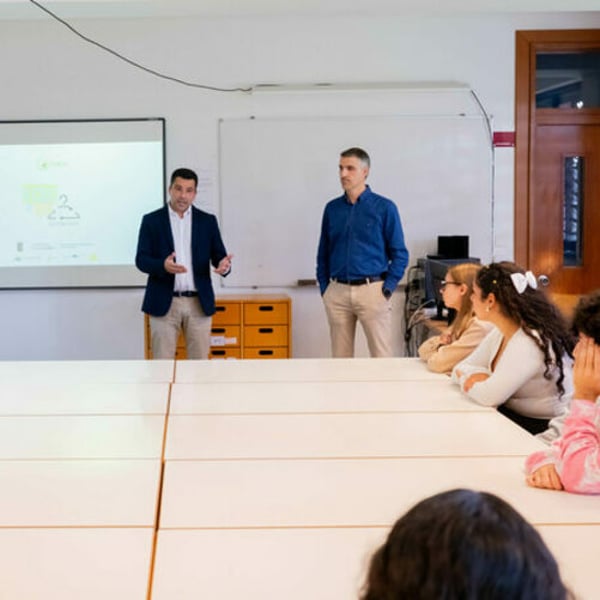
As part of the 16th Azores Waste Week, and of this project, a series of 10 creative workshops on sustainable fashion and environmental awareness began across all the Azorean islands, as well as online, with the aim of showing how textile waste can be given a new lease of life, explained the Regional Secretary for the Environment and Climate Action, Alonso Miguel, at the launch of the series of creative workshops on sustainable fashion, held at the Tomás de Borba Primary and Secondary School in Angra do Heroísmo.
The Regional Secretary for the Environment and Climate Action said that “the aim is to stimulate creativity, motivation, and critical thinking among participants, demonstrating that it is possible to transform used clothes into new products, create sustainable fashion, or simply extend the life of garments and fashion accessories”.
During this week, 114 awareness-raising actions were carried out in the Azores, including 20 on Pico, 23 on São Miguel, 12 on Terceira, 14 on Faial, nine on Santa Maria, 10 on Graciosa, nine on São Jorge, 12 on Flores, and five on Corvo, said Alonso Miguel, stressing that the initiative covered five thematic areas: clean-up actions; reuse and preparation for reuse; prevention and reduction at source; waste sorting and recycling; and the thematic focus area of waste electrical and electronic equipment.
Alonso Miguel added that “in the region, 143 entities are taking part, including public administration bodies, local authorities, private companies, waste management entities and operators, educational establishments, environmental associations, and non-governmental organisations, as well as individual citizens”.
“These actions, carried out at regional level, have the main objective of raising awareness of proper waste management, informing about appropriate destinations and promoting prevention and reduction at source, thus helping to minimise waste production on each island.”
Also according to Alonso Miguel, who took part in the launch of the creative sustainable fashion workshops in Angra: “In the Azores, due to the geographical location, the archipelagic specificities and the small size of the territory, we face increased challenges and significant additional costs related to the transport, management, and treatment of waste,” he noted on the occasion.
Alonso Miguel also pointed out that “waste management and the promotion of the circular economy are priority issues for the Regional Government, and one of the main objectives of the Regional Secretariat for the Environment and Climate Action is to develop innovative solutions to ensure a reduction in waste generation and a sustainable management model, especially with regard to the types that pose the greatest challenges, such as textiles,” according to the Azores government portal (portal.azores.gov.pt).
This is how the ‘INTERREG MAC- TEXTIL: Weaving a Sustainable Future’ project came about, with a financial allocation of around 200,000 euros to implement measures in the Azores between 2025 and 2027, with the aim of “boosting the circular economy in the textile sector, reducing imports and dependence on unsustainable textiles, and promoting the reuse, recycling, and efficient management of textile waste in Macaronesian regions, namely in the Azores and Madeira.” It further states that, “in practice, the project aims to promote the transition to a more sustainable production and consumption model, reducing the fraction of textile waste incinerated or landfilled, and encouraging its reuse and recycling through technological solutions, creativity, and management and cooperation adapted to the regional context.”
For Alonso Miguel, “this project, which is of great relevance to the region, involves regional and local governments and academia, with the participation of various universities, such as the Universities of the Azores, Las Palmas de Gran Canaria, La Laguna (Tenerife), Cape Verde, and São Tomé and Príncipe, among other technology centres. It also includes civil society organisations and NGOs, such as AJITER and the Gaspar Frutuoso Foundation, as well as the Madeira Chamber of Commerce and Industry”.
For the government official, “we need to act, innovate and change habits,” stressing that “textile waste management is not just the responsibility of governments, companies, or the fashion industry. It is a collective responsibility, but also an individual responsibility of each of us, which starts with small actions in our daily lives,” he concluded at the event, which took place at the school in the Azores.
This article is an automatic translation.
Click here to read the original article.
Copyright © 2025 FashionNetwork.com All rights reserved.









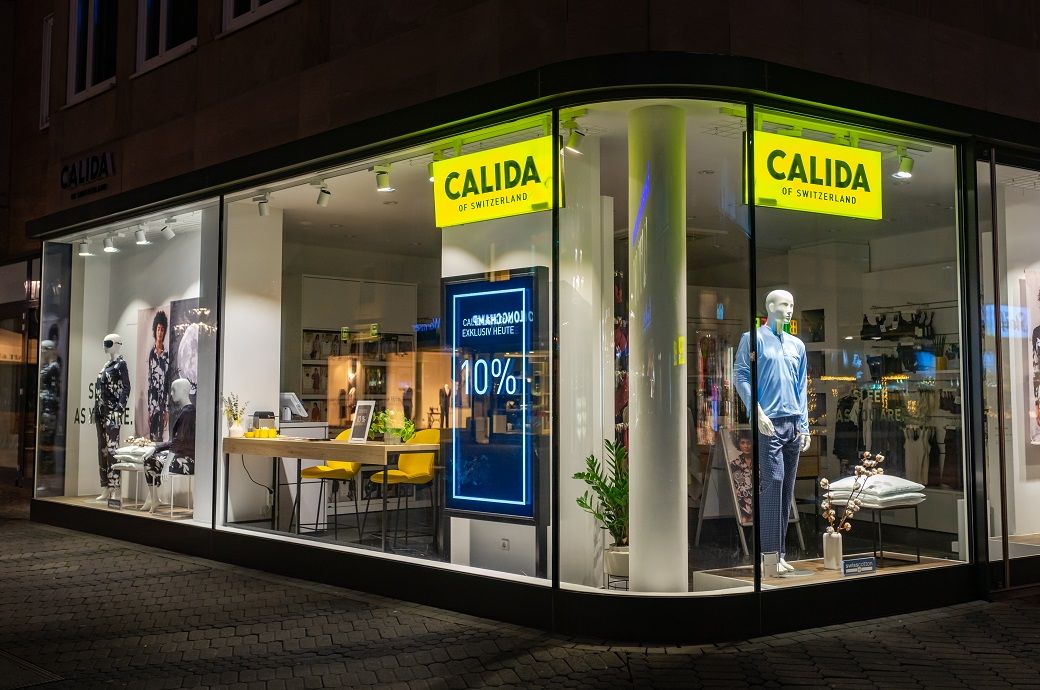
The group recorded an operating result (EBIT) of CHF 9 million (~$11.6 million) compared with CHF 4 million in the previous year, lifting the EBIT margin to 4.2 per cent from 1.7 per cent. Excluding Cosabella, the combined EBIT margin of Calida and Aubade reached 6.7 per cent, approaching the company’s medium-term target range. Operating net profit improved significantly to CHF 7.6 million (~$9.8 million) from CHF 0.5 million a year earlier, Calida Group said in a press release.
Calida Group has reported net sales of CHF 215.9 million (~$278.5 million) in 2025, down 5 per cent YoY.
EBIT rose to CHF 9 million (~$11.6 million) and net profit to CHF 7.6 million (~$9.8 million), supported by strong Calida and Aubade performance.
The group maintained solid liquidity and continued Cosabella repositioning while targeting future profitability improvement.
The group maintained a solid financial base with net liquidity of CHF 25.1 million and an adjusted equity ratio of 67.9 per cent, while free cash flow reached CHF 9.8 million. The board proposed a cash dividend of CHF 0.25 per share, corresponding to a payout ratio of 23 per cent in line with its long-term dividend policy.
“After a challenging first half of 2025, the Calida Group developed positively in the second half and achieved operational improvements on sales and profitability. By deliberately and systematically forgoing discount-driven growth and strategically positioning Calida and Aubade in the premium segment, the brands were strengthened in the long-term. Overall, 2025 was another year defined by a persistently challenging market environment,” said Thomas Stocklin, CEO of the Calida Group.
“Geopolitical uncertainty, US trade and tariff policies, and muted consumer sentiment in our core markets impacted the entire industry. In this environment, the Calida Group has demonstrated strategic discipline and, step by step, is evolving in the desired direction. Today, our group is more agile and efficient. Combined with our financial strength, this positions the Calida Group to pursue well-considered organic as well as external growth opportunities, allowing us to look to the future with confidence,” added Stocklin.
Operationally, the company continued implementing its efficiency-focused strategy by reintegrating functions into individual brands, streamlining group management structures and strengthening capabilities across product management, marketing, operations and sales.
Brand-wise, Calida generated sales of CHF 145.1 million, declining modestly as store traffic softened, although e-commerce growth and a strong Christmas season supported second-half performance. The brand improved its operating contribution margin through higher gross margins and ongoing cost optimisation while reinforcing its premium market positioning.
Aubade recorded sales of CHF 58 million amid weak consumer sentiment in France and the strategic withdrawal from unprofitable channels following the pandemic-driven demand surge. Nevertheless, margin performance strengthened through strict cost management, ongoing rebranding initiatives and progress in expanding export markets, particularly in the United States.
Cosabella reported sales of CHF 12.8 million, extending its negative growth trajectory and contributing higher losses as the brand remains in an intensive repositioning phase under strategic review. The group is targeting a turnaround towards operational break-even in 2026.
Overall, the group indicated that organisational restructuring, inventory optimisation and disciplined channel management enhanced agility and cost efficiency, positioning the company for future growth while aiming to improve group profitability further as Cosabella’s performance stabilises.
Fibre2Fashion News Desk (SG)

The gross margin expanded to 47.3 per cent and diluted earnings per share more than doubled to $1.14 from $0.55.
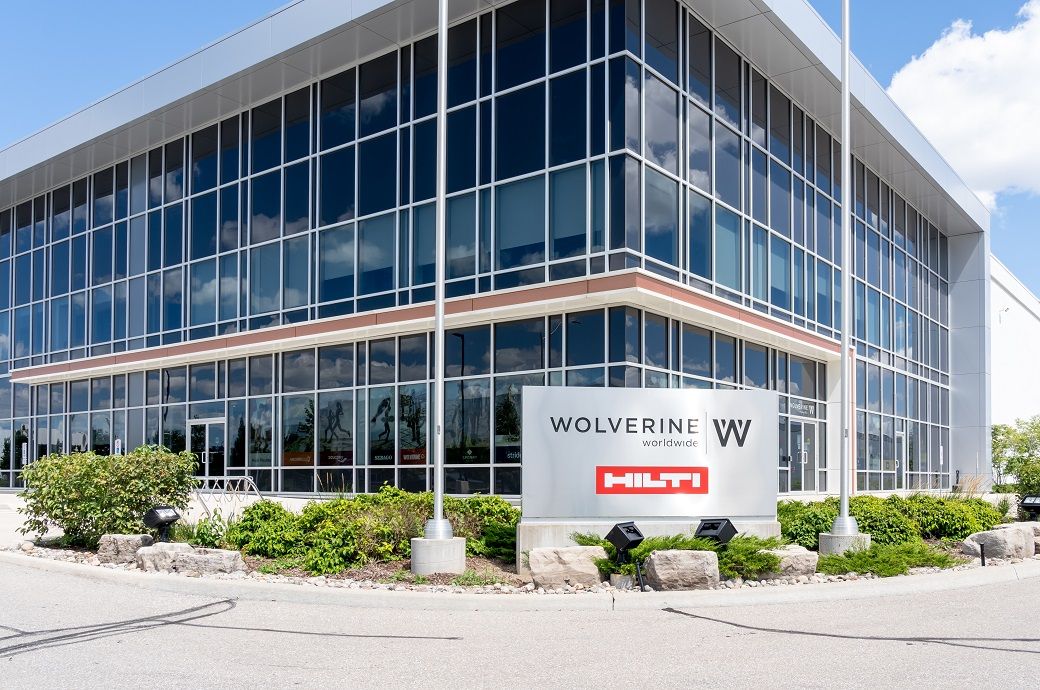
Wolverine Worldwide has reported revenue of $1.874 billion in 2025, up 6.8 per cent, led by Active Group growth and strong Saucony performance.
Margins and earnings improved, while cash rose and debt declined.
Fourth-quarter revenue increased 4.6 per cent.
CEO Hufnagel highlighted brand momentum and transformation progress.
The company expects 2026 revenue growth with steady margins.
The company strengthened its balance sheet during the year, ending with cash of $206 million, up 35.6 per cent, and net debt reduced 16.2 per cent to $415 million. Inventory increased 10.7 per cent to $274 million, Wolverine Worldwide said in a press release.
The fourth quarter (Q4) revenue rose 4.6 per cent YoY to $517.5 million, supported by strong Active Group growth, particularly Saucony and Merrell. Active Group revenue increased 12.4 per cent to $372.7 million, while Work Group declined 11.3 per cent to $134 million. Gross margin improved to 47 per cent from 43.6 per cent, reflecting product cost savings, favourable mix and price increases, partly offset by higher US tariffs. Diluted earnings per share climbed to $0.38 from $0.28.
“We exceeded our expectations across all key metrics in the fourth quarter, finishing a solid year for the Company. Our biggest brands are growing around the world, direct-to-consumer (DTC) continues to improve, earnings per share increased meaningfully YoY, and I believe we’re finding our footing where we’ve underperformed,” said Chris Hufnagel, president and chief executive officer of Wolverine Worldwide. “I am pleased with our progress in transforming the company and encouraged by the momentum we have carried into 2026. We’re focused squarely on executing our brand-building model with pace and distinction—building awesome products, telling amazing stories, and driving the business each day.”
Looking ahead, Wolverine Worldwide expects fiscal 2026 revenue of $1.96-1.985 billion, representing growth of 4.6-5.9 per cent YoY. The company anticipates gross margin of about 46 per cent, operating margin of roughly 8.8 per cent and diluted earnings per share between $1.31 and $1.46, signalling continued but measured expansion as brand-driven strategy execution progresses, added the release.
Fibre2Fashion News Desk (SG)


Aviva flags potential for Iran conflict to send claims costs rising

Queen Letizia shows presence and support during difficult day

Need One Pair for Hiking, Traveling, and Working Out? Try Gravel Running Shoes

What are Iran’s ballistic missile capabilities?

India Us Trade Deal: Fresh look at India-US trade deal? May be ‘rebalanced’ if circumstances change, says Piyush Goyal – The Times of India

Attock Cement’s acquisition approved | The Express Tribune

-
 Politics1 week ago
What are Iran’s ballistic missile capabilities?
-
Business6 days ago
India Us Trade Deal: Fresh look at India-US trade deal? May be ‘rebalanced’ if circumstances change, says Piyush Goyal – The Times of India
-
Business7 days ago
Attock Cement’s acquisition approved | The Express Tribune
-
 Business1 week ago
Households set for lower energy bills amid price cap shake-up
-

 Politics1 week ago
US arrests ex-Air Force pilot for ‘training’ Chinese military
-

 Fashion7 days ago
Policy easing drives Argentina’s garment import surge in 2025
-

 Sports6 days ago
LPGA legend shares her feelings about US women’s Olympic wins: ‘Gets me really emotional’
-
 Fashion6 days ago
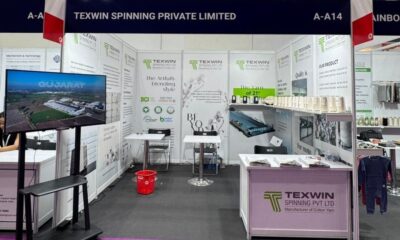
Texwin Spinning showcasing premium cotton yarn range at VIATT 2026