

Fashion
Portugal’s Azores Waste Week runs creative workshops on sustainable fashion

Published
December 2, 2025
Portugal’s Regional Secretariat for the Environment and Climate Action, based in Ponta Delgada, the Azores, has just hosted a series of creative sustainable fashion workshops during the 16th Azores Waste Week, held from November 22 to 30, as part of the 17th European Week for Waste Reduction.
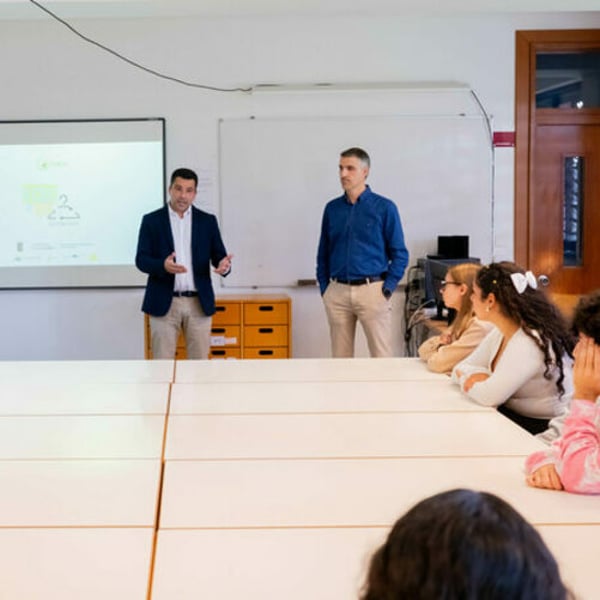
As part of the 16th Azores Waste Week, and of this project, a series of 10 creative workshops on sustainable fashion and environmental awareness began across all the Azorean islands, as well as online, with the aim of showing how textile waste can be given a new lease of life, explained the Regional Secretary for the Environment and Climate Action, Alonso Miguel, at the launch of the series of creative workshops on sustainable fashion, held at the Tomás de Borba Primary and Secondary School in Angra do Heroísmo.
The Regional Secretary for the Environment and Climate Action said that “the aim is to stimulate creativity, motivation, and critical thinking among participants, demonstrating that it is possible to transform used clothes into new products, create sustainable fashion, or simply extend the life of garments and fashion accessories”.
During this week, 114 awareness-raising actions were carried out in the Azores, including 20 on Pico, 23 on São Miguel, 12 on Terceira, 14 on Faial, nine on Santa Maria, 10 on Graciosa, nine on São Jorge, 12 on Flores, and five on Corvo, said Alonso Miguel, stressing that the initiative covered five thematic areas: clean-up actions; reuse and preparation for reuse; prevention and reduction at source; waste sorting and recycling; and the thematic focus area of waste electrical and electronic equipment.
Alonso Miguel added that “in the region, 143 entities are taking part, including public administration bodies, local authorities, private companies, waste management entities and operators, educational establishments, environmental associations, and non-governmental organisations, as well as individual citizens”.
“These actions, carried out at regional level, have the main objective of raising awareness of proper waste management, informing about appropriate destinations and promoting prevention and reduction at source, thus helping to minimise waste production on each island.”
Also according to Alonso Miguel, who took part in the launch of the creative sustainable fashion workshops in Angra: “In the Azores, due to the geographical location, the archipelagic specificities and the small size of the territory, we face increased challenges and significant additional costs related to the transport, management, and treatment of waste,” he noted on the occasion.
Alonso Miguel also pointed out that “waste management and the promotion of the circular economy are priority issues for the Regional Government, and one of the main objectives of the Regional Secretariat for the Environment and Climate Action is to develop innovative solutions to ensure a reduction in waste generation and a sustainable management model, especially with regard to the types that pose the greatest challenges, such as textiles,” according to the Azores government portal (portal.azores.gov.pt).
This is how the ‘INTERREG MAC- TEXTIL: Weaving a Sustainable Future’ project came about, with a financial allocation of around 200,000 euros to implement measures in the Azores between 2025 and 2027, with the aim of “boosting the circular economy in the textile sector, reducing imports and dependence on unsustainable textiles, and promoting the reuse, recycling, and efficient management of textile waste in Macaronesian regions, namely in the Azores and Madeira.” It further states that, “in practice, the project aims to promote the transition to a more sustainable production and consumption model, reducing the fraction of textile waste incinerated or landfilled, and encouraging its reuse and recycling through technological solutions, creativity, and management and cooperation adapted to the regional context.”
For Alonso Miguel, “this project, which is of great relevance to the region, involves regional and local governments and academia, with the participation of various universities, such as the Universities of the Azores, Las Palmas de Gran Canaria, La Laguna (Tenerife), Cape Verde, and São Tomé and Príncipe, among other technology centres. It also includes civil society organisations and NGOs, such as AJITER and the Gaspar Frutuoso Foundation, as well as the Madeira Chamber of Commerce and Industry”.
For the government official, “we need to act, innovate and change habits,” stressing that “textile waste management is not just the responsibility of governments, companies, or the fashion industry. It is a collective responsibility, but also an individual responsibility of each of us, which starts with small actions in our daily lives,” he concluded at the event, which took place at the school in the Azores.
This article is an automatic translation.
Click here to read the original article.
Copyright © 2025 FashionNetwork.com All rights reserved.









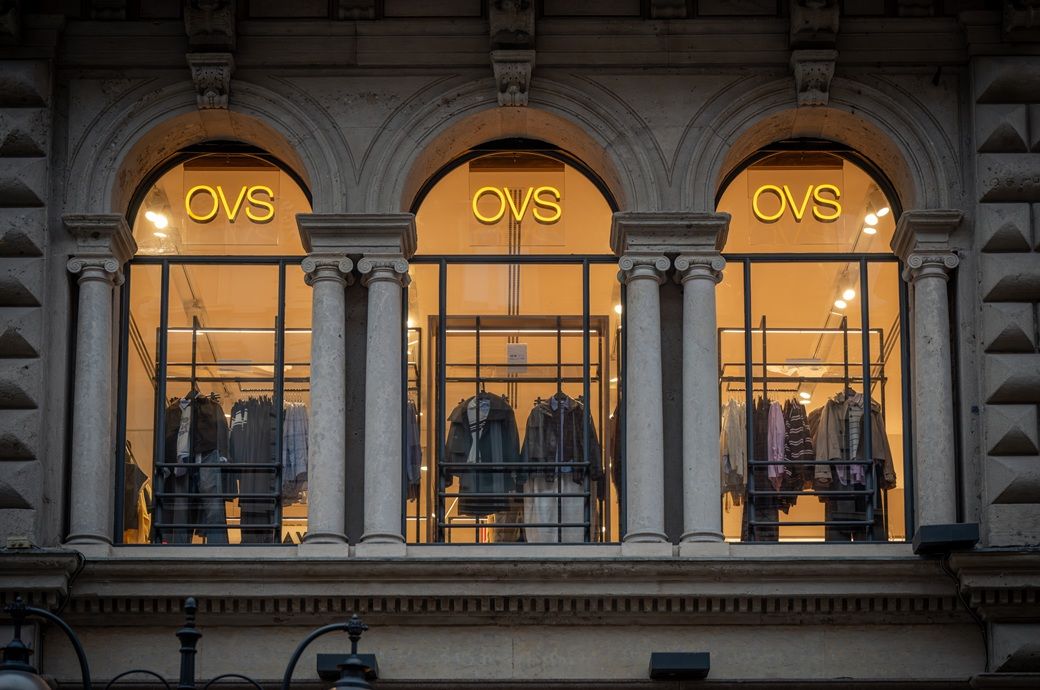
The company’s net sales rose 7 per cent year on year (YoY) to €1,745.9 million (~$2.06 billion) in FY25 ended January 31, 2026. Excluding Goldenpoint, sales growth stood at 2.9 per cent, significantly outperforming the reference market, which expanded by just 0.3 per cent during the period. Directly operated stores generated €1,431.3 million in revenue, up 8.2 per cent YoY, while franchising and B2B channels contributed €314.7 million.
OVS has posted record FY25 sales of €1,745.9 million (~$2.06 billion), up 7 per cent YoY, driven by like-for-like growth and Goldenpoint consolidation.
Adjusted gross margin rose 8.8 per cent, while net profit increased 14.8 per cent.
Key brands delivered solid EBITDA gains.
Womenswear and beauty led growth, with early FY26 performance remaining strong on robust collection demand.
The group delivered strong improvements across key financial metrics. Adjusted gross margin rose to €1,033 million, up 8.8 per cent YoY, with margin expanding to 59.2 per cent. Adjusted net profit was €89.4 million, an increase of 14.8 per cent YoY.
At the brand level, OVS reported EBITDA of €172.6 million, up €9.8 million YoY, while Upim recorded €44.0 million, compared with €40.1 million in 2024. Stefanel also delivered improved performance, with EBITDA rising by around €4 million. Goldenpoint contributed €3.9 million to EBITDA during its seven-month consolidation period, OVS said in a press release.
“2025 was a year of excellent results, with growth across all the main banners and brands. This performance confirms the validity of a positioning based on quality, stylistic research, and sustainability, which have elevated the perceived value of the brands, effectively intercepting a growing demand for quality products at affordable prices,” said Stefano Beraldo, CEO of OVS.
He added that the group continued to strengthen its brand portfolio, including the launch of Les Copains and extensions of the PIOMBO line, alongside the expansion of Altavia, B Angel, and Utopja. Womenswear and beauty remained standout categories, with the latter supported by Shaka stand-alone stores, now operating 10 locations.
“Another fundamental pillar remains the constant enhancement of the stores, in a context where offline is regaining centrality in customer preferences,” added Beraldo, highlighting investments in store design and customer experience.
Goldenpoint delivered sales growth of around 10 per cent during its initial consolidation phase, supported by product updates and store modernisation, along with purchasing synergies that improved margins.
“The internationalisation strategy of OVS is accelerating, supported by a solid financial position and the success of the womenswear offering. Expansion into the most promising markets is planned for 2026,” Beraldo said.
The 2026 financial year is showing significant growth compared to 2025 thanks to the very positive reception of the new collections, added the release.
Fibre2Fashion News Desk (SG)

As pressure grows to decarbonise and modernise, countries face a dual challenge: reducing emissions while maintaining efficiency and competitiveness.
UNCTAD and the Maritime and Port Authority of Singapore have launched a partnership to accelerate the transition towards more sustainable, resilient and inclusive global maritime transport.
Both sides will promote cleaner fuels and digital technologies across ports and shipping networks.
A key pillar is support, including training, advisory services and institutional strengthening, for developing nations.
Singapore’s role as one of the world’s most connected and efficient ports positions it as a key partner in testing and scaling innovations, said UNCTAD, which complements this with global reach, policy expertise and on-the-ground support to developing countries.
Under the agreement, the partners will promote cleaner fuels and digital technologies across ports and shipping networks.
Efforts will focus on solutions that can be adapted to different national contexts, alongside knowledge-sharing in sustainable finance, digital innovation and workforce development—key enablers of a successful transition.
“This partnership brings together Singapore’s operational excellence and UNCTAD’s global development expertise,” said Pedro Manuel Moreno, acting secretary general of UNCTAD, in a release.
“It will help accelerate a maritime transition that is not only greener and more efficient, but also resilient and inclusive—while contributing to global discussions at the UN Global Supply Chain Forum 2026,” he added.
A central pillar of the initiative is support, including training, advisory services and institutional strengthening, for developing countries.
Building on UNCTAD’s long-standing work with port communities, the partnership will help improve performance, strengthen connectivity and enhance preparedness for disruptions.
The initiative will also feed into preparations for the UN Global Supply Chain Forum taking place in late 2026, where global stakeholders will address the future of trade logistics and resilience.
Fibre2Fashion News Desk (DS)

The committee will serve as a forum for expert advice on trade, investment, labour and economic strategy, and will be chaired by Dominic LeBlanc, minister responsible for Canada-US Trade, Intergovernmental Affairs, Internal Trade and One Canadian Economy. It includes leaders from across key sectors of the Canadian economy and will hold its first meeting on April 27, 2026.
Canada has formed a new advisory committee to guide its economic strategy with the United States ahead of the Canada-United States-Mexico Agreement (CUSMA) review.
With 85 per cent of trade remaining tariff-free, the move aims to deepen collaboration, safeguard market access and better position Canada for upcoming negotiations and evolving trade dynamics.
Carney announced members including Jean Simard, Candace Laing, Darryl White, Lisa Raitt, Tracy Robinson, Flavio Volpe, Ron Bedard, Ken Seitz, Dennis Darby, Lana Payne, Francois Poirier, Emile Cordeau, Luc Theriault, Magali Picard, Jonathan Price, Susan Yurkovich, Michael Harvey, Tabatha Bull, Cameron Bailey, Valerie Beaudoin, Erin O’Toole, Jean Charest, P.J. Akeeagok and Ralph Goodale.
The initiative replaces the former Council on Canada-US relations and aims to strengthen engagement with business and labour stakeholders while positioning Canada for future negotiations.
“Canada is approaching its economic relationship with the US with focus, discipline and unity. This new Advisory Committee ensures that government is drawing on the best advice and the broadest perspectives to advance Canada’s economic interests. Our goal is a strong economic partnership with the US that creates greater certainty, security and prosperity for all,” Carney said.
“Canada is strongest when governments, workers, businesses and industry leaders pull in the same direction. This Advisory Committee will help us stay closely connected to key sector perspectives, support effective outreach and strengthen Canada’s position as we establish a new economic and security relationship with the US,” LeBlanc added.
Canada-US trade remains a cornerstone of North America’s economy. In 2024, both countries exchanged nearly $3.6 billion in goods and services daily. Together with Mexico, the three countries represent a market of 517 million consumers with a combined GDP of $48.8 trillion. Since CUSMA came into force on July 1, 2020, bilateral trade has increased by more than 27 per cent, or $196 billion.
CUSMA, which is in force until 2036, will undergo a mandatory joint review on July 1, 2026. Member countries will decide by consensus on potential updates or an extension for another 16 years. If no agreement is reached, annual reviews will continue until consensus is achieved or the agreement expires.
Fibre2Fashion News Desk (CG)


Italy’s OVS’ FY25 sales rise 7% to $2.06 bn; beats market

Comcast beats revenue, earnings expectations as broadband losses improve

Meghan Markle plots royal bombshell sequel to Prince Harry’s big hit

-

 Fashion1 week ago
France’s LVMH Q1 revenue falls 6%, shows resilience amid Iran war
-

 Entertainment1 week ago
Is Claude down? Here’s why users are seeing errors
-

 Tech1 week ago
The Deepfake Nudes Crisis in Schools Is Much Worse Than You Thought
-

 Sports1 week ago
PSL 11: Peshawar Zalmi win toss, opt to field first against Quetta Gladiators
-
 Business1 week ago
Standard Life buys rival in £2b deal to create savings giant
-
 Tech1 week ago
Human-machine teaming dives underwater
-

 Politics1 week ago
Iran in continuous message exchange with mediator Pakistan after US talks: Report
-

 Tech7 days ago
CYBERUK ’26: UK lagging on legal protections for cyber pros | Computer Weekly