

Business
Postcode glitch freezes pensioners out of winter heating benefit

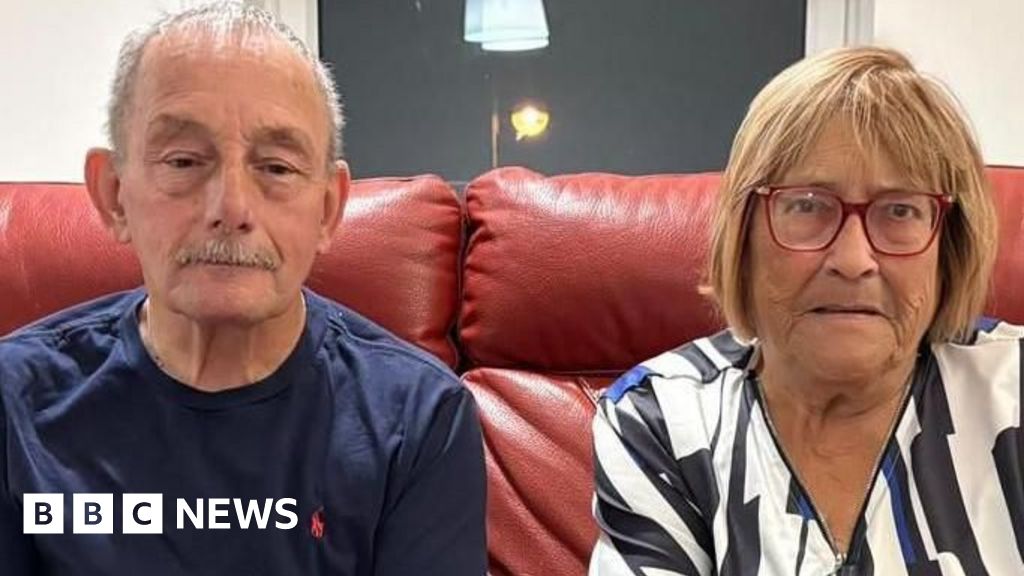
Katy McCloskey and Chris Clements
 BBC
BBCPeople on low incomes could be losing out on a grant for winter heating bills because postcodes are missing from an energy supplier’s website.
Scottish Gas were warned last autumn that customers on means-tested benefits living in a specific Glasgow postcode were unable to apply for the Warm Home Discount online. More than a year later, the website has still not been fixed.
Tenants and charities have criticised the power company, with Energy Action Scotland telling the BBC that it’s “absolutely incredible” the problem hasn’t been solved.
Scottish Gas said addresses for new build properties may not have been registered correctly with Royal Mail and it hopes to have the website updated.
‘That money would make a big difference’
The Warm Home Discount of £150 is paid automatically by energy suppliers to those on the guaranteed element of Pension Credit.
Other households of any age on a low income can also be eligible via the “broader group” category, but they have to manually apply and enter details about their means-tested benefit.
Annie Dougherty, 71, lives in Govan with her husband Sammy.
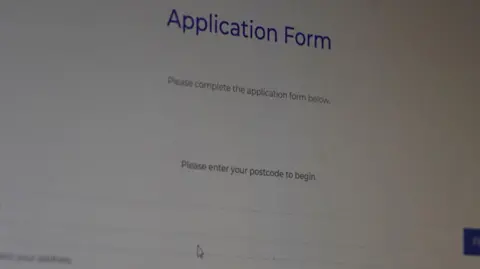
She tried to apply online via the Scottish Gas website in November 2024 but found her postcode was missing from the dropdown box on the site.
This meant she could not continue her application.

Annie believes she is eligible for the discount because she claims Housing Benefit.
She told BBC Scotland: “I think it’s ridiculous.
“I don’t know what they are playing at. They say our postcode isn’t registered with Scottish Gas website but they manage to send us bills with our postcode on them.
“We didn’t get the Warm Home Discount last year and we’re not getting it this year. That would make a big difference, it would be £150 off my bill each year.”
Annie said she worries about her bills.
“I get fed up with it, I really do.
“We only put our heating on if it’s really cold. We go to our beds early so we don’t have to have the heating on. And I only put my tumble dryer on once a week.
“I try my best to cut back on things but it’s hard.”
The flats where the Doughertys live were built in 2024.
“None of us in this block or the block next door get it,” Annie added.
Missing postcodes ‘flagged a year ago’
Gordon Brown, of local charity Glasgow Action for Pensioners, first spotted the problem in November last year, and said he flagged it with the energy supplier.
He said: “In this area we know of 46 residences where the Scottish Gas database doesn’t recognise the postcode.
“Most of them are elderly people who would be on the qualifying benefits. These people could be sitting cold.”
He said Scottish Gas had offered a “workaround” for affected customers, but he described the process as “complicated”.
“They’ve told me to use the head office postcode and then phone up with a number from the website and they can sort it manually,” he said.
“Why can’t they just fix their database?
“We don’t know how many people are in the exact same boat.
“People don’t have the ability or time to phone them up to ask what’s going on and why the website doesn’t work.”

Fuel poverty charity Energy Action Scotland said it was expecting an additional 250,000 households in Scotland to receive the broader Warm Home Discount payment this winter.
Households need to be receiving a means-tested benefit such as Housing Benefit or Universal Credit.
Suppliers then check eligibility with the Department for Work and Pensions or Social Security Scotland.
Frazer Scott, chief executive at Energy Action Scotland, said he found the situation in Govan “incredible”.
“It’s absolutely ridiculous that, for a company with the resources that Scottish Gas has, they cannot get this right.
“It should have been sorted a long time ago.”
He added: “I cannot understand why it is left to the eligible person, someone who is in need of financial support and someone who is likely in difficult circumstances, that they have to try and come up with a fix for this when it should be energy supplier moving heaven and earth to help these people.
“There is a huge question mark about people’s ability to engage when many of the only routes companies seem to have available these days are electronic or web-based.
“Companies are not working hard enough to support all their customers fairly. People should be at the heart of the system, not processes.”
‘Not registered correctly’
Scottish Gas said it was “sorry to hear that some residents in Glasgow’s Govan area have had some trouble completing their Warm Home Discount application through the online portal”.
A spokesperson added: “It appears the address details for these new builds may not have been registered correctly with the Royal Mail and we’re helping to get these updated.
“To reassure customers, our advisors can help with completing the form and ensuring their application is successfully processed.”
BBC Scotland has contacted Royal Mail for comment.

Motorists are facing higher fuel prices ahead of Easter break due to the conflict in the Middle East, the RAC says.
Source link

Hyderabad: Pharma player Hetero on Friday said it has rolled out exports of its generic semaglutide injection portfolio as part of a multi-year plan to widen access to treatments for type 2 diabetes and obesity in more than 75 countries.The Hyderabad-based pharmaceutical company said initial rollouts are under way in Africa, Asia and the Middle East, with additional launches planned in other markets subject to regulatory approvals.The injectable therapies will be sold under the brand names Truglyx, Rolmodl and Moto G. Semaglutide belongs to the GLP-1 class of medicines, which are used in diabetes care and weight management.Hetero said the export launch is part of its broader strategy to improve access to advanced cardio-metabolic therapies, particularly in emerging markets.The company said the products will be offered in multi-dose disposable pen devices designed in line with innovator formats and will be available in several strengths, including 0.25 mg, 0.5 mg, 1 mg, 2 mg, 1.7 mg and 2.4 mg, allowing dosing flexibility for both diabetes and obesity treatment.Hetero said it is also awaiting approval from India’s Central Drugs Standard Control Organisation (CDSCO) after completing clinical trials in type 2 diabetes and obesity and plans an India launch after regulatory clearance.Hetero managing director Dr Vamsi Krishna Bandi said the company aims to provide high-quality, affordable generic semaglutide through a single global product platform backed by its manufacturing and development capabilities.He said Hetero would use its commercial networks across Asia, the Middle East, Africa and Latin America to support supply and access. The Hyderabad-headquartered Hetero operates in more than 145 countries and employs over 30,000 people.
Business
India-US trade deal update: Piyush Goyal meets USTR Jamieson Greer, discusses next steps in BTA talks – The Times of India

Commerce and industry minister Piyush Goyal on Friday met US Trade Representative Jamieson Greer and reviewed the next steps in negotiations for the proposed India-US bilateral trade agreement (BTA).The meeting took place on the sidelines of the 14th ministerial conference (MC14) of the World Trade Organisation in Yaounde, Cameroon, where both sides also exchanged views on issues related to the WTO agenda.“Had a very productive discussion with @USTradeRep Jamieson Greer on the sidelines of the WTO Ministerial Conference. Exchanged views on the #WTOMC14 agenda, next steps in the India-US BTA negotiations and explored ways to further deepen our economic cooperation and bilateral trade ties,” Goyal said in a social media post.The development comes amid ongoing efforts by both countries to finalise an interim trade pact. Last month, India and the US announced that they had finalised a framework for the first phase of the agreement, though it is yet to be signed.The two sides had earlier announced a trade deal on February 2, followed by a joint statement on February 7 outlining the contours of the agreement.As part of the framework, the US had agreed to reduce tariffs on Indian goods to 18%. However, the tariff structure has since undergone changes after the US Supreme Court struck down sweeping tariffs imposed under earlier measures.Following the ruling, US President Donald Trump introduced a 10% tariff on all countries for a period of 150 days starting February 24.In view of these developments, a planned meeting between chief negotiators of India and the US — aimed at finalising the legal text of the agreement — has been postponed. The pact was earlier expected to be signed this month.An official had earlier said that the interim trade agreement would be signed once the new global tariff framework of the US is fully in place.

Asda boss rejects profiteering claims as petrol price tops 150p

Britney Spears turns a new page after recent legal trauma

This Premium Sennheiser Soundbar Is $1,000 Off

-

 Entertainment1 week ago
Val Kilmer revived 1 year after death through AI
-

 Fashion7 days ago
China’s textile & apparel exports surge 17% to $50 bn in Jan-Feb 2026
-
 Business7 days ago
Flipkart group CFO to leave co amid IPO plans – The Times of India
-

 Sports7 days ago
Rating Adidas’ 2026 World Cup away shirts: Argentina, Spain, Mexico and more
-
 Business1 week ago
Video: The Effects of High Oil Prices
-

 Sports7 days ago
American Conference Commissioner Tim Pernetti thanks Trump for Army-Navy game executive order
-
Tech1 week ago
The Corsair 4000D RS PC Case Keeps Your System Cool
-

 Fashion1 week ago
The hidden $1.62 war tax now embedded in every garment you source