

Business
Pound climbs as miners help FTSE 100 nudge higher

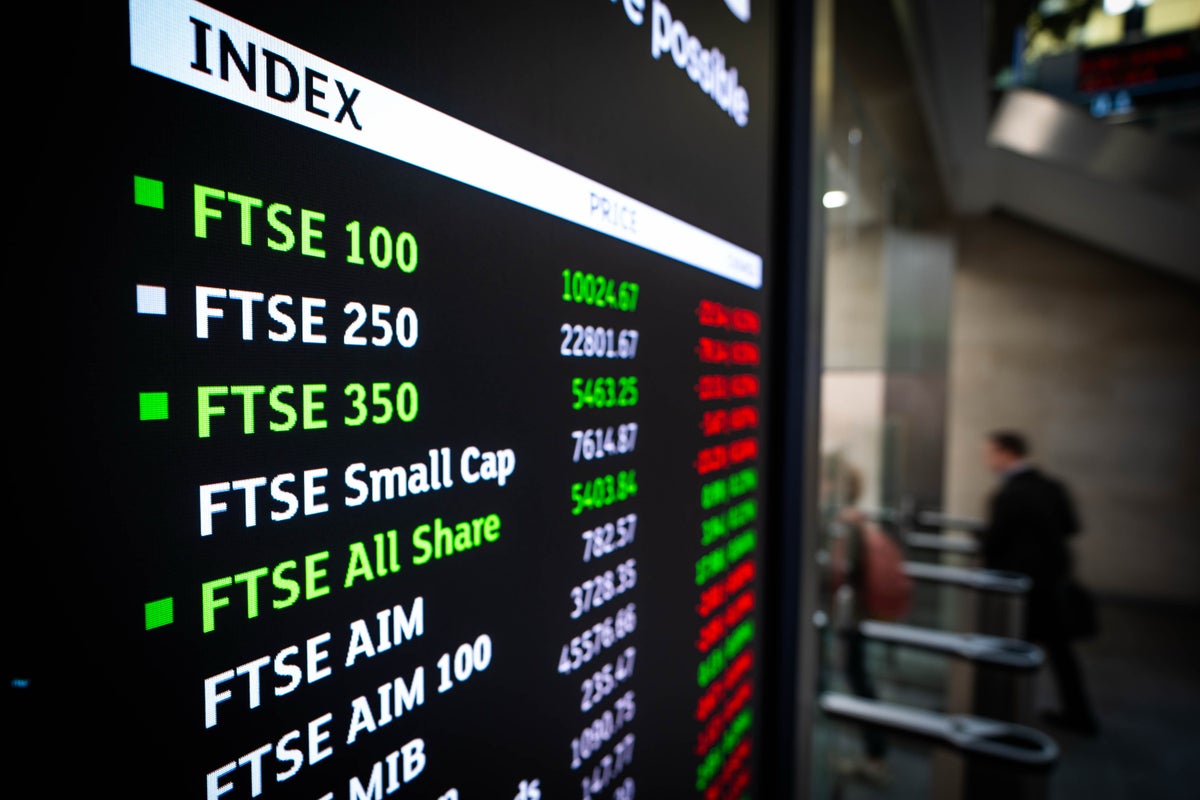
The FTSE 100 made modest headway on Monday, supported by fresh gains in mining stocks as gold and silver prices hit new highs.
The FTSE 100 index closed up 5.41 points, 0.1%, at 10,148.85.
The FTSE 250 ended 34.13 points higher, 0.2%, at 23,351.66, and the Aim All-Share closed up 5.74 points, 0.7%, at 828.49.
Miners Fresnillo, Antofagasta and Endeavour led blue-chip risers, up 6.7%, 5.3% and 4.0%, amid strength in metals prices.
Gold was quoted at 5,095.11 dollars an ounce on Monday, after hitting another record high, and up from 4,984.07 dollars on Friday.
Meanwhile, the price of silver leapt 10%, pushing well above the 100 dollar an ounce landmark it hit late on Friday.
Russ Mould at AJ Bell noted: “In less than 18 months bullion has more than doubled in value – buoyed by central bank demand, global turmoil, dollar weakness, and the diminished appeal of other popular defensive assets.”
Tom Stevenson, investment director at Fidelity International, said the yellow metal is the “ultimate risk-off safe haven – and investors have found plenty to worry about so far this year.”
“With government bonds – the traditional safe haven – falling out of favour as concerns mount about the high levels of borrowing around the world… gold has become the go-to for risk averse investors,” he pointed out.
The latest moves came amid increased uncertainty in the US with Mr Mould noting the odds of another US government shutdown have increased as Democrats say they will block the federal spending package over the fallout from the Trump administration’s immigration crackdown.
Wells Fargo said the odds of a government shutdown starting on January 31 have risen sharply.
“Polymarket traders price the odds of a shutdown starting this Saturday at roughly 80%… which strikes us as reasonable based on what we know now,” the broker said.
“Should another extended shutdown occur, it would leave the FOMC in a tricky spot.
“The lack of visibility that arises from receiving limited economic data could thrust an already divided FOMC into a period of stasis.
“Fed officials lamented the lack of clarity on inflation during the last shutdown. We expect they would again use this argument to delay additional cuts.”
The political uncertainty plus speculation of intervention to support the yen sparked further dollar weakness.
ING noted widespread discussion late on Friday that the Federal Reserve started asking banks in New York about their position sizes in USD/JPY, akin to a “rate check”, where a central bank might be preparing the market for physical intervention.
“That the Fed was allegedly doing this and not making clear that this activity was purely on behalf of Japanese authorities”, has led to “understandable suggestions that the US might be on the verge of joint intervention with Japan,” ING said.
The pound was quoted higher at 1.3704 dollars at the time of the London equities close on Friday, compared to 1.3567 dollars on Thursday.
The euro stood at 1.1884 dollars, higher against 1.1758 dollars. Against the yen, the dollar was trading at 153.99 yen, lower from 157.99 yen.
Kathleen Brooks at XTB said in the short term, a stronger yen means a weaker dollar, which is inflationary for the US.
“This is a good way to inflate away some of the US’s debt pile, however, it may cause a big headache for the Federal Reserve.
“The central bank will meet this week, and we expect yen intervention to be a major topic up for discussion, along with the future of Fed independence.”
The Federal Reserve is widely expected to leave interest rates unchanged on Wednesday after three successive cuts.
“The January FOMC meeting is likely to be uneventful, with no change to the fed funds rate, only minor changes to the statement, and few hints about the future policy path,” analysts at Goldman Sachs said.
Goldman thinks the next cut will be in June, with one more in September.
In European equities on Monday, the Cac 40 in Paris closed down 0.2%, while the Dax 40 in Frankfurt ended up 0.1%.
In New York, financial markets were higher at the time of the London equity market close.
The Dow Jones Industrial Average was up 0.4%, the S&P 500 was 0.5% higher, as was the Nasdaq Composite.
The yield on the US 10-year Treasury was quoted at 4.22%, trimmed from 4.25% on Friday.
The yield on the US 30-year Treasury was quoted at 4.81%, narrowed from 4.84%.
Back in London, a report showed short-term inflation expectations increased in January.
According to the latest Citi/YouGov inflation expectation survey year-ahead expectations increased to 3.8% from 3.6% on a single-month basis.
This reverses the last two months of prospective disinflation in the series and brings it to the highest level since October 2025.
On a three-month rolling basis, however, year-ahead expectations fell to 3.7% from 3.8% thanks to the 4.2% reading in October falling out of comparison.
“This move is explicable, given recent data, but it will continue to keep the inflation expectation argument alive for monetary policy despite recent moderation in these series,” analysts at Citi said.
On the FTSE 100, 3i fell 4.9% as RBC Capital Markets downgraded to “underperform” from “sector perform”.
The broker thinks the private equity and venture capital firm’s key investment, discount retailer Action, is “at risk of moving into a period of diminishing returns” because of macro-economic pressures on its customers and increased maturity and competition in its major markets.
On the FTSE 250, Spire Healthcare rose 18% after confirming it is in early-stage discussions for a potential buyout.
The London-based private healthcare company named Bridgepoint Advisers and Triton Investment Advisers as two suitors with whom it had communicated so far.
The Takeover Code gives Bridgepoint and Triton until February 21 – unless an extension is granted – to declare a firm intention to make an offer.
Ninety One soared 8.4% as Bank of America raised to “buy” from “underperform”, while Costain climbed 7.0% after striking a new agreement with the trustees of its defined-benefit pension scheme.
Costain said the deal clears the way for increased shareholder returns, including a £20 million share buyback this year.
The Maidenhead-based construction and engineering firm also intends to almost double its cash dividend payments in 2026 from 2025, starting with the final dividend for 2025.
Brent oil traded lower at 65.43 dollars a barrel on Monday, down from 65.76 dollars late on Friday.
The biggest risers on the FTSE 100 were Fresnillo, up 280.00p at 4,448.00p, Antofagasta, up 191.00p at 3,775.00p, Endeavour Mining, up 176.00p at 4,542.00p, Segro, up 22.40p at 752.00p and Pershing Square Holdings, up 96.00p at 4,646.00p.
The biggest fallers on the FTSE 100 were 3i, down 160.0p at 3,129.0p, Autotrader, down 19.4p at 549.0p, Experian, down 97.0p at 2,932.0p, BT Group, down 5.45p at 182.8p and BAE Systems, down 54.0p at 1,973.0p.
Tuesday’s global economic calendar sees the start of the two-day Federal Open Market Committee meeting and US house price data.
Tuesday’s UK corporate calendar has trading statements from accountancy software provider Sage, boot maker Dr Martens and betting operator Evoke.
– Contributed by Alliance News
Business
Coal gasification to boost energy security and cut imports, says G Kishan Reddy – The Times of India
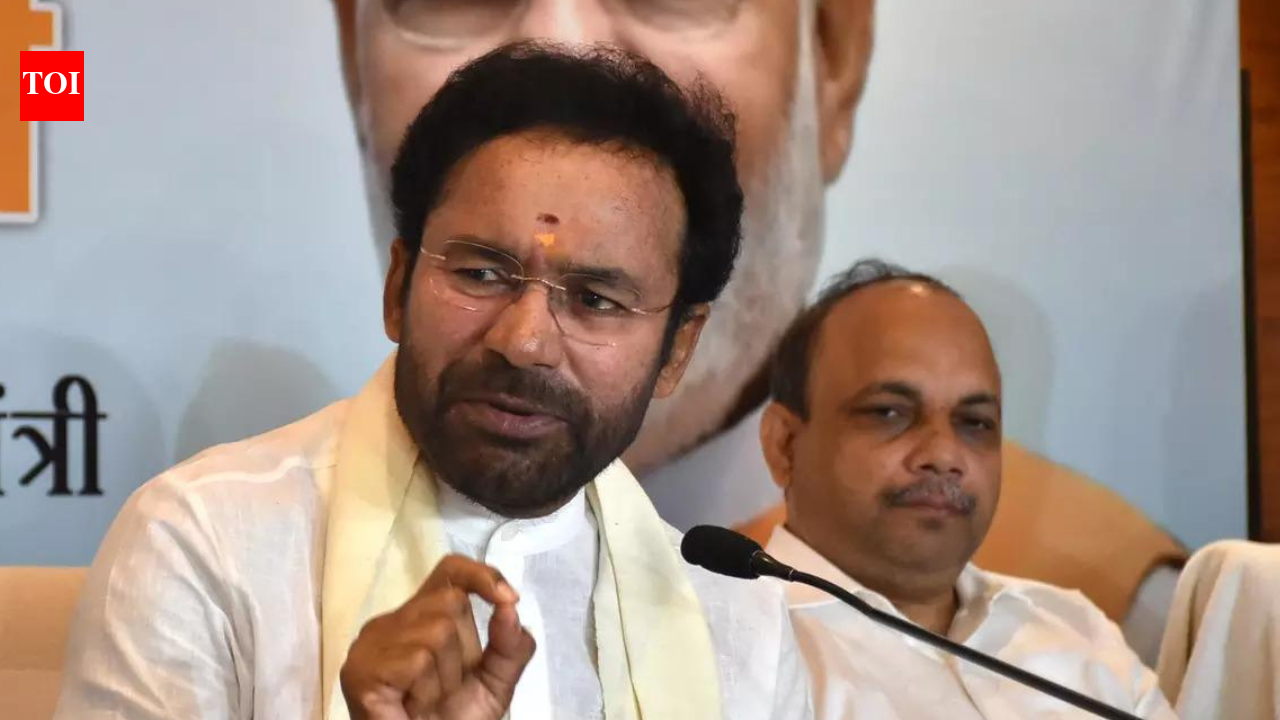
Union coal and mines minister G Kishan Reddy on Sunday said coal gasification will play a critical role in enhancing India’s energy security, reducing import dependence and supporting industrial growth.The renewed push has gained urgency amid the ongoing Middle East conflict, which has led to a surge in global energy prices.Speaking at the Bharat Electricity Summit 2026, the minister described coal gasification as a transformative technology that converts coal into syngas, which can be used to produce cleaner fuels, chemicals, fertilisers and hydrogen, as reported by PTI.He said the approach would enable more efficient and sustainable utilisation of domestic resources while strengthening economic resilience.Reddy highlighted India’s dependence on energy imports, noting that the country imports about 83 per cent of its crude oil requirements, 50 per cent of natural gas and more than 90 per cent of methanol and fertilisers, making energy security a strategic priority.To promote adoption of the technology, the Centre has launched the National Coal Gasification Mission with a target of achieving 100 million tonnes of coal gasification by 2030.“…. An incentive framework of Rs 8,500 crore has been introduced to support public and private sector projects, with several large-scale initiatives already underway and investments exceeding Rs 64,000 crore in the pipeline,” he said.The minister also pointed to advanced technologies such as Underground Coal Gasification, which can help tap previously inaccessible reserves while lowering environmental impact.Calling for greater collaboration, Reddy said coal gasification spans multiple sectors including power, oil and gas and fertilisers, and requires a coordinated ecosystem involving industry, academia, start-ups and research institutions.He reiterated the government’s commitment to streamlined approvals, supportive policies and incentives to encourage early participation and investment.Expressing confidence in India’s potential, the minister said that with innovation, indigenous technology development and coordinated efforts, the country can emerge as a global leader in clean coal technologies while advancing energy security, sustainability and self-reliance.
Business
Sri Lanka increases fuel prices around 25% as Middle East tensions disrupt global oil supplies – The Times of India
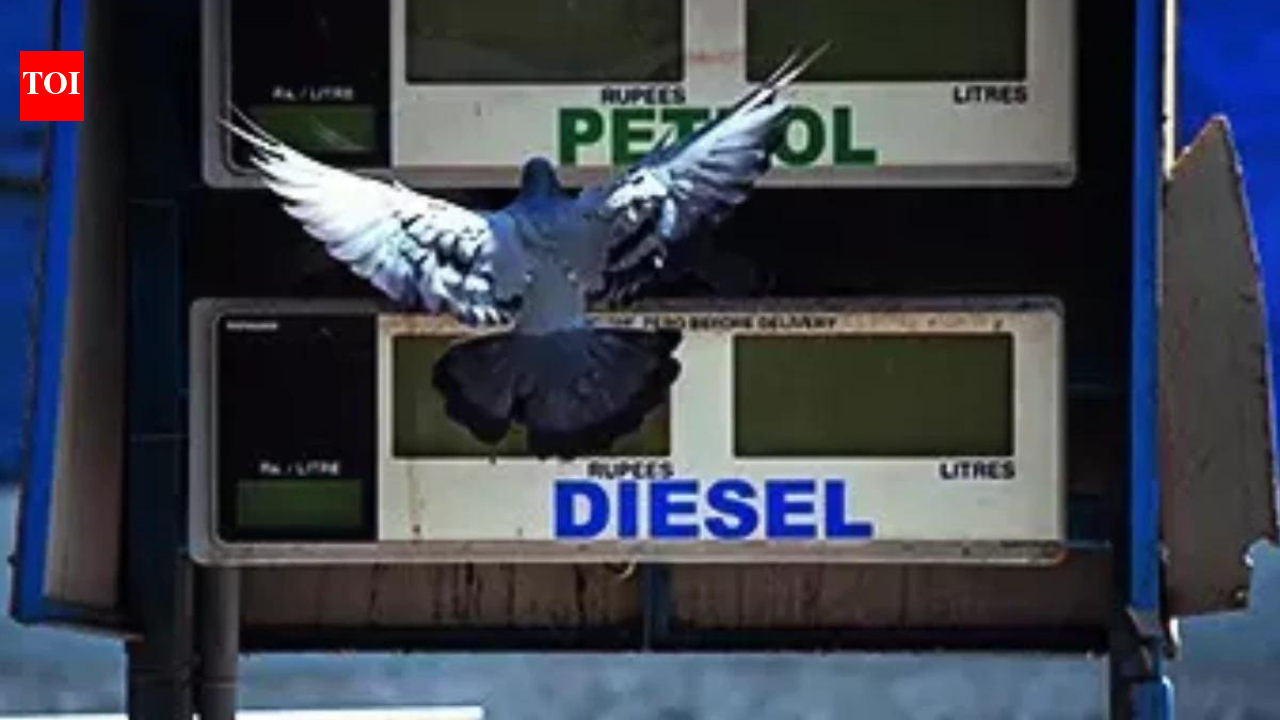
Sri Lanka on Sunday raised fuel prices by around 25 per cent, marking the second increase within a week as the ongoing Middle East conflict continues to disrupt global energy markets, news agency PTI reported.The price revision, effective from midnight, comes as tensions triggered by joint US–Israel strikes on Iran and retaliatory action by Tehran have spread across the Gulf region, leading to the closure of the Strait of Hormuz — a key global energy transit route.According to official announcements, the price of auto diesel rose 26.1 per cent from Sri Lankan rupees (LKR) 303 to LKR 382 per litre, while super diesel increased 25.5 per cent from LKR 353 to LKR 443. Petrol 92 octane climbed 25.6 per cent from LKR 317 to LKR 398, petrol 95 octane rose 24.7 per cent from LKR 365 to LKR 455, and kerosene jumped 30.8 per cent from LKR 195 to LKR 255.This is the third fuel price hike since March 1 and comes as the conflict, which has unsettled global oil markets, entered its fourth week.With the latest revision, retail fuel prices in Sri Lanka are set to return close to levels seen during the 2022 economic crisis, when the country declared its first-ever sovereign default since independence in 1948. The unprecedented financial turmoil at the time forced then president Gotabaya Rajapaksa to resign amid widespread civil unrest.The steep increase has sparked concern among transport operators. Non-state bus owners warned that up to 90 per cent of their fleet could be taken off the roads unless fares are revised.“This is the biggest rise of diesel ever. We will not be able to operate buses without an adequate fare revision. We need a minimum 15 per cent fare hike to stay afloat,” Gamunu Wijeratne, chairman of the Lanka Private Bus Owners’ Association, told reporters.The association threatened a nationwide strike if authorities fail to announce a scheduled fare revision.Responding to the developments, the National Transport Commission (NTC) said the latest diesel price increase, when applied to its fare formula, translates into a rise of more than 10 per cent in current bus fares. NTC Director General Nilan Miranda said Cabinet approval is expected on Monday to implement revised fares, according to media reports.Private operators account for about 65–75 per cent of the island nation’s public transport fleet, while the state-run share stands at around 25–35 per cent.Three-wheeler taxi operators, many of whom use petrol vehicles dominated by India’s Bajaj brand, said the price of commonly used petrol had risen to nearly LKR 400 per litre.“Who would want to ride with us at this rate?” a three-wheeler driver said, as quoted news agency PTI.Apart from state-owned Ceylon Petroleum Corporation (CPC), fuel retailing in Sri Lanka is also carried out by Lanka IOC — a subsidiary of IndianOil –as well as China’s Sinopec and Australia’s United Petroleum. Following CPC’s decision, LIOC and Sinopec also revised their retail fuel prices, media reports said.Opposition leaders criticised the government’s tax policy, claiming that authorities collect about LKR 119 per litre of petrol and LKR 93 per litre of diesel in taxes. They demanded that these levies be scrapped to provide relief to consumers.Analysts warned that the fresh fuel price hike could push inflation higher by 5–8 per cent.Earlier, government spokesman and minister Nalinda Jayatissa said that despite the price revisions, the government continues to bear a monthly subsidy burden of around Rs 20 billion by subsidising diesel by Rs 100 per litre and petrol by Rs 20 per litre.He said that without the revision, the state would have faced an additional financial burden of approximately $1.5 billion. Jayatissa urged the public to consume electricity and fuel “mindfully” and warned against hoarding, calling on citizens to report any such attempts.

The discussion of ways to mitigate any energy price rises came after the government’s cost-of-living tzar, Lord Walker, who is also chief executive of supermarket chain Iceland, suggested in the Sunday Times that energy companies and petrol stations should have their profits temporarily capped as oil prices jump.


Notre Dame men join women in winning inaugural three-weapon title

Men’s March Madness live tracker: Updates from all of Sunday’s games

Carrie Anne Fleming’s death confirmed by ‘Supernatural’ costar at 51

Tips and Advice for Buying Used or Refurbished Electronics

UAE savings strategies 2026 explained: Best apps, tools, budget rules and smart money hacks to beat rising cost of living in emirates – The Times of India

Iran threatens US-linked oil facilities after Kharg Island bombed

-
 Tech1 week ago
Tips and Advice for Buying Used or Refurbished Electronics
-
Business1 week ago
UAE savings strategies 2026 explained: Best apps, tools, budget rules and smart money hacks to beat rising cost of living in emirates – The Times of India
-
 Politics1 week ago
Iran threatens US-linked oil facilities after Kharg Island bombed
-

 Fashion1 week ago
US court to review de minimis ban on imports from China & Hong Kong
-
 Entertainment1 week ago
Strategic oil stocks to be released ‘immediately’ in Asia and Oceania: IEA
-

 Entertainment1 week ago
Iran at war
-

 Sports1 week ago
Japan suffers shocking collapse to Venezuela in World Baseball Classic
-

 Entertainment1 week ago
Meet one of the last true paparazzi