

Business
Prediction markets allow trading on Super Bowl commercials, prompting insider trading questions


The Super Bowl 60 logo on a Santa Clara Valley Transportation Authority light rail car in Santa Clara, California, Dec. 29, 2025.
Aaron M. Sprecher | Getty Images Sport | Getty Images
A version of this article first appeared in the CNBC Sport newsletter with Alex Sherman, which brings you the biggest news and exclusive interviews from the worlds of sports business and media. Sign up to receive future editions, straight to your inbox.
For many Americans, the best part of the Super Bowl is the commercials. This year, you can make — or lose — money on them, too.
Prediction market platforms Kalshi and Polymarket currently have contracts open on which companies will run ads during Super Bowl 60, which will feature the Seattle Seahawks vs. the New England Patriots and is set for Feb. 8 in Santa Clara, California. Users can trade on whether Salesforce or Verizon or Coca-Cola will have a Super Bowl spot this year, for example.
While Polymarket’s trades are just a “Yes/No” bet, Kalshi has a few predictions that are a bit more nuanced, such as, “Who will appear in a big game ad before Feb 9, 2026?”, with trades available for Sydney Sweeney, Timothée Chalamet and Harry Styles.
It’s a new wrinkle for the advertising industry’s biggest night. The price of Super Bowl commercials goes higher and higher each year as the Super Bowl’s TV audience keeps rising. Last year’s game was watched by 127.7 million viewers, a record high. That game, broadcast by Fox, generated about $7.5 million per 30-second spot, with 10 or so ads commanding more than $8 million.
This year, NBC, which will broadcast the game, has sold out all of its ad inventory, averaging $8 million per 30-second commercial, with between five and 10 ads selling for more than $10 million apiece, according to Mark Marshall, NBC’s chairman of global advertising and partnerships. The closer to the game that a company buys an ad slot, the more it pays.
According to Marshall, technology companies have bought the most spots across this year’s slate, though NBC defines technology relatively broadly: Uber Eats, for example, is considered a tech company. Only two automobile companies are advertising during the game. About 40% of advertisers this year have never bought a Super Bowl spot before, Marshall said.
But the entrance of prediction market platforms means Marshall has reason to keep details close to the vest.
Insider trading concerns
For those not familiar with how these prediction markets work, they basically trade like stocks, with contracts priced between $0 and $1. The contracts trade up or down depending on the action.
For example, for “Which brands will advertise during the big game 2026?” on Kalshi, Spotify spiked on Jan. 19, going from $0.35 to $0.69 before settling down. As of Friday morning, a “Yes” contract for Spotify was priced at $0.37.
If your predicted outcome materializes, you get paid, with winning contracts paying out $1 each, minus fees.
Both Polymarket and Kalshi are also offering other prediction trades around the Super Bowl, including “What songs will be played at the halftime show?,” “Who will attend the big game?” (Lionel Messi? Elon Musk?), and more traditional sportsbook “bets” such as “Seattle vs. New England: Most Rushing Yards.”
While straight sports predictions, such as rushing yards, are unknown events, there are likely hundreds, if not thousands, of employees who know whether their company is planning to run a Super Bowl commercial. That makes some contracts ripe for insider trading.
Existing laws prohibit insider trading on prediction markets, but industry experts are skeptical that a gutted Commodity Futures Trading Commission has the will or the staff to police those problems.
Meanwhile the question of whether events contracts on sports amount to financial derivatives or gambling is dividing the sports gambling industry — and tying federal courts in knots.
“A couple of courts have held that event contracts based on sports are not derivatives subject to the CFTC’s authority,” said Jack Murphy, senior counsel at Akin Gump and a former CFTC enforcement attorney. “Those decisions are up on appeal. If sports event contracts aren’t derivatives, then criminal authorities could still prosecute insider trading on prediction markets under a wire fraud theory.”
On Thursday, Michael Selig, the new chairman of the CFTC, said he had directed agency staff to withdraw a proposed rule that would ban prediction trades on sports and politics. He said new rules would be coming.
Meanwhile live sports continue to fuel prediction market growth. Kalshi’s on track for 44% month-over-month growth in total trading volume, according to Piper Sandler analyst Patrick Moley. The contract on “Who will win the Super Bowl?” has already accounted for more than $150 million in trading volume.







Heineken has announced a substantial investment exceeding £44 million into hundreds of its pubs across the UK, a move expected to create approximately 850 jobs.
The Dutch brewing giant’s Star Pubs operation, which manages 2,350 sites nationwide, is undertaking this significant financial commitment despite a challenging period for the pub sector.
The industry has faced considerable pressure over the past year, grappling with escalating labour costs and increases in national insurance contributions.
Concurrently, consumer spending has been constrained by concerns over inflation and rising unemployment, further impacting pub revenues. However, pubs did receive additional business rates support from the government last month, aimed at alleviating some of these financial burdens.
Lawson Mountstevens, managing director of Star Pubs, indicated that the investment strategy is partly designed to bolster revenues and help the group navigate the recent “sustained increases in running costs”.
This year, £44.5 million will be allocated to upgrades for 647 pubs. A notable 108 of these venues are earmarked for particularly significant cash injections, with each transformation costing at least £145,000.
Heineken clarified that while the majority of its pubs are group-owned, they are independently operated by local licensees. A key focus for this investment, particularly in the lead-up to the 2026 football World Cup, will be on sports-focused venues.
The pub firm and brewer has a history of significant investment in British pubs, having pumped £328 million into the sector since 2018. Work has already commenced at 52 locations, including eight projects dedicated to reopening boarded-up pubs that have endured lengthy closures.
Mr Mountstevens also urged the government to reduce the tax burden on pubs, arguing it would ease cost pressures and foster further job creation within the industry.
He stated: “We can only do so much; the root-and-branch reform of business rates that the industry has been calling for over many years is urgently required, as well as a lowering of the burden of taxation on pubs, including VAT and beer duty.”
He concluded with a direct appeal: “We are calling on the Government to support us in bringing out the best in the Great British pub.”
GameStop’s boss Ryan Cohen says he sees potential to make eBay a much bigger rival to Amazon.
Source link
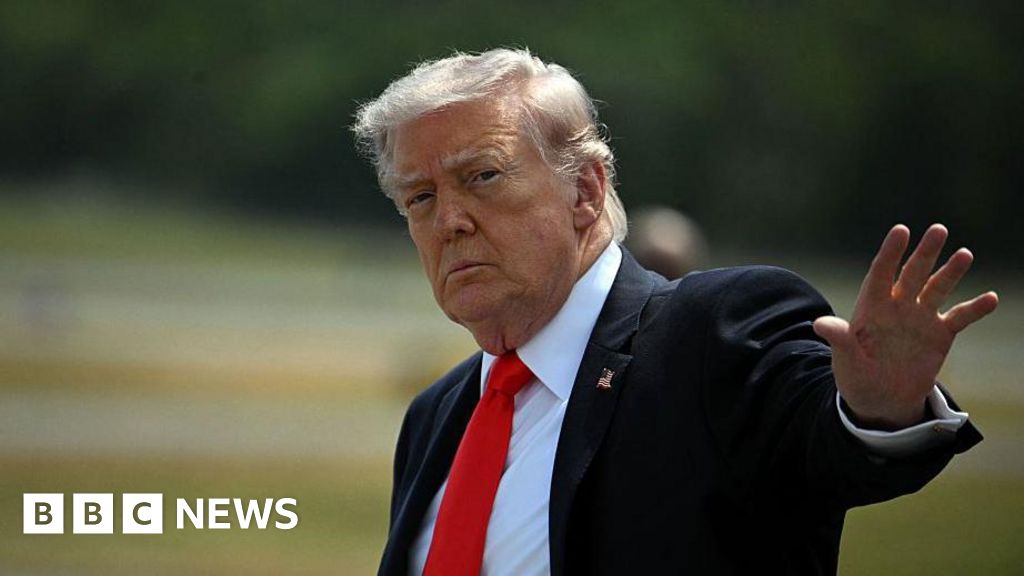
It comes as the US said on Monday it will begin to help “guide” vessels out of the Strait of Hormuz.
Source link


Met Gala 2026 “Costume Art” red carpet pictures from New York City

Jack Brooksbank opts for intimate celebration as new baby brings fresh focus

White House briefly locked down after Secret Service shooting in Washington

-

 Tech1 week ago
A Brain Implant for Depression Is About to Be Tested in Humans
-

 Tech1 week ago
Almost 90% of women leave tech industry within 10 years | Computer Weekly
-
 Business1 week ago
Pakistan’s oil market is fuelling the crisis | The Express Tribune
-
 Business1 week ago
‘I had £20,000 stolen and had to fight a 13-month fraud reporting rule to get it back’
-

 Sports6 days ago
Pro wrestling star Steph De Lander reveals how colleague’s advice helped lead her to title triumph at ACW
-

 Entertainment1 week ago
Norway joins Type 26 Frigate Programme to boost NATO naval power
-

 Entertainment1 week ago
Melania Trump says ABC should ‘take a stand’ on late-night host Kimmel
-
 Tech7 days ago
This Ambitious Laptop Doesn’t Leave Much Room for Your Hands