

Politics
President Masoud Pezeshkian speaks to Americans — read full letter here

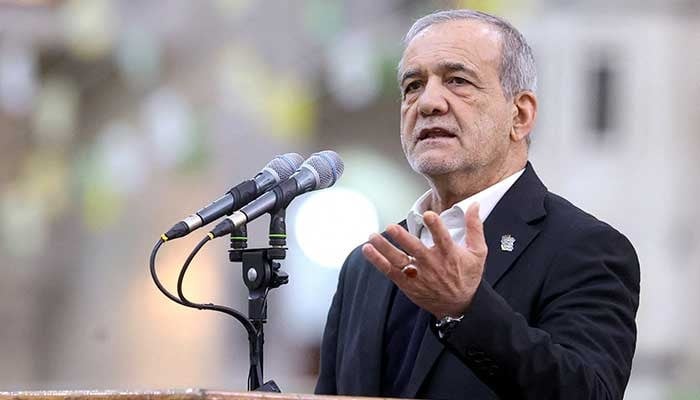
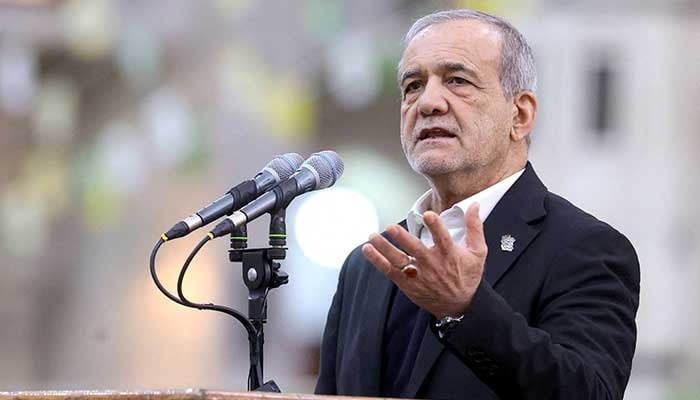
Iran’s president, Masoud Pezeshkian, on Wednesday published an open letter directly to the American public, challenging the rationale behind the ongoing US‑Israeli campaign against Tehran and urging citizens in the United States to reconsider the motives driving Washington’s foreign policy.
In the wide‑ranging message, Pezeshkian questioned longstanding assumptions about Iran as a security threat, traced grievances in bilateral relations back decades, and insisted that Iran’s recent military measures are grounded in self‑defence rather than aggression.
The letter comes as US President Donald Trump prepares to address the nation on the state of the conflict.
Here’s the full text of his letter:
“In the name of God, the Compassionate, the Merciful
“To the people of the United States of America, and to all those who, amid a flood of distortions and manufactured narratives, continue to seek the truth and aspire to a better life:
“Iran — by this very name, character, and identity — is one of the oldest continuous civilisations in human history. Despite its historical and geographical advantages at various times, Iran has never, in its modern history, chosen the path of aggression, expansion, colonialism, or domination. Even after enduring occupation, invasion, and sustained pressure from global powers — and despite possessing military superiority over many of its neighbours — Iran has never initiated a war. Yet it has resolutely and bravely repelled those who have attacked it.
“The Iranian people harbour no enmity toward other nations, including the people of America, Europe, or neighbouring countries. Even in the face of repeated foreign interventions and pressures throughout their proud history, Iranians have consistently drawn a clear distinction between governments and the peoples they govern. This is a deeply rooted principle in Iranian culture and collective consciousness — not a temporary political stance.
“For this reason, portraying Iran as a threat is neither consistent with historical reality nor with present-day observable facts. Such a perception is the product of political and economic whims of the powerful — the need to manufacture an enemy in order to justify pressure, maintain military dominance, sustain the arms industry, and control strategic markets. In such an environment, if a threat does not exist, it is invented.
“Within this same framework, the United States has concentrated the largest number of its forces, bases, and military capabilities around Iran — a country that, at least since the founding of the United States, has never initiated a war. Recent American aggressions launched from these very bases have demonstrated how threatening such a military presence truly is. Naturally, no country confronted with such conditions would forgo strengthening its defensive capabilities. What Iran has done — and continues to do — is a measured response grounded in legitimate self-defence, and by no means an initiation of war or aggression.
“Relations between Iran and the United States were not originally hostile, and early interactions between the Iranian and American people were not marred with hostility or tension. The turning point, however, was the 1953 coup d’etat — an illegal American intervention aimed at preventing the nationalisation of Iran’s own resources. That coup disrupted Iran’s democratic process, reinstated dictatorship, and sowed deep distrust among Iranians toward US policies. This distrust deepened further with America’s support for the Shah’s regime, its backing of Saddam Hussein during the imposed war of the 1980s, the imposition of the longest and most comprehensive sanctions in modern history, and ultimately, unprovoked military aggression — twice, in the midst of negotiations —against Iran.
“Yet all these pressures have failed to weaken Iran. On the contrary, the country has grown stronger in many areas: literacy rates have tripled —from roughly 30 per cent before the Islamic Revolution to over 90pc today; higher education has expanded dramatically; significant advances have been achieved in modern technology; healthcare services have improved; and infrastructure has developed at a pace and scale incomparable to the past. These are measurable, observable realities that stand independent of fabricated narratives.
“At the same time, the destructive and inhumane impact of sanctions, war, and aggression on the lives of the resilient Iranian people must not be underestimated. The continuation of military aggression and recent bombings profoundly affect people’s lives, attitudes, and perspectives. This reflects a fundamental human truth: when war inflicts irreparable harm on lives, homes, cities, and futures, people will not remain indifferent toward those responsible.
“This raises a fundamental question: Exactly which of the American people’s interests are truly being served by this war? Was there any objective threat from Iran to justify such behaviour? Does the massacre of innocent children, the destruction of cancer-treatment pharmaceutical facilities, or boasting about bombing a country ‘back to the stone ages’ serve any purpose other than further damaging the United States’ global standing?
“Iran pursued negotiations, reached an agreement, and fulfilled all its commitments. The decision to withdraw from that agreement, escalate toward confrontation, and launch two acts of aggression in the midst of negotiations were destructive choices made by the US government —choices that served the delusions of a foreign aggressor.
“Attacking Iran’s vital infrastructure — including energy and industrial facilities — directly targets the Iranian people. Beyond constituting a war crime, such actions carry consequences that extend far beyond Iran’s borders. They generate instability, increase human and economic costs, and perpetuate cycles of tension, planting seeds of resentment that will endure for years. This is not a demonstration of strength; it is a sign of strategic bewilderment and an inability to achieve a sustainable solution.
“Is it not also the case that America has entered this aggression as a proxy for Israel, influenced and manipulated by that regime? Is it not true that Israel, by manufacturing an Iranian threat, seeks to divert global attention away from its crimes toward the Palestinians? Is it not evident that Israel now aims to fight Iran to the last American soldier and the last American taxpayer dollar — shifting the burden of its delusions onto Iran, the region, and the United States itself in pursuit of illegitimate interests?
“Is ‘America First’ truly among the priorities of the US government today?
“I invite you to look beyond the machinery of misinformation — an integral part of this aggression — and instead speak with those who have visited Iran. Observe the many accomplished Iranian immigrants — educated in Iran — who now teach and conduct research at the world’s most prestigious universities, or contribute to the most advanced technology firms in the West. Do these realities align with the distortions you are being told about Iran and its people?
“Today, the world stands at crossroads. Continuing along the path of confrontation is more costly and futile than ever before. The choice between confrontation and engagement is both real and consequential; its outcome will shape the future for generations to come. Throughout its millennia of proud history, Iran has outlasted many aggressors. All that remains of them are tarnished names in history, while Iran endures —resilient, dignified, and proud.”


BEIJING: China’s cyberspace regulator issued draft regulations on Friday to oversee the development online of digital humans, requiring clear labelling and banning services that could mislead children or fuel addiction.
The Cyberspace Administration of China’s proposed rules would require prominent “digital human” labels on all virtual human content and prohibit digital humans from providing “virtual intimate relationships” to those under 18, according to rules published for public comment until May 6.
The draft regulations would also ban the use of other people’s personal information to create digital humans without consent, or using virtual humans to bypass identity verification systems, reflecting Beijing’s efforts to maintain control in the face of advances in artificial intelligence.
Digital humans are also prohibited from disseminating content that endangers national security, inciting subversion of state power, promoting secession, or undermining national unity, the draft rules said.
Service providers are advised to prevent and resist content that is sexually suggestive, depicts horror, cruelty or incites discrimination based on ethnicity or region, according to the document. Providers are also encouraged to take necessary measures to intervene and provide professional assistance when users exhibit suicidal or self-harming tendencies.
China made clear its ambitions to aggressively adopt AI throughout its economy in the new five-year policy blueprint issued last month. The push comes alongside tightening governance in the booming industry to ensure safety and alignment with the country’s socialist values.
The new rules aim to fill a gap in governance in the digital human sector, setting clear red lines for the healthy development of the industry, according to an analysis published on the cyberspace regulator’s website.
“The governance of digital virtual humans is no longer merely an issue of industry norms; rather, it has become a strategic scientific problem that concerns the security of cyberspace, public interests, and the high-quality development of the digital economy,” it added.
- Habshan plant fires disrupt energy operations.
- Ajban debris incident injures 12 civilians.
- Air defences intercept missiles, drones daily.
DUBAI: The death toll in the United Arab Emirates (UAE) has risen to 10, including foreign nationals, with more than 200 people injured since the Middle East conflict began on February 28, as falling debris from intercepted Iranian missiles and drones continues to hit civilian and industrial areas.
Among the deceased are four Pakistani nationals, highlighting the broader impact on expatriate communities.
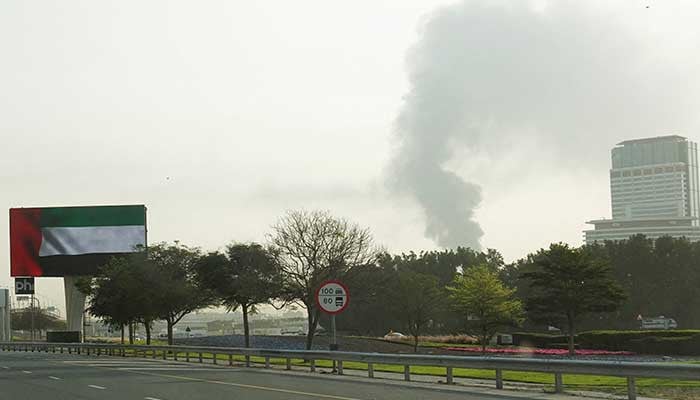
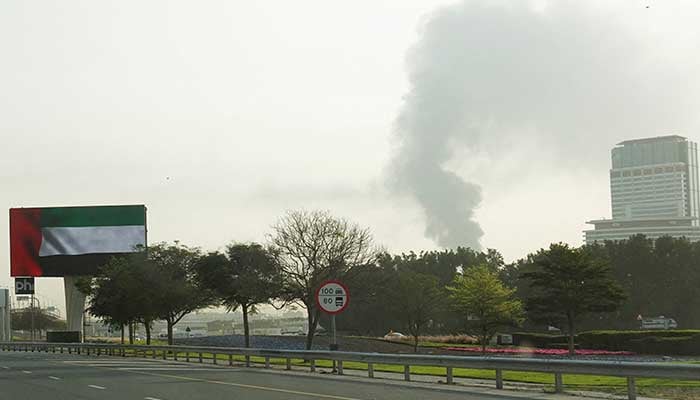
In the latest incident, debris from intercepted aerial threats triggered fires at the Habshan gas processing plant, a key energy facility in south-west Abu Dhabi.
An Egyptian national was killed during evacuation, while four others — including two Pakistanis — sustained minor injuries, according to the Abu Dhabi Media Office. Operations at the plant have been suspended, and damage assessments are ongoing.
In a separate incident in Ajban, about 80 kilometres north-east of Abu Dhabi city, debris from intercepted projectiles injured 12 people. Those wounded included nationals from Nepal and India; one individual remains in serious condition, while others suffered minor to moderate injuries.
The UAE Ministry of Defence said its air defence systems intercepted multiple ballistic and cruise missiles, as well as drones launched from Iran in the past 24 hours. While the interceptions prevented potentially larger-scale damage, officials warned that falling debris continues to pose significant risks to populated and industrial zones.
Authorities said missile and drone attacks have been reported on a near-daily basis since the conflict began, increasing pressure on emergency response systems and critical infrastructure.
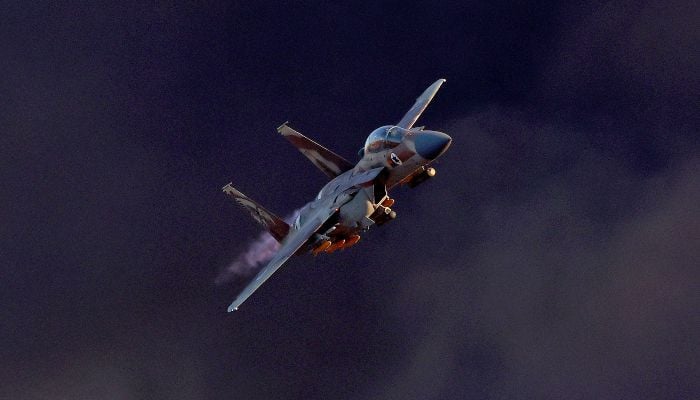
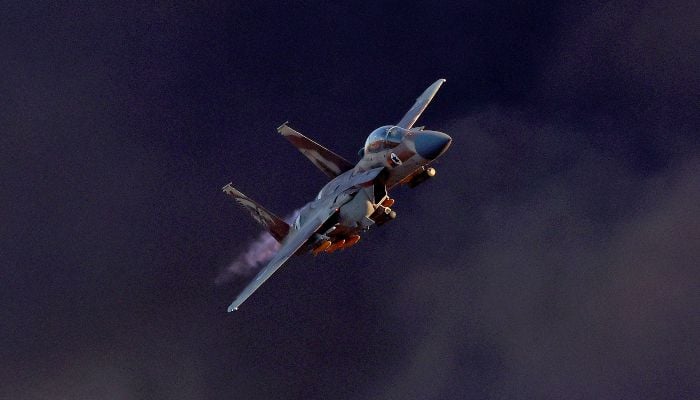
WASHINGTON: As American forces race against time and Iran’s military to locate an aviator reportedly shot down Friday, a former Air Force pilot and a rescuer told AFP what it takes to hide, survive and extract someone behind enemy lines.
“You’re like, ‘Oh my God, I was in a fighter jet two minutes ago, flying 500 miles an hour, and a missile just exploded, literally 15 feet from your head,'” said retired brigadier general Houston Cantwell, who is now at the Mitchell Institute for Aerospace Studies.
That said, a pilot’s training — known as survival, evasion, resistance and escape (SERE) — would likely kick in before he or she parachutes to the ground.
“Your best view of where you may want to go or where you may want to avoid is while you’re coming down in your parachute,” Cantwell said.
Cantwell logged 400 hours of combat flight experience, including missions over Iraq and Afghanistan.
Parachuting to the ground risks foot, ankle, and leg injuries, the former airman explained.
“There are many stories of survivors from Vietnam that had severe injuries — compound fractures — just from the ejection,” he said.
Upon landing, “take an inventory of yourself to figure out, what condition am I in? Can I even move? Am I even mobile?”
Aviators then figure out where they are, whether it is behind enemy lines, where they can hide, and how they can communicate.
“Try to avoid enemy capture, as long as you can,” Cantwell said. “And if I were in a desert environment, I’d want to try to find some water.”
Simultaneously, Combat Search and Rescue (CSAR) teams — highly trained soldiers and pilots already on alert — would be activated.
“It gives you tremendous peace of mind, knowing that, you know, they’re going to do everything they can to come get you,” Cantwell said. “At the same time, they’re not going to come on a suicide mission.”
That’s where the missing crewmember can increase the odds of a safe rescue.
“My priority would be, first of all, concealment, because I don’t want to be captured,” he said. “I want to try to get to a location where I can get extracted.”
In a city, that may be a rooftop. In a rural setting, a field where helicopters can land. Movement is best at night, he said.
Cantwell said that when he flew, he also carried a pistol.
Rescue mission
Meanwhile in a “ready room,” CSAR soldiers like retired master sergeant Scott Fales suit up.
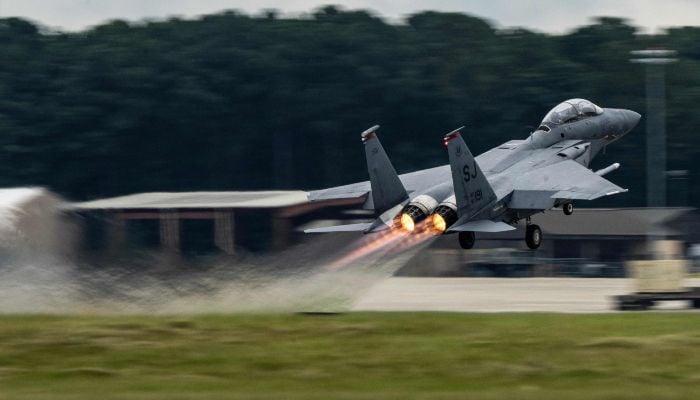
Experts like Fales — a pararescue jumper who played a key role in the 1993 “Black Hawk Down” incident in Mogadishu, Somalia — are always standing by whenever US aircraft are over enemy territory.
“Before any operations are conducted… there is always a CSAR plan,” Fales told AFP.
Simultaneously, an immense amount of intelligence is gathered and analyzed on the location and status of the missing aviator.
“Everything from human intelligence to imagery intelligence, to you know, all the different drones we have looking — signals intelligence,” Fales said. “It’s all being used to try to find this guy.”
Once the missing aviator is located, a rescue plan is formulated in real time inside the helicopters.
“Those gunners are spotting and looking for threats, the pilots are looking for a place to land, we’re reaching out to that downed aviator,” he said.
On the ground, they ensure the pilot is actually the person they are searching for, and a threat-versus-medical-needs assessment is done.
In their minds, Fales said: “What kind of immediate threat are we in? How much time do we have to get this person out? What kind of injuries do they have? And then we’ll make up our mind on the type, amount of treatment that’s needed on the scene — or do we just grab and go depending on the threat?”
With a fellow soldier still unaccounted for in southwest Iran, Fales said he’s “very hopeful” the aviator will be located.
“I’m hoping that friendly people have found him and are hiding him,” he said. “Or he’s still evading.”


Netflix renews ‘Love on the Spectrum’ for season 5

China moves to regulate digital humans, bans addictive services for children

UAE death toll hits 10 as intercepted Iranian strikes cause deadly debris

-

 Entertainment1 week ago
Lee Sang-bo dies at 45: Funeral details revealed
-

 Sports1 week ago
Illinois defense gets tough, ousts Houston to reach Elite Eight
-

 Sports6 days ago
USMNT handed reality check by Doku, Belgium ahead of World Cup
-

 Sports6 days ago
2026 NCAA men’s hockey tournament: Schedule, results
-

 Fashion1 week ago
China rolls out tariff cuts on Congo imports from April 1
-
 Business1 week ago
How do you spot a fake online review?
-

 Fashion1 week ago
EU apparel imports slump 15.48% YoY in Jan; Bangladesh hardest hit
-

 Sports6 days ago
Man City show why they are worthy WSL title winners as tired United wilt