Connect with us

Fashion

Primark says Gen Z is denim obsessed

Published

on

Primark says Gen Z is denim obsessed


Published


September 29, 2025

The UK’s love affair with denim shows no signs of waning with 2.5 million women (nearly one in 10) wearing their wardrobe staple daily and spending £3.2 billion a year in the process.

Primark

And Gen Z is ensuring its appeal remains strong, with 28% of the age group wearing denim for any occasion, from workwear (17%) to even weddings (10%), according to findings from value fashion/lifestyle giant Primark.

Its commissioned report shows the North of England is driving denim demand, with Mancunians and Geordies (both 12%) currently owning 10 or more pairs of jeans UK. But when it comes to style, classic looks dominate in the South as London emerges as “the capital for baggy jeans”.

And of course, all this fits in with Primark currently “reinvent[ing] its new affordable denim collection “to ensure great fit is across every style this Autumn/Winter season” accompanied by its first ever denim ad campaign launched earlier this month.

Back to the findings, 42% of women are now embracing double denim with Gen Z firmly leading the way “thanks to the Y2K revival trend bringing back this bold look with a strong dose of early 2000s nostalgia”.

Southerners are far more likely to go for classic denim shapes, compared to Northerners who are a bit more adventurous, exploring new styles.

Almost a quarter of Londoners (23%) say that baggy jeans are their favourite style, while mom jeans are the most popular in Birmingham and straight-legs are the overwhelming preference for Bristolians (62%). Meanwhile for Scots, in Edinburgh, high waisted are the city’s style of choice for almost a third (30%) and Glasgow comes out on top for favouring the low-rise look (10%).

As to what’s behind the perfect pair of jeans, almost three-quarters of UK women say it’s finding the right level of comfort and fit that’s the most important consideration when buying new denim. This is followed by price (55%), style (41%) and fabric quality (26%), highlighting the need for more affordable, quality fashion choices on the high street to meet the needs of female shoppers.

In response, Primark said it has revamped its latest denim collection “to meet rising demand for better fit and quality, without the premium price tag”. The  new denim collection features a curated range of 10 standout styles “specifically designed to combine comfort, quality, and fashion-forward cuts at unbeatable prices starting at just £12 for its Palazzo jeans”.

After over 18 months of work to refine its fit, sizing, styles and quality, Primark recently launched its first-ever ‘In Denim We Can’ ad campaign in the UK and Autumn/Winter 2025 denim collection in all 197 UK stores, including Click & Collect.
 

Copyright © 2025 FashionNetwork.com All rights reserved.



Source link

Continue Reading
Click to comment

Leave a Reply

Your email address will not be published. Required fields are marked *

Fashion

Swedish consumers prefer sustainable clothing: Study

Published

on

Swedish consumers prefer sustainable clothing: Study


There is a strong demand in Sweden for clothing produced in a more sustainable way—especially clothing that avoids the most harmful production practices—consumers are generally unwilling to pay extra for garments that meet the very highest sustainability standards, as per a new study from the University of Gothenburg.

More than 1,700 respondents participated in the study, choosing between T-shirts with different levels of working conditions, health protection and environmental impact. Health risks linked to chemicals in clothing were ranked as the most important factor, followed by working conditions and, lastly, environmental impacts.

A study of over 1,700 Swedish consumers found strong support for avoiding poor clothing production practices, especially health risks from chemicals.
Consumers were willing to pay 60–85 SEK (~$5.50–~$8.00) more per T-shirt to avoid the worst standards, but few would pay extra for top sustainability levels.
Results support clearer EU labelling and targeted premium markets.

On average, consumers were willing to pay an additional 60–85 SEK (~$5.50–~$8.00) per T-shirt to avoid the poorest production standards. In contrast, willingness to pay for reaching the highest sustainability levels was low.

“There is a substantial willingness to pay to avoid the worst alternatives and to reach regulatory minimum standards, but relatively few consumers are willing to pay for further improvements,” said Daniel Slunge, researcher at the University of Gothenburg and co-author of the study.

The study was conducted both with consumers purchasing clothing for themselves and with parents purchasing clothing for their children. The pattern was similar across both groups.

The findings provide important insights for the ongoing development of the European Union’s Ecodesign Regulation, which will introduce more comprehensive product labelling and traceability requirements.

Our results indicate that producers could cover a significant share of the cost increases associated with making their products more sustainable, if these improvements are clearly communicated to consumers,” said Anders Boman, co-author of the study. “While most consumers are not willing to pay beyond regulatory standards, there are consumer groups who prefer and are willing to pay for higher levels of sustainability. These groups may form an important target market for premium-certified products.”

Fibre2Fashion News Desk (RR)


Source link

Continue Reading

Fashion

India’s PDS Limited wins AEPC Gold Award for global RMG leadership

Published

on

India’s PDS Limited wins AEPC Gold Award for global RMG leadership


India’s leading sourcing and manufacturing solutions platform PDS Limited has received the Gold Award for World Leadership in Ready-Made Garments from India at the Export Awards organised by the Apparel Export Promotion Council (AEPC). The award recognises PDS’ sustained contribution to global apparel exports and its leadership role in positioning India as a key sourcing hub.

The honour was presented to group chairman Deepak Seth and Payel Seth by the Vice President of India, C P Radhakrishnan, at the AEPC Export Awards ceremony. The recognition highlights Dr. Seth’s visionary leadership and the collective capabilities of the PDS Platform, PDS Limited said in a LinkedIn post.

PDS Limited has been awarded the Gold Award for World Leadership in RMG from India at the AEPC Export Awards, recognising its leadership in global apparel exports.
Presented by the Vice President of India to chairman Deepak Seth and Payel Seth, the honour underscores PDS’ commitment to quality, innovation and sustainability, and its role in reinforcing India’s position as a major apparel sourcing hub.

Instituted by AEPC, the Export Awards celebrate apparel exporters that demonstrate excellence in quality, innovation, sustainability, and global impact. These values are central to PDS’ operating model, which integrates design, sourcing, manufacturing, and logistics to serve leading international fashion brands and retailers.

“We share this recognition with every partner, customer, and colleague who continues to shape India’s leadership on the global apparel stage,” the company said in the post.

Fibre2Fashion News Desk (KD)


Source link

Continue Reading

Fashion

India year-end review 2025: Trapped in the crossfire

Published

on

India year-end review 2025: Trapped in the crossfire


The Indian textile sector contributes about 2.3 per cent to the country’s GDP, 13 per cent to industrial production, and 12 per cent to total exports. It is also the second-largest employer after agriculture, providing direct work to more than 45 million people, many of whom are women and members of the rural workforce.

Indo-US Trade Relations

The US has been the largest export market for Indian textile and apparel, accounting for 28-29 per cent of exports over the last four years ended 2024. India primarily exports cotton-based textile products to the US, mainly home textiles and apparel, which together accounted for 90 per cent of Indian textile exports to the US in 2024. The US also buys a fifth of India’s leather goods, from shoes to handbags. Since about one-third of India’s garment exports go to the US, losing this business means directly affecting around 700,000 workers and indirectly impacting another 1.5 million in areas that serve the US market. This made India’s response to the US tariff a cautious one. According to Indian Commerce Ministry, imposition of 50 per cent tariffs by the US will have a short-term impact on the country’s exports, particularly in sectors such as textiles, chemicals, and machinery, with long-term effect on overall trade and GDP remaining limited. However, some economists reckoned that the tariffs could shave up to one percentage point off India’s GDP in 2025.

US tariffs of up to 50 per cent disrupted India’s textile exports, triggering order cancellations, factory shutdowns and job losses across key hubs.
Exports to the US are set to fall in 2026, squeezing margins and MSMEs.
Relief is expected from UK duty-free access under CETA and diversification towards the EU and domestic retail sourcing.

Tariff Attack

On August 7, the US first imposed a 25 per cent “reciprocal” tariff on Indian exports. Less than a week later, it added another 25 per cent “penalty” tariff for purchasing Russian oil, to be effective from August 27, taking the import duty on certain Indian goods to 50 per cent even as both sides held parallel talks on a trade deal. The duties significantly harmed labour-intensive sectors, such as textiles, footwear and jewellery. At a 50 per cent tariff rate, an Indian-made shirt once sold at $10, now costs US buyers $16.40—far costlier than $14.20 from China, $13.20 from Bangladesh or $12 from Vietnam. Even at 25 per cent rate, India stood less competitive than its Asian peers. Despite this, India continued to import Russian oil, citing that it helps keep energy markets stable and is suitable for its economy.

Instant Industry Impact

With imposition of 50 per cent tariff in August, the garment production lines supplying to US markets came to a halt until further notice, with workers either told to stay home or shifted around to other lines with fewer hours. The first to let go were the contract workers who are often employed on short-term or piece-rate arrangements without any social security protections of regular workers. As US orders slowed down, the factories cut productions and moved workers onto rotation lines, mostly producing for European buyers. Wage insecurity became the biggest source of fear. Small- and medium-sized suppliers became particularly vulnerable by trade crisis. Smaller exporters and MSMEs struggled with reworking production schedules, negotiating raw material costs or shifting manufacturing to other geographies, given their smaller scale and lower bargaining power. Cash flow management became even more critical for them as delayed payments or cancelled orders severely impacted day-to-day operations. Few had the financial reserves to absorb tariff shocks or withstand delayed payments, while those heavily dependent on US brands, without a diversified base of European and domestic brands, were hit the hardest. Many American brands producing for European markets also paused operations in India to avoid risk of building an inventory that would later become too costly and could end up being blocked. Not only American brands but even some European brands used the desperation of Indian suppliers to push prices down, being fully aware that peak-season production for upcoming Christmas and New Year season made it almost impossible for factories to refuse.

As a later date impact of US tariff, India’s textile export is estimated to decline by 9-10 per cent in 2026, and with expected loss of revenue and partial tariff absorption, PBILDT (Profit Before Interest, Lease, Depreciation and Tax) margin of Indian apparel and home-textile exporters is forecast to decline by 300-500 bps.

Turmoil Within

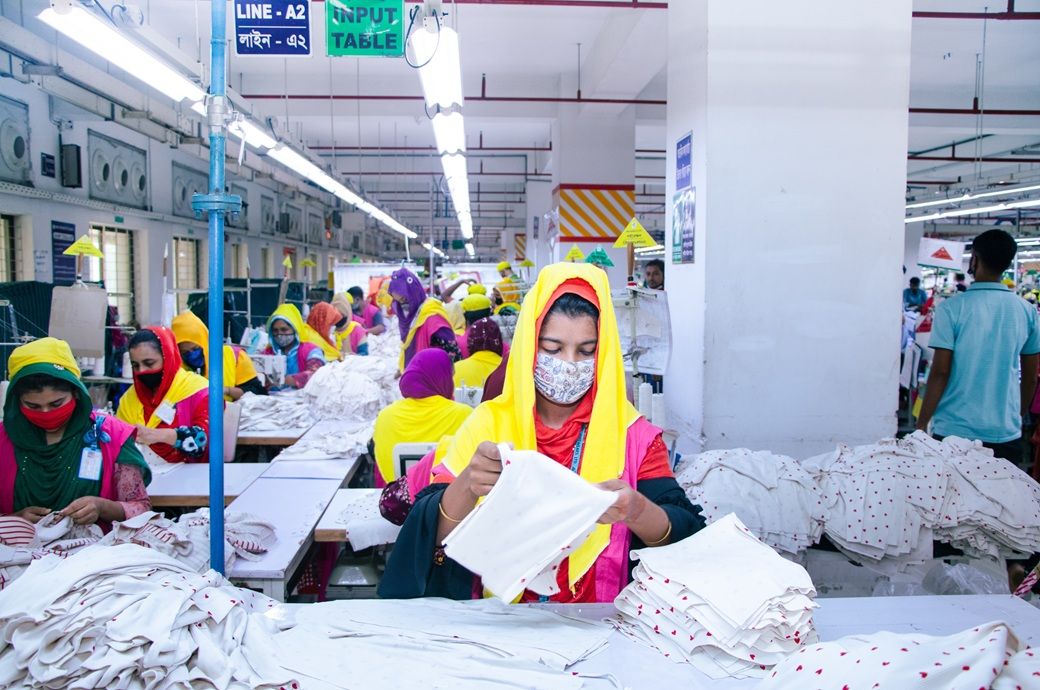
Faced with shrinking orders, Indian exporters began undercutting each other to hold on to clients by offering discounts, even if it meant suffering a loss. Factories in Tiruppur, as well as Noida in Uttar Pradesh, near Delhi, and Gujarat, shuttered production lines. Indian exporters rushed shipments to the US in August to beat the fall of the tariff hammer. Leather exporters, too, braced for tough times. It is not just the garment exporters who took the hit but also the ancillary industries, and migrant labourers. An estimated around 3,000 allied units, comprising spinning, knitting, printing, embroidery etc, of which around 90 per cent being MSMEs employing roughly one million people, were hit directly or indirectly.

Brands made U-turn

Major US retailers such as Walmart, Amazon, Target and Gap Inc., paused or halted orders, with exporters receiving written instructions to suspend shipments until further notice. Buyers were unwilling to share the increased costs, estimated to have risen by 30-35 per cent, and pressurised exporters to absorb the full burden. While brands willed to accept the goods that had already been shipped, the rest of the orders were put on hold. While dealing with 25 per cent tariff, some brands managed costs by ‘de-specing’ (reducing product features to keep prices stable), similar to shrinkflation (reducing size or weight of food products keeping price intact), but with the tariff escalating to 50 per cent, such measures were not enough. Manufacturers remained unclear on how the October-November bookings-in-production would be handled under new and hiked tariffs. Finished goods and ready-to-be-shipped were kept on hold because of uncertain situation. This hesitation extended to the recently placed orders also. Those with manufacturing units abroad utilised their relatively better position and shifted US-bound production to overseas facilities.

Crisis in South

In Tiruppur, the southern city in Tamil Nadu accounting for 68 per cent of India’s knitwear exports and employing roughly 600,000 people in textile sector, the orders halted following the 50 per cent levy. The tariff blow was particularly cruel as Tamil Nadu’s textile belt had actually been gearing up for a rebound in the US demand on the back of the initial round of higher tariffs on other countries. Many exporters had invested in new machinery, anticipating a surge in orders, including from the India-UK free trade agreement. Nearly 20 per cent of the over 2,500 export-dependent companies in the city shut down entirely, while others slashed production by more than half. The tariff caused a massive pile-up of unsold inventory, leaving manufacturers unable to pay workers or sustain operations. The crisis rippled beyond garment manufacturing, affecting dyeing units, tailoring shops, accessory suppliers, and logistics providers, effectively stalling the entire industrial ecosystem of the region.

American buyers stalled orders and renegotiated previously placed orders with knitted apparel exporters and SMEs operating with 8 to 15 per cent margins. While some companies offered 5 per cent discount on prices, yielding a 7 per cent reduction in landed cost, some companies offered discounts without any margins. By September, the ancillary sectors such as carton box, polybag manufacturing, and transportation were also hit. Cotton farmers too braced for losses, with crop prices falling below the MSP (minimum selling price) in the new cotton season beginning October 1.

Tiruppur faced a severe economic and humanitarian crisis too, leading to an estimated 30 per cent job loss across the industry and triggering an exodus of migrant workers, primarily from states like Odisha, Bihar, and Uttar Pradesh, who form the backbone of the region’s workforce. A large share of workers in Tiruppur are home-based, many are women and at the very end of the production chain. Women there earn less than a dollar a day and found themselves deprived even of that.

Trouble in North

Ludhiana, one of India’s biggest textile hubs in the northwestern state of Punjab, was particularly exposed. Each year, the city ships approximately $700 million worth of hosiery and knitwear, especially woollens, to the US, and the local industry employs more than 500,000 workers. The Ludhiana spinning mills supplies yarn to the city’s textile factories, which produce woollen knitwear, hosiery, and other garments, much of which is further destined for the US. Within just two weeks of imposition of 50 per cent tariff, orders for yarn plunged by nearly 30 per cent with no clarity on future orders. Smaller brands that used to procure from Ludhiana stopped placing orders. The larger ones, tied into longer contracts, still allowed production-in-cycle to finish but with condition of absorption of 25 per cent of the tariff burden by the factories, making their operations brutally cut-throat, with margins collapsing. Even the raw materials that Indian firms source from overseas to use in their products faced new levies, raising serious concerns about potential disruptions to supply chains.

Panipat, a town in Haryana, is one of the world’s largest textile recycling hubs and India’s biggest supplier of blankets, carpets and shoddy yarn. It had an export turnover of about ₹200 ($2.2) billion to the US, of which home textiles alone accounted for about ₹120 ($1.3) billion in annual sales, making up roughly 60 per cent of the city’s total exports. Some local manufacturers in the town considered rerouting their supply chains through countries such as Bangladesh or Vietnam to facilitate exports to the US. They either planned to set up warehouse facilities in these countries and carry out minimal value addition there, or were in talks with US importers for additional support to make this arrangement viable.

Home Textile’s Anticipated Fall

Home textile manufacturers were predicted for a 5-10 per cent decline in revenue, apart from reduction in operating profitability, after imposition of 50 per cent tariff coming into effect on August 27, 2025. CRISIL Ratings analysed about 40 home textile companies, accounting for 40-45 per cent of the industry revenue, to forecast this fall. Exports of home textiles to the US grew a modest 2 to 3 per cent in Q1, FY26 as retailers became cautious of the demand amid inflationary concerns. Before implementation of 50 per cent tariffs, exports had spiked because of some frontloading of orders. With competing countries having limited capacity to make cotton-based home textile products, the overall revenue decline for the industry will be limited to 5 to 10 per cent. The impact will be more profound on the companies generating more than half of their revenues from the US. Indian manufacturers will have to look at alternative markets in the EU and the UK, which together accounted for almost 13 per cent of India’s home textile exports last fiscal. However, this will take time. With Indian exporters forced to absorb part of the higher tariffs, some expected inflation-induced reduction in demand from the US and potential oversupply in the EU market will make industry-level operating profitability to fall 200-250 bps compared to last fiscal.

Silver Lining

Amidst a series of setbacks in 2025, Indian apparel manufacturers found a salvaging window. Many big US retailers, such as Nike, Levi’s, Tommy Hilfiger and Walmart (through Flipkart) have a strong retail presence in India, which is not just a production hub but also a major retail market for them. Their retail presence carries importance because under India’s FDI rules, foreign single-brand retailers with 100 per cent ownership must source at least 30 per cent of what they sell in India from within the country. This sourcing rule is averaged over the first five years and then becomes an annual requirement. Therefore, even if US-bound exports slow down because of tariffs, these brands will still need Indian manufacturers for their local stores. This provided some solace to the troubled apparel manufacturers in the country.

Comprehensive Economic & Trade Agreement (CETA)

Sensing more trouble coming from the US tariffs after 90-day reprieve, India timely signed CETA with the UK, the nation’s third-largest export destination which accounted for 5.80 per cent of textile exports in 2024, on July 24. India is the fourth-largest textile supplier to the UK, with a 6.6 per cent market share ($1.79 billion). With CETA, India’s textile exports will be able to enter the UK duty-free, once the agreement comes into force. This move removed previous tariff disadvantages and provided a competitive edge to Indian exporters vis-a-vis regional rivals like Bangladesh and China. The pact is seen to potentially double India’s share of UK imports from 6 per cent to about 12 per cent and in volume terms, the pact can boost textiles exports to the UK by 30-45 per cent by 2030, translating into an additional $500-800 million in export value. India’s free trade pact with the UK will boost shipments of garments, home textiles, carpets and handicrafts. Domestic exporters can leverage the trade agreement to significantly tap opportunities in Britain, which imports $27 billion worth of textiles annually.

Expectation from the Government

To soften the blow of 50 per cent tariff by the US, the Indian government announced some measures, including a suspension of import duties on raw materials. Trade talks with other countries also gathered momentum to diversify markets. The government removed 10 per cent import duty on cotton till December 31, 2025. In addition, the Indian textile exporters want support in the form of expanding of export markets through government’s dedicated outreach programme to 40 nations, as well as export incentives and interest subsidies, to support the competitiveness and profitability of Indian textile exporters. Moreover, the export loss of RMG and home-textile products is likely to be compensated by growth in exports of cotton yarn and fabric as the competing nations lack backwards integration in these products.

Moving Ahead

It is widely expected that the losses incurred due to the imposition of reciprocal tariffs by the US on Indian textiles will be greatly offset by increased exports to the UK. Ongoing EU trade negotiations may further boost India’s textile trade, opening additional avenues, signalling a strategic realignment of the nation’s textile trade landscape. Overall, while textile exports are expected to decline, government support and growth in yarn and fabric exports could mitigate the impact.

Fibre2Fashion News Desk (SB)


Source link

Continue Reading

Trending