

Politics
Prince Rahim Aga Khan V inks MoUs on climate change, culture on first visit to Kenya

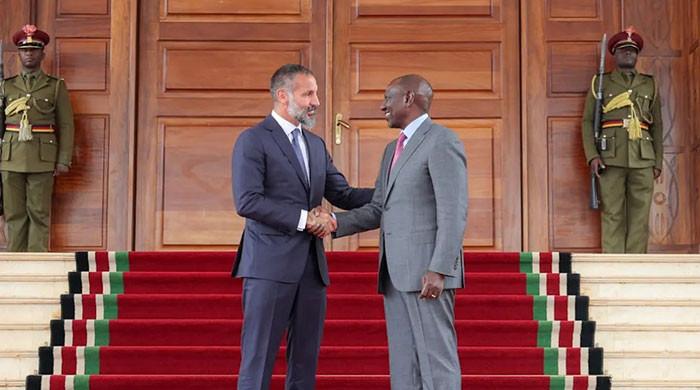
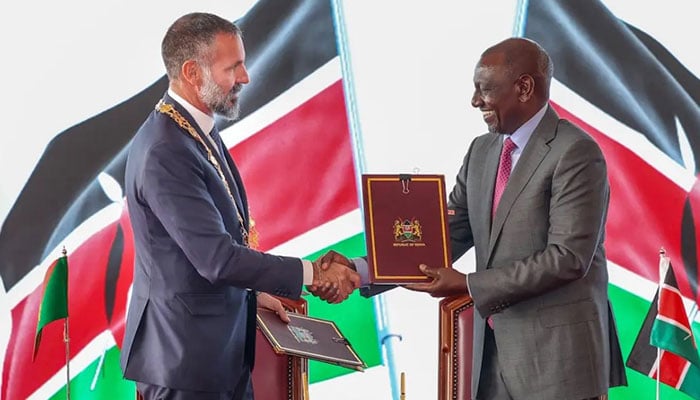
Prince Rahim Aga Khan V has commenced an official visit to Kenya from August 25 to 27 at the invitation of President William Ruto — marking his first official visit to East Africa, following his accession in February this year as the 50th hereditary Imam of the Ismaili Muslims.
Received by President Ruto, Aga Khan V discussed the long-standing warm relations between the Ismaili Imamat and Kenya and the priorities for future cooperation.
Apart from the two dignitaries signing an agreement to reaffirm the deep and long-standing partnership between the Ismaili Imamat and the Government of Kenya, a memorandum of understanding (MoU) on general cooperation was also signed to deepen cooperation on issues such as environmental conservation, climate change, urban rehabilitation and cultural heritage.
The agreements support Kenya’s priorities for the coming years, which seek to stimulate grassroots economic activity, create opportunities and improve livelihoods for all Kenyans.
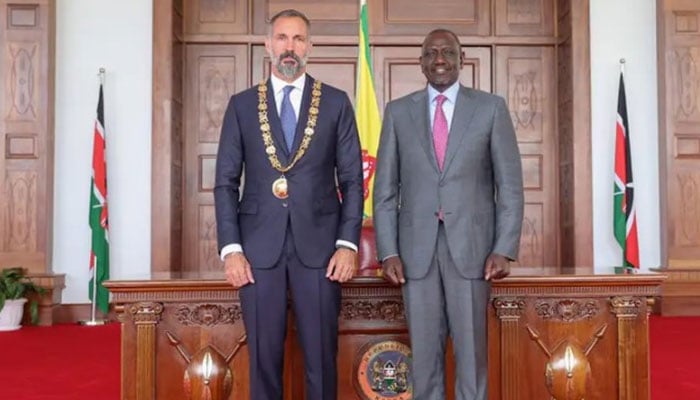
Expressing his views at the occasion, Aga Khan V said: “Our goal is to work alongside the [Kenyan] government as you tackle the emerging challenges of climate change, urban regeneration and delivery of public services”.
“Our approach will be to ensure that our programmes are meaningfully aligned with Kenya’s national priorities and the Bottom-Up Economic Transformation Agenda.
“As in the past, we will continue to mobilise not only our own institutional capacity and resources, but also those of our international partners and investors, for Kenya’s benefit,” he said.
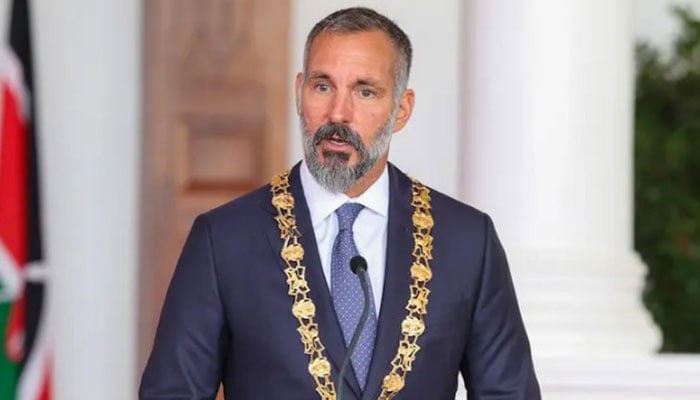
Meanwhile, President Ruto remarked, “This moment is both historic and symbolic. It affirms Kenya’s deep appreciation of the enduring legacy of the Ismaili Imamat, whose service to humanity has long been a pillar of our national journey.”
“For decades, the Aga Khan Development Network has been a trusted ally in Kenya’s development: establishing hospitals and schools that save lives and nurture talent; investing in hospitality, media and insurance to spur growth and create jobs; and advancing cultural and environmental initiatives that safeguard our heritage and strengthen communities,” the president added.
Furthermore, President Ruto formally conferred Kenya’s highest civilian honour, the Chief of the Order of the Golden Heart (C.G.H.) upon Aga Khan V. The award recognises “distinguished and outstanding services to the nation,” and was first announced in March 2025.
- Hegseth rapidly reshaping Pentagon leadership.
- No official reason given for George’s removal.
- General LaNeve to serve as acting Army chief.
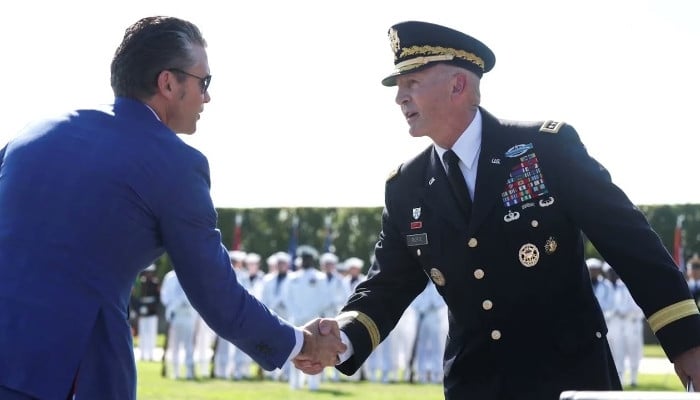
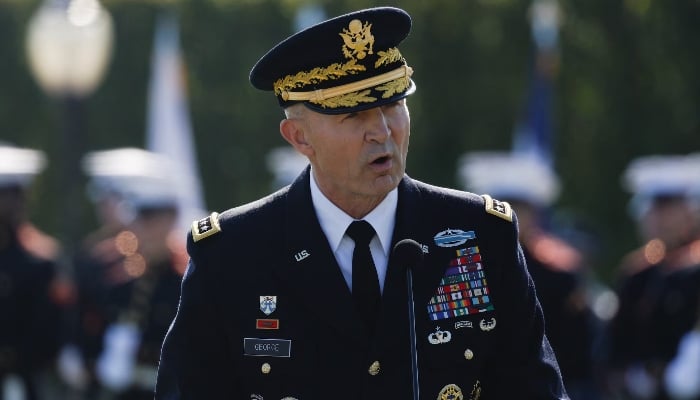
WASHINGTON: US Army Chief of Staff Randy George was fired on Thursday by Defence Secretary Pete Hegseth, three US defence officials told Reuters, in the latest purge among the Pentagon’s most senior ranks.
Even as Hegseth, a former Fox News host, has moved quickly to reshape the department, firing a general during wartime is nearly without precedent.
The Pentagon confirmed that George, who had more than a year left in his term, “will be retiring from his position as the 41st Chief of Staff of the Army effective immediately.”
The Pentagon said in a statement it was grateful for George’s decades of service. “We wish him well in his retirement,” it said.
Two of the officials, speaking on the condition of anonymity, said Hegseth has also fired General David Hodne, who leads the Army’s Transformation and Training Command, and Major General William Green, head of the Army’s Chaplain Corps.
The department did not give a reason for George’s departure, which comes as the US military builds up its forces in the Middle East while carrying out operations against Iran.
The US strikes in the region are largely being carried out by the Navy and Air Force, although US Army soldiers have been dispatched to the Middle East for air defence systems. The Army is the largest branch of the US military, with about 450,000 active-duty soldiers.
Thousands of soldiers from the US Army’s elite 82nd Airborne Division have also started arriving in the Middle East, potentially for ground operations in Iran.
Latest upheaval at Pentagon
There had been no public signs of friction between Hegseth and George, even as Hegseth pursued controversial moves such as firing the Army’s top lawyer and arranging a massive military parade to celebrate the Army’s 250th birthday, which coincided with Trump’s birthday.
Earlier this week, Hegseth also reversed an Army decision to investigate Army pilots who were flying attack helicopters near singer Kid Rock’s house, in an apparent show of support for the vocal Trump backer.
CBS News, which first reported the dismissal, said it was not related to the Kid Rock incident.
One of the officials said Hegseth’s former military aide and Army vice chief of staff, General Christopher LaNeve, will take over George’s role in an acting capacity.
Another of the officials added that senior Army leadership learned about George’s firing at the same time as it was made public.
George, an infantry officer who served in Iraq and Afghanistan, was confirmed to the top Army post in 2023. Terms in that role usually run for four years.
Prior to holding the top job, George was the vice chief of the Army and, before that, the senior military adviser to then-Defence Secretary Lloyd Austin.
He was considered close to Army Secretary Dan Driscoll. The two worked together to take on large defence companies, in the Army’s drive to speed up weapons development and drive down costs.
George’s removal adds to recent upheaval at all levels of leadership at the Pentagon, including the firing last year of the previous chairman of the Joint Chiefs of Staff, Air Force General CQ Brown, as well as the chief of naval operations and Air Force vice chief of staff.
The office for George did not immediately respond to a request for comment.
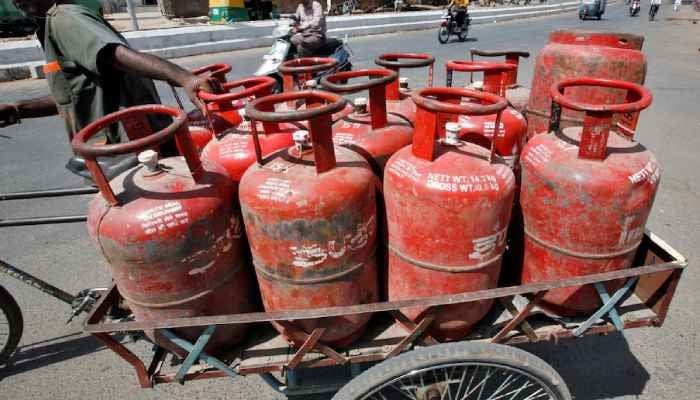
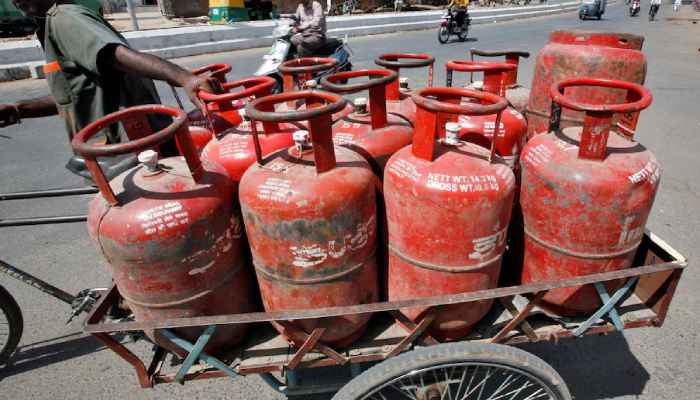
Indian police this week seized 414 cooking‑gas canisters hidden in a graveyard in Hyderabad city and arrested those involved in trying to sell them on the black market amid shortages due to the Iran war, a government official said on Thursday.
Authorities have stepped up raids to curb hoarding of liquefied petroleum gas canisters after the US-Israeli war against Iran disrupted shipping, causing supply shortages. India, the world’s No 2 LPG importer, meets about 60% of its demand through overseas purchases, mostly from the Middle East.
“Just yesterday, around 2,600 raids were carried out and about 700 cylinders were seized,” Sujata Sharma, a senior official in the Ministry of Petroleum and Natural Gas, told a regular briefing on the Middle East crisis.
“In addition, around 400 cylinders were recently found at one location inside a graveyard in Hyderabad. Ten people have been detained there, and the distributor involved has been suspended,” she said.
Police said the accused had been selling both commercial and domestic canisters from the graveyard at nearly three times the current market price. A commercial canister that costs about 2,100 Indian rupees ($22) had been sold for as much as 6,000 rupees.
The total value of the seized canisters and some vehicles used by the accused was nearly 2.2 million rupees, police said. Reuters could not immediately contact the accused or their representatives.
“The supply of natural gas to domestic consumers is 100% assured,” Sharma said. “With regard to LPG supply, prices have remained stable despite international volatility, and there has been no increase in the price of domestic LPG cylinders.”
To ease the pressure on LPG supplies, India has been promoting the use of alternatives such as kerosene, coal and biogas, while accelerating the rollout of piped natural gas for households.
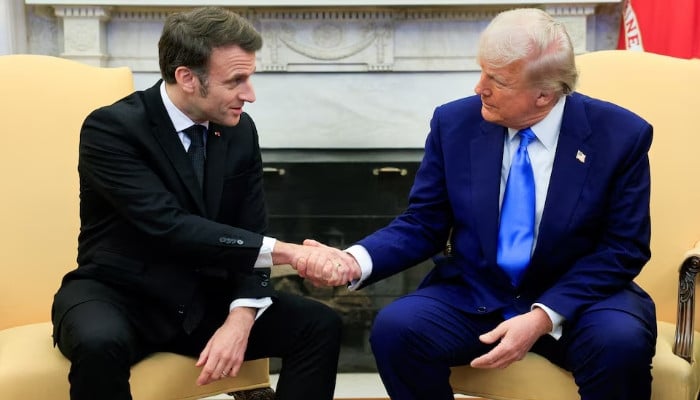
WASHINGTON: US President Donald Trump made fun of the French president and his wife during a private lunch Wednesday, as he lambasted Nato allies for not joining the war against Iran that has roiled the Middle East.
“We didn’t need them, but I asked anyway,” Trump told a private lunch in a video posted briefly on the White House YouTube channel before access was blocked.
“I call up France, Macron — whose wife treats him extremely badly. Still recovering from the right to the jaw,” Trump said.
He was referring to a May 2025 news video that appeared to show Brigitte Macron shoving the French president’s face on a trip to Vietnam, which Macron later rejected as part of a disinformation campaign.
“And I said, ‘Emmanuel, we’d love to have some help in the Gulf even though we’re setting records on knocking out bad people and knocking out ballistic missiles. We’d love to have some help. If you could, could you please send ships immediately,'” Trump continued.
He then mimics a French accent to give Macron’s alleged answer: “‘No no no, we cannot do that, Donald. We can do that after the war is won,'” he said.
“I said, ‘No no, I don’t need after the war is won Emmanuel,'” Trump said.
“So I learned about Nato — Nato won’t be there if we ever have the big one, you know what I mean by the big one,” Trump said, without elaborating.
He also branded Nato a “paper tiger,” the latest salvo by Trump and his top officials against the transatlantic alliance since he returned to the White House last year.
On Tuesday, Secretary of State Marco Rubio said the United States “is going to have to reexamine” its relationship with Nato once the war against Iran has concluded.


How Brandon Bussi’s brother, Dylan, inspired his NHL journey

Lightering vessel ops disrupted in Bangladesh amid fuel shortage

US Army chief of staff fired by Hegseth, sources say

-
 Fashion1 week ago
Ho Chi Minh City bizs adjust production plans, seek new supply chains
-

 Entertainment7 days ago
Lee Sang-bo dies at 45: Funeral details revealed
-

 Fashion1 week ago
India’s Gen Z to drive half of fashion market by 2030: Reedseer
-
 Entertainment1 week ago
Andrew holds breath as King Charles plans bombshell move amid probe
-
 Business7 days ago
How do you spot a fake online review?
-
 Business1 week ago
Co-op boss quits after ‘toxic culture’ claims reported by BBC
-

 Sports7 days ago
Illinois defense gets tough, ousts Houston to reach Elite Eight
-

 Fashion7 days ago
China rolls out tariff cuts on Congo imports from April 1