

Fashion
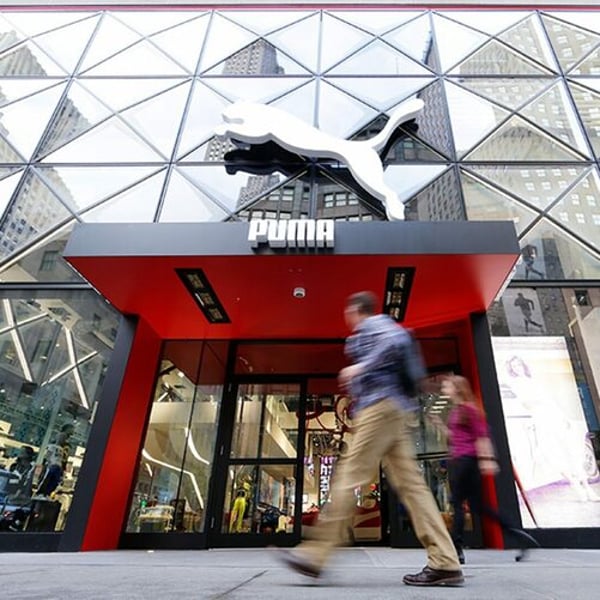
Puma could be sold as Pinault family weighs next move

By
Bloomberg
Published
August 25, 2025
The Pinault family is exploring strategic options for German sportswear giant Puma SE — including a potential sale — after the brand lost nearly half its market value over the past year, according to people familiar with the matter.
The French billionaire family has enlisted advisers and approached potential buyers, including China’s Anta Sports Products Ltd. and Li Ning Co., to gauge interest, the sources said, requesting anonymity as the discussions are private. Other U.S.-based sportswear firms and sovereign wealth funds in the Middle East have also been contacted.
The Pinaults currently hold a 29% stake in Frankfurt-listed Puma through their holding company, Artémis, which also controls French luxury group Kering SA. Any sale is expected to command a significant premium, the sources added.
Puma shares have declined 50% over the past 12 months, impacted by weakened demand for sports apparel and concerns over U.S. tariffs. The company’s market capitalization now stands at around €2.6 billion ($3 billion).
Talks are ongoing and there is no guarantee that a transaction will be finalized, the sources said.
A spokesperson for Puma declined to comment, while representatives for Artémis, Anta and Li Ning did not respond to requests for comment.
Puma is currently in the midst of a strategic turnaround led by Chief Executive Officer Arthur Hoeld, as it works to revive consumer interest in its offerings. Despite the efforts, the company issued a profit warning last month, underscoring the challenges ahead.
As part of the restructuring, Puma recently appointed former Adidas executive Andreas Hubert as chief operating officer. Hubert, a 20-year Adidas veteran, previously served as the group’s chief information officer.
Founded in 1948, Puma reported €281.6 million in net income last year, with annual sales reaching €8.8 billion. The brand employs approximately 22,000 people worldwide and sponsors major teams including Premier League club Manchester City, the Portugal national football team, and Denmark’s men’s handball team.
Anta’s portfolio includes brands such as Fila, Descente, Kolon Sport and Jack Wolfskin. In 2019, it led a consortium that acquired Amer Sports Oyj — maker of Wilson tennis rackets and Louisville Slugger baseball bats — for €4.6 billion.
Li Ning, established in 1990 by the celebrated Chinese gymnast of the same name, designs and markets athletic and casual footwear, apparel and accessories. In addition to its core brand, the company operates or licenses others, including Double Happiness (table tennis), Aigle (outdoor gear), and Kason (badminton equipment).









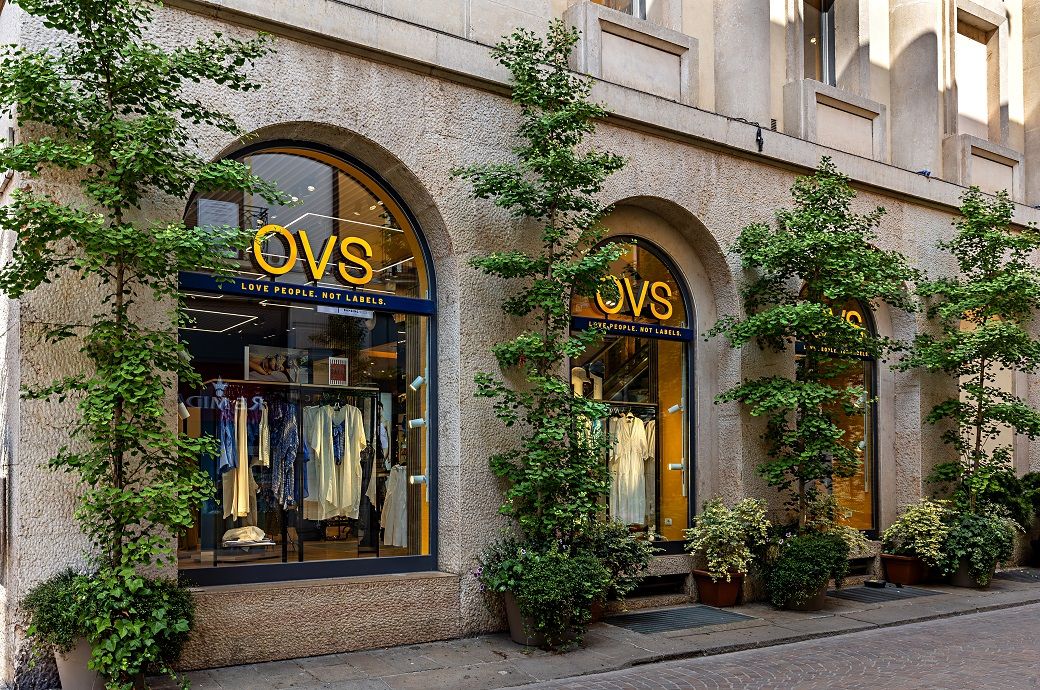
This opening will mark OVS’ second store in India, following its flagship debut in New Delhi in October 2025, and underscores the brand’s long-term commitment to the Indian market.
OVS will launch its first Mumbai store on March 14 at Sky City Mall, Borivali, expanding its India presence after debuting in New Delhi in October 2025.
The 11,000 sq ft outlet will feature womenswear, menswear and kidswear, including premium labels such as PIOMBO and Les Copains.
The move reflects strong early performance and OVS’ long-term growth plans in India.
Spanning approximately 11,000 sq. ft., the Mumbai store will introduce customers to OVS’ latest global retail concept, designed to deliver a modern and seamless shopping experience. Reflecting Mumbai’s diverse fashion sensibilities, where style ranges from everyday comfort to trend-forward dressing, the store offers a versatile mix across womenswear, menswear and kidswear, making Italian style affordable to all. The assortment spans accessible everyday fashion from OVS alongside premium and contemporary collections, including PIOMBO, Les Copains, B.Angel, Altavia, and OVS Kids, designed to meet the style needs of a wide spectrum of consumers.
Sharing his thoughts on the Mumbai launch, Sundeep Chugh, Managing Director at OVS India, said: “The response to our New Delhi launch has been highly positive and has validated our belief that Indian consumers are seeking global fashion that delivers both style and value. Mumbai is a natural next step for us, given its strong fashion consciousness and retail maturity. Our vision is to establish OVS as a trusted destination for the entire family, offering a distinctive Italian aesthetic at democratic price points while maintaining high standards of quality and sustainability.”
Carmine Di Virgilio, Global Chief Retail Officer at OVS S.p.A, added: “India represents an important growth market in our international strategy and Mumbai is among the country’s most influential retail destinations. This opening will allow us to further strengthen our global footprint while introducing consumers to a retail experience that reflects our heritage, the contemporary Italian design philosophy and commitment to responsible fashion. We are very satisfied with our Delhi debut and the enthusiastic response from a wide range of customers, particularly younger generations. At the same time, we are actively evaluating additional expansion opportunities across the Indian market to support our long term growth strategy.”
Globally, OVS operates over 2,200 stores across multiple markets and has built a strong position in accessible, everyday fashion by combining Italian design excellence with quality materials and affordable pricing. Sustainability remains central to the brand’s approach, with responsible sourcing, recyclable materials, water-efficient processes and transparency.
Note: The headline, insights, and image of this press release may have been refined by the Fibre2Fashion staff; the rest of the content remains unchanged.
Fibre2Fashion News Desk (RM)

India’s GDP growth for Q3 FY26 was 7.8 per cent, following high growth of 8.4 per cent in Q2, as per the revised GDP series.
Care Ratings recently projected India’s FY27 GDP growth at 7.2 per cent.
Favourable impact of the GST rate rationalisation and past central bank rate cuts are expected to remain supportive of the consumption scenario, it noted.
On the investment front, the central government’s continued emphasis on capital expenditure-led growth and some signs of revival in private capex are positives.
Favourable impact of the goods and services tax (GST) rate rationalisation and past central bank rate cuts are expected to remain supportive of the consumption scenario.
On the investment front, the central government’s continued emphasis on capital expenditure-led growth and some signs of revival in private capex are positives.
On the external front, the recently announced trade deals with several countries are favourable developments for India’s export performance, Care Ratings said in a release.
However, the external economic conditions remain volatile. It will be critical to monitor the evolving geopolitical situation and trade policy shifts.
Furthermore, the rise in probability of El Nino in 2026 remains a key watchout as it poses risks for agriculture and inflation outlook.
According to the second advance estimate, the full-year growth for FY26 has been revised higher to 7.6 per cent from the earlier estimate of 7.4 per cent. This follows high growth of 7.1 per cent in FY25.
Fibre2Fashion News Desk (DS)
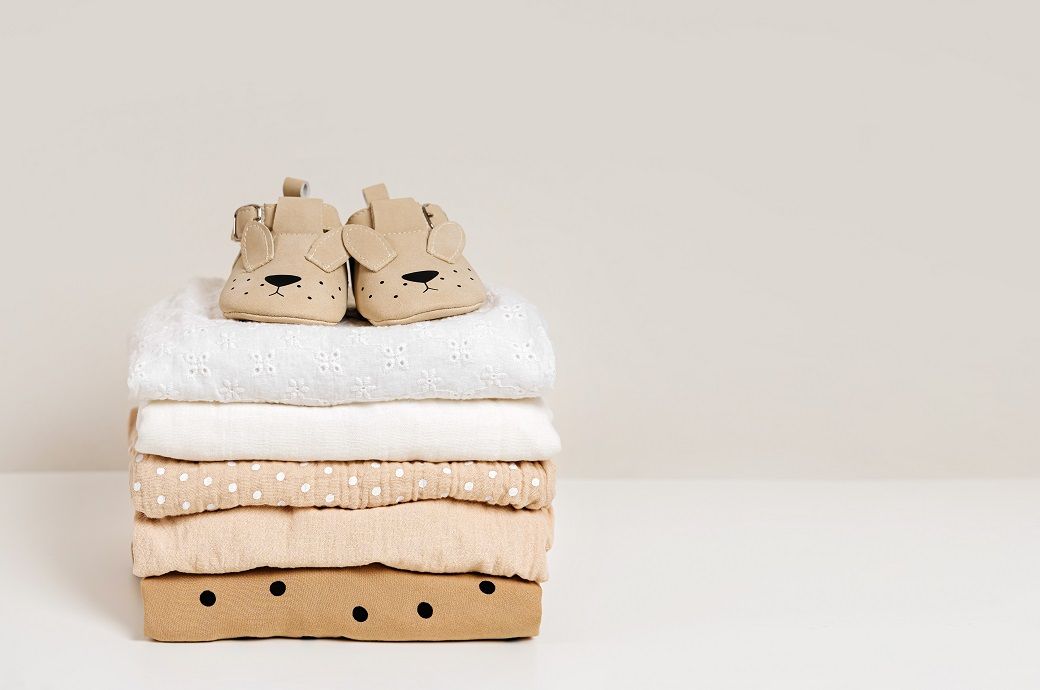
Data from *fashion.com/market-intelligence/texpro-textile-and-apparel/” target=”_blank”>sourcing intelligence platform TexPro showed that trousers and shorts led the import basket at $*.*** billion, accounting for **.** per cent of total shipments. T-shirts followed at $***.*** million (**.** per cent), while jerseys, shirts and coats contributed $***.*** million (**.** per cent), $***.*** million (**.** per cent) and $***.*** million (*.** per cent) respectively. The composition highlights Mexico’s strong demand for everyday and casual wear categories, which dominate mass retail assortments.
By product construction, knitwear maintained a clear lead at $*.*** billion, representing **.** per cent of imports, compared with woven garments at $*.*** billion (**.** per cent). The preference for knitted apparel aligns with global trends favouring comfort-driven, athleisure-inspired and casual lifestyles, particularly in urban markets.

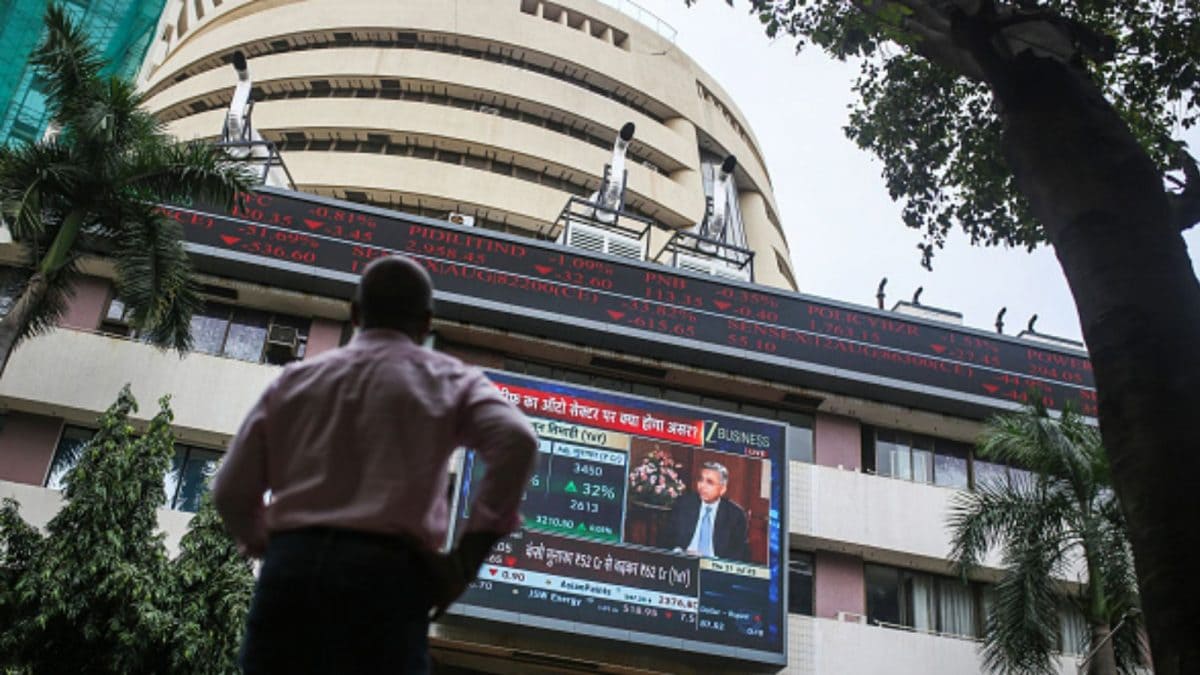
Stock Market Updates: Sensex Tanks 1,100 Points, Nifty Tests 24,450; India VIX Jumps Over 11%

OVS brings Italian fashion to Mumbai retail scene

US Justice Dept releases Epstein documents with claims against Trump

-
 Business1 week ago
Attock Cement’s acquisition approved | The Express Tribune
-

 Politics1 week ago
What are Iran’s ballistic missile capabilities?
-
 Business1 week ago
India Us Trade Deal: Fresh look at India-US trade deal? May be ‘rebalanced’ if circumstances change, says Piyush Goyal – The Times of India
-

 Fashion1 week ago
Policy easing drives Argentina’s garment import surge in 2025
-

 Politics1 week ago
US arrests ex-Air Force pilot for ‘training’ Chinese military
-
 Business7 days ago
Greggs to reveal trading amid pressure from cost of living and weight loss drugs
-

 Sports7 days ago
LPGA legend shares her feelings about US women’s Olympic wins: ‘Gets me really emotional’
-

 Fashion1 week ago
Texwin Spinning showcasing premium cotton yarn range at VIATT 2026