

Sports
Ranking each NHL team’s top prospect: Hagens, Iginla, more


Every NHL franchise has a prospect pool. Some, usually the perennial contenders, have thinner prospect pools because of a lack of draft capital. However, each team usually has one guy about whom the organization and fan base are excited.
Some of those players are polished and NHL-ready, producing at high rates in other leagues, while others are early in their development with a high ceiling. Each represents hope, a possible answer to a roster hole, or, in the best-case scenario, a foundational piece of a Stanley Cup contender.
To be considered a prospect for this list, the player must be under 23 and not an established NHL player. Generally, that means fewer than 50 games in the current season. But in the case of someone like Michael Misa, who has played only 30 games but very clearly has an established roster spot with the Sharks, those players would be ineligible for this list.
Here is a look at the top prospect in each team’s pipeline, what they do well, where they need to grow, and a look at reasonable NHL timelines and expectations.


Roger McQueen, F
2025-26 team: Providence (NCAA)
McQueen is a 6-foot-5, right-shot center with the handling skill of a first-line playmaker, a sniper’s release, and defensive instincts among the best outside the NHL. The toolkit is undeniable and has been tested against tougher competition this season at Providence College.
McQueen attacks with a wonderful skating posture, full-wingspan dekes that bait defenders before beating them, cross-body wristers, and passes through layers to teammates in space. All of this from a player who throws hits on the forecheck and battles with genuine aggression.
After a wonderful freshman season at Providence, McQueen earned Hockey East Rookie of the Year honors with 11 goals and 16 assists, and he continued to demonstrate projectable two-way play. If McQueen stays healthy and continues to develop the way he has in his first college season, he has a real chance to be a star in the NHL.
0:29
Roger Mcqueen finds the back of the net
Roger Mcqueen finds the back of the net

James Hagens, F
2025-26 team: Boston College (NCAA)
The Bruins have their center of the future in the Boston College sophomore.
He plays at high pace and has a game built on elite processing and edge work. He floats through neutral-zone traffic with effortless crossovers and weight shifts, creating time and space. He’s a dual-threat offensive center, with high-end playmaking and a shot that has taken a real step forward this season, doubling his goal output and winning the Hockey East scoring title.
What separates Hagens from other undersized pivots is the professional detail in his two-way game. He patrols passing lanes, anticipates breakouts and supports the puck in positions that allow for quick-strike offense without cheating the defensive side.
Hagen’s motor, intelligence and ability to drive play project him as a legitimate top-six center in Boston as soon as next season. The B’s signed him to an AHL deal Monday.

Radim Mrtka, D
2025-26 team: Seattle Thunderbirds (WHL)
Mrtka is going to fit perfectly on Buffalo’s talented blue line.
The physical profile alone is rare, standing 6-foot-6, 216 pounds, and being a right-handed shot. But what makes Mrtka special is how well he moves around the ice with that frame. His first step is quick, his pivots are clean and he escapes pressure with poise. Defensively, his reach allows him to funnel attackers wide, kill plays in transition and maneuver with high-end awareness. With the puck, Mrtka is a transporter, joining the rush with purpose and threading passes to the middle of the ice off retrievals.
The offensive ceiling has room to grow, but the defensive floor is already high. Buffalo will have a minutes-eating defender with a combination of size, skating, and high-end defensive capability who will likely be ready for the 2027-28 season. As a righty, Mrtka also helps an imbalanced Buffalo blue line and should allow either Owen Power or Rasmus Dahlin to move back to their natural side.

Zayne Parekh, D
2025-26 team: Calgary Flames/Wranglers (NHL/AHL)
This was a lost season for Parekh, and he would benefit from playing a major role in the AHL, where he can run the power play. His offensive toolkit remains arguably the best among all defensive prospects in the game.
Parekh’s entire game is built on deception, four-way mobility, elite edgework, head fakes, look-offs and a release that catches goalies by surprise. The professional reality has been harder, which isn’t surprising for a 19-year-old defenseman. Parekh has yet to find his offensive game in the NHL while playing sheltered minutes on Calgary’s third pairing, a far cry from the dynamic offensive creator who put up 107 points in the OHL. The offensive instincts have yet to translate, with Parekh giving up more high-danger chances than he creates.
The IIHF World Junior Championship offered a reminder of his capabilities, with five goals and 13 points, shattering the Canadian record for points by a defenseman at the event. The ceiling remains a power-play quarterback and top-four dynamo who can be a game changer. But the Flames cannot afford to keep mismanaging his development the way they did this season.

Bradly Nadeau, F
2025-26 team: Chicago Wolves (AHL)
Nadeau is built to be a scoring winger at the NHL level. His shot is a combination of power, deception and accuracy, combined with a release that goalies have trouble picking up. That shot has seen him average more than half a goal per game in his first two seasons in the AHL with the Chicago Wolves.
Adding to his threatening offensive profile is his high-end awareness. He picks apart defensive structures, scans the ice and exploits passing lanes. His two-way game has taken a massive developmental step forward, and he has become a consistent penalty killer and is trusted in high-leverage situations.
At 5-foot-10, 172 pounds, the physical limitations see him lose board battles and get muscled off 50/50 pucks, and he lacks net-front presence against bigger defenders.
The good news is Carolina doesn’t need him to be a power forward; they need a difference-making goal scorer. If he continues to develop his two-way game and find the open space in the offensive zone, Nadeau projects as a top-six scoring winger — exactly the type of player the Hurricanes need — as soon as the 2026 playoffs.

Anton Frondell, F
2025-26 team: Djurgardens IF (SHL)
Get ready, Chicago!
Frondell is built like a tank and shoots like a sniper. At 6-foot-1, 205 pounds, he is physically mature for his age (he’ll turn 19 in May), leaning on opponents, throwing reverse hits, and winning position at the net front with a physicality that will serve him well in the NHL.
He’s a quality off-puck player, which has only improved with his experience in the SHL, Sweden’s top league. He reads the play, pushes pace to beat defensemen to rebounds and deflections and gets himself to the quiet areas, where he only needs a moment to beat goaltenders. His shot is versatile, blending power, accuracy, a good one-timer from the flank and impressive hand-eye coordination for tip-ins.
Frondell scored 20 goals for Djurgårdens IF in 43 SHL games as an 18-year-old, which is fourth all time for a player at that age. After a dominant performance at the World Juniors, he made significant development strides offensively, scoring 10 goals in his final 18 SHL games and showing improved playmaking ability.
He played mostly on the wing, which is the best spot for him to start in the NHL while his skating develops. Frondell is not particularly explosive or elusive, and adding that will give him more space to make plays. At his floor, he’s a top-six scoring winger and power-play weapon who rides shotgun with Connor Bedard. At his ceiling, he’s a force up the middle of the ice in Chicago’s top six and takes the rebuild to the next level.

Gavin Brindley, F
2025-26 team: Colorado Avalanche (NHL)
Brindley is 5-foot-9 — and plays like he doesn’t know it or doesn’t care.
His motor is relentless, his forechecking eliminates space, and his defensive engagement is the kind that makes coaches trust a 21-year-old in an NHL lineup. The offensive numbers don’t jump off the page, but the impact transcends the scoresheet. Brindley is exceptional at pressuring puck carriers and winning races to loose pucks, and he is reliable in his own end. His skating and agility are strengths because of quick feet and good edge work, and he has the ability to make plays under duress in tight spaces.
He’s unlikely to become a top-six driver, but the tenacity, two-way detail, and compete level project a middle-six, all-situations forward who elevates every line on which he plays. In a league that increasingly values players who do the hard things right, Brindley’s game translates, though he’ll likely be a fourth-line player at least to start.

Sergei Ivanov, G
2025-26 team: SKA St. Petersburg (KHL)
We could’ve picked a number of Blue Jackets prospects here, but it is rare that a 21-year-old goaltender puts up the numbers that Ivanov is registering in the KHL. He has exceptional post-to-post movement, a quick glove hand and an unconventional “just make the save” competitiveness blended with modern technique.
After posting a .911 save percentage with HC Sochi last season, Ivanov moved to SKA St. Petersburg this season and has taken another step. He posted a .927 save percentage and three shutouts across 29 games and was named to the KHL All-Star Game at 21 years old.
Ivanov studies Igor Shesterkin and Sergei Bobrovsky, and if you’re going to emulate goaltenders, there are certainly worse ones than those two.
Blue Jackets GM Don Waddell said the organization believes Ivanov is ready, and he confirmed his intention to come to North America when his KHL contract expires after this season. His size (6-foot) will always invite skepticism, but Ivanov covers ground he has no business reaching via anticipation and sheer will. He has genuine starting potential in the NHL once he adjusts to the North American game.

Emil Hemming, F
2025-26 team: Barrie Colts (OHL)
At 6-foot-1, 200 pounds, Hemming plays a prototypical power forward’s game. He drives the net, absorbs contact, links up with linemates on breakouts and backchecks with purpose rather than going through the motions.
Hemming’s shot is high-end, with the ability to fire off either leg and the ability to shoot through defenders’ triangles off the rush. Dallas gave him a brief AHL look to open the season before reassigning him to Barrie, where the OHL version of Hemming reemerged immediately. He produced 62 points in 45 games, with his shot volume jumping to nearly four shots per game and his playmaking emerging as a secondary weapon.
The Stars’ pipeline is thin due to limited draft capital, which makes Hemming’s development all the more critical. He represents their best chance at a homegrown middle-six forward if the shot translates as expected and the two-way habits keep maturing.

Nate Danielson, F
2025-26 team: Grand Rapids Griffins (AHL)
Danielson is one of the better skaters among center prospects in the NHL pipeline. He possesses a long, smooth stride with good edgework and agility.
His two-way play is the foundation of his game. He competes hard everywhere, supports the play, reads passing lanes and has been effective on both the penalty kill and power play with the Grand Rapids Griffins in the AHL. Danielson is a smart, connective playmaker rather than a dynamic one, and his impact tends to show up in the details of his game.
The offensive ceiling is the biggest question, but his statistical profile projects him to become a middle-six forward whose two-way play sees him play tough matchups. There’s a path to becoming a legitimate second-line center who anchors both ends of the ice and makes the players around him better. He has the skating ability to become an offensive play driver.

Isaac Howard, F
2025-26 team: Bakersfield Condors (AHL)
The Hobey Baker winner parlayed his dominant college career into a trade from Tampa Bay to Edmonton, where the Oilers’ development staff immediately identified what makes him special: the ability to find soft ice in the offensive zone and finish.
Howard has split this season between the NHL (five points in 28 games) and AHL Bakersfield (38 points in 36 games), showing the kind of shoot-first mentality and transitional intelligence that suggest he can be a 30-goal scorer with the Oilers. Howard’s skating helps him get to spots to shoot, especially with his ability to deftly stickhandle at full speed.
The concern is defensive responsibility, but if Howard can show he deserves a role next to Connor McDavid or Leon Draisaitl, he will be buoyed by their play. His puck skills are high-end, his creativity at speed is rare, and his willingness to try things other players wouldn’t attempt makes him a dynamic offensive weapon. The adjustment to NHL pace is ongoing, but he’s exactly the type of winger who should be given time to develop chemistry with one of Edmonton’s elite centers.

Jack Devine, F
2025-26 team: Charlotte Checkers (AHL)
Devine has spent his entire development arc proving that the teams who drafted 220 players ahead of him in 2022 missed something.
At the University of Denver, he was one of the most productive players in college hockey, winning the national scoring title as a senior with 57 points in 44 games, and he helped the Pioneers win two NCAA championships. His ability to adapt to his linemates has translated seamlessly to pro hockey, immediately becoming an impact AHL scorer with the Charlotte Checkers.
He drives play with tenacious playmaking, keeps plays alive and wins battles. He hangs on to pucks between checks, blending effort with above-average skill and has developed into a dual-threat passer and shooter. His motor is relentless, his reads are high-end and his speed has improved to complement his game.
At 5-foot-10, he’s still not viewed as a surefire NHL forward, but his feel for the game and hockey sense are there. It is more likely than not that Devine figures it out and becomes an everyday NHL contributor who outworks opponents and makes a difference in the bottom six.

Carter George, G
2025-26 team: Sault Ste. Marie Greyhounds (OHL)
George is the most intriguing goaltending prospect in the Kings’ pipeline, and that’s saying something for an organization that has three netminders with legitimate NHL futures.
At 6-foot-1, George doesn’t have the imposing frame of a modern goaltender, but his crease movement is quick and poised, his positioning is mature and his puckhandling is as confident as that of any goalie prospect in the game. He reads the play early, tracks through traffic easily and fills the net with an upright stance that maximizes his coverage.
After making his AHL debut with the Ontario Reign last spring — winning both of his starts, including a shutout — George returned to the OHL this season and posted a .908 save percentage across 45 games including four shutouts and 23 wins. George’s anticipation, lateral quickness and ability to launch breakouts with stretch passes project him as a starting-caliber goaltender at the NHL level. He and Hampton Slukynsky could become L.A.’s future tandem in goal.

Charlie Stramel, F
2025-26 team: Michigan State (NCAA)
Stramel is a 6-foot-3, 216-pound center who has finally started looking like the player Minnesota believed it was drafting 21st in 2023.
After a quiet first two college seasons, Stramel broke out as a junior after transferring to Michigan State. He’s physically imposing and plays like it, punishing forecheckers, containing cycles and using his reach to cut off skating lanes and read passing options. The skating stride remains awkward, and his first step lacks explosiveness, but his top-end speed is legitimate and his balance through contact is a real asset at his size.
The offensive development has been the revelation. Soft hands, improved playmaking vision and the confidence to hold on to pucks and attack make him a scoring threat. Stramel’s floor is a reliable bottom-six center who wins battles and defends well. His ceiling, if the offensive game keeps trending, is a second-line, two-way force, something Minnesota really needs.
0:23
Charlie Stramel scores goal
Charlie Stramel scores goal

Michael Hage, F
2025-26 team: Michigan (NCAA)
Simply put, Hage is a well-rounded player without a glaring flaw. His sophomore season at Michigan has been spectacular; he’s among the NCAA scoring leaders and firmly in the Hobey Baker conversation.
He’s a dynamic rush attacker who drives the middle and processes the play at lightning-quick pace, allowing him to make give-and-go plays at full speed to leave defenders scrambling. Hage reads defensive coverage, creates passing lanes and delivers pucks in prime scoring areas. A dual threat, his shot fools goaltenders with a toe drag snap that catches them on their heels. He’s creative, intelligent and has no significant weaknesses, and he’s capable of elevating a line.
Hage’s two-way game has matured; he’s a 200-foot player with the strength to win battles against tough competition. His development trajectory suggests he may be ready to play behind Nick Suzuki as a potential second-line center as soon as next season. If Hage signs his entry-level deal this spring, he could step in and play meaningful playoff minutes, too.

Brady Martin, F
2025-26 team: Sault Ste. Marie Greyhounds (OHL)
Martin is a one-of-a-kind blend of manipulative playmaking and bone-crushing physicality, a forward who can fake a pass on his first touch, thread a no-look feed across the slot, and then immediately try to send someone through the boards. His motor is relentless, his hits are punishing and devastatingly timed and his forechecking generates more turnovers than many forwards I can remember.
Nashville saw enough to give him an NHL look out of training camp, and he was impactful for Canada at the World Juniors. Unfortunately, he has struggled since returning from injury in February.
The skating needs to take another step, but the intelligence, physicality and scoring tools are all top-six caliber. If his speed and pace of play improve, Martin becomes a unique power playmaker who elevates when the games matter most. If it doesn’t, he’s still a middle-six player whom teams will hate to play against.

Anton Silayev, D
2025-26 team: Torpedo Nizhny Novgorod (KHL)
Silayev is a physical anomaly. At 6-foot-7, 207 pounds, he’s a mammoth right-shot defenseman with the skating ability to cross the neutral zone in three or four strides; he moves like a player who has no right to be that big and that fluid simultaneously.
His defensive game is built on reach, aggression and an ability to close gaps, making opposing forwards feel like the ice is shrinking. His decisions with the puck are quick and sound. Becoming a shutdown defender who thrives in physical battles and denies space with suffocating range is the floor. The ceiling, if the offensive game develops, is a minutes-munching, top-four presence who can move pucks, kill plays and physically dominate.
Silayev’s KHL contract with Torpedo Nizhny Novgorod runs through May, at which point he’s expected to come to North America and be ready for NHL action next season.

Victor Eklund, F
2025-26 team: Djurgardens IF (SHL)
Eklund is the kind of prospect who people point to and say, “Size does not matter when the skill and motor are that good.”
At 5-foot-11, 170 pounds, he has no business winning board battles against men who outweigh him by 40 pounds, but he does so consistently by attacking their hands, getting underneath and leveraging his body to gain a positioning advantage. His forechecking is elite and is going to be a nightmare for every defenseman he plays against. The skating isn’t a standout tool on its own, but paired with that seemingly bottomless motor, it creates a pace that suffocates defenders and drives transition.
Playing full-time for Djurgårdens IF (the same team as the Blackhawks’ Frondell), he scored 24 points in 43 SHL games as a teenager. He has been on a tear of late and owns a statistical profile that lends very well to an NHL player. He’s not going to be an elite offensive creator in the NHL, but his vision below the goal line, his ability to turn steals off the forecheck into chances and his willingness to do everything the hard way will endear himself to any coach.
Eklund projects as a top-six winger who elevates every line he plays on. The Isles got a real good one 16th overall last summer, and there is a good chance other teams will regret passing on him.

Liam Greentree, F
2025-26 team: Windsor Spitfires (OHL)
Greentree solves problems with the puck on his stick. At 6-foot-3, 215 pounds, he has an NHL-ready frame and uses it to power through checks, protect possession and navigate traffic. He manipulates space off the rush with look-offs and give-and-goes, while forcing defenders and goalies to respect a high-end shot.
Greentree has been on a 14-goal, 25-point tear for the OHL’s Windsor Spitfires since being acquired by the Rangers as the centerpiece of the Artemi Panarin trade. He’s a crafty, powerful forward who racks up points through playmaking and finishing in equal measure.
His skating is the legitimate concern; his first step and acceleration need meaningful improvement to project as more than a middle-six contributor at the NHL level. The offensive intelligence, size and production profile suggest a player who will find ways to score even if the footspeed never becomes a strength. New York got a prospect with middle-six tools and a frame built for playoff hockey.

Carter Yakemchuk, D
2025-26 team: Belleville Senators (AHL)
Yakemchuk’s offensive instincts from the back end are rare, and he’s producing at a high-end rate on the Senators’ AHL squad (Belleville). He jumps into rushes aggressively, gets shots through from the point and has the power to score from range.
At 6-3, right-handed, with a booming point shot and dynamic puck skills, the power-play upside is clearly there. The majority of his growth has been on the defensive side, including improved gap control, better consistency in the corners, and a willingness to play within structure that Ottawa’s development staff has prioritized.
The forward skating is strong, but lateral and backward mobility remain hurdles to full-time NHL play. If the defensive details keep trending upward alongside the offensive firepower, Yakemchuk projects as a middle-pair defenseman who can anchor a power play and change games with his shot. Ottawa is rightfully being patient, and giving Yakemchuk a steady defensive partner when he steps into the NHL will help him.

Porter Martone, F
2025-26 team: Michigan State (NCAA)
Martone is one of the smartest prospects in an NHL pipeline. He constantly scans, anticipates defenders’ movements, manipulates coverage and delivers passes that are translatable to the NHL. His dual-threat shot is a violent power transfer through his entire body, and he also has the deception to rip a no-look short-side wrister that freezes goaltenders.
After moving to Michigan State, Martone performed well against bigger, stronger competition, and his skating continued to improve. Questions remain around pace of play and physical engagement, as he’s currently a soft-skill player in a power forward’s body.
But if his skating and willingness to use his powerful body continue to improve, at 6-3, 208 pounds, Philadelphia has a potential top-line winger and elite power-play weapon. Philadelphia is the perfect place for a power forward to thrive, and Martone has all the tools to be a dominant NHL winger.
0:41
Porter Martone finds the back of the net
Porter Martone scores goal

Will Horcoff, F
2025-26 team: Michigan (NCAA)
Horcoff towers over most everyone on the ice. At 6-5, 200 pounds, the son of longtime NHLer Shawn has an NHL frame, and he has developed offensively during his sophomore season at Michigan.
Horcoff’s defensive play is a real asset. He’s fueled by proactive reads, physical disruption and a backcheck that suffocates puck carriers with his range and positioning. The playmaking has emerged as a legitimate weapon, including one-touch passes, area feeds, deft wall plays and delays for teammates to jump into lanes.
His ability to be a play driver remains a question, largely related to his skating. His edge work needs work, and he can slow the game down too much when he’s hunting the perfect play. If the pace and mobility improve as the body fills out, Horcoff has the hockey sense, defensive detail and skill to become more than a bottom-six center. His ability to become a play driver and support the play will ultimately determine how high he plays in the lineup.

Igor Chernyshov, F
2025-26 team: San Jose Sharks/Barracuda (NHL/AHL)
Chernyshov’s combination of size, skating and skill makes him one of the more intriguing young wingers. At 6-2 with pro-caliber speed and high-end puck handling, he has been a reliable point producer at every level. With the Barracuda, he produced 33 points in 41 AHL games, and when San Jose recalled him, Chernyshov didn’t look out of place, posting 22 points in 31 NHL games while skating alongside Macklin Celebrini and Will Smith.
His playmaking is more refined than the power-forward archetype suggests. He sees the ice well, shows poise with the puck and is creative with his rush play. Chernyshov is a dynamic transition threat with the size, speed and skill to become a top-six winger who can score and facilitate.
San Jose’s rebuild has a centerpiece forward group forming, and Chernyshov looks like a core piece of it.

Jake O’Brien, F
2025-26 team: Brantford Bulldogs (OHL)
Passing is O’Brien’s first, second and third play, which is a major reason he is the owner of the most points in Brantford Bulldogs history. When he can’t find a lane, he creates one by shifting defenders or selling a shot fake before slipping a feed through multiple defenders. He passes through sticks, under skates, behind his own back, and spots teammates at the far post before anyone recognizes the threat.
He’s a forward who is likely to be a quarterback for an NHL power play because of his vision, deceptive releases and cross-slot passing. Back with Brantford this season as captain, O’Brien led the OHL in assists and scored 1.75 points per game, answering questions about whether he can drive a team on his own.
He needs to fill out his frame, but at 6-foot-2 and 177 pounds, the physical runway is enormous, and the playmaking ceiling makes the bet worthwhile. If the skating and strength develop alongside the creativity, Seattle has a top-line, play-driving center. At worst, O’Brien is a play-driving winger in the top six who will pile up the assists.

Justin Carbonneau, F
2025-26 team: Blainville-Boisbriand Armada (QMJHL)
The 6-foot-1 winger can fly while keeping tight control over the puck, slipping it around skates, under sticks and behind defenders. His scoring tools are elite, with an excellent release he can fire from uncomfortable positions, deceptive passing that draws multiple defenders before threading feeds through coverage and the off-puck instincts to time himself into pockets to catch-and-release.
The decision-making remains the primary area of development. When everything clicks, he looks like a first-line play driver; when it doesn’t, the turnovers multiply and his impact vanishes. Those turnovers will hold him back from earning trust at the NHL level right now. However, the tools, self-confidence and adaptability suggest the processing will catch up. Carbonneau’s ceiling is a first-line, dual-threat winger.

Conor Geekie, F
2025-26 team: Syracuse Crunch (AHL)
The younger brother of Boston’s Morgan Geekie, the 21-year-old is the most complete prospect in Tampa Bay’s system — and the foundation for whatever comes after the Golden Years.
At 6-4, his combination of size, reach, hands and offensive IQ is rare. He handles pucks through tight spaces, protects possession and is a dual-threat playmaker and shooter with a release that punishes goalies who cheat to his passing lanes.
Tampa Bay sent him to Syracuse this season with a specific prescription: play as the first-line center, on the top power play and the penalty kill. He has responded with 54 points in 40 AHL games.
The skating remains the primary development requirement. His stride is upright and lacks explosiveness out of turns; at the NHL level, that limits his ability to separate and win races he should win with that frame. But his defensive play is already strong, he tracks well in transition and takes good routes to the puck.
If the skating improves to even league-average level, Geekie has the toolkit of a 60-point, two-way center. If it doesn’t, he’s a bottom-six guy who can contribute offensively.

Ben Danford, D
2025-26 team: Brantford Bulldogs (OHL)
With the graduation of Easton Cowan, Danford reigns as the top Leafs prospect.
For all the talk about the Leafs needing to add some physicality and a mean streak to their lineup, Danford has no shortage of either. He delivers thunderous body checks, is reliable in the defensive zone, wins the majority of his puck battles and plays in key situations. His skating is slightly above average, allowing him to have good gap control and disrupt passes with a well-placed stick.
His offensive capabilities have grown over the past couple of seasons, beating the first layer of pressure and getting shots through. He’s unlikely to be an offensive producer in the NHL, as his strengths are suited to a shutdown role with heavy penalty-killing minutes. Danford makes a good first pass under pressure and has shown more patience.
His decision making and execution with the puck will determine whether he becomes a middle-pairing defender or a bottom-pair player.

Tij Iginla, F
2025-26 team: Kelowna Rockets (WHL)
Iginla is a tour de force and seems destined to become a top-six point producer in the NHL.
Through 47 WHL games this season, he led the league in points per game (1.93) while driving a Kelowna team preparing to host the Memorial Cup.
His shot is his calling card. It is quick and deceptive, and when combined with the ability to create his own time and space, it is a game changer. Iginla’s details are well-rounded. His wall game is high-end, and he wins the vast majority of puck battles. His habits away from the puck are an equal strength, with constant threat identification, an active stick and hard-nosed backchecking.
Simply put, he’s one of the best prospects outside the NHL. The dual-threat offensive ability, the compete level, and the rapidly improving all-around game project a player who can impact an NHL lineup in every situation and make impactful plays in the playoffs.
In Iginla, Utah has the type of player that many in the industry say “you win with.”

Braeden Cootes, F
2025-26 team: Prince Albert Raiders (WHL)
Cootes is a one-man forechecking machine who already looks like an NHL player at age 19. His motor and energy are undeniably elite. His feet never stop moving, and he makes plays while absorbing hits, which separates him from other prospects.
Vancouver believed enough to put him on their opening night roster this season, before sending him back to the WHL to develop. Now with Prince Albert after a midseason trade, Cootes is leading the Raiders in scoring and driving a Memorial Cup contender. His playmaking is above average and his rush game is dynamic. He dangles with his feet moving, attacks the middle and skates through back pressure.
Cootes’ defensive detail is already projectable, which is largely why he got to the NHL look to start the season. Vancouver — perhaps more than any other franchise — is starved for centers, and Cootes’ floor is a high-energy, third-line pivot. The ceiling is a matchup second-line center with 65-point upside. He’d benefit from a full AHL season, where he can further develop both sides of his game and adjust to the speed of professional hockey.

Trevor Connelly, F
2025-26 team: Henderson Silver Knights (AHL)
Connelly is a brilliantly skilled forward with the creativity and pace to score and make plays at the NHL level.
His skating is among the fastest and most agile outside of the NHL, making him a monster in transition. He has the ability to change direction at full speed, leaving defenders flat-footed. Combine that with quick hands, jaw-dropping deception and the ability to make difficult plays look easy, and the offensive toolkit is undeniable.
Connelly made his AHL debut with Henderson this season and quickly showed why Vegas believes in the top-six projection. The development path requires patience as his decision-making consistency needs to improve. When the processing catches up to the raw offensive tools, Connelly has the ceiling of a dynamic, top-six winger who makes everyone around him more dangerous.

Cole Hutson, D
2025-26 team: Boston University (NCAA)
The emergence of Cole Hutson is likely why the Capitals moved off John Carlson at the trade deadline — and the freshly signed 19-year-old scored his first NHL goal into an empty net last week.
His offensive creativity from the blue line is otherworldly and already impactful in the NHL. His edgework is elite; a combination of lateral slides, hesitation moves and the kind of confidence while carrying the puck that lets him walk the line and break defensive coverage.
In his sophomore season at Boston University, Hutson led the Terriers in scoring with 32 points in 35 games and averaged over 25 minutes of ice time per game, earning All-Hockey East first-team honors for a second consecutive season. The offensive toolkit projects him as a power-play quarterback and transition weapon. The defensive game will develop as he plays more in the NHL, including gap control, defending against the cycle and shoulder checking for threats.
Washington didn’t use the No. 43 pick in 2024 on him to be a shutdown defender; the Caps drafted him to be an offensive catalyst. If the defensive details sharpen, the offensive upside makes him a legitimate top-four option with game-breaking ability.
0:47
Cole Hutson lights the lamp
Cole Hutson tallies goal vs. Senators

Brayden Yager, F
2025-26 team: Manitoba Moose (AHL)
Yager is one of the smartest players at the AHL level. His shot is his offensive calling card, whether he’s ripping a wrister or loading up a one-timer; it’s NHL-caliber already.
Yager provides defensive value across all three zones, competes on retrievals, supports the play and does not cheat for offense. In his first professional season with Manitoba, he has earned middle-six center duties and time on both the power play and penalty kill. He is producing at a respectable clip while adjusting to the AHL’s pace and physicality. The hockey sense and puck skills are evident.
The areas for growth are strength and quickness. Yager still has time to develop on both sides of the puck, but the foundation of a middle-six secondary point producer who brings reliable two-way play is there. He is the kind of center Winnipeg can slide onto its third line once the physical tools catch up to the hockey IQ.

Jannik Sinner won the Italian Open on Sunday. Photo: AFP
ROME:
Jannik Sinner has his eyes on a first Roland Garros title after winning the Italian Open on Sunday to claim a record-extending sixth consecutive Masters 1000 tournament victory.
World number one Sinner beat Casper Ruud 6-4, 6-4 to complete the ‘Golden Masters’ by winning all of the ATP’s top-ranked events, in the process becoming the first Italian men’s champion in Rome since Adriano Panatta 50 years ago.
Only Novak Djokovic had previously won all nine Masters 1000 events before Sunday, but there was little doubt about Sinner triumphing over the last 10 days.
Sinner heads into Roland Garros, which starts next weekend, on a 29-match winning streak and will be intent on banishing the ghosts of last year’s final when he wasted three championship points before losing to Carlos Alcaraz.
And his run of match wins is even longer in Masters 1000 tournaments — now at 34 — another record he has established in a season in which he has dominated the men’s tour.
Sinner can complete his collection of Grand Slams and, with his great rival Alcaraz out of action, few would bet against him securing a first title on Paris clay.
“I need to keep myself in form because there’s my most important tournament of the year coming up,” Sinner told reporters.
“I don’t want to put too much pressure on myself because the pressure comes anyway. The most important thing to do right now is take a break and do the right things.
“I don’t even want to think too much about tennis right now.”
Ruud has won more matches and tournaments on clay than anyone else on the men’s tour since the start of 2020 — his last title on the surface coming at the Madrid Masters last year — but he couldn’t beat Sinner for the first time.
‘Better and better’
Norwegian Ruud had never won a set against Sinner in any of their previous four meetings, but immediately improved on the fearful hammering he received here from the Italian last year by winning the first two games.
But Sinner broke straight back and took the lead in the match after an opening set in which the world number 25 held his own against a player he’d previously said “cannot lose”.
Sinner then broke Ruud again at the start of the second set and from there it was just a matter of time before he won the championship, even though Ruud performed with credit in front of a packed centre court crowd.
“I know that in football it’s a different story,” joked Ruud, whose country will play in a World Cup for the first time since 1998.
Norway reached this summer’s World Cup in the United States, Canada and Mexico at the expense of Italy, who in March failed for a third consecutive time to qualify for the global showpiece.
“I never played the big three in their prime… But I’m sure Roger, Novak, Rafa, 25, 26 years old was also the same feeling for the other players,” said Ruud of Sinner to reporters afterwards.
“I don’t see him getting any worse, unfortunately. You just have to think that you have to be better and better because he’s also going to get better and better.”
It was a golden Sunday for Italian tennis as Simone Bolelli and Andrea Vavassori also won the men’s doubles title, beating second seeds Marcel Granollers and Horacio Zeballos 7-6 (10/8), 6-7 (3/7), 10-3.

LONDON: World Cups are where rising stars of football quickly transform into global icons.
AFP Sport looks at five of the contenders to become the game’s next superstar at this year’s finals in the United States, Mexico and Canada:
Nico Paz (Argentina)
The son of former Argentine international Pablo Paz has opted to play for the world champions despite being born and raised in Spain.

A rising star in the Real Madrid academy, Paz has flourished in two years working under Cesc Fabregas since a move to Como in Italy.
Madrid are reportedly set to exercise their buyback option on the 21-year-old.
His technical ability and eye for goal from range has alerted Europe’s other top clubs.
Paz could have the daunting task of filling in for Lionel Messi with Argentina coach Lionel Scaloni expected to manage the 38-year-old’s minutes during the champions’ title defence.
Desire Doue (France)
Doue has already lit up the biggest stage in club football, winning the man-of-the-match award and scoring twice in Paris Saint-Germain’s Champions League final thrashing of Inter Milan last year.
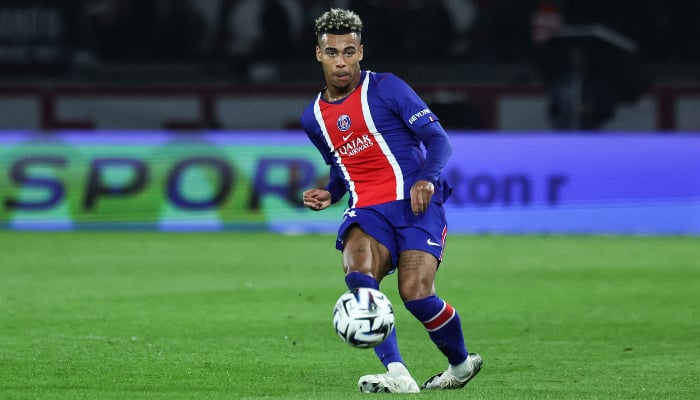
But this will be the 20-year-old’s first taste of a major international tournament.
Doue has a battle just to ensure he starts for Les Bleus among a dazzling display of attacking talent that includes Kylian Mbappe, Ballon d’Or winner Ousmane Dembele and Bayern Munich’s Michael Olise.
But Doue gave Didier Deschamps a timely reminder of his quality with his first two international goals in a 3-1 friendly win over Colombia in France’s last outing in March.
Nico O’Reilly (England)
O’Reilly, 21, has already earned the trust of Pep Guardiola to become a regular for Manchester City.

Scorer of two goals from left-back in City’s League Cup final win over Arsenal in March, O’Reilly began his career as a goalscoring midfielder.
Guardiola has harnessed his blend of height, speed and skill as an attacking weapon from deep and may have solved a problem position for England coach Thomas Tuchel in the process.
England reached the final of Euro 2024 without a natural left-back for the majority of the tournament due to Luke Shaw’s lack of fitness.
“What a player,” said Guardiola. “He has made an incredible step up and he has had a lot of minutes, but he deserves it.”
Endrick (Brazil)
A teenage prodigy who made his Palmeiras debut at 16 and was snapped up by Real Madrid before his18th birthday, Endrick’s hopes of shining at the World Cup have been rekindled by a successful loan move at French club Lyon.

Endrick burst onto the international scene by scoring the winner against England at Wembley two years ago and becoming Brazil’s youngest goalscorer since Ronaldo in the process.
Relegated behind international team-mate Vinicius Junior and Mbappe after his big move to Madrid two years ago, the 19-year-old has found his scoring touch since his switch to France in January.
Often compared to another Brazilian great Romario for his squat but powerful physique, Endrick will be hoping to recreate the former’s success in scoring five goals as Brazil won the World Cup on US soil in 1994.
Pedri (Spain)
Spain’s latest passing metronome, Pedri has proven to be a fitting heir to Xavi Hernandez for both club and country.

After first rising to prominence as an 18-year-old at Euro 2020, Pedri was key to Spain’s run to conquering Europe two years ago in Germany, but injury prevented him from featuring in the semi-finals and final.
For Barcelona he has put his fitness troubles behind him under Hansi Flick, playing a starring role in back-to-back La Liga title triumphs over the past two seasons.

Pakistan’s young squash players are all set to showcase their talent at the 33rd Asian Junior Individual Squash Championships 2026, scheduled to be held from May 20 to 24 in Panzhihua, China.
According to Pakistan Squash Federation, the national contingent, led by Director Academies Group Captain (R) Irfan Asghar and Head Coach Fahim Gul, will compete against top emerging players from across Asia in the prestigious junior event.
Pakistan’s squad comprises five boys and two girls competing in different age categories.
In the boys’ events, Abdullah Nawaz will participate in the Under-19 category, Nouman Khan in Under-17, Ahmed Rayyan Khalil and Sohail Adnan in Under-15, while Mustafa Khan will feature in the Under-13 category.
In the girls’ competitions, Sehrish Ali and Mahnoor Ali will represent Pakistan in the Under-15 category.
The championship is regarded as one of Asia’s premier junior squash events and provides a major platform for young players to gain international exposure and improve continental rankings.
Pakistan squash officials expressed confidence that the young players would deliver strong performances and continue the country’s rich legacy in the sport.


Robo-top: The machines that could make your next t-shirt

Fan spending on Harry Styles Wembley gigs set to top £1bn

‘Star Wars’ voice actor was 64

-

 Entertainment6 days ago
Conan O’Brien hat tricks as Oscar host
-

 Tech1 week ago
Could Contact-Tracing Apps Help With the Hantavirus? Not Really
-

 Fashion6 days ago
Italy’s Zegna Group’s Q1 growth boosted by strong organic performance
-

 Entertainment1 week ago
Martin Short: Facing tragedy with joy
-

 Entertainment1 week ago
Tom Brady gets back at Kevin Hart during Netflix roast
-

 Sports1 week ago
Jacob Fatu unleashes vicious assault on Roman Reigns after World Heavyweight Championship loss at WWE Backlash
-

 Entertainment1 week ago
Martha Stewart: How to make an omelet
-

 Tech1 week ago
Papa Johns Is Getting Into Drone Delivery—but Not for Pizza