Connect with us

Business

RBI Raises India’s GDP Growth Forecast To 6.8% For 2025-26

Published

on

RBI Raises India’s GDP Growth Forecast To 6.8% For 2025-26
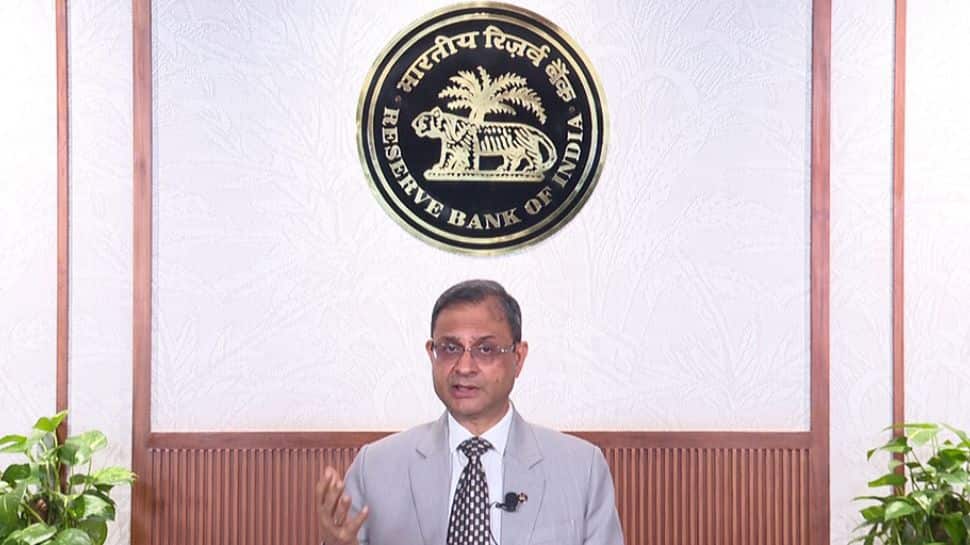

New Delhi: The RBI has raised its projection of India’s GDP growth rate to 6.8 per cent for 2025-26 from 6.5 per cent earlier, as the implementation of several growth-inducing structural reforms, including streamlining of GST, is expected to offset some of the adverse effects of the external headwinds, Reserve Bank Governor Sanjay Malhotra said on Wednesday. 

He pointed out that India’s GDP recorded a robust growth of 7.8 per cent in Q1:2025-26, driven by strong private consumption and fixed investment. On the supply side, growth in gross value added (GVA) at 7.6 per cent was led by a revival in manufacturing and steady expansion in services. Available high-frequency indicators suggest that economic activity continues to remain resilient. Rural demand remains strong, riding on a good monsoon and robust agriculture activity, while urban demand is showing a gradual revival, the RBI Governor added.

“Taking all these factors into account, real GDP growth for 2025-26 is now projected at 6.8 per cent, with Q2 at 7.0 per cent, Q3 at 6.4 per cent, and Q4 at 6.2 per cent,” Malhotra explained. He also said that the global economy has been more resilient than anticipated in 2025, with robust growth in the US and China. 

Add Zee News as a Preferred Source


The outlook, however, remains clouded amidst elevated policy uncertainty. Inflation has remained above their respective targets in some advanced economies, posing fresh challenges for central banks as they navigate the shifting growth-inflation dynamics. Financial markets have been volatile. The US dollar strengthened after the upward revision of US growth numbers for the second quarter, and treasury yields hardened recently, tracking changes in policy rate expectations. Equities have remained buoyant across several advanced and emerging market economies.

The RBI Governor further stated that revenue expenditure of the Union and state governments registered robust growth during the fiscal year so far (April-July). Investment activity, as suggested by healthy growth in construction indicators, i.e., cement production and steel consumption in July-August, is holding up well even though production and import of capital goods witnessed some moderation. Recovery in the manufacturing sector continues while services activity is sustaining its momentum.

Looking ahead, an above normal monsoon, good progress of kharif sowing and adequate reservoir levels have further brightened prospects of agriculture and rural demand. Buoyancy in the services sector, coupled with steady employment conditions, is supportive of demand, which is expected to get a further boost from the rationalisation of goods and services tax (GST) rates. Rising capacity utilisation, conducive financial conditions, and improving domestic demand should continue to facilitate fixed investment, he observed.

However, ongoing tariff and trade policy uncertainties will impact external demand for goods and services. Prolonged geopolitical tensions and volatility in international financial markets caused by risk-off sentiments of investors also pose downside risks to the growth outlook, the RBI Governor added.




Source link

Business

PTA warns consumers against fake calls and UAN numbers, reason revealed – SUCH TV

Published

on

PTA warns consumers against fake calls and UAN numbers, reason revealed – SUCH TV


Pakistan Telecommunication Authority has warned users against fake calls and UAN numbers.

A video message released by PTA states that scammers are impersonating PTA, FIA, and banks to steal your personal and financial information. No government agency will ever ask you for OTP, PIN, identity card or biometrics over a call or message. Mobile users should be vigilant and verify only through official channels.

It should be noted that earlier, PTA had warned users in a statement that using a SIM registered in the name of another person is a violation of relevant regulations.

The PTA had stressed that the full responsibility for any misuse of the SIM will lie with the registered user, therefore, users should ensure responsible use of their SIMs and mobile connections at all times. Registered users will be held individually accountable for all calls, messages and data usage made through their SIMs or devices.

The PTA further appealed to users to abide by all relevant laws and regulations, warning that action will be taken in case of violation.


Source link

Continue Reading

Business

Budget 2026: CII pitches demand-led disinvestment plan; proposes four-step privatisation roadmap – The Times of India

Published

on

Budget 2026: CII pitches demand-led disinvestment plan; proposes four-step privatisation roadmap – The Times of India


The Confederation of Indian Industry (CII) suggested a four-fold privatisation process in their recommendations on the Union Budget 2026-27. They called for faster and more predictable disinvestment. The industry body claimed that a calibrated privatisation approach would help sustain capital expenditure and fund development priorities, particularly in sectors where private participation can improve efficiency, technology adoption, and competitiveness. CII Director General Chandrajit Banerjee highlighted the role of private enterprise in India’s growth. “A forward-looking privatisation policy, aligned with the vision of Viksit Bharat, will enable the government to focus on its core functions while empowering the private sector to accelerate industrial transformation and job creation,” he said, as quoted by ANI. To accelerate the government’s exit from non-strategic Public Sector Enterprises (PSEs), CII outlined a four-pronged strategy. First, CII recommended adopting a demand-led approach for selecting PSEs for privatisation. Contrary to short-listing entities and then checking the appetite for them, it was proposed that government needs to start by measuring market interest for a larger list of entities and short-list those with better interest and valuation. Second, the industry body called for announcing a rolling three-year privatisation pipeline in advance. According to CII, greater visibility would give investors time to plan, deepen participation, and improve price discovery. Third, CII proposed setting up a dedicated institutional mechanism to oversee privatisation. This would include a ministerial board for strategic direction, an advisory panel of industry and legal experts, and a professional execution team to handle due diligence, market engagement, and regulatory coordination. Fourth, acknowledging that complete privatisation is complex and time-consuming, CII suggested a calibrated disinvestment route as an interim measure. The government could initially reduce its stake in listed PSEs to 51 per cent, retaining management control, and later bring it down further to between 33 per cent and 26 per cent. CII estimated that lowering government ownership to 51 per cent in 78 listed PSEs could unlock nearly Rs 10 lakh crore. In the first two years, disinvestment in 55 PSEs could raise about Rs 4.6 lakh crore, followed by Rs 5.4 lakh crore from 23 additional enterprises. “A calibrated reduction of government stake balances strategic control with value creation,” Banerjee said, adding that the proceeds could fund healthcare, education, green infrastructure, and fiscal consolidation while maintaining control in strategic sectors. The Union Budget for 2026–27 will be presented on February 1.


Source link

Continue Reading

Business

The FTSE 100 has hit a record high. Is now the time to start investing?

Published

on

The FTSE 100 has hit a record high. Is now the time to start investing?


Kevin PeacheyCost of living correspondent

Getty Images Young woman sitting on a bed with a laptop on her legs and holding out a mobile phone with a graph on the screen.Getty Images

As the new year got into its stride, so did the UK’s index of leading shares.

The FTSE 100 climbed above 10,000 points for the first time since it was created in 1984, cheering investors – and the chancellor, who wants more of us to move money out of cash savings and into investments.

The index tracks the performance of the 100 largest companies listed on the London Stock Exchange and rose by more than a fifth in 2025.

But with many people still struggling with everyday costs, and with talk of some stocks being overvalued, does the FTSE’s success really make it a good time to encourage first-time investors?

Investing v saving

People can invest their money in many different ways and in different things. Various apps and platforms have made it easy to do.

Crucially, the value of investments can go up and down. Invest £100 and there is no guarantee that the investment is still worth £100 after a month, a year, or 10 years.

But, in general, long-term investments can be lucrative. The rise of the FTSE 100 is evidence of that. Shareholders may also receive dividends, which they could take as income or reinvest.

For years, the advice has been to treat investments as a long-term strategy. Give it time, and your pot of money will grow much bigger than if it was in a savings account.

In contrast, cash savings are much more steady and safe. The amount of interest varies between account providers, but savers know what returns will be. Savings rates have held up quite well over the last year, but interest rates are generally thought to be on the way down.

Savings accounts are popular when putting money aside for emergencies, or for holidays, a wedding or a car – for one predominant reason: you can usually withdraw the money quickly and easily.

“It is important that everyone has savings. It gives you access when you need it,” says Anna Bowes, savings expert at financial advisers The Private Office (TPO).

“It means you do not need to cash out your investments at the wrong time.”

Getty Images Over the shoulder shot of somebody looking at financial performance on a smartphoneGetty Images

Evangelists for investing agree that savings are an important part of the mix for everyone managing their money.

“People starting out should have a cash buffer in case of emergency before going into investing,” says Jema Arnold, a voluntary non-executive director at the UK Individual Shareholders Society (ShareSoc).

One in 10 people have no cash savings, and another 21% have less than £1,000 to draw on in an emergency, according to the regulator, the Financial Conduct Authority (FCA).

But Arnold and others point out that cash is not without risk either. As time goes on, the spending power of savings is eroded by the rising cost of living, unless the savings account interest rate beats inflation.

Risk and reward

Our brains make a judgement about risk and reward thousands of times every day. We consider the risk of crossing the road against the reward of getting to the other side and so on.

With money, those who are more risk-averse have tended to stick with savings, while others have moved into investments. It also helps if you have money you can afford to lose.

It is worth remembering that millions of people already have money for their pension invested, although it is often managed for them and they may not pay much attention to it.

The FCA says seven million adults in the UK with £10,000 or more in cash savings could receive better returns through investing.

Chancellor Rachel Reeves has advocated more risk-taking from consumers. For those with the money, she says the benefit of long-term investing for them, and the UK economy as a whole, is clear.

She is altering rules on tax-free Isas (Individual Savings Accounts) in a much-debated move aimed at encouraging investing.

It is also why, in a couple of months’ time, we are all going to be blitzed with an advertising campaign (funded by the investment industry) telling us to give investing some thought.

It will be a modern version of the Tell Sid campaign of the 1980s, which encouraged people to invest in the newly privatised British Gas.

British Gas Still from the Tell Sid campaign of TV adverts encouraging people to invest in British Gas. It shows one man whispering to another.British Gas

The Tell Sid campaign was considered to be a success

But is this a good time for such a campaign? Back then, lots of people invested in British Gas for a relatively quick profit.

Invest now, and there is a chance the value of your investment could take a short-term hit.

A host of commentators have suggested an AI tech bubble is about to burst. In other words, they say there is a chance the value of companies heavily into AI has been over-inflated and will plunge – meaning anyone investing in those companies will see the value of those investments plunge too.

It isn’t only commentators. The Bank of England has warned of a “sharp correction” in the value of major tech companies. America’s top banker Jamie Dimon, the chief executive of US bank JP Morgan, said he was worried, and Google boss Sundar Pichai told the BBC there was “irrationality” in the current AI boom.

In truth, nobody really knows if and when this will happen.

New rules on getting investment help

All of this may leave people keen for some help, and the regulator has come up with plans to allow banks to offer some assistance.

Currently financial advice can be expensive, and regulated advisers may not bother with anyone who hasn’t got tens of thousands of pounds to invest.

Financial influencers have tried to fill the gap on social media. Some have been accused of promoting financial schemes and risky trading strategies with glitzy get-rich-quick promises in front of fancy cars – but without authorisation or any explanation of the risks involved.

Some first-time investors have turned to AI for tips. Some are vulnerable to fraudsters offering investment opportunities that are too good to be true.

Nearly one in five people turned to family, friends or social media for help making financial decisions, according to a survey by the FCA.

So, from April, registered banks and other financial firms will be allowed to offer targeted support, preferably for free. It will stop short of individually tailored advice, which can only be provided by an authorised financial adviser for a fee. But it will allow them to make investment and pensions recommendations to customers based on what similar groups of people could do with their money.

It is a big change in money guidance but, as with investments, no guarantees that it will be successful.


Source link

Continue Reading

Trending