

Business
Reeves could face £20bn Budget hole as UK productivity downgraded

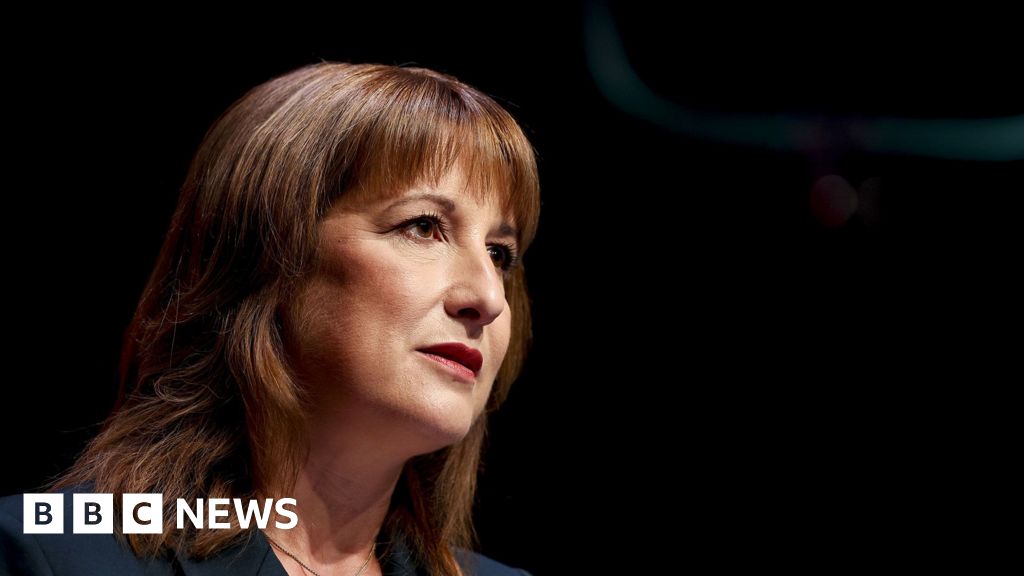
The government is facing a bigger-than-expected hole in the public finances as it prepares for next month’s Budget.
A downgrade to the UK’s productivity performance from the government’s official forecaster could lead to the chancellor facing a £20bn gap in meeting her tax and spending rules, the BBC understands.
Rachel Reeves has confirmed both tax rises and spending cuts are options in next month’s Budget.
The Treasury declined to comment on “speculation” ahead of the Office for Budget Responsibility’s (OBR) final forecast, which will be published on 26 November alongside the Budget.
It comes as the chancellor told an audience in Saudi Arabia that Brexit is partly to blame for high inflation in the UK.
Persistent higher prices have been a dampener on UK economic growth, because the Bank of England has kept interest rates higher to control inflation, and that has made Reeves’ job harder to balance tax and spending within her fiscal rules.
“Inflation is too high in countries around the world including in the UK, and one of the reasons for that is that there’s too much cost associated with trade with our nearest neighbours and trading partners,” Reeves said as she argued that closer economic ties with the EU could ease the inflation burden and boost economic growth.
“Businesses, especially small businesses, who face increasing red tape since we left the European Union, for workers, who are now locked out of the jobs market in Europe, there are obviously huge benefits from rebuilding some of those relations.”
The OBR will deliver its final draft forecast for Reeves’s Budget, including productivity – a measure of the output of the economy per hour worked – to the Treasury on Friday.
The forecaster had previously assumed a partial bounce back in productivity growth, but this has never materialised.
This productivity assumption is essential to long-term growth prospects and so, under the current system, even a small change can alter how much money a Budget needs to raise by several billion pounds.
The OBR is understood to have downgraded forecast for productivity by 0.3 percentage points – a figure first reported by the Financial Times – bringing its assumption closer to that of the Bank of England.
The Institute for Fiscal Studies think-tank has calculated that for every 0.1 percentage point downgrade in the productivity forecast, government borrowing would increase by £7bn in 2029-30 – meaning a 0.3 point cut could add £21bn to the Budget hole.
The changes open up an initial gap of some £20bn, rather than the £10-£14bn widely anticipated.
Such a hole could be plugged by hiking taxes, reducing public spending or increasing government borrowing.
Reeves has set out two main Budget rules, which she has described as “non-negotiable”. These are:
- Not to borrow to fund day-to-day public spending by the end of this parliament
- To get government debt falling as a share of national income by the end of this parliament
Reeves admitted on Monday to business leaders in Saudi Arabia that the OBR was “likely to downgrade productivity” which has been “very poor since the financial crisis and Brexit”.
The OBR is expected to explain the decision in detail, but some ministers have privately pointed out that if it had done this earlier, different choices could have been made at this summer’s Spending Review.
There are many other moving parts in the Budget which may bring better news for the chancellor, such as the decline in the interest rates paid on government debt.
However, with other pressures such as the U-turns on welfare spending and a desire to rebuild a bigger buffer in the public finances, speculation is pointing towards significant tax rises, including some possible breaches of manifesto commitments such as changes to income tax.
The Treasury will inform the OBR of its first draft Budget measures next week.
On Tuesday, the government announced it had agreed a series of trade and investment deals with Saudi Arabia, following Reeves’s visit to the Gulf.
This included up to £5bn in support from UK Export Finance for projects in Saudi Arabia which the government said would “unlock” contracts for British firms.
It also announced deals including a £37m investment from Saudi cybersecurity firm Cipher to set up its European office in London, and a £75m investment from Saudi investors and bankers into British digital bank Vemi.
The chancellor also met ministerial counterparts from Qatar and Kuwait for talks over a wider potential trade deal between the UK and the Gulf Cooperation Council.
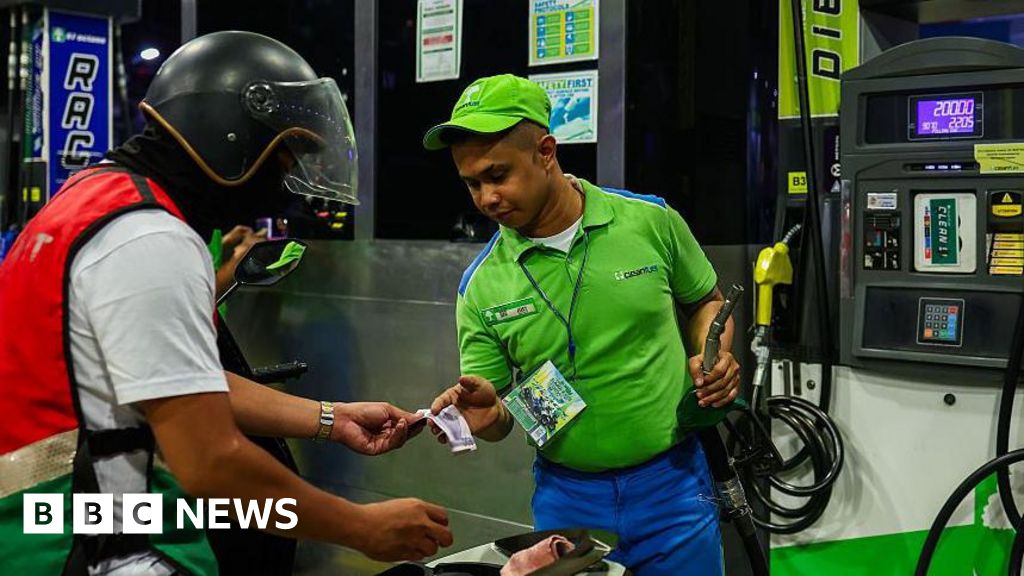
Crude rose back above $100 a barrel as the US and Iran clashed over bringing the conflict to an end.
Source link

President Donald Trump said he’s considering sending the National Guard to U.S. airports, two days after the administration deployed Immigration and Customs Enforcement agents to several major U.S. airports following hourslong waits for travelers because of the partial government shutdown.
In a Truth Social post Wednesday, Trump blamed Democrats for the shutdown, which began Feb. 14.
“Thank you to our great ICE Patriots for helping. It makes a big difference,” he wrote in his post. “I may call up the National Guard for more help.”
Travelers wait in line at a Transportation Security Administration (TSA) checkpoint at Hartsfield-Jackson Atlanta International Airport (ATL) in Atlanta, Georgia, US, on Monday, March 23, 2026.
Elijah Nouvelage | Bloomberg | Getty Images
More than 11% of TSA officers called out on Wednesday and over 450 have quit since the shutdown started, the Department of Homeland Security said.
Elevated absences of Transportation Security Administration officers, who are required to work though they’re not getting paid during the shutdown, have contributed to long lines at major U.S. airports, including in Atlanta, Houston and New York.
The DHS, which oversees both ICE and and the TSA, said the ICE agents will “support airports facing the greatest strain” but the department didn’t respond to requests for comment on what the ICE agents’ duties are. ICE agents are getting paid in the shutdown.
Airlines have been warning customers about potentially long security lines, while executives grow increasingly frustrated with lawmakers about the impasse. On Tuesday, Delta Air Lines said it suspended its airport escorts and other special services for members of Congress and their staff because of the ongoing partial shutdown of the DHS.
The shutdown comes as Democrats in Congress have demanded changes to how federal immigration enforcement operates in exchange for releasing DHS funding after two U.S. citizens were shot and killed by ICE officers in Minneapolis.

Low-income families are being offered help with the cost of food during the Easter holidays.
Source link

Oil prices volatile as Trump talks up Iran negotiations

What small businesses need to know

My Favorite Air Fryer Is at Its Lowest Price Since Black Friday

Sales at US apparel, clothing accessories stores up 4% YoY in Jan 2026

Justice Department Says Anthropic Can’t Be Trusted With Warfighting Systems

March Madness 2026 – How to watch in SA, start time, schedule, TV channel for NCAA championship basketball tournament

-
 Fashion1 week ago
Sales at US apparel, clothing accessories stores up 4% YoY in Jan 2026
-
 Tech1 week ago
Justice Department Says Anthropic Can’t Be Trusted With Warfighting Systems
-
 Sports1 week ago
March Madness 2026 – How to watch in SA, start time, schedule, TV channel for NCAA championship basketball tournament
-
 Business1 week ago
Stocks and pound rise as US rate call approaches
-

 Entertainment1 week ago
Val Kilmer revived 1 year after death through AI
-
 Business1 week ago
Brits cashing in jewellery as gold price hits record high
-

 Politics1 week ago
Iran strikes Tel Aviv with cluster-warhead missiles in retaliation of Larijani’s martyrdom
-

 Sports1 week ago
WBC championship: USA-Venezuela preview, live updates, analysis