

Business
Reeves defends Budget tax and spending choices as ‘fair and necessary’

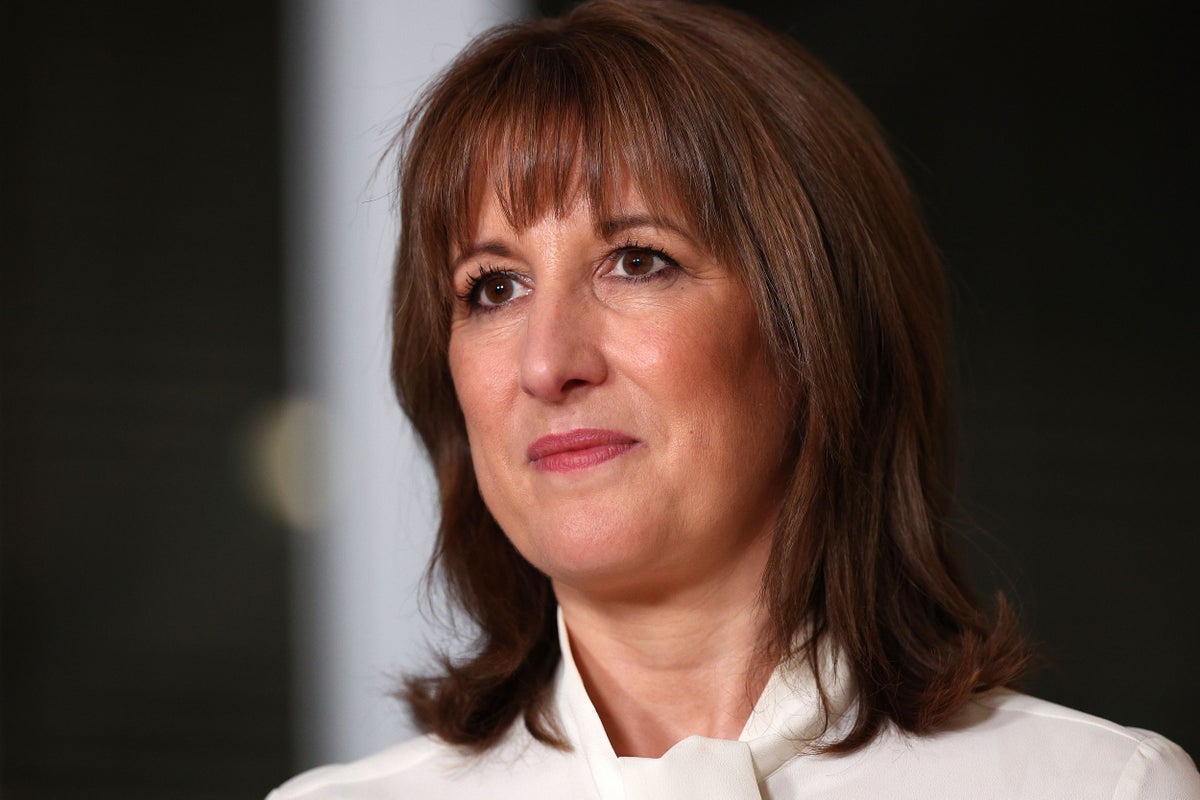
Rachel Reeves defended her recent Budget as “fair and necessary”, saying more of the economic “burden” of her decisions should fall on the wealthy.
In an interview with The Guardian, she said she had made choices to increase taxes and improve public infrastructure, and had “chosen to protect public spending”.
“I wasn’t willing to cut public services, because people voted for change at the election,” she said.
Ahead of the Budget, warnings suggested that Rachel Reeves could face a fiscal gap of up to £20 billion in meeting her self-imposed rule of not borrowing for day-to-day spending.
The debate intensified after the Office for Budget Responsibility (OBR) revealed on Friday it had informed the Chancellor as early as September 17 that the gap was likely smaller than initially expected.
Ms Reeves said: “People often talk about what chancellors do in their budget, but sometimes what’s more important are the things you don’t do. One of the things I didn’t do was cut the investment that I put into capital spending, new schools and hospitals, new energy infrastructure, rail infrastructure.
“It would have been the easiest thing to do to say the OBR’s done this downgrade, you need to cut our cloth accordingly.”
Ms Reeves also denied claims that working-age people were being asked to carry the bulk of the economic burden.
“It’s quite clear that the economic burden in the budget was not about age. It was about wealth,” she said.
“People who bear more of the burden are those with big incomes and assets… so I don’t accept that.”
Conservative leader Kemi Badenoch said the revelation from the OBR showed Ms Reeves had “lied to the public” and should be sacked.
Downing Street was asked on Friday whether Ms Reeves’ warnings of coming difficult decisions despite the OBR’s improved forecasting meant she had misled the public and the markets in the run-up to the Budget.
“I don’t accept that,” the Prime Minister’s official spokesman said.
He added: “As she set out in the speech that she gave here (Downing Street), she talked about the challenges the country was facing and she set out her decisions incredibly clearly at the Budget.”
On November 4, Ms Reeves set the scene for the Budget with a Downing Street speech that suggested tax rises were needed to secure the UK’s economic future and that poor productivity growth would have “consequences for the public finances” in terms of lower tax revenue.
But a letter from the OBR to the Treasury Select Committee of MPs published on Friday appeared to suggest an improved tax take from growing wages and inflation meant that gap had diminished before she even made the speech.
Dame Meg Hillier, Labour chairwoman of the committee, asked OBR chief Richard Hughes to set out a timeline for its pre-Budget forecast process, which informed the Chancellor’s decision-making.
The OBR’s first fiscal forecast ahead of the Budget, received by Treasury officials on September 17, suggested the black hole was £2.5 billion.
The watchdog’s final forecast on October 31 then suggested that it had been eliminated altogether and that there was now a £4.2 billion net positive above the Chancellor’s day-to-day spending plans.
The prospect of a hike in income tax rates – which was trailed for several weeks – was dropped on November 13, with the Treasury citing improved forecasting.
However, the OBR suggested it had provided ministers with no new forecasting in November.
“No changes were made to our pre-measures forecast after October 31,” the watchdog’s letter to the Treasury Select Committee said.
At the Budget on Wednesday, Ms Reeves hiked taxes by £26 billion, including by freezing thresholds on income tax.
The tax hikes come in response to downgraded economic forecasts but also increased welfare spending because of the abolition of the two-child benefit cap and the Labour revolt over attempts to curb the benefits bill.
Ms Reeves also used some of the tax take to build herself a bigger buffer against her borrowing rules.
The Chancellor also told the newspaper the leak of the OBR’s Economic and Fiscal Outlook (EFO), published more than half an hour before the Chancellor delivered her Commons statement, was “a bit of a scary moment”.
“My worry was that the budget is a story as well as a set of numbers … but in the end it was, I think, OK,” she said.
OBR chairman Richard Hughes has launched an investigation involving a cybersecurity expert, and said he would be prepared to resign if the Chancellor and MPs on the Treasury Committee lost confidence in him.
Business
Rs 20,000 crore gold, silver rush: What will people buy this Akshaya Tritiya? – The Times of India
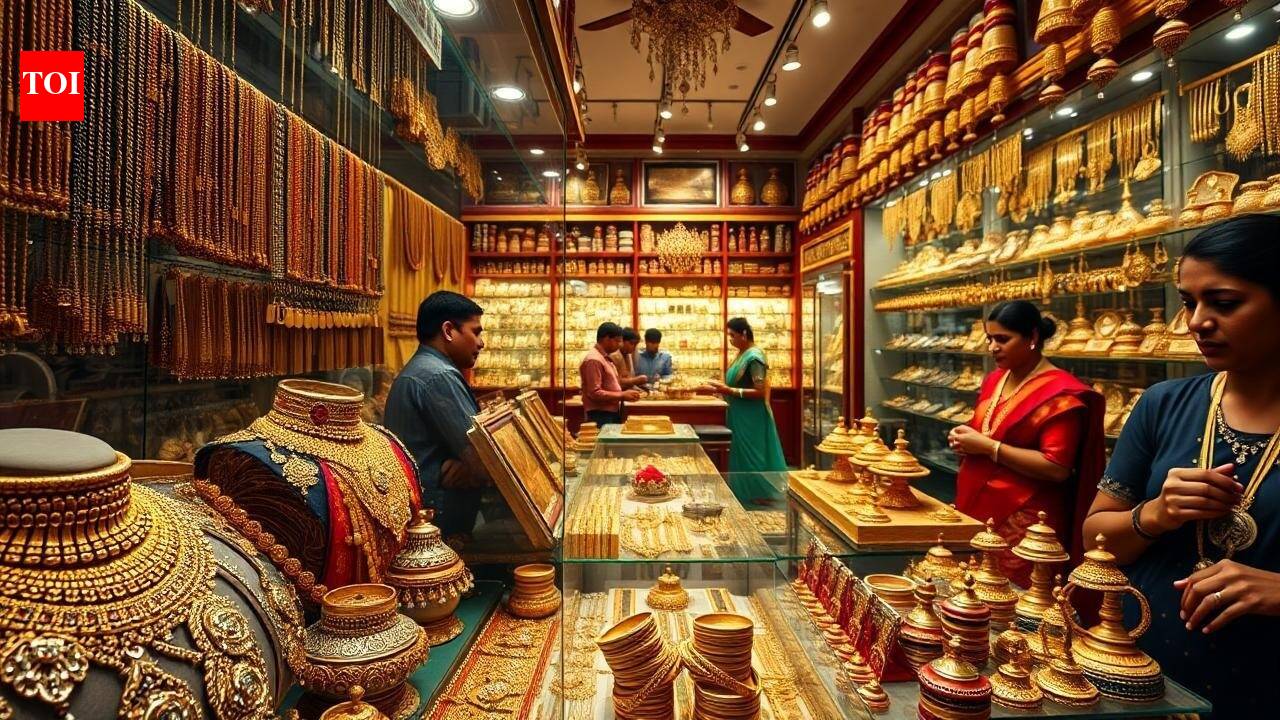
This Akshaya Tritiya, India’s gold and silver markets are heading for bumper purchases, with overall trade likely to cross Rs 20,000 crore even as record-high prices reshape buying patterns. The estimate, shared by the Confederation of All India Traders (CAIT), is higher than last year’s Rs 16,000 crore, signalling growth in value despite a sharp rise in bullion rates.Prices for the yellow metal have surged sharply over the past year, going from Rs 1,00,000 per 10 grams, to Rs 1.58 lakh. Meanwhile, silver has shown a steeper rally, jumping from Rs 85,000 per kilogram to Rs 2.55 lakh per kilogram. According to CAIT, this sharp escalation has not weakened demand, but is instead prompting consumers to make more deliberate and value-oriented purchases.Praveen Khandelwal, member of parliament from Chandni Chowk and secretary general of CAIT told ANI, “Akshaya Tritiya has traditionally been one of India’s most auspicious occasions for purchasing gold… While gold continues to dominate, the nature of purchasing is evolving significantly in response to steep price escalation.”Commenting on customer preference, CAIT national president BC Bhartia highlighted, “There is a clear shift towards lightweight, wearable jewellery, alongside a stronger focus on silver and diamond products. Attractive incentives such as reduced making charges and complimentary gold coins are also helping sustain consumer interest.”Despite the increase in overall trade value, the quantity of metals being sold tells a different story. Pankaj Arora, National President of the All India Jewellers and Goldsmith Federation (AIJGF), an associate of CAIT, explained that the projected Rs 16,000 crore gold trade amounts to nearly 10,000 kilograms (10 tonnes) at current rates. The value, spread across an estimated 2 to 4 lakh jewellers, translates to average sales of only 25 to 50 grams per jeweller, “clearly indicating a sharp decline in volume”.Meanwhile for silver, the estimated Rs 4,000 crore trade corresponds to around 1,56,800 kilograms (157 tonnes), resulting in average sales of about 400 to 800 grams per jeweller during the festival period. “These figures underline a critical shift: while the value of business is expanding due to rising prices, actual consumption is contracting,” Khandelwal said.This gap between value and volume is also reshaping consumer’s buying pattern, with smaller items and lightweight jewellery gaining popularity. At the same time, jewellers are facing challenges due to fluctuating prices, especially when it comes to managing inventory.Even so, festive demand remains steady, with markets witnessing healthy footfall. “Consumers are now adopting a more cautious and pragmatic approach, balancing traditional beliefs with financial discipline,” Khandelwal added.At the same time, it’s not just about physical gold anymore as consumers are increasingly exploring alternatives like digital gold, Sovereign Gold Bonds and gold ETFs, drawn by the promise of liquidity, safety and flexibility when prices are volatile.CAIT and AIJGF have urged jewellers to comply with mandatory hallmarking standards, including HUID certification, and advised buyers to verify the purity and authenticity of their purchases.
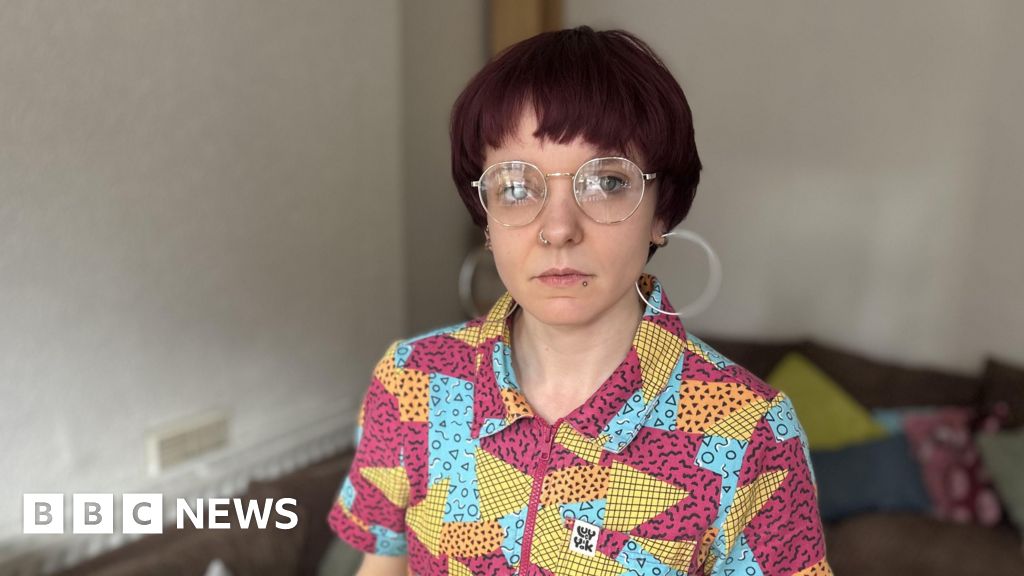
Lauren Elcock is among the young Londoners who say rising rents are forcing them to quit the capital.
Source link
As governments across the world restricted the movements of their citizens during Covid lockdowns from 2020, people spent more time online. We bought more online and socialised more online, and this brought us closer to the people who want to scam us. At the same time, realistic video impersonations, voices, websites, and texts became more commonplace, and scammers increased their use of social media including WhatsApp.

Rs 20,000 crore gold, silver rush: What will people buy this Akshaya Tritiya? – The Times of India

Prince Harry corrects blunder before peace with King Charles suffers again
The cost of rising rents: Working four jobs and pushed on to benefits

-

 Entertainment6 days ago
Palace left in shock as Prince William cancels grand ceremony
-

 Sports6 days ago
The case for Man United’s Fernandes as Premier League’s best
-

 Politics1 week ago
Chinese, Taiwanese will unite, Xi tells Taiwan opposition leader
-

 Entertainment1 week ago
Dua Lipa hits major career high ahead of wedding with Callum Turner
-
 Business1 week ago
100% road tax waiver for electric cars, new rules for 2, 3 and 4 wheelers – what Delhi govt’s draft EV policy says – The Times of India
-
 Business6 days ago
UK could adopt EU single market rules under new legislation
-
 Business1 week ago
The FAA wants gamers to apply for air traffic control jobs
-

 Sports1 week ago
Lamar Jackson hits back at critics with faithful message on social media