

Business
Reeves: Gatwick second runway shows Government ‘backing builders, not blockers’

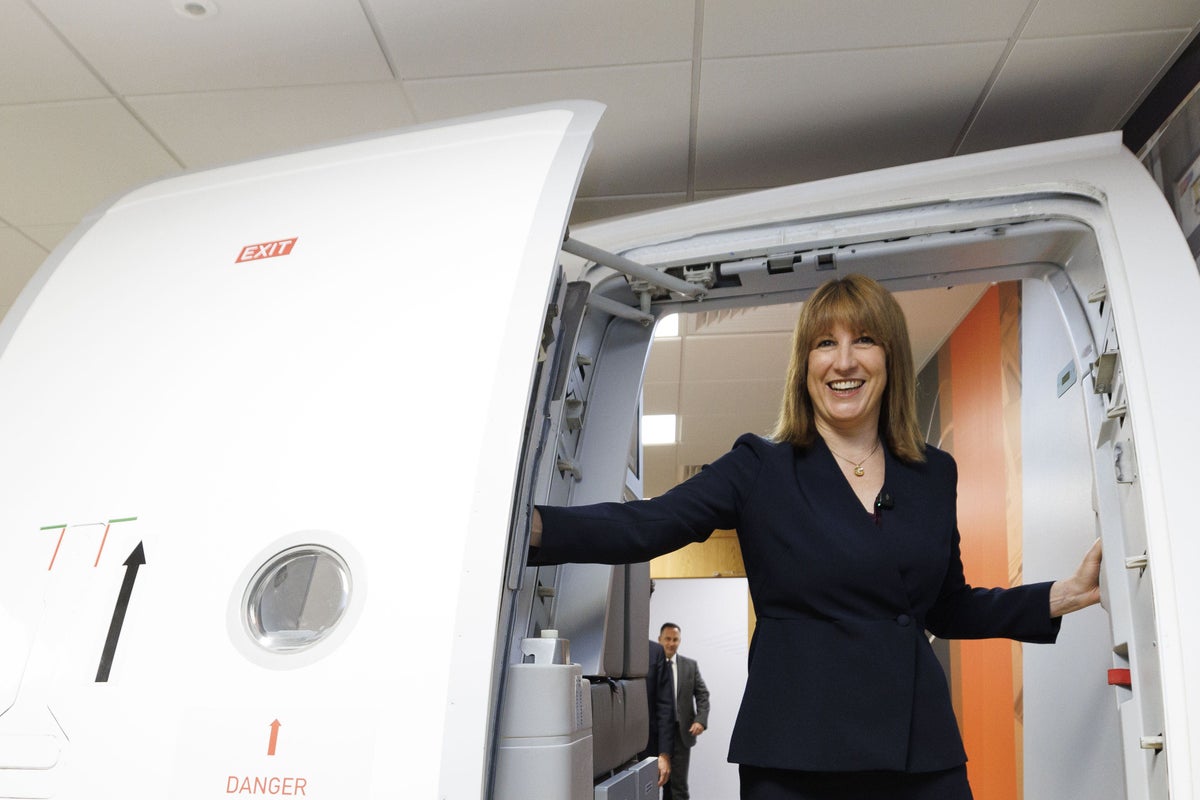
Gatwick Airport’s £2.2 billion second runway plan could create thousands of jobs and help “kickstart the economy”, Chancellor Rachel Reeves said.
In the privately financed project, the West Sussex airport will move its emergency runway 12 metres north, enabling it to be used for departures of narrow-bodied planes such as Airbus A320s and Boeing 737s.
This will enable it to be used for about 100,000 more flights a year.
Ms Reeves said: “This Government promised to kickstart the economy – and we are.
“A second runway at Gatwick means thousands of more jobs and billions more in investment for the economy.”
The Chancellor views the plan as a signal of the Government’s commitment to back “the builders, not the blockers”.
She said: “By slashing red tape and transforming the planning system to get Britain building again we are investing in this country’s renewal and building an economy that works for working people.”
Ms Reeves is keen to seize on any positive news for the economy as she prepares for her November 26 Budget against a backdrop of sluggish growth and inflation remaining stubbornly above target.
The Gatwick scheme has been given the go-ahead by Transport Secretary Heidi Alexander.
She backed the scheme as a “no-brainer” for economic growth, a Government source said, suggesting flights could take off from the new full runway before 2029.
The Cabinet minister is satisfied with adjustments made, covering issues such as noise mitigation and the proportion of passengers who would travel to and from the airport by public transport.
It comes after the Planning Inspectorate initially rejected the airport’s application and earlier this year recommended Ms Alexander should approve the project if the changes were made.
New commitments include a legally binding target for the proportion of passengers who travel to Gatwick by public transport, rather than the airport’s management setting its own targets.
Residents affected by more noise will be able to ask Gatwick to cover the costs for triple-glazed windows.
Homeowners, living directly beneath the new flight routes who choose to sell could have their stamp duty and reasonable moving costs paid, as well as estate agent fees of up to 1% of the purchase price.
Gatwick says its plans will create £1 billion per year in economic benefits, and generate an additional 14,000 jobs.
A Government source told the PA news agency: “With capacity constraints holding back business, trade and tourism, this is a no-brainer for growth.
“This Government has taken unprecedented steps to get this done, navigating a needlessly complex planning system, which our reforms will simplify in future.
“It is possible that planes could be taking off from a new full runway at Gatwick before the next general election.”
The source said the expansion must be delivered in line with climate change commitments and meet strict environmental requirements.
Local campaigners opposed to expansion are concerned about the impact on surface transport, noise, housing provision and wastewater treatment, but the airport insists it has conducted “full and thorough assessments” of those issues.
Cagne, an umbrella aviation community and environment group for Sussex, Surrey and Kent, said it stands ready to serve a judicial review funded by residents and environmental bodies.
The group said: “We know this Government cares little for the environmental impact aviation is having on our planet and Gatwick’s neighbours, but not to demand that Gatwick pays for the infrastructure, the onsite wastewater treatment plant, and noise impact is unlawful in our book.”
The Labour Government’s backing of a third runway at Heathrow Airport in its bid to grow the economy has also drawn criticism from environmental groups and opposition politicians.
The move was welcomed by shadow transport secretary Richard Holden, who accused Labour of delaying the “key” decision.
He said: “This decision should have been made months ago. Labour pledged to go ‘further and faster’ on growth, yet they’ve dithered and delayed at every turn.
“Pushing key decisions down the road has only created uncertainty for businesses and local communities.”
But Green Party leader Zack Polanski said: “Labour keeps wheeling out the same nonsense about growth, but at what cost? What this really means is more pollution, more noise for local communities, and no real economic benefit.”
Stewart Wingate, Vinci Airports managing director for the UK and former Gatwick chief executive, said: “After a lengthy and rigorous planning process, we welcome the Government’s approval of plans to bring our Northern Runway into routine use, ahead of the expected deadline.
“This is another important gateway in the planning process for this £2.2bn investment, which is fully funded by our shareholders and will unlock significant growth, tourism and trade benefits for London Gatwick and the UK and create thousands of jobs.
“As we’ve said previously, it is essential that any planning conditions enable us to realise the full benefits of the project and do not impose unnecessary constraints that make it uneconomic to invest in.
“We now need to carefully examine the details of the planning consent. Once we have done that, we will be able to comment further.”

Business sentiment among major Japanese manufacturers rose from 16 to 17 in March, according to the Bank of Japan’s quarterly survey released on Wednesday.
The improvement in the so-called diffusion index in the closely watched “tankan” report, recorded for the fourth quarter straight, comes even as worries grow about Japan’s economic growth and oil supplies because of the US-Israeli war on Iran.
The survey is an indicator of companies foreseeing good conditions minus those feeling pessimistic.
The index for large non-manufacturers, such as the service sector, stood unchanged from the last tankan at 36.
Japan’s inflation has so far remained relatively moderate, but worries are growing about prices at the gas stands and other products. Investors and consumers alike are filled with uncertainty about how much longer the war may last and what US president Donald Trump might say next. Japan’s benchmark Nikkei 225 has gyrated wildly in recent weeks.
Analysts say the Bank of Japan may start to raise interest rates because of concerns about inflation, given the soaring energy costs and declining yen, two elements that greatly affect living costs for the average Japanese consumer.
Historically, Japan has benefited from a weak yen because of its giant exports, exemplified in autos and electronics. A weak yen raises the value of exports’ earnings when converted into yen.
But in recent years, a weak yen is working as a negative, as resource-poor Japan imports much of its energy, as well as other key products such as food and manufacturing components.
The US dollar has been soaring against the yen lately.
Japan’s central bank had a negative interest rate policy for years to fight deflation until it normalised policy in 2024. It kept the rate unchanged at 0.75 per cent in March. The next Bank of Japan monetary policy board meeting is set for April 27 and 28.

The price of Brent crude oil to be delivered in May rose by a record 64% in March as the conflict disrupted energy supplies.
Source link
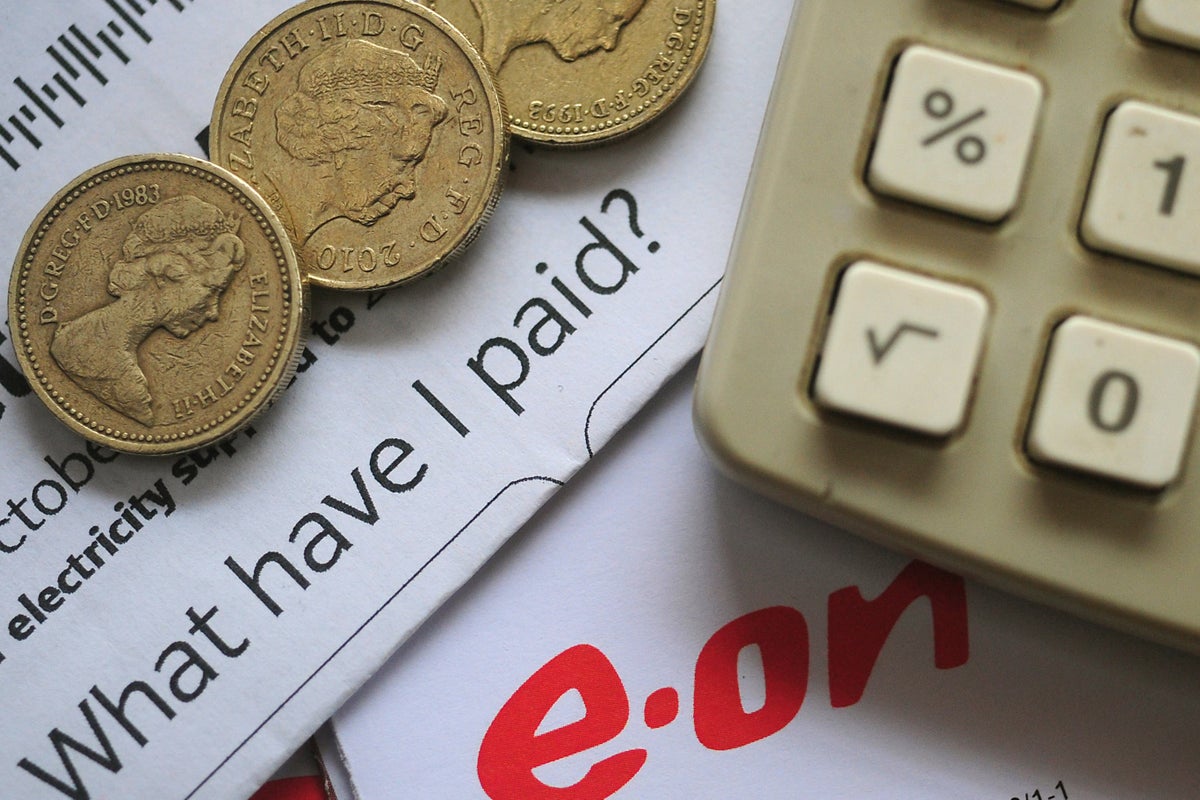
Household energy prices are falling by 7% from Wednesday in a “short-lived respite” for households already braced for a predicted 18% hike from July.
Ofgem’s price cap has dropped from £1,758 to £1,641 – a reduction of £117 or around £10 a month for the average household using both electricity and gas.
This is an 11% fall year on year, but still £600 more than bills were in the winter of 2020 to 2021.
The reduction is lower than the average £150 cut to bills pledged by the Chancellor in November, when she moved 75% of the cost of the renewables obligation from household bills onto general taxation and scrapped the energy company obligation (Eco) scheme.
And it comes amid increasing concern about the amount energy bills could rise by from July as a result of the Middle East conflict, with latest predictions from Cornwall Insight suggesting this could be 18% or £288 a year – to almost £900 above pre-crisis levels.
In the meantime, consumer groups have urged households to send in meter readings to ensure their energy usage is billed at the lowest possible rate, and investigate fixed rate deals if they remain on their firm’s standard variable rate.
A spokesman for Energy UK, which represents firms, said: “Suppliers are required to set direct debits as accurately as possible based on the best and most current information available.
“So – as well as factors like current balance, payment record and previous energy usage – this will also include the latest projection of energy costs over the coming months.
“Suppliers regularly review direct debt levels so any current assessment for price cap customers would likely take into account that bills look set to go up again in July. Customers on fixed deals however will not see any increase until their current deal comes to an end.”
Simon Francis, coordinator of the End Fuel Poverty Coalition, said: “The fall in bills from April 1 offers brief relief for households, but the respite will be short-lived.
“Given the ongoing profits made by the energy industry, households deserve more than a temporary reprieve before prices rise again.
“For the millions of households already in energy debt to their suppliers, this is a real concern and risks pushing more people into crisis.
“The Government must use the window between now and July to act. That means targeted support for those hit first and hardest, including households off the gas grid and those on heat networks, faster action on energy debt, and preparations to bring costs down if prices deteriorate further.”
National Energy Action chief executive Adam Scorer said: “Any price drop is good news, but everyone knows that it will be overtaken by events.
“It is likely to be a false dawn. And the people who know that the best are those already struggling to afford their energy bills and know the real cost of an energy crisis.
“Unfortunately, today’s good news is hugely overshadowed by the fear and dread of what may be to come.”
Which? energy editor Emily Seymour said: “April’s energy price cap fall will bring much needed relief for households. What you save will vary depending on how much you use.
“Despite this drop, many households are already concerned about the next price cap announcement in May, which will set rates from July and is currently predicted to rise by £288, or 18%, per year for the average household.
“It’s important to remember this isn’t confirmed yet, so don’t feel pressured into making quick decisions.
“If you’re currently paying variable rates, it’s worth checking the market to see what fixed deals are available. Fixing could offer protection against future increases, but only if the price is right.
“Options have reduced in the last few weeks, but some energy companies are still offering fixes with prices around those of the January-March price cap.
“If you’re worried about paying your energy bills, contact your supplier as soon as possible. Energy companies are obliged to help if you’re struggling to pay and won’t disconnect you for missing a payment. Request a review or break in payments, and access any available hardship funds.”


China’s Anta Sports posts record $11.62 bn revenue in 2025

UK commits $1.25 mn to trade facilitation programme for 2026–29

Sweden’s H&M’s Q1 FY26 sales dip but margins improve on cost control

Afghanistan announces release of detained US citizen

Property Play: Home flippers see smallest profits since the Great Recession, real estate data firm says

Broadcast industry CEO says consolidation is ‘essential’ to compete for NFL soaring media rights prices

-
 Politics1 week ago
Afghanistan announces release of detained US citizen
-
Business1 week ago
Property Play: Home flippers see smallest profits since the Great Recession, real estate data firm says
-
 Sports1 week ago
Broadcast industry CEO says consolidation is ‘essential’ to compete for NFL soaring media rights prices
-

 Entertainment1 week ago
UN warns migratory freshwater fish numbers are spiralling
-

 Tech1 week ago
Can a Home Appliance Fix the Problem of Soft-Plastic Waste?
-
 Business1 week ago
Gold prices soar in Pakistan – SUCH TV
-

 Fashion1 week ago
ICE cotton slips on weaker crude, profit booking
-
 Business1 week ago
More women are entering wealth management, but few are in advisory roles, study finds