

Business
Reko Diq project set to get $3.5b loan | The Express Tribune

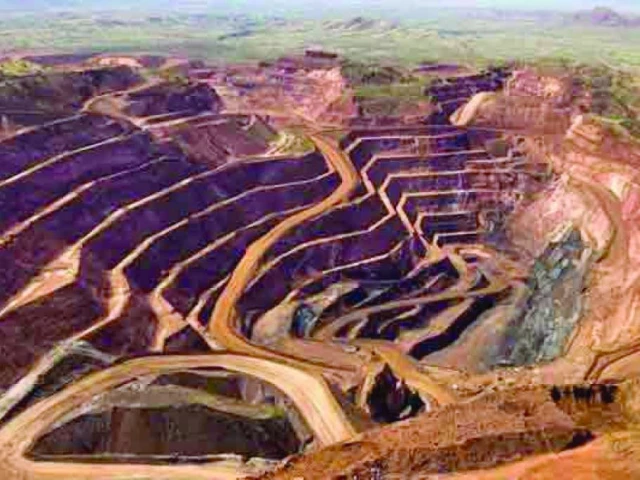
Pakistan has already chalked out a $1.9 billion funding plan to execute the Reko Diq copper and gold mining project. Total project funding has been estimated at $4.297 billion. Photo: File
ISLAMABAD:
Petroleum Minister Ali Pervaiz Malik said on Thursday that the Reko Diq Mining Company was very near to achieve financial close with $3.5 billion loans lined up, as the company’s local executive vowed to complete the $7 billion first phase of the project in the next three years.
The Reko Diq Mining Company is very close to achieving the financial close and raising $3.5 billion in debt, said Malik while speaking about prospects of Pakistan’s mining sector during a seminar organised by the Pakistan Business Council (PBC).
The minister’s statement came days after the US Export-Import (Exim) Bank board approved a $1.25 billion loan for the Reko Diq mine, as part of the US Congress’s larger plan to invest $100 billion to secure global mineral supplies.
The total cost of the project is estimated at $7.7 billion, which includes $3.5 billion in debt from 11 international banks and organisations.
Zarar Jamali, Country Manager of Reko Diq Mining Company, said that the $3.5 billion financing has been secured from 11 banks, including Japan, Canada and the United States. Jamali said that the first export shipment is targeted for the first quarter of 2029.
There have been high hopes that Reko Diq miners can solve Pakistan’s external sector problems. But the petroleum minister watered down claims of $7 trillion worth of mineral reserves in Pakistan, saying that “$7 trillion is a presumed value, as it neither has been measured nor calculated”. He cautioned against attaching so many hopes to the $7 trillion figure and said that it takes about a decade to complete one mining project.
Malik said that the government spent the past year standardising the legal, regulatory and safety regulations in the light of feedback received from foreign investors.
Pakistan has already revised upwards the cost of the first phase of the Reko Diq copper and gold mines project for the second time in six months. The cost has now jumped 79% to $7.7 billion from the initial estimate due to the higher cost of loans being taken for the project and to offset any future price shocks.
Zarar Jamali said that the first phase of construction at Reko Diq mines is going on with an estimated investment of $5.5 billion to $6 billion.
While commenting on the Barrick Company split, Jamali said that Barrick has not performed as well as other mining companies. “Barrick has given a statement that it would stay here. We have secured the financing and we are going ahead with the project,” said the local executive.
Barrick’s board has recently raised the possibility of splitting the company into two entities: one focused on North American assets and the other on assets in Africa and Asia.
Barrick’s interim chief executive officer also recently stated that the company remained committed to its Reko Diq copper project in Pakistan.
Muhammad Ali Tabba of the Lucky Group emphasised the need to set up smelting plants of copper and gold in Pakistan, brushing aside the perception that these facilities were unviable. He spoke against exporting raw materials and called for exporting only refined value-added products.
Millions of tonnes of raw material should not be exported, which will be more hazardous and involve security concerns too, said Tabba.
Ali Pervaiz Malik said that to run a smelter on a sustainable basis, there is a need for continued supplies of raw material.
Pakistan is on the verge of operationalising two mining projects – about $8 billion worth of Reko Diq and over $1.5 billion worth of Siadiq project, said Shamsuddin Sheikh, Chief Executive Officer of National Resources Limited. He said that both of these projects are expected to begin operations before the end of 2030.
Col Hamid Ashraf, Adviser to the Geological Survey of Pakistan, said that there was a need to give fiscal incentives for mining to tap the $7 trillion reserves and set a better internal rate of return on investment.
The petroleum minister said that it would be difficult to give fiscal incentives under the IMF programme. In her closing remarks, Dr Zeelaf Munir, Chairperson PBC, stated, “Pakistan’s economic future depends on resilience, reform and responsible partnership. No institution can deliver progress alone; all the stakeholders need to believe in business.”




Rising heating oil prices are hitting Northern Ireland harder than the rest of the UK – here’s everything you need to know.
Source link

The logo for the Food and Drug Administration is seen ahead of a news conference at the Health and Human Services Headquarters in Washington, April 22, 2025.
Nathan Posner | Anadolu | Getty Images
A key U.S. Food and Drug Administration official who oversees vaccines and biotech treatments will step down from the agency following multiple decisions that raised concerns within the industry.
Vinay Prasad, director of the Center for Biologics Evaluation and Research, will leave the FDA at the end of April, an agency spokesperson confirmed on Friday. It is his second departure from the position: He briefly left the post in July following backlash over his regulatory decisions, and returned only two weeks later in August.
In a post on X, FDA Commissioner Marty Makary said the FDA will appoint a successor before Prasad returns next month to the University of California San Francisco, where he taught before taking the FDA position last year. Makary said Prasad “got a tremendous amount accomplished” during his tenure at the agency.
Prasad’s decision to step down comes after criticism of the FDA mounted within the biotech and pharmaceutical industry and among former health officials. In the past year, the agency has denied or discouraged the approval applications of at least eight drugs, according to RTW Investments, after taking issue with data the companies used to support their applications. The FDA also initially refused to review Moderna’s flu shot before it later reversed course.
All of those companies accused the FDA of reversing previous guidance about the evidence they could use to back their applications, sparking criticism within the industry that an unreliable regulatory process could stifle development of drugs for hard-to-treat diseases.
A former FDA official who spoke to CNBC on the condition of anonymity to speak freely on the issue called the reversals the worst kind of regulatory uncertainty because companies say they are being told one thing and then experience another.
In a statement earlier Friday, an FDA spokesperson said there was “no regulatory uncertainty,” adding the agency “makes decisions based on the evidence, but does not make assurances about outcomes.” The spokesperson said the FDA is “conducting rigorous, independent reviews and not rubber-stamping approvals.”
The most recent controversy came after the FDA discouraged UniQure from applying for expedited approval of its experimental treatment for Huntington’s disease.
The agency, which underwent staff cuts and an overhaul under Health and Human Services Secretary Robert F. Kennedy Jr., has faced broader backlash for its drug and vaccine approvals process. Critics have worried the agency could stifle the development of new treatments and risk the safety of patients.
The Wall Street Journal earlier reported Prasad’s departure.
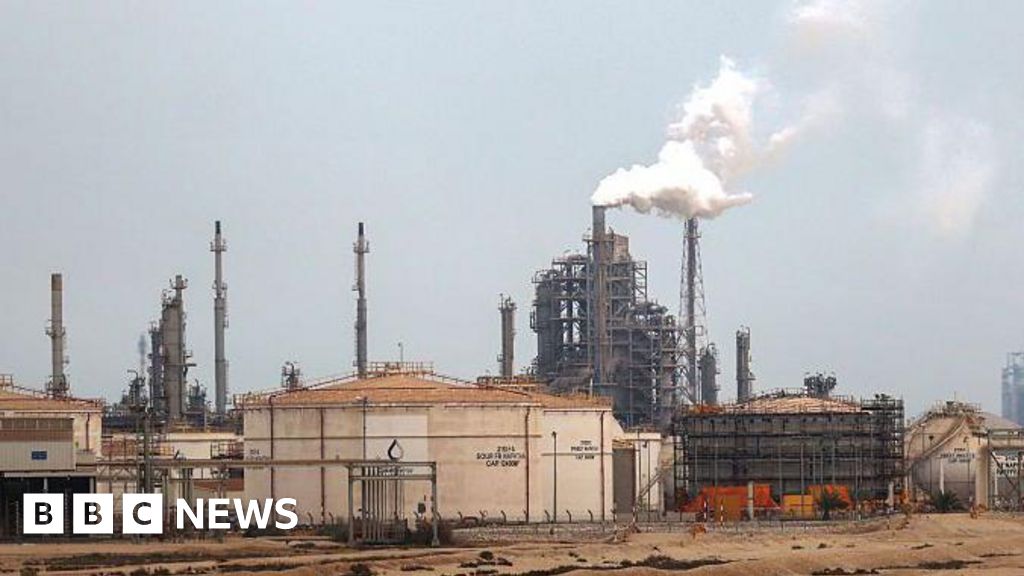
Energy Minister Saad al-Kaabi says oil could hit $150 a barrel if the Iran conflict continues over the coming weeks.
Source link


Kanye ‘Ye’ West trips during trial: ‘Is he asleep?’

Winners and losers of the 2026 NHL trade deadline

Ben Stiller condemns use of ‘Tropic Thunder’ clip in political video

-
 Business1 week ago
Attock Cement’s acquisition approved | The Express Tribune
-

 Politics1 week ago
US arrests ex-Air Force pilot for ‘training’ Chinese military
-

 Fashion1 week ago
Policy easing drives Argentina’s garment import surge in 2025
-
 Business1 week ago
India Us Trade Deal: Fresh look at India-US trade deal? May be ‘rebalanced’ if circumstances change, says Piyush Goyal – The Times of India
-

 Politics1 week ago
What are Iran’s ballistic missile capabilities?
-

 Sports1 week ago
Sri Lanka’s Shanaka says constant criticism has affected players’ mental health
-

 Entertainment1 week ago
Bobby J. Brown, “The Wire” and “Law & Order: SUV” actor, dies of smoke inhalation after reported fire
-

 Sports1 week ago
LPGA legend shares her feelings about US women’s Olympic wins: ‘Gets me really emotional’