

Fashion
Rent the Runway to swap debt for equity in revival effort


By
Bloomberg
Published
August 21, 2025
Rent the Runway Inc. will hand over a controlling stake in the company as part of a plan to cut debt and grow, after residual effects of the Covid-19 pandemic pushed the firm to the brink of bankruptcy.
The deal, with lender Aranda Principal Strategies and other partners, will wipe more than $240 million of debt from Rent the Runway’s balance sheet, according to an emailed statement. The company, which allows subscribers to rent clothing for the office and events, will have several more years to repay $120 million in remaining borrowings.
Private equity firms Story3 Capital Partners and Nexus Capital Management, along with Aranda, will also inject $20 million into the company as part of the transaction. Aranda was spun off from Singapore’s Temasek Holdings Pte. as a private credit platform earlier this year.
The three investors will receive a majority ownership stake in the company, representatives for Rent the Runway said in an interview — about 86% before accounting for a management incentive plan and a rights offering set to give existing stockholders the opportunity to purchase as much as $12 million of shares.
The offering will be at $4.08 a share, according to the statement. The stock closed Wednesday at $4.485, up from a record low of $3.77 in April. Shares have dropped by two-thirds over the past year. “I’m viewing this as an IPO 2.0 for the company,” Chief Executive Officer Jennifer Hyman said in an interview.
Rent the Runway’s operations and trajectory over the past 18 months encouraged lenders to agree to the plan, which allows management and current owners to retain stakes in the firm, according to Hyman.
“Every single financial metric has substantially improved over last several years, and we were able to do that with shackles on,” Hyman said, referring to the company’s debt load. She acknowledged alternatives included potentially filing for bankruptcy.
Its debt burden grew larger as it started paying interest in kind, which allows borrowers to defer paying interest in cash but tack it on as additional debt due at maturity. The decision was made in light of financial pressures stemming from the pandemic, when people stopped wearing chic work-wear in office and turned to pyjamas at home.
Hyman co-founded Rent the Runway with her business partner Jenny Fleiss in 2009, introducing people to the option of renting clothing for events. The company then started offering a subscription: members can borrow merchandise for a monthly fee.
The firm was valued at $1 billion in 2019, a figure that dropped to $750 million after the pandemic hit in March 2020. Rent the Runway went public in 2021, betting in-person events such as weddings would return, and had more than 147,000 subscribers as of the end of the first quarter.
The company has struggled to revive its business since its public listing amid a subscriber slump. Management executed a reverse stock split in 2024 remain on the Nasdaq. Revenue fell 7.2% in its most recent quarter.
Hyman has been working to revamp Rent the Runway’s operating model. The service has begun sharing revenue with brand partners — made possible in part by its shift to an “asset-light” model.
While Rent the Runway previously owned the inventory on its platform, it more recently shifted to a model that allow brands to put their items on the platform for free and receive a portion of the revenue generated when the goods are rented out. Hyman plans to hone in on that strategy after the recapitalisation and find more companies to work with.
“My primary action post this deal clothing is doing even more deals with brand partners around the world,” said Hyman. “It allows us to invest in even more inventory.”
More merchandise is critical to the company’s revival effort, and management hopes that a larger assortment of items will lure more subscribers. Rent the Runway has added 1,000 new styles and expects to accelerate that process.










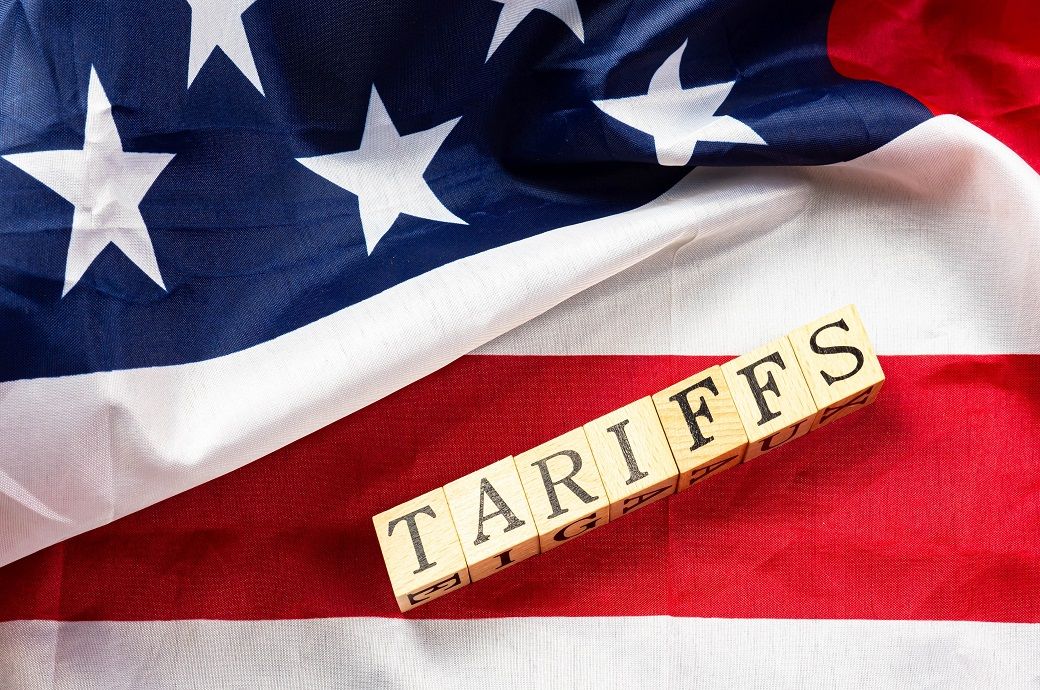
If the US administration imposes a 15-per cent levy, the US ETR would rise to 11.3 per cent.
President Donald Trump reinstated tariffs immediately following the US Supreme Court’s February 20 ruling that invalidated the reciprocal tariffs imposed under the International Emergency Economic Powers Act (IEEPA). The new blanket 10-per cent tariff rate is authorised under Section 122 of the Trade Act of 1974 and expires in 150 days unless extended by Congress.
The 10-per cent blanket reciprocal tariff imposed by the US on most trading partners has reduced the US effective tariff rate (ETR) to 9.4 per cent from 12.7 per cent, Fitch Ratings said.
If a 15-per cent levy is imposed, the ETR would rise to 11.3 per cent.
China has the highest ETR among trading partners, followed by Vietnam, Japan and Brazil.
China’s ETR is around 19 per cent from 29 per cent earlier.
Section 122 permits a maximum rate of 15 per cent but does not allow for tariff adjustments for individual countries.
Prior to the court decision, China was subject to two reciprocal tariffs: a fentanyl tariff of 10 per cent that applied to all imports and a 10-per cent reciprocal tariff on an import base subject to carveouts. The two tariffs have been consolidated into the 10-per cent blanket tariff, reducing China’s ETR to around 19 per cent from 29 per cent, Fitch said in a release.
China still has the highest ETR among major trading partners, followed by Vietnam, Japan and Brazil. Of the United States’ 31 largest trading partners, 26 will see their ETRs decline. Brazil benefits the most, with its ETR decreasing by 18 percentage points (pp) to 11 per cent from 29 per cent.
ETRs for most countries largely remain unchanged following the switch in tariff regimes, and no country will see an increase in its ETR if the Section 122 tariff rate remains at 10 per cent.
Fibre2Fashion News Desk (DS)
Unadjusted, it rose by 2.9 per cent for the 12 months ended January 2026.
Prices for final demand goods declined by 0.3 per cent, the largest decrease since falling 0.7 per cent in March 2025.
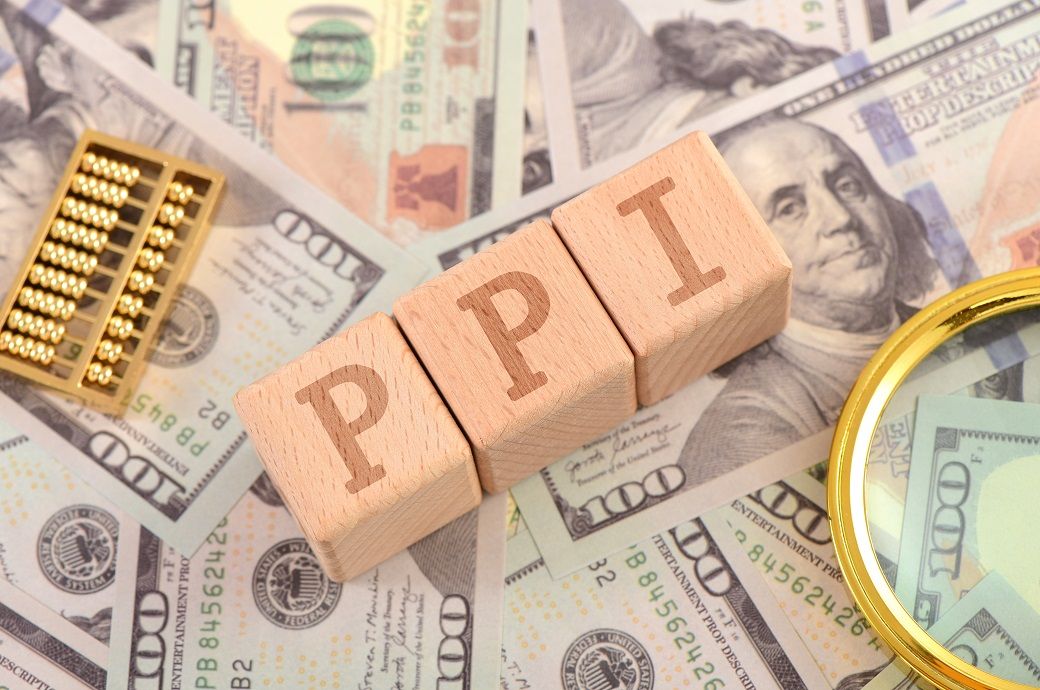
The seasonally-adjusted US producer price index (PPI) for final demand rose by 0.5 per cent in January.
Unadjusted, it rose by 2.9 per cent for the 12 months ended January 2026.
Prices for final demand goods declined by 0.3 per cent, the largest decrease since falling 0.7 per cent in March 2025.
Leading the January decline, the index for final demand energy dropped by 2.7 per cent.
Leading the January decline, the index for final demand energy dropped by 2.7 per cent.
The index for final demand less food, energy and trade services moved up by 0.3 per cent in January, the ninth consecutive increase. For the 12 months ended in January, such prices rose by 3.4 per cent, a BLS release said.
The index for final demand goods less food and energy advanced by 0.7 per cent in the month.
Fibre2Fashion News Desk (DS)
Ind-Ra expects sector revenues to grow around 9 per cent year on year (YoY) in FY26 and 10.5 per cent YoY in FY27 following uneven and subdued growth through FY24 and early FY25; the growth in FY25 was 8 per cent YoY.
Ind-Ra expects India’s apparel retail sector revenues to grow around 9 per cent YoY in FY26 and 10.5 per cent YoY in FY27 following uneven and subdued growth through FY24 and early FY25.
Premium, branded and ethnic players are expected to see steadier, high single-digit growth trends.
Ind-Ra feels value retailers will outperform other segments within apparel, with robust revenue growth.
Ind-Ra feels value retailers will outperform other segments within apparel, with robust revenue growth through healthy same store sales growth and rapid store additions, albeit at a lower profitability.
Healthy growth in operating profit coupled with strong inventory turns is expected to result in value retailers demonstrating stronger-than-industry return indicators and credit metrics.
Premium, branded and ethnic players are expected to see steadier, high single-digit growth trends as consumer confidence rebuilds with a better spread out wedding calendar than in FY26 and early signs of normalisation seen in the first nine months of FY26.
Listed apparel retail players from Ind-Ra’s sample set reported revenue growth of around 10 per cent YoY in these nine months as the government’s consumption push through lower taxation and mild inflation resulted in higher disposable income and improved affordability.
The operating profit margins also improved to 15.6 per cent in the nine months compared to 15.2 per cent in FY25 due to various cost optimisation measures adopted by companies.
Organised retailers are pivoting from aggressive expansion to productivity-led growth. After elevated store additions in FY24-FY25, Indian apparel retailers are moderating store roll-outs, sharpening site selection, right-sizing formats and targeting faster ramp-ups of recent openings, with omni-channel execution and scalable franchise models enhancing reach and capital efficiency, Ins-Ra said in a press note.
It expects store additions to ease to nearly 7 per cent YoY in FY26 and 6 per cent YoY in FY27, even as retail area continues to rise by 9 per cent YoY in FY26 and by 9.5 per cent YoY in FY27, reflecting larger average store sizes and assortments designed to lift footfalls, average transaction values and sales per square foot.
Value and luxury segments are set to lead sector performance. Value formats benefit from GST rationalisation at lower price points, improved affordability, and rising private-label penetration, while luxury gains from a widening affluent base and deeper global-brand access.
Fast fashion continues to capture Gen-Z-led, content-driven demand. Casual and athleisure remain ahead of ethnic-casual and formal wear, in line with comfort- and lifestyle-led dressing trends.
Ind-Ra expects profitability to improve gradually as cost optimisation, better sourcing/mix, disciplined advertising and marketing promotions, and operating leverage offset residual pressures from expansion and fixed costs.
The working capital cycle for value retailers is likely to improve YoY in FY27, due to higher inventory turns and improved store level operating metrics.
Overall, as the consumption upturn broadens and retailers prioritise productivity over pace, Ind-Ra expects a stable, sustainable improvement in revenues and operating metrics for organised apparel retailers over FY26–FY27.
The luxury segment is also expected to benefit from an increase in target customer segment through widening affluent base and deeper global-brand access.
Mid-premium and several incumbent retailers witnessed slower growth in FY25, due to entry price mix-shifts and loss of market share to value retailers. This, coupled with investments in store format revamps, has stressed their margin profiles. Profitability pressures and a dip in inventory turns have slightly weakened credit metrics for segment players.
Fibre2Fashion News Desk (DS)


Apple’s New MacBook Air and MacBook Pro Have New Chips, More Storage, and Higher Prices

Preview of UFC 326: Holloway vs. Oliveira

T20 World Cup: Aleem Dar ‘expressed reservations’ over inclusion of Babar, Shadab

-

 Politics5 days ago
What are Iran’s ballistic missile capabilities?
-
 Business7 days ago
Households set for lower energy bills amid price cap shake-up
-

 Politics5 days ago
US arrests ex-Air Force pilot for ‘training’ Chinese military
-

 Sports5 days ago
Sri Lanka’s Shanaka says constant criticism has affected players’ mental health
-

 Sports1 week ago
Top 50 USMNT players of 2026, ranked by club form: USMNT Player Performance Index returns
-
 Business7 days ago
Lucid widely misses earnings expectations, forecasts continued EV growth in 2026
-
 Business5 days ago
Attock Cement’s acquisition approved | The Express Tribune
-

 Fashion1 week ago
OECD GDP growth slows to 0.3% in Q4 amid mixed trends