Connect with us

Business

Reserves to hit $18b by June | The Express Tribune

Published

on

Reserves to hit b by June | The Express Tribune


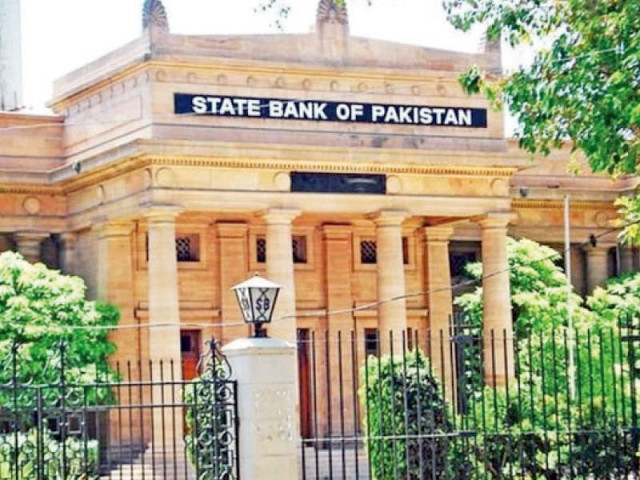
Pakistan’s current account deficit (CAD) declined 86% to $74 million in February compared $519mn in the same month last year, according to the State Bank of Pakistan.—File photo


KARACHI:

The State Bank of Pakistan (SBP) has anticipated that its foreign currency reserves will rise to $18 billion by the end of June 2026, providing nearly three months of import cover. It will increase further in the next fiscal year.

It made the forecast in its bi-annual Monetary Policy Report, released on Monday, as part of efforts to improve communication with external stakeholders and bring greater transparency to monetary policy decision-making. The report reviews the macroeconomic developments and outlook that guided the Monetary Policy Committee’s decisions since the publication of the August 2025 Monetary Policy Report.

The report noted that macroeconomic conditions and the outlook had improved, supported by a prudent monetary policy stance and continued fiscal consolidation.

Inflation is projected to remain within the 5-7% target range during most of FY26 and FY27, despite some near-term volatility. The current account deficit is forecast to remain contained at 0-1% of GDP in FY26, with a higher trade deficit expected to be partly offset by robust workers’ remittances and planned official inflows. “As a result, the SBP’s forex reserves are expected to rise to $18 billion by June,” it said.

According to the report, economic activity has strengthened, amidst ongoing macroeconomic stabilisation, ease in financial conditions and the recent reduction in the Cash Reserve Requirement to 5%. Accordingly, economic growth prospects have improved, and real GDP growth is now projected in the range of 3.75-4.75% for FY26 and is expected to increase further in FY27.

The Monetary Policy Report also underscored the evolving risks to the macroeconomic outlook. While the risk of widespread impact from recent floods has receded, uncertainty from global tariff-related developments persists, alongside volatility in global commodity prices.

Domestically, challenges from below-target revenue collection and the impact of potential adverse climate events remain sources of vulnerability for the outlook of inflation, external account and GDP growth. “In this context, it is important to speed up progress on structural reforms to increase the economy’s resilience to adverse shocks and to improve productivity and plug losses of state-owned enterprises.”

The report features four box items that discuss key macroeconomic concepts related to the monetary policy. One box provides an update about the monetary policy transmission mechanism in light of the sizable earlier reduction in policy rate from June 2024 onwards and the transmission lag of six to eight quarters.

Another box explains the use of heat maps as an alternative tool for gauging the level of economic activity by consolidating signals from multiple indicators across different sectors into a single visual summary.




Source link

Business

Your Car Number Will Be Scanned For Automatic Toll Collection. Do You Still Need FASTag?

Published

on

Your Car Number Will Be Scanned For Automatic Toll Collection. Do You Still Need FASTag?


Last Updated:

Automatic toll collection via cameras and ANPR starts in March; FASTag will still be needed for payments on expressways and national highways

India has more than 1,000 toll plazas, many of which witness long queues of vehicles. (PTI)

India has more than 1,000 toll plazas, many of which witness long queues of vehicles. (PTI)

The Ministry of Road Transport and Highways is preparing to introduce automatic toll collection for vehicles travelling on expressways and national highways, a move that could begin on select stretches as early as March 2026. Under the proposed system, cameras will scan vehicle number plates and toll charges will be deducted from the driver’s account based on the distance travelled.

At present, toll is collected on nearly 45,000 kilometres of the country’s 1.5 lakh kilometre national highway and expressway network. India has more than 1,000 toll plazas, many of which witness long queues of vehicles, particularly when cars do not have FASTag or when their FASTag accounts are inactive or blocked. These delays often increase waiting time for commuters.

According to the ministry, the new plan involves removing physical toll barriers and introducing Automatic Number Plate Recognition (ANPR) technology for toll collection. Cameras installed along highways will read vehicle number plates and calculate the charges automatically. Tenders for implementing this technology have already been issued at some locations, and the system is expected to be gradually expanded across the country.

Despite the introduction of camera-based toll collection, FASTag will continue to remain in use. Officials from the Ministry of Road Transport and Highways have clarified that even after the new system is introduced, drivers will still need FASTag, as toll charges will continue to be deducted through the existing payment mechanism.

Since many FASTag accounts are linked to digital wallets rather than directly to bank accounts, the current deduction process will remain in place alongside the new technology.

Click here to add News18 as your preferred news source on Google.

Follow News18 on Google. Join the fun, play games on News18. Stay updated with all the latest business news, including market trends, stock updates, tax, IPO, banking finance, real estate, savings and investments. To Get in-depth analysis, expert opinions, and real-time updates. Also Download the News18 App to stay updated.
News business Your Car Number Will Be Scanned For Automatic Toll Collection. Do You Still Need FASTag?
Disclaimer: Comments reflect users’ views, not News18’s. Please keep discussions respectful and constructive. Abusive, defamatory, or illegal comments will be removed. News18 may disable any comment at its discretion. By posting, you agree to our Terms of Use and Privacy Policy.

Read More


Source link

Continue Reading

Business

Coleen Rooney ups stake in Applied Nutrition as it targets working mothers

Published

on

Coleen Rooney ups stake in Applied Nutrition as it targets working mothers


Coleen Rooney has upped her stake in Applied Nutrition as the health firm aims to attract a wider cohort of consumers including working mothers.

The TV personality, and wife of ex-footballer Wayne Rooney, has significantly increased her shareholding in the company, it said.

It is understood that Ms Rooney has roughly doubled her investment, which remains below the 3% threshold requiring a listed business to disclose it to the London Stock Exchange.

The Liverpool-based company, which is also backed by retailer JD Sports, launched its shares on the London stock markets in 2024 and has reported a growth in sales since.

Ms Rooney was one of the investors in the firm’s flotation after becoming a brand ambassador for the group, although the size of her shareholding has never been disclosed.

She is also the face of a collection of  products for Applied Nutrition, including collagen and powders that target sleep, immunity, hydration and debloating.

Her involvement has helped the business capture a wider demographic of customers, as the sports nutrition market is typically viewed as a more male-dominated field.

Coleen Rooney said: “Combining a healthy lifestyle with exercise helps me feel good about myself and provides the energy required for a busy mum of four boys especially now that I have gone back to working on several projects and opportunities.”

She said she “couldn’t be happier” about her decision to invest in the growing business, adding: “I am excited about the future of the company as it expands into new markets and products and have decided to invest further.”

Applied Nutrition’s chief executive Thomas Ryder said: “Coleen has played an important role in broadening our customer base and increasing brand awareness among a wider, health-conscious audience.”

Applied Nutrition mainly operates by selling its products to other businesses, including retailers, grocers, gyms and sports clubs, targeting consumers from professional athletes to people wanting to lose weight.


Source link

Continue Reading

Business

Aye Finance IPO Day 2: GMP Remains Zero; Apply Or Not? Check Price, GMP, Financials, Recommendations

Published

on

Aye Finance IPO Day 2: GMP Remains Zero; Apply Or Not? Check Price, GMP, Financials, Recommendations


Last Updated:

Aye Finance IPO GMP: Unlisted shares of Aye Finance Ltd trade at Rs 129 apiece in the grey market, which is zero premium over the upper IPO price of Rs 129.

Aye Finance IPO GMP.

Aye Finance IPO GMP.

Aye Finance IPO: The initial public offering (IPO) of non-banking financial company Aye Finance Ltd is witnessing its second day of bidding on Tuesday, February 10. The Rs 1,010-crore IPO, whose price band has been fixed in the range of Rs 122 to Rs 129 apiece, will be closed on February 11. Till 5:50 pm on the second day of bidding on Tuesday, the IPO got a muted 0.16x subscription, receiving bids for 72,85,960 shares as against 4,55,32,785 shares on offer.

Its retail category got a 0.47x subscription. The non-institutional investors (NII) category has received a 0.02x subscription. The qualified institutional buyers (QIBs) category got 0.13x subscription.

Also Read: Fractal Analytics IPO Day 2: Subscription Remains Muted; Should You Apply? Price, GMP, Recommendations

Aye Finance IPO GMP Today

According to market observers, unlisted shares of Aye Finance Ltd were trading at Rs 129 apiece in the grey market, which is zero premium over the upper IPO price of Rs 129. It indicates a flat or negative listing. Its listing will take place on February 16, Monday.

The GMP was zero on Tuesday also.

The GMP is based on market sentiments and keeps changing. ‘Grey market premium’ indicates investors’ readiness to pay more than the issue price.

Aye Finance IPO Lot Size

The IPO has a lot size of 116 shares. At the upper end of the price band, a retail investor will need to invest a minimum of Rs 14,964 for one lot. For small non-institutional investors (sNII), the minimum application size is 14 lots, or 1,624 shares, translating into an investment of Rs 2,09,496. Big non-institutional investors (bNII) must apply for at least 67 lots, or 7,772 shares, requiring an investment of Rs 10,02,588.

Aye Finance Mobilises Rs 454 Crore From Anchor Investors

Aye Finance on Friday collected Rs 454.5 crore from anchor investors, ahead of its initial share sale opening for public subscription. The anchor book saw participation from a mix of domestic mutual funds, insurance companies and foreign portfolio investors.

Aye Finance IPO: More Details

The IPO comprises a fresh issue of equity shares worth up to Rs 710 crore and an offer for sale (OFS) of up to Rs 300 crore by current shareholders.

The company proposes to utilise the net proceeds from the fresh issue to strengthen its capital base, supporting future capital requirements arising from the expansion of its business and asset base.

Aye Finance is scheduled to list on the BSE and NSE on February 16.

Classified as a middle-layer NBFC, Aye Finance focuses on lending to micro and small enterprises (MSEs), a segment that remains largely underserved by traditional banks. The company provides small-ticket business loans for working capital and expansion, secured through hypothecation of business assets or property, across manufacturing, trading, services and allied agriculture sectors.

As of September 30, 2025, Aye Finance operated across 18 states and three union territories, serving around 5.9 lakh active customers, with assets under management (AUM) of Rs 6,027.6 crore.

Retail investors can apply for the issue in a lot size of 116 shares and multiples thereof, translating into a minimum investment of Rs 14,964 at the upper end of the price band.

Under the allocation structure, qualified institutional buyers (QIBs) will receive 75 per cent of the issue, while non-institutional investors (NIIs) and retail investors will be allotted 15 per cent and 10 per cent, respectively.

The IPO is being managed by Axis Capital, IIFL Capital, JM Financial and Nuvama Wealth as book-running lead managers, while KFin Technologies is the registrar to the issue.

Click here to add News18 as your preferred news source on Google.

Follow News18 on Google. Join the fun, play games on News18. Stay updated with all the latest business news, including market trends, stock updates, tax, IPO, banking finance, real estate, savings and investments. To Get in-depth analysis, expert opinions, and real-time updates. Also Download the News18 App to stay updated.
News business ipo Aye Finance IPO Day 2: GMP Remains Zero; Apply Or Not? Check Price, GMP, Financials, Recommendations
Disclaimer: Comments reflect users’ views, not News18’s. Please keep discussions respectful and constructive. Abusive, defamatory, or illegal comments will be removed. News18 may disable any comment at its discretion. By posting, you agree to our Terms of Use and Privacy Policy.

Read More


Source link

Continue Reading

Trending