

Fashion
Rieter announces details on EGM agenda

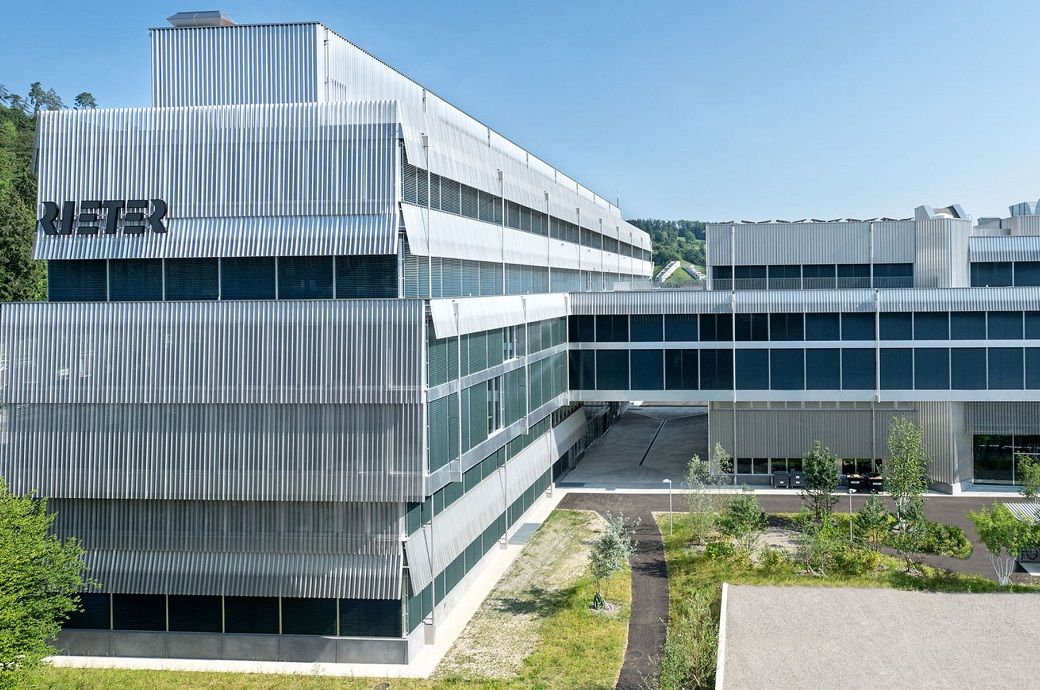
Rieter Holding Ltd. is publishing the final details of the agenda of today’s Extraordinary General Meeting, as announced in the invitation of August 25, 2025. This does not involve any new motions, merely serving instead to clarify the existing motions. It also represents publication of the final terms and procedure for the proposed issuing of subscription rights in the amount of around CHF 400 million (~$505.9 million) and the proposed private placement in the amount of around CHF 77.4 million (~$97.90 million) .
Rieter has confirmed final Extraordinary General Meeting (EGM) agenda details, clarifying motions on a ~$505.9 million rights issue and ~$97.90 million private placement to fund its planned Barmag acquisition.
Major shareholders Peter Spuhler (33 per cent) and Martin Haefner (10 per cent) back the deal.
UBS will underwrite the rights issue, with trading of new shares set for October 2, 2025.
In addition to bank financing, the planned capital increase in two tranches will fund the planned acquisition of OC Oerlikon’s Barmag division. The two largest Rieter shareholders support the transaction. The largest Rieter shareholder, Peter Spuhler via his ownership of PCS Holding AG (approx. 33% shareholding), has committed to participate in the subscription rights issue on a pro rata basis by exercising his subscription rights and investing additional capital as part of the private placement. After completion of the capital increase – tranche A and tranche B – Peter Spuhler will continue to hold a stake of approx. 33% through his PCS Holding AG. The second largest Rieter shareholder, Martin Haefner via his ownership of BigPoint Holding AG (approximately 10% shareholding), has also committed to participate in the subscription rights issue on a pro rata basis by exercising his subscription rights and to invest additional capital as part of the private placement. The acquisition of the Barmag division is expected to be completed by the end of the 2025 financial year, subject to regulatory approval.
With reference to the invitation to the Extraordinary General Meeting sent on August 25, 2025, the Board of Directors of Rieter Holding Ltd. has set the final details of the proposals concerning the ordinary capital increase in tranche A (rights issue) and tranche B (private placement) as well as the reintroduction of the capital band in accordance with agenda items 2.1, 2.2 and 3. of the invitation as follows:
With regard to agenda item 2.1 Ordinary capital increase – tranche A (rights issue), the Board of Directors has decided to submit a definitive proposal to increase the share capital, which is to be reduced to CHF 46 723.63, by CHF 116 809.75 to CHF 1 214 814.38 by issuing 116 809 075 registered shares at a nominal value of CHF 0.01.
With regard to agenda item 2.2 Ordinary capital increase – tranche B (private placement), the Board of Directors has decided to submit a definitive proposal to increase the share capital from CHF 1 214 814.38 by CHF 145 762.70 to CHF 1 360 577.08 by issuing 14 576 270 registered shares at a nominal value of CHF 0.01.
With regard to agenda item 3. (reintroduction of the capital band), the Board of Directors has decided to submit a definitive proposal to create a capital band in accordance with Art. 653s et seq. of the Swiss Code of Obligations (CO) with a lower limit of CHF 1 292 548.23 and an upper limit of CHF 1 496 634.78 and to authorize the Board of Directors to increase the share capital within this band until September 18, 2030 (capital band) by issuing up to 13 605 770 registered shares with a nominal value of CHF 0.01 each or by increasing the nominal value of the existing registered shares and/or by canceling 6 802 885 registered shares with a nominal value of CHF 0.01 each or by reducing the nominal values of the existing registered shares.
If the proposal of the Board of Directors regarding agenda item 2.1 Ordinary capital increase – tranche A (rights issue) is approved, existing shareholders will each receive one subscription right for each registered share they hold on September 22, 2025 after the close of trading.
The new registered shares will be offered to existing shareholders at a ratio of 25 new shares for 1 subscription right held, subject to legal restrictions and the approval by the Extraordinary General Meeting of the capital increase proposed by the Board of Directors. The subscription rights will be admitted to trading on the SIX Swiss Exchange and can be traded from September 23, 2025 to September 29, 2025. The subscription rights can be validly exercised from September 23, 2025 until October 1, 2025 at 12:00 noon (CEST) and thereafter expire without compensation.
Shares that are not subscribed by existing shareholders exercising their subscription rights may be offered to other investors. The number of new shares acquired by existing shareholders and the maximum number of shares to be placed under the share offer are expected to be announced on October 1, 2025 after the close of trading on the SIX Swiss Exchange.
The offer price for the new shares in tranche A (rights issue) is CHF 3.43. The offer price for the new tranche B shares (private placement) is CHF 5.31. The listing and first trading day of the new registered shares from the ordinary capital increase, tranche A and tranche B, on the SIX Swiss Exchange are expected to take place on October 2, 2025 while the completion and settlement of the subscription rights issue and the share offering are expected to take place on October 6, 2025.
Rieter Holding Ltd. has mandated UBS to carry out the rights issue, which has underwritten the rights issue.
Expected schedule of capital increase tranche A (rights issue):
Details of the rights issue and private placement can be found in the prospectus, which is expected to be available today after the close of trading following the Extraordinary General Meeting.
Note: The headline, insights, and image of this press release may have been refined by the Fibre2Fashion staff; the rest of the content remains unchanged.
Fibre2Fashion News Desk (HU)









The increase was driven primarily by higher reinvested earnings and intra-company loans, indicating continued engagement by existing investors with Bangladesh.
Reinvested earnings rose by 318.25 per cent, from $103.79 million in 2024 to $434.10 million in 2025, while intra-company loans increased by 25.68 per cent, from $621.96 million to $781.68 million.
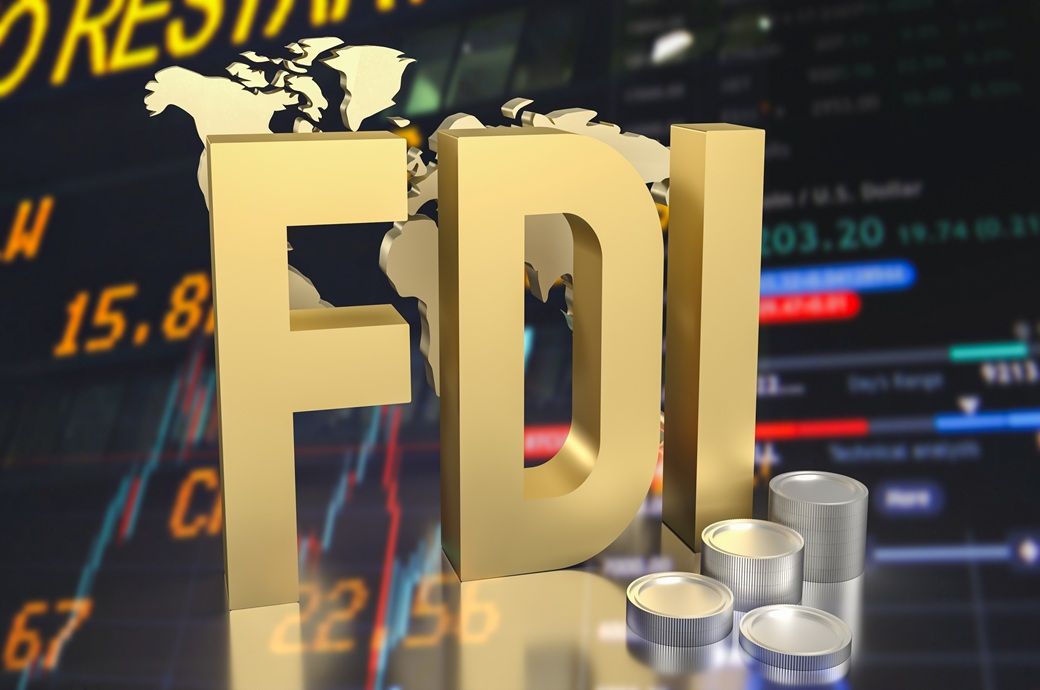
Bangladesh’s net FDI inflows increased by 39.36 per cent last year to $1,770.42 million compared with $1,270.39 million in 2024, the Bangladesh Bank said.
The increase was driven primarily by higher reinvested earnings and intra-company loans.
Reinvested earnings rose by 318.25 per cent, from $103.79 million in 2024 to $434.10 million in 2025, while intra-company loans rose by 25.68 per cent.
Equity capital remained broadly stable, rising by 1.84 per cent, from $544.64 million to $554.64 million in 2025, a release from Bangladesh Investment Development Authority said.
Greenfield project announcements declined by 16 per cent in 2025.
Fibre2Fashion News Desk (DS)
The company’s adjusted EBITDA, excluding Employee Stock Option Plan (ESOP) expenses, rose around 14 per cent YoY to ₹468 crore, while EBITDA margin improved by 20 basis points to around 9.3 per cent. Excluding the reciprocal tariff impact of around ₹36 crore and incremental losses of around ₹13 crore in Bihar and Guatemala, adjusted EBITDA margin stood at around 10.3 per cent.
Pallab Banerjee, managing director, Pearl Global Industries, said: “FY26 marked the company’s second consecutive year of double-digit growth and improved profitability. This performance further solidifies the position of Pearl Global’s diversified operating model and disciplined execution across geographies.”
Pearl Global Industries has reported its highest-ever FY26 revenue of ₹5,025 crore (~$523.93 million), up 11.5 per cent YoY, driven by volume growth and value-added products.
PAT rose 17 per cent to ₹270 crore (~$28.15 million), while Q4 revenue hit ₹1,314 crore (~$137 million).
The company shipped 78.1 million pieces.
Its net worth stands at ₹1,438 crore (~$149.93 million).
He said that geopolitical shifts and Gulf conflicts could lead to energy cost escalation, affecting raw material and logistics costs. However, the company remains prepared to manage these headwinds, supported by its diversified manufacturing base, strong order book, and broad market presence.
The profit after tax (PAT) increased 17 per cent YoY to ₹270 crore (~$28.15 million), the company said in a press release.
On a standalone basis, FY26 revenue stood at ₹1,081 crore, while adjusted EBITDA was ₹67 crore, with EBITDA margin improving by 60 basis points to 6.2 per cent, mainly due to cost restructuring. Standalone PAT rose to ₹69 crore from ₹55 crore in the previous year.
The company’s net worth stood at ₹1,438 crore (~$149.93 million) as of March 31, 2026, compared with ₹1,146 crore a year earlier.
“In FY26, Group delivered another year of resilient performance against a complex geopolitical backdrop. Group achieved, among others, two major milestones this year: revenue crossed INR 5,000 crore mark and installed capacity surpassed 100 million pieces per annum,” said Pulkit Seth, vice-chairman and non-executive director, PGIL.
Seth added that the global apparel industry faced tariff-related disruptions during FY26, with the company’s India operations impacted by tariffs and penal duties imposed by the US. However, he added that Pearl Global leveraged its diversified, multi-country manufacturing presence to mitigate these challenges and deliver double-digit growth.
For the fourth quarter (Q4) of FY26, PGIL posted its highest-ever quarterly revenue of ₹1,314 crore (~$137 million), up 6.9 per cent YoY. Adjusted EBITDA rose 13.7 per cent to ₹135 crore, with margin at 10.3 per cent, the highest EBITDA margin recorded by the company in any quarter. PAT for the quarter stood at ₹81 crore, up 24.6 per cent YoY, PGIL said in a press release.
Standalone revenue during the quarter stood at ₹304 crore, adjusted EBITDA at ₹24 crore, and PAT at ₹14 crore.
PGIL shipped its highest-ever volumes in Q4 FY26 and FY26, at 22 million pieces and 78.1 million pieces respectively. Its annual installed capacity crossed 100 million pieces, reaching around 101 million pieces.
The ongoing capex in Bangladesh is expected to be completed by the first half of FY27 and will add around 6-7 million pieces of capacity during the year.
Fibre2Fashion News Desk (SG)
PTA prices recorded notable declines across key Asian benchmarks, tracking crude oil weakness rooted in evolving geopolitical signals. The correction was broad-based, spanning China, Southeast Asia, and South Korea, while India**;s CIF price held steady reflecting the lag in import contract structures and limited spot availability in the domestic market on the day.
The *** per cent Polyester Yarn market witnessed a slightly negative trend during the assessed period, with mild price corrections observed across both yarn grades in the Asia Free on Board (FOB) China market. Prices for **s (*** per cent polyester yarn) declined from around $*.***/kg to nearly $*.***/kg, registering a decrease of approximately *.** per cent.


Bangladesh net FDI inflows up 39.36% in 2025

US weighs drone threat from Cuba: report

India’s Pearl Global’s FY26 revenue crosses $521 mn milestone

-

 Entertainment5 days ago
Conan O’Brien hat tricks as Oscar host
-

 Tech1 week ago
I Tried the Best Captioning Smart Glasses, and Only One Leads the Pack
-

 Tech1 week ago
Could Contact-Tracing Apps Help With the Hantavirus? Not Really
-

 Fashion5 days ago
Italy’s Zegna Group’s Q1 growth boosted by strong organic performance
-

 Sports1 week ago
Bobby Cox, legendary Atlanta Braves manager who led 1995 World Series champions, dead at 84
-

 Entertainment1 week ago
Martin Short: Facing tragedy with joy
-

 Entertainment1 week ago
Tom Brady gets back at Kevin Hart during Netflix roast
-

 Entertainment1 week ago
Martha Stewart: How to make an omelet