

Tech
Right-Wing Influencers Are Turning to Foreign Affairs


These trips have seemingly influenced the way traditional politicians spread diplomatic messages on their own social media accounts. When the Trump administration first partnered with the Nayib Bukele government this spring to send migrants detained in the US to the El Salvadoran megaprison Terrorism Confinement Center (CECOT), government officials traveled to the prison, and images of the visits were blasted online. Department of Homeland Security secretary Kristi Noem stood in front of dozens of CECOT’s prisoners who were lined up behind the prison’s bars where she took photos and videos warning immigrants that this prison could be “one of the consequences” they face if they’re caught unlawfully entering the US.
The strategy hasn’t been confined to explicitly political influencers either. In July, Israel prime minister Benjamin Netanyahu joined popular YouTuber group the Nelk Boys for their Full Send Podcast. The more than an hourlong podcast provided Netanyahu with a new audience composed primarily of young men who rarely tune into traditional news, allowing the world leader to reach a coveted demographic credited with helping Trump win reelection in 2024. Netanyahu’s team reached out to Full Send to schedule the interview, John Shahidi, who manages the Nelk brand, tells WIRED.
“We are so not qualified to do this,” Kyle Forgeard said at the beginning of the podcast, shortly before Netanyahu joined. “That’s what’s interesting about this.”
The podcast also showed how these kinds of political collaborations could blow up in the creators’ faces. Clips of Nelk’s interview with Netanyahu drew fierce criticism from both the right and left online, with critics accusing the Full Send crew of trivializing Israel’s war on Gaza and extending Netanyahu a platform to spread propaganda.
“Asking him if he prefers Burger King or McDonald’s … while people are starving … this is insane,” one YouTube commenter wrote. (After going on the Israel365 trip and getting some similar blowback, Zirkle “parted ways” with Bannon’s War Room, Axios reported.)
For foreign governments seeking approval from the MAGA base, meeting with these creators provides them with insight on US voters and a platform to speak directly to them.
“If you want to understand MAGA, you have to understand the online ecosystem that fuels our movement. That’s why it’s no surprise countries around the world are eager to engage with creators who have the ear of the administration and finger on the pulse,” says CJ Pearson, a MAGA-aligned creator.
Conducting diplomacy via influencer may in some cases have the additional advantage of falling into blind spots in social media regulation and existing laws governing lobbying, allowing creators to operate on behalf of foreign governments without traditional disclosures.
“Part of the challenge with political influencers is that it’s unclear the extent to which they’re being paid by various competing interest groups and organizations,” says Samuel Woolley, an associate professor at the University of Pittsburgh who studies digital propaganda. “Political influencers exist in this liminal space where they’re one part campaign mouthpiece and another part independent actor.”
This points to what’s new—not trips and conferences for potentially sympathetic and influential people but rather using them to establish a new type of diplomatic messenger. Partisan influencers with millions of followers can amplify foreign policy talking points on behalf of the MAGA movement and any foreign governments eager to access their platforms—all beyond existing rules and oversight.
“It makes them very valuable,” says Woolley, “given discrepancies and extant holes in the law to political organizations that are hoping to do things a little more under the table and in a little bit more of a casual or less trackable manner.”







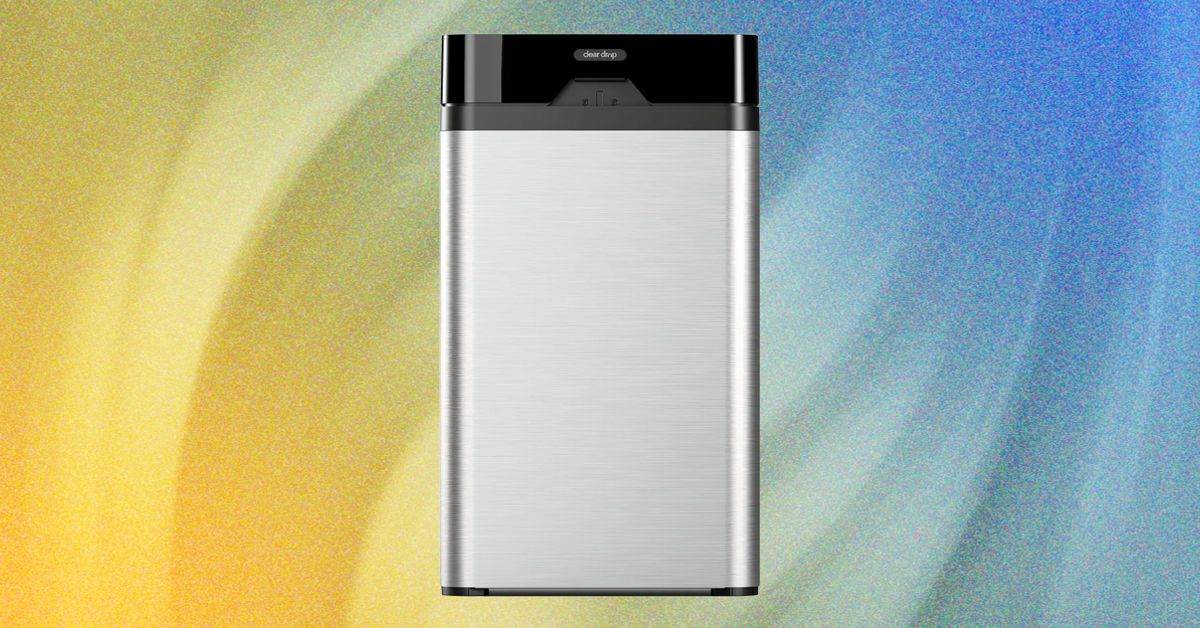
Soft plastics are notorious for jamming sorting machines, slipping through processing lines, and wreaking havoc on the environment. They’re also not accepted in most municipal curbside recycling programs.
Facilities for recycling these types of plastic exist, but getting waste to these locations clean and free of what some call “wishful recycling” items (compostable cups, plastic utensils) is such a challenge that the majority of soft plastics, even the bags recycled at the front of grocery stores, end up in the trash. The SPC is what Arbouzov calls a “pre-recycling device,” designed to simplify this stream and deliver plastic that’s contained, traceable, and more likely to make it through the system.
I tried to envision how the blocks would turn into patio furniture, as advertised, but didn’t learn exactly how until months later, when Arbouzov sent me a video of the blocks at their final destination—a facility in Frankfort, Indiana, that specializes in processing polyethylene and polypropylene films. The blocks get shredded into crumbles resembling, at least on video, handfuls of wet newspaper, which are then compressed into composite decking, chairs, garden edging, and more.
Courtesy of Clear Drop
Courtesy of Clear Drop
“The full cycle from mailing a block to it entering recycling processing typically takes a few weeks,” Arbouzov said, “depending on shipping time and batching schedules.” Right now, the Frankfort location is the only facility processing the blocks, but Arbouzov said he hopes this is only temporary.
“Our goal is to shift more of this processing closer to where the material is generated, so blocks can move in bulk through regional recycling infrastructure rather than through mail-based logistics,” he said. “The mail-back system is essentially a bridge that allows the material to be captured today while that larger infrastructure develops.”
Recycling, Rewired
I found that my household of three was able to produce a block every couple of weeks, which quickly outpaced the provided supply of mailers. As the blocks started piling up on the floor of my office, I found myself wishing the SPC made something useful for consumers. Spoons, straws, 3D-printing filament … anything that could be used at home.
However, a 2023 Greenpeace report found that recycling plastic can actually make it even more toxic than it already is—heating it can not only cause existing chemicals to escape into the air and water supply, but even create new ones, like benzene. Would I want this in my house? Does recycled plastic actually belong in a circular economy? I asked Arbouzov what he thought.
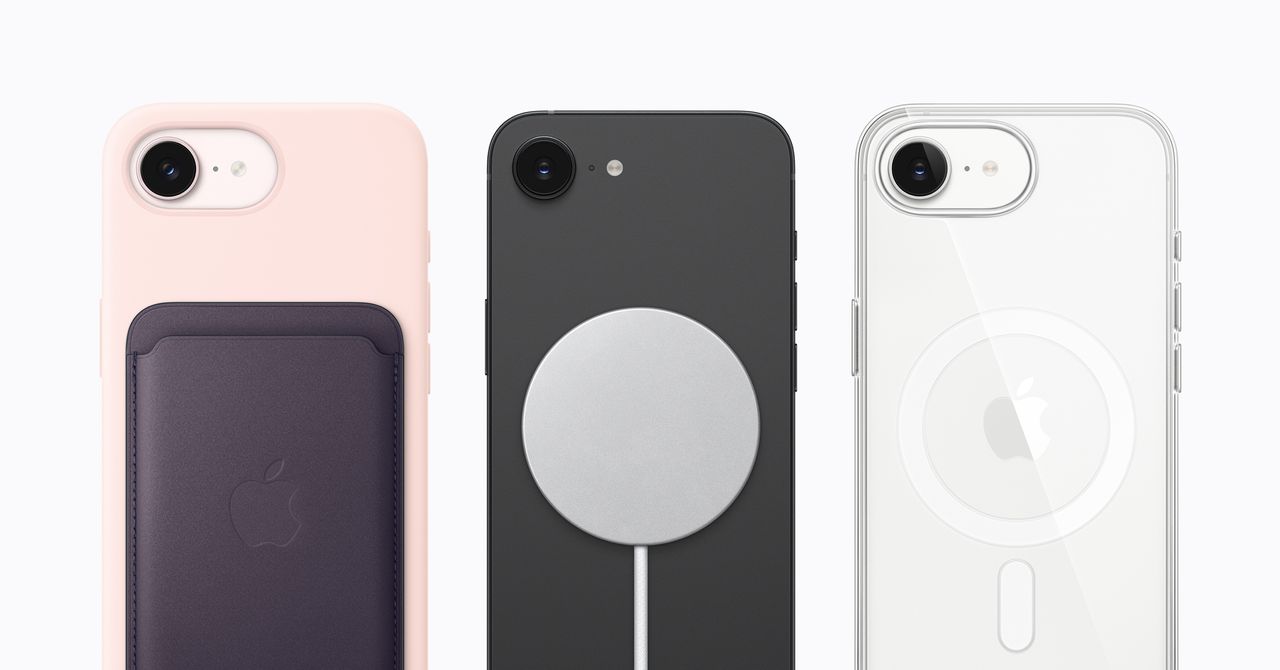
Predating the launch of Moto Mods in 2016, the first batch of Jolla The Other Half concepts included back covers with an extra E Ink display, an infrared camera, and an Angry Birds tie-in that activated themes and ringtones. But probably the most popular was a Blackberry/Nokia Communicator-style slider keyboard made and sold by two entrepreneurs from the original Jolla community. That trend is back in—at CES 2026, accessory company Clicks showed off a magnetic keyboard accessory you can slap on the back of any Qi2 or MagSafe smartphone, though it uses Bluetooth for connectivity.
Quite a bit has changed in what’s achievable, not least more bandwidth, more capability, and more accessible, high-quality 3D printing. “We have seven pogo pins [on the Jolla Phone] which give you the capability to get power out and power in,” says Jolla CEO Sami Pienimäki. “So you can do maybe wireless charging, and you can power external circuit boards.” Pienimäki imagines E Ink interfaces or low-bandwidth radios on the back of its upcoming phone—it has an I3C interface, which delivers bit rates up to 12 megabits per second, allowing data to flow between the phone and the mod, enabling new kinds of smarter modular accessories.
Jolla has promised to release the final phone specifications by the end of the month, with shipping due for the first preorder customers at the end of June. Pienimäki teases that it’s “tempting” for him to release one of Jolla’s own internal concepts for a TOH back cover even earlier as “a showcase of what you can actually do.” (The Jolla Phone doesn’t have FCC approval in the US, but the company is considering a US launch in the future.)
With more than 10,000 preorders since December 2025, Jolla is back in business but still far from mainstream. So why, despite plenty of internet hype over the years, did truly modular phones never quite take off?
“During the LTE days, there was thinking that these devices would morph into ‘cloud phones,’ where the rest of the phone could be cost-optimized,” Fieldhack says. “Swappable parts and lower costs, as most of the compute would be done in the cloud.”
But things changed as flagship phones went from costing $350 to around $1,000. Both the camera and media production and consumption became much more important: “Great displays, great cameras, multiple cameras, more memory, better sound and mics, as well as more elegant and thin devices—this is not easily done on a modular smartphone,” Fieldhack says. “There are huge compromises, and phones are thicker and heavier with less performance. Then, agentic AI, on-device for lower costs and better security, made modular design even less optimal.”
Repairable Modules
One strong and emerging argument for true hardware modularity is repairability. Another European smartphone maker, Fairphone, has been making that case for over a decade. “It’s about thinking about how do we group the actual phone itself into modules?” says Fairphone chief technology officer Chandler Hatton. The latest FairPhone Gen 6 smartphone is made up of 12 modules. A customer sitting at the kitchen table with a single T5 screwdriver (included) and a guitar pick can repair the phone quickly, easily, and cheaply.

BT has announced a 10-year deal worth up to £200m with Northern Ireland Electricity Networks (NIE Networks) to deliver enhanced connectivity, cyber security and IT to support critical services for homes and businesses across the country.
Established in 1993, when the business was privatised and employing over 1,500 people, NIE Networks is responsible for the safe, secure and reliable supply of electricity to 966,000 homes, farms and businesses across Northern Ireland, and is also the operator for its distribution network.
The business was acquired by Irish energy company ESB in December 2010, and operates as an independent organisation with its own board and management teams, and separate regulation via the Utility Regulator for Northern Ireland.
NIE also owns the electricity network across the province, consisting of approximately 2,300km of transmission network and 58,800km of distribution network with 340 major substations, investing around £100m in the network each year.
Electricity networks are part of the critical infrastructure that keeps Northern Ireland running, and they rely on technology that is secure, reliable and resilient by design. Fundamentally, the deal will support NIE Network’s digital transformation, which aims to modernise the key services and infrastructure that provide electricity across Northern Ireland.
Technologically, the partnership with BT is designed to provide the energy company with a suite of services including improved network infrastructure, strengthened connectivity and a team of dedicated professionals to guard against cyber security threats. BT will also be responsible for ensuring high-quality service and support across the business, day-to-day management of network infrastructure, and data hosting.
Initially, the contract will run for five years, with the option to extend by up to another 10 years. Another key component of the deal will be supporting local jobs, building digital skills and creating supply chain opportunities across Northern Ireland.
The deal is also intended to enable a move to more sustainable infrastructure and networks, supporting NIE Networks to reach their sustainability and net zero ambitions.
“This multi-year partnership is a win-win for Northern Ireland’s economy, supporting local jobs, skills development and supply-chain opportunities,” said Rohan Kapoor, chief information officer of NIE Networks.
“The collaboration will also help meet Northern Ireland’s energy needs, increasing our technological capabilities and enabling further electrification, renewables integration and emerging flexibility markets, all of which have a positive impact on the Northern Ireland economy and the NI Executive’s net zero targets.”
Chris Sims, chief commercial officer at BT Business, said: “Electricity networks are part of the critical infrastructure that keeps Northern Ireland running, and they rely on technology that is secure, reliable and resilient by design. That’s where BT comes in. With evolving cyber threats, protecting essential services is more important than ever, and organisations rely on digital connections they can trust.
“With our experience in supporting critical services and our long-standing presence in Northern Ireland, we are in a unique position to provide the secure, trusted connectivity and specialist expertise that will help strengthen the network for years to come.”
BT Group has a large presence in Northern Ireland, employing more than 3,400 people, and says that its work provides an economic boost of £630m in the country. In 2023, it officially unveiled a multimillion-pound refurbishment of its flagship Belfast Riverside office, boasting technology and collaboration spaces for colleagues from its EE, BT Business and Openreach units.


After Trump’s sanction waiver, Reliance Industries procures 5 million barrels of Iran crude oil: Report – The Times of India

Kate Hawley wins Best Costume Design for ‘Frankenstein’ at Oscars 2026

Zayn Malik sends fans into meltdown with new music video

-

 Entertainment1 week ago
Strategic oil stocks to be released ‘immediately’ in Asia and Oceania: IEA
-
 Business1 week ago
UK looking at all options to secure Strait of Hormuz, says Ed Miliband
-
 Tech7 days ago
Justice Department Says Anthropic Can’t Be Trusted With Warfighting Systems
-

 Sports6 days ago
March Madness 2026 – How to watch in SA, start time, schedule, TV channel for NCAA championship basketball tournament
-

 Fashion1 week ago
Trump signs order to combat fraudulent ‘Made in America’ labels
-
 Business1 week ago
Stocks To Watch: Tata Motors, IndiGo, Jindal Stainless, GMR Airports, Hindalco, And Others
-

 Sports1 week ago
Men’s March Madness 2026 bracket: Get to know all 68 teams
-
 Business1 week ago
Gas supply crunch a worry for AC makers ahead of peak season – The Times of India