Business
Risk-averse capital drives hybrid deals | The Express Tribune
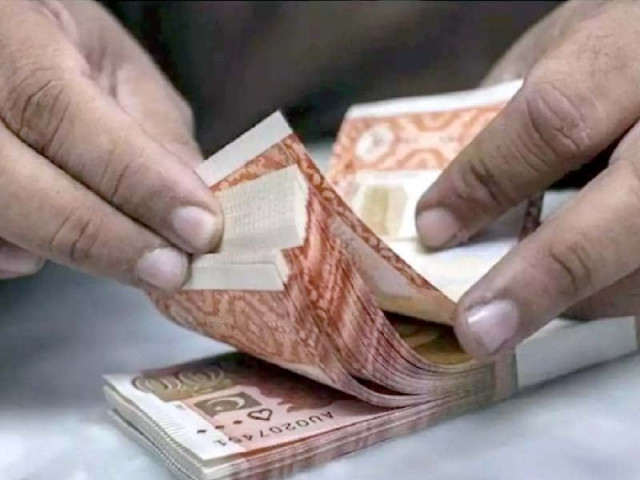
The central bank injected financing at a stable rate of 17.25% compared to previous injections made at 17.04% about a week ago. photo: Afp
KARACHI:
Pakistan’s startup ecosystem, once a headline-grabbing post-Covid-19 success story that attracted aggressive venture capital chasing growth and buzzworthy “disruption,” is now entering a more cautious and structurally different phase.
With investors increasingly prioritising risk-adjusted returns and shifting capital towards safer assets such as gold, the funding landscape is undergoing a transformation marked by a decisive move away from speculative equity rounds towards hybrid financing structures that now dominate capital flows.
The shift was highlighted during Invest2Innovate (i2i)’s “Ecosystem Signals 2026” event, where industry leaders discussed the findings of Pakistan’s Capital Landscape Brief 2024-2025 and outlined emerging investment trends shaping the ecosystem. Aleena Khan, Deputy Director Growth & Strategy at i2i, highlighted that total startup funding doubled to $74 million in 2025 from $34 million in 2024, while deal activity also increased from eight deals to 16 deals. However, the nature of capital changed significantly as hybrid financing, combining equity with debt, surged dramatically and accounted for nearly 89% of all capital raised in 2025, underscoring a structural shift in investor behaviour rather than a broad-based revival in venture capital.
During the period under review, hybrid financing surged from just $1 million in 2024 to $66 million in 2025, representing 89% of total capital. Misbah Naqvi, an early-stage investor, noted that Pakistan’s evolving funding environment reflects broader trends across emerging markets. “Pakistan’s landscape has changed, but many of these changes are not unique to Pakistan,” she said, adding that investors globally are adopting diversified financing mechanisms to manage risk exposure.
Naqvi highlighted that Pakistan already has venture debt criteria and instruments that founders can utilise, providing alternative financing channels beyond traditional equity rounds. However, she cautioned that the ecosystem remains incomplete without successful exits. “A full venture cycle has not yet been completed, as meaningful exits have not been seen within the startup ecosystem,” she said, emphasising that exits are critical for recycling capital and strengthening long-term investor confidence. The report noted that the funding recovery was not driven by a revival in traditional venture capital equity rounds, which remained subdued, but instead reflected founders’ growing reliance on diversified capital structures amid cautious investor sentiment and tighter risk appetite.
Analysts highlighted that hybrid structures offered investors downside protection while enabling startups to secure growth capital without heavy dilution, marking a structural evolution in Pakistan’s startup financing landscape. Despite the rebound, equity funding continued to contract, signalling that investor confidence in high-risk early-stage ventures remains fragile. The briefing suggested that whether equity markets recover or hybrid financing continues to dominate will be a key trend to watch in 2026.
Experts cautioned that while diversified funding channels improved capital access, long-term ecosystem sustainability will depend on restoring balanced capital flows across equity, debt and alternative financing instruments. Panellists also underscored a fundamental shift in venture capital philosophy heading into 2026. Kasra Zunnaiyyer, Co-Founder of logistics platform Trukkr, said investors have moved decisively away from funding speculative ideas and are now demanding capital efficiency, proven business models and measurable performance metrics.
There is a growing focus on service-based startups offering must-have solutions with strong financial sustainability, Zunnaiyyer said, noting that founders must demonstrate profitability pathways and robust unit economics before seeking additional capital. He added that AI-enabled service companies are becoming particularly attractive to investors because they can scale efficiently, automate operations and deliver personalised services with reduced labour intensity.
Omer Bin Ahsan, founder and CEO of fintech firm Haball, emphasised the broader macro-financial context influencing capital flows. He said capital naturally avoids environments perceived as unstable or high-risk, saying “capital is coward,” but pointed out that Pakistan currently has surplus liquidity within the private sector as government borrowing requirements have moderated compared to previous years. “This surplus provides an opportunity for the local banking system to lend to startups,” he said.
Business
Why Are IT Stocks Falling? Know Key Factors Behind TCS, Infosys, Wipro Crash On February 13
Last Updated:
The Nifty IT index plunges nearly 5% in early trade on February 13, with heavyweights such as Infosys, Tata Consultancy Services, Wipro and HCLTech leading the fall.

Know Why IT Are Stocks Falling.
Why Are IT Stocks Falling? Indian IT stocks extended their sharp decline for a second straight session on Friday, tracking global weakness in technology shares and mounting concerns that rapid advances in artificial intelligence could disrupt the traditional business models of software exporters.
The Nifty IT index plunged nearly 5% in early trade on February 13, with heavyweights such as Infosys, Tata Consultancy Services, Wipro and HCLTech leading the fall. The sell-off mirrored weakness in US technology stocks overnight, where Apple dropped nearly 5%, Meta fell 2.82%, Nvidia declined 1.61% and Tesla slipped 2.69%. American Depository Receipts of Indian IT firms, including Infosys and Wipro, also slid as much as 9%, signalling negative sentiment ahead of domestic trading.
On the day, Infosys tumbled 6.2%, TCS fell 4.84% to a fresh 52-week low of ₹2,620, HCLTech declined 4.85% and Wipro lost 3.7%. Mid-cap names also saw broad-based selling: Persistent Systems dropped 3%, Coforge fell 5.32%, KPIT Technologies slumped nearly 8%, and Tech Mahindra declined 3.55%.
Why Are IT Stocks Falling?
Market participants say the sector is facing a rare combination of structural disruption and macroeconomic headwinds.
Agentic AI fears: The launch of advanced artificial intelligence systems capable of executing entire workflows — not just assisting coders — has intensified concerns about “seat compression”, or reduced staffing needs. Since Indian IT firms traditionally earn revenue based on billing hours and manpower, automation threatens the very foundation of their pricing model. Recently, Anthropic’s Claud Cowork sent shockwaves to the global IT industry. A new tool from AI company Algorhythm Holdings has also made trucking companies the latest victim of the market’s AI jitters.
Billing model transition: According to analysts, clients might move from time-and-material contracts to outcome-based pricing. While this could improve efficiency in the long term, markets worry that the transition phase may temporarily dent revenues as tech companies recalibrate pricing structures.
Valuation correction: After a strong rally in late 2025 driven by AI optimism, many IT stocks were trading at elevated valuations. The current risk-off environment is triggering profit-booking, especially in companies lacking a clear near-term AI monetisation roadmap.
Global tech layoffs: More than 80,000 tech employees were reportedly laid off globally in the first 40 days of 2026, including at large firms such as Amazon and Salesforce. Investors see this not as routine cost-cutting but as a structural shift toward automation and AI-driven efficiency.
What Analysts Are Saying
Strategists at JPMorgan said in a recent note that the sharp correction in software stocks may be excessive and driven more by fear than by actual deterioration in business fundamentals. According to the brokerage, markets appear to be pricing in AI-led disruption at unrealistic levels, which could create room for a rebound.
Vinod Nair, Head of Research at Geojit Investments, said AI is triggering a structural transformation in Indian IT services by compressing timelines and automating routine tasks. “Layoffs are likely in routine-heavy areas as fewer people will be needed to deliver the same outcomes. Clients are shifting toward outcome-based pricing, and in the coming quarters AI adoption could create headwinds for deal wins, potentially impacting topline. Monitoring deal flow will be critical,” he said.
Kenneth Andrade, CIO at Old Bridge Mutual Fund, noted that sector-wide profit surges are unlikely going forward. Growth is becoming company-specific as market share shifts and structural challenges reshape valuations. “It’s no longer a broad play — only a select company or two truly makes sense in this climate,” he said.
What Should Investors Do Now?
Market strategists say selectivity is key. JPMorgan’s strategy team believes the risk-reward balance is gradually tilting toward recovery, given bearish positioning and still-solid fundamentals. They recommend increasing exposure to high-quality software companies that are better positioned to adapt to AI-driven changes.
For investors, the message is clear: the sector is undergoing a structural transition rather than a cyclical slowdown. Near-term volatility may persist, but long-term winners are likely to be firms that successfully pivot from manpower-driven outsourcing to AI-enabled, outcome-focused technology services.
Not the First Time the Tech Sector Has Faced Disruption Fears
The IT industry has historically gone through phases of panic during technological transitions.
Y2K era (late 1990s): Fears that computer systems would crash at the turn of the millennium triggered massive global spending to fix legacy code. While markets were volatile, the demand surge ultimately helped Indian IT firms scale globally and build their reputation.
Outsourcing wave (mid-2000s): Western economies feared job losses to low-cost destinations such as India and the Philippines. Although it caused short-term disruptions and wage pressure, outsourcing ended up expanding the global tech ecosystem and creating new categories of jobs.
Both episodes show that technological shifts often cause short-term market pain but can expand the industry’s long-term opportunity set.
February 13, 2026, 10:28 IST
Read More
Business
Top stocks to buy today: Stock recommendations for February 13, 2026 – check list – The Times of India
Stock market recommendations: Bajaj Broking Research recommends buying Tata Power, and Manappuram Finance as the top stocks picks for February 13, 2026 with a 3-month timeframe for target. It also shares its view on Nifty and Bank Nifty:
Index View: NIFTY
Indian benchmark indices traded within a narrow range during the week, exhibiting a positive bias amid supportive domestic cues. Market sentiment remained constructive, underpinned by a revival in Foreign Institutional Investor (FII) inflows. After a phase of sustained outflows, FIIs have turned net buyers, reflecting renewed confidence in India’s macroeconomic fundamentals. The continuation of these inflows is expected to lend further support to equities, particularly in light of improving GDP growth expectations.Investor attention has gradually shifted toward the concluding phase of the third-quarter earnings season. Market participants are closely evaluating corporate earnings performance and forward-looking management commentary to gauge the sustainability of earnings growth. Additionally, upcoming inflation data will be a key monitorable in both India and US, as it may influence expectations regarding the Reserve Bank of India’s and US FOMC future rate decision.Developments related to the proposed trade agreement also remain in focus, with reports suggesting that the final contours are nearing completion. Greater clarity on this front could provide incremental direction to the markets in the near term. Overall, the market undertone remains cautiously optimistic, supported by improving macroeconomic indicators and stabilizing external flows.Nifty post the RBI monetary policy outcome rebounded from the support area of 20 days EMA and tested the immediate resistance area of 26,000 in Wednesday session.Going forward, index sustaining above the key psychological level of 26,000, will open upwards toward the key resistance area of 26,200–26,300 in the coming sessions. However, if it fails to move above the 26,000 levels, the index is likely to consolidate in the range of 25,500-26,000.The overall outlook remains positive, and market dips should be seen as buying opportunities. Immediate support is placed at 25,500–25,400, which aligns with last week’s breakout area and the 20-day EMA.Volatility is likely to remain elevated amid uncertain global cues and the rising crude oil prices.BANKNIFTYBank Nifty traded in a range with positive bias during the current week. PSU banking stocks extended their outperformance. Going ahead, a move above 61,000 levels will lead to further upside toward the 61,400 and 61,800 levels in the coming sessions. Failure to move above 61,000 will signal some consolidation in the range of 59,800-60,800 levelsBias remains positive and we believe dips should be used as buying opportunity, with short term support seen at 59500-59200 levels being the confluence of the 20- and 50-days EMA. Volatility is likely to remain elevated amid uncertain global cues
Stock Recommendations:
Tata PowerBuy in the range of ₹ 373-381
The stock is at the cusp of generating a breakout above a falling supply line joining the highs of October 2025 and January 2026 signaling resumption of up move and offers fresh entry opportunity.We expect the stock to head towards 413 levels in the coming quarters being the high of October 2025 and the upper band of the last 12 months range.Daily 14 periods RSI is in uptrend and is seen sustaining above its nine periods average thus supports the positive bias in the stock.Manappuram FinanceBuy in the range of 300-310
Buying demand is seen emerging from the 52 weeks EMA and the previous major low of October 2025 signaling strength and offers fresh entry opportunity. The stock during last week formed a bullish engulfing candle signaling strength and opening upside towards 332 levels being the 123.6% external retracement of the previous decline.The daily 14 periods RSI is seen rebounding, taking support at its nine periods average thus supports the positive bias in the stock. The weekly stochastic has generated a buy signal.(Disclaimer: Recommendations and views on the stock market, other asset classes or personal finance management tips given by experts are their own. These opinions do not represent the views of The Times of India)
Business
Rayner calls for Starmer to appoint night-time economy minister
Angela Rayner has called for Sir Keir Starmer to appoint a dedicated night-time economy minister as she warned “more needs to be done” to support the industry.
In a challenge to the Labour Government, the former deputy prime minister suggested venues face a “triple whammy” of costs with business rates, VAT and a minimum wage increase, on top of other pressures.
Speaking at a summit on the night-time economy in Liverpool, Ms Rayner said the sector should have a “true champion on the national stage” to represent its interests.
The Labour MP, who served as Sir Keir’s deputy and as local government secretary until resigning last year after a row over her underpayment of stamp duty on a new property, told an event in Liverpool: “We need to do better.
“We need to recognise the value of this industry, economically, culturally, socially.
“We need to design policy with the industry and not for it.”
She added: “I would support the Government in having a named minister with responsibility for the night-time economy to champion the sector inside Government and ensure that the voices of small and medium businesses are heard loud and clear.”
In a Q&A following her speech, Ms Rayner said “the ministerial position is really important” and urged Labour to avoid a “one-size-fits-all” approach to the sector.
The MP, who also previously oversaw Labour’s workers’ rights package and is widely seen as a potential successor to Sir Keir amid recent speculation about his future in No 10, also lamented the “challenges” to business of rising costs.
“I think we’ve got to recognise, it’s not even a double whammy, it’s not even a triple whammy, I talk about the challenges on business rates, the challenges on VAT, the challenges of the minimum wage going up and the living wage going up,” she said.
“And the cost of energy – we’ve got to start looking at the intersectionality of all these challenges and start relieving some of them.”
In her budget last year, Chancellor Rachel Reeves slashed a discount on business rates for pubs introduced during the pandemic.
Following anger from landlords, a £300 million “lifeline” for pubs was announced in January in a bid to ease concerns.
Also coming in April are new rateable values of business properties, which have been revalued to reflect changes in the property market.
Labour needs to “put rocket boosters on what we promised at the election and start delivering now”, Ms Rayner added, arguing that firms also need a “more permissive approach to licensing”.
“If we’re serious about recovery, then we must fuel the recovery of them (businesses),” she said.
“That means recognising the value not just in rhetoric, but in policy. And this is where we must be candid.
“There is, without doubt, a clear divide between policy that truly understands the night-time economy and policy that simply applies a one-size-fits-all approach.
“Too often, policy is done to this sector, not with it. And I recognise clearly and openly that more needs to be done to engage the industry directly and consistently and respectfully, to listen, to co-design, to recognise expertise where it exists.”
Responding to Ms Rayner’s speech, shadow business secretary Andrew Griffith said she had “finally realised the cumulative impact” of the Government’s “anti-business policies” on the economy.
“But these words will ring hollow for many, given she was one of the principal architects of the job-destroying Employment Rights Bill,” the Tory frontbencher added.
Several Labour figures have suggested changes should be made to the way Government operates in recent days following the fallout from the Peter Mandelson scandal.
Her recommendation of a new ministerial post follows calls from female Labour parliamentarians for Sir Keir to appoint a woman as his de facto deputy after a series of controversies which critics say has exposed a “boys’ club” in Downing Street.
No 10 has rejected the accusations about the way it has been run, but the Prime Minister has said he would consider a suggestion from Baroness Harriet Harman to revive the position of first secretary of state, which functions in practice as a deputy prime minister, and give the role to a woman.
A Government spokesperson said: “Thriving nightclubs are often at the heart of communities and play a key role in supporting economic growth across the UK.
“That is why we are taking action to support the sector including tackling late payments, speed up licensing reforms and cut red tape while our £4.3 billion support package will cap big business rate bill hikes – and we are publishing a new high streets strategy later this year to renew our neighbourhoods.”
-
Entertainment7 days agoHow a factory error in China created a viral “crying horse” Lunar New Year trend
-
Tech6 days agoNew York Is the Latest State to Consider a Data Center Pause
-
Business3 days agoAye Finance IPO Day 2: GMP Remains Zero; Apply Or Not? Check Price, GMP, Financials, Recommendations
-
Tech7 days agoPrivate LTE/5G networks reached 6,500 deployments in 2025 | Computer Weekly
-
Business7 days agoStock market today: Here are the top gainers and losers on NSE, BSE on February 6 – check list – The Times of India
-
Tech7 days agoNordProtect Makes ID Theft Protection a Little Easier—if You Trust That It Works
-
Business7 days agoMandelson’s lobbying firm cuts all ties with disgraced peer amid Epstein fallout
-
Fashion3 days agoComment: Tariffs, capacity and timing reshape sourcing decisions