

Business
Rivian stock slides 9% after unveiling new AI tech and robotaxi ambitions


Rivian debuted new tech at its first “Autonomy and AI Day” in Palo Alto, California, Dec. 11, 2025.
Credit: Rivian
PALO ALTO, Calif. – Electric vehicle maker Rivian Automotive has developed a custom chip, car computer and new artificial intelligence models that will enable it to bring self-driving features to its forthcoming vehicles, the company revealed at its first “Autonomy and AI Day” on Thursday here.
Shares of Rivian were off roughly 3% during the hourlong event, and fell further as OpenAI made its own AI announcement Thursday, revealing its most advanced model yet. The stock was down more than 9% in afternoon trading.
Rivian also said it plans to roll out an Autonomy+ subscription with “continuously expanding capabilities” to customers of its second-generation vehicles in early 2026, to be powered by its Rivian Autonomy Processors and autonomy computers.
The Autonomy+ offering will be priced at $2,500 as a one-time, up-front purchase or is available for $49.99 per month to start. By comparison, competitor Tesla offers its premium FSD (Supervised) option for $8,000 up front or a $99 per month fee.
“AI is enabling us to create technology and customer experiences at a rate that is completely different from what we’ve seen in the past,” Rivian founder and CEO RJ Scaringe said during the event.
Company executives said in a statement that a near-future software update will include a “Universal Hands-Free,” capability, enabling Rivian customers “hands-free driving” on more than 3.5 million miles of roads in North America, covering the vast majority of marked roads in the U.S.
Scaringe said the new advanced driver-assistance system will continue to improve as more miles are driven, through reinforced learning.
Unlike its primary competitor, Tesla, Rivian said it intends to use lidar, or light detection and ranging, systems and radar sensors in its forthcoming R2 cars to enable “level 4,” or fully automated driving, as defined by SAE Levels of Driving Automation.
A passenger can sleep in the back seat in a level 4 self-driving car while it carries them to their destination in normal traffic and weather conditions. Waymo, the Alphabet-owned robotaxi leader in the U.S., considers its vehicles level 4.
Rivian CEO RJ Scaringe at the company’s first “Autonomy and AI Day” on Dec. 11, 2025, in Palo Alto, California.
Lora Kolodny | CNBC
Scaringe said Thursday the company’s forthcoming self-driving vehicles enable it to pursue robotaxis, which Tesla has promised for years but has yet to launch.
“Now, while our initial focus will be on personally owned vehicles, which today represent a vast majority of the miles to the United States, this also enables us to pursue opportunities in the rideshare space,” Scaringe said during the event.
Rivian is not alone in aiming to deliver autonomous systems that meet level 4 expectations, while rolling out partially automated features along the way to drivers who generally want these to reduce fatigue on long drives or make them safer behind the wheel overall.
Tesla and General Motors are working on their own proprietary driverless systems, while Honda, Lucid and Nissan have partnered with venture-backed autonomous vehicle tech startups (Helm.AI, Nuro and Wayve, respectively) to develop similar systems with a range of different technical approaches.

Rivian and Tesla stock’s since Rivian went public.
Powering Rivian’s self-driving aspirations will be a new in-house chip, which is set to launch in 2026. Vidya Rajagopalan, Rivian vice president of electrical hardware, said the chip uses “multi-chip module” packaging and has “high memory bandwidth,” which is “key for AI applications.” Rivian’s chip boasts bandwidth of 205 gigabytes per second.
“Rivian is uniquely positioned to move from a software-defined vehicle and bring to the world an AI-defined vehicle,” Rivian Chief Software Officer Wassym Bensaid said.
The automaker also announced a new AI-powered “Rivian Assistant,” a next-generation voice interface launching in early 2026 on its first- and second-generation vehicles.
Rivian is under pressure to prove its future growth potential to investors and to grow its customer base amid slowing sales of battery electric vehicles in the U.S. and competition from Chinese EV makers internationally.
The fully electric vehicle segment has experienced a sales slump domestically after the Trump administration put an early end in September to a $7,500 federal tax credit previously available for EV buyers in the U.S.
Shares of Rivian are up about 25% this year, but remain off more than 80% since the company’s 2021 initial public offering amid internal and external challenges.







At a time when global markets are witnessing high volatility due to geopolitical uncertainties, the hike in securities transaction tax (STT) on derivatives trades hit investor sentiment on Dalal Street on the Budget day. This in turn led to a sharp sell-off that pulled the sensex down by nearly 1,500 points—its biggest points loss on a Budget day—to close at 80,773 points. The sell-off also left investors poorer by Rs 9.4 lakh crore, the biggest Budget day loss in BSE’s market capitalisation.The day’s trading was marked by high volatility. The sensex rallied over 400 points as FM started her speech, fell about 1,100 points after the STT hike proposal was announced, partially recovered by mid-session to trade 600 points down on the day and then sold-off to close below the 81K mark for the first time in four months.On the NSE, Nifty too treaded a similar path to close 495 points (2%) lower at 24,825 points. Fund managers and market players feel the day’s sell-off was overdone, compounded by the absence of most institutional players since it was a Sunday. “The market’s reaction (to the hike in STT rates) was a bit overdone, although the decision itself was unexpected,” said Taher Badshah, President & Chief Investment Officer, Invesco Mutual Fund. “I think markets should settle down in 2-3 days.” Badshah said the Budget was in line with govt’s set path of the past few years, showing a conservative approach to setting targets.“The revenue and expenditure targets for FY27 are achievable. And since the rate of inflation is lower now, the nominal GDP growth rate of 10% may turn out to be on the higher side as inflation normalises during the year,” the top fund manager said. In Sunday’s market, of the 30 sensex stocks, 26 closed in the red. Among index constituents, Reliance Industries, SBI and ICICI Bank contributed the most to the day’s loss. Buying in software services majors Infosys and TCS cushioned the slide. In all, 2,444 stocks closed in the red compared to 1,699 that closed in the green, BSE data showed.STT hike aimed at curbing F&O speculation The decision to raise securities transaction tax (STT) for trading in equity derivatives means trading futures & options (F&O) will be more expensive from April 1. STT on futures trading rises from 0.02% to 0.05% now, and on options premium and exercise of options to 0.15% from 0.1% and 0.125% respectively. This could more than double statutory costs of trading F&O contracts.While the move is to curb excessive speculation by retail traders who mostly suffer losses, investors sold stocks of those companies that derive a large portion of their turnover from this segment. Stock price of Angel One crashed nearly 9%, BSE crashed 8.1%, Billionbrains Garage Ventures that runs the Groww trading platform, lost 5.1% and Nuvama Wealth Management lost 7.3%. STT hike follows a Sebi survey that showed that 91% of the retail investors lost money in the F&O market with average loss per investor surpassing Rs 1 lakh per year. Institutional and some high net worth players took home most of the profits from the segment.18% GST on brokerage for FPIs removedThe Budget proposed to do away with 18% GST charged on the brokerage that foreign portfolio investors pay in India. Among the host of changes to the GST laws that the finance minister proposed, one was abolishing clause (b) of sub-section (8) of section 13 of the Integrated Goods and Services Tax Act, 2017. This is being “omitted so as to provide that the place of supply for ‘intermediary services’ will be determined as per the default provision under section 13(2) of the IGST Act,” the Budget proposal said.

Buying property from an NRI? Worried about obtaining TAN? Not anymore. To relax the compliance burden, the Budget has proposed that resident individuals and HUFs need not have a Tax Deduction and Collection Account Number (TAN) if they are purchasing a property from a non-resident Indian (NRI). The amendment will take effect from Oct 1, 2026.Under the proposed framework, resident individuals or HUFs can report the tax deducted at source (TDS) by quoting PAN, as is done when the transactions are between two residents. Presently, if a person buys an immovable property from a resident seller, the person is not required to obtain TAN to deduct tax at source. However, where the seller of the immovable property is a non-resident, the buyer is required to obtain TAN to deduct tax at source.Ameet Patel, partner at Manohar Chowdhry & Associates, said this used to be a detailed process. “At present, if a resident were to purchase an immovable property from an NRI, there is no separate relaxation regarding compliance with TDS responsibilities. As a result, in such cases, the buyer needs to obtain a TAN, register on the portal, and then deduct TDS u/s. 195, and pay to the govt. Under section 195, as with all other regular TDS sections, a quarterly e-TDS statement is required. A buyer would need professional help for all this.”Hinesh Doshi, CA, welcomed the move. “There used to be an unnecessary compliance burden due to this. While the process to obtain TAN is simple, people used to obtain TAN for just one transaction. So, this is a good riddance.”

The former One Direction member-turned-solo artist appears on the Sunday Times list for the first time.
Source link


Former UK minister Mandelson quits Labour after new Epstein revelations: reports

2026 NBA All-Star: Biggest surprises and snubs as full rosters revealed

Kennedy Center to close for construction for 2 years, Trump says

-

 Sports5 days ago
PSL 11: Local players’ category renewals unveiled ahead of auction
-

 Entertainment5 days ago
Claire Danes reveals how she reacted to pregnancy at 44
-

 Fashion1 week ago
Spain’s apparel imports up 7.10% in Jan-Oct as sourcing realigns
-
 Business6 days ago
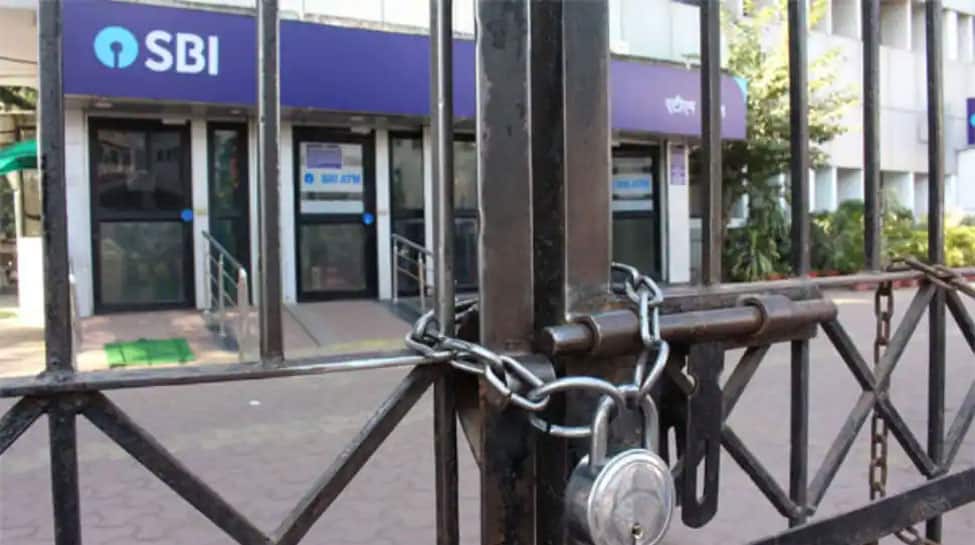
Banking services disrupted as bank employees go on nationwide strike demanding five-day work week
-

 Tech1 week ago
ICE Asks Companies About ‘Ad Tech and Big Data’ Tools It Could Use in Investigations
-

 Sports5 days ago
College football’s top 100 games of the 2025 season
-

 Politics1 week ago
Fresh protests after man shot dead in Minneapolis operation
-

 Fashion1 week ago
Turkiye cuts benchmark rate to 37%, flags confidence on inflation