

Business
Road accidents: a massive economic challenge | The Express Tribune


Over 90% of freight, 95% of passenger traffic moves by road; accidents are dangerous and unaffordable
KARACHI:
Road accidents in Pakistan have become a persistent national tragedy – one that unfolds daily on our highways, city streets and rural roads. Beyond the heartbreaking loss of life, these accidents impose a massive and often overlooked economic burden on the country.
Pakistan loses thousands of citizens every year to preventable crashes, and millions more suffer injuries that disrupt livelihoods, strain families and weaken the national economy. The scale of the problem is so large that it has quietly become one of Pakistan’s most expensive public health and development challenges.
Pakistan records tens of thousands of road accidents annually. The World Health Organisation (WHO) estimates that more than 27,000 people die each year on our roads, while hundreds of thousands are injured. These numbers are likely under-reported due to gaps in data collection, especially in rural areas. Every fatality represents not just a life lost but also the disappearance of a breadwinner, a skilled worker, a student or a caregiver. The ripple effects extend far beyond the immediate tragedy.
Most victims are between 18 and 45 years old, the most economically productive segment of the population. When a young worker dies or becomes permanently disabled, the country loses decades of potential economic contribution. Families fall into poverty, businesses lose trained employees, and the state faces long-term social welfare costs.
Road accidents impose several direct financial burdens on the economy. These include healthcare expenditure: Emergency response, surgeries, long-term rehabilitation and hospital stays consume significant resources. Public hospitals, already stretched thin, must allocate beds, staff time and equipment to accident victims. Private hospitals charge high fees, pushing families into debt. The cumulative healthcare cost runs into billions of rupees annually.
Then there is property and vehicle damage. Accidents involving cars, motorcycles, buses and trucks result in extensive property damage. Repair costs, insurance claims and vehicle write-offs all contribute to economic loss. For commercial transporters, a single accident can mean the loss of a vehicle worth millions of rupees and weeks of disrupted operations.
There are also costs associated with law enforcement and emergency response. Police investigations, rescue services and legal proceedings require manpower and resources. These are essential but costly components of the post-accident process.
In addition to direct costs, there are indirect costs which often exceed direct ones and have deeper long-term implications, such as loss of productivity. When a worker dies or becomes disabled, the economy loses years of potential output. Even temporary injuries result in lost workdays, reduced efficiency and lower household income. For businesses, this means lower productivity, higher recruitment costs and disruptions in operations.
Many Pakistani households rely on a single breadwinner. A fatal accident can push an entire family into poverty. Children may drop out of school to work, perpetuating cycles of low education and low income. Medical bills, funeral costs and loss of income create long-term financial instability.
An already debt-ridden government must allocate funds for disability benefits, rehabilitation programmes and social support for affected families. International studies estimate that road accidents cost countries between 2% and 5% of GDP. For Pakistan, this translates to billions of rupees lost annually. These resources could otherwise be invested in education, infrastructure or economic development.
Pakistan’s economy relies heavily on road transport. Over 90% of freight and 95% of passenger traffic moves by road. Accidents disrupt supply chains, delay deliveries and increase operational costs for logistics companies. Insurance premiums rise, vehicle downtime increases and businesses face unpredictable losses. For exporters, delays caused by highway accidents can mean missed shipping windows, penalties and damaged international credibility.
So why are there so many road accidents? The causes include poor road infrastructure, especially in rural areas; weak enforcement of traffic laws; overloaded and poorly maintained vehicles; untrained or unlicensed drivers; reckless driving and speeding; motorcycle proliferation without a safety culture; lack of pedestrian infrastructure; and inadequate public transport, which pushes more vehicles onto roads.
Motorcycles deserve special mention. They are affordable, widely used and extremely vulnerable. A huge proportion of road fatalities involve motorcyclists, many of whom do not wear helmets.
The most tragic aspect of Pakistan’s road accident crisis is that it is largely preventable. Countries that invested in road safety, such as Vietnam, Turkey and Malaysia, saw dramatic reductions in fatalities and economic losses. Pakistan can achieve similar results through a commitment to some simple precepts such as stronger enforcement, including strict penalties for speeding and unlicensed driving.
Better road engineering is also needed such as improved signage, lighting, lane markings, pedestrian bridges and safer intersections can save thousands of lives. Public awareness campaigns are an absolute necessity through sustained national campaigns. These must promote helmet use, seatbelts and safe driving habits
Contributing to the problem is the woeful state of our public transport. A safer, more reliable public transport system would reduce the number of private vehicles and motorcycles on the road and hence the number of accidents. Many road-related deaths occur because of the lack of proximate treatment facilities. More trauma centres, especially along major highways, would reduce fatalities and long-term disabilities.
Road accidents in Pakistan are not just a public health issue. They are a major economic threat. The country loses billions of rupees every year, thousands of productive citizens and countless opportunities for growth. The human suffering is immeasurable, but the economic cost is quantifiable and devastating.
Addressing this crisis requires political will, investment and a cultural shift towards road safety. The payoff would be enormous: fewer deaths, stronger families, a more productive workforce and a healthier economy. Pakistan cannot afford to ignore the human and economic impact of road accidents any longer. The cost of inaction is simply too high.
THE WRITER IS CHAIRMAN OF MUSTAQBIL PAKISTAN. HE HOLDS AN MBA FROM HARVARD BUSINESS SCHOOL





Rising inflation in the country has already broken the backbone of the common man but prices of ghee and cooking oil have again increased by Rs20 to Rs50 in Karachi.
According to details, the A and B brands of ghee and oil companies’ prices increased from Rs20 to Rs50 over the last ten days.
The price of A brand cooking oil is being sold at Rs610 per kilogram after an increase of Rs20.
The cooking oil of the B brand is being sold in the market at the rate of Rs500 instead of Rs450 per liter. B brand of cooking oil is available at Rs 470 per liter instead of Rs 450.
A shopkeeper said that an increase in prices has been witnessed over the last ten days.
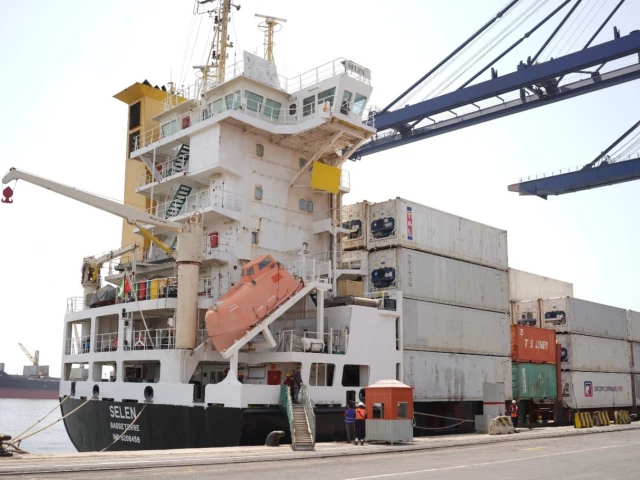
The shopkeeper further revealed that prices were increased due to the rise in shipping companies’ fares and demand in difference between demand and supply.
The outgoing year proved to be an inflationary tsunami, devastating household budgets as prices of food and essential commodities surged to record levels.
Pulses, vegetables, fruits, meat, chicken, milk, yoghurt, flour, bread, and even a cup of tea became crushingly expensive, eroding the purchasing power of salaried classes.
Business
Stocks to buy: What’s the outlook for Nifty for April 13-April 17 week? Check list of top stock recommendations – The Times of India
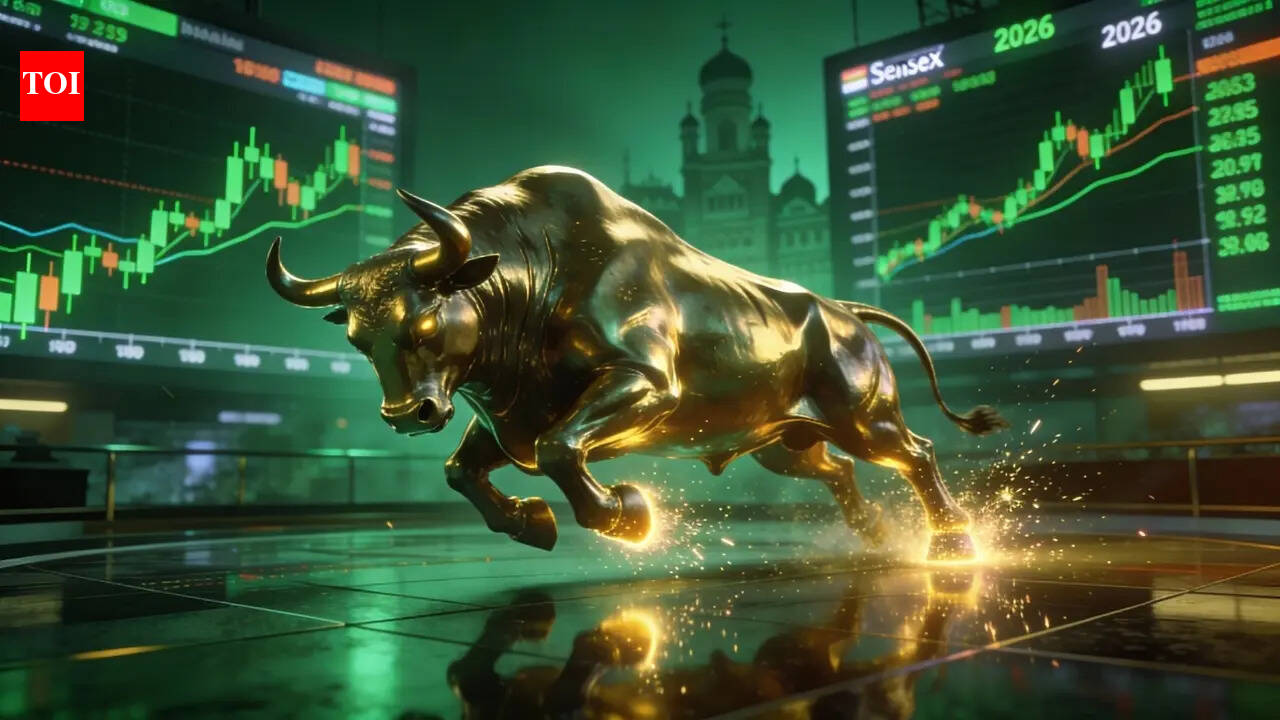
Stock market recommendations: Sona BLW Precision Forgings, and Eicher Motors have been recommended as the top stocks to buy this week by Sudeep Shah, Head – Technical Research and Derivatives, SBI Securities. He also shares outlook on Nifty and Bank Nifty:Nifty ViewThe benchmark index Nifty staged a strong pullback rally over the last week, closing decisively above the 24000 mark with a robust gain of 5.89%. This marked its strongest weekly performance since February 2021 and signaled a meaningful shift in near-term market sentiment. Investor confidence improved notably after the announcement of a two week ceasefire between the US and Iran, which helped ease global geopolitical concerns. From its recent swing low of 22182, the index rebounded sharply by more than 1800 points, translating into an impressive recovery of 8.19% in just six trading sessions. However, the more important aspect of this move lies in the underlying drivers of strength rather than just the headline numbers.Encouragingly, the rally has been supported by a clear improvement in market participation. Market breadth strengthened significantly, pointing to widespread buying interest across sectors and market capitalizations. The broader market indices remained at the forefront of this rally, with both the Nifty Midcap 100 and Nifty Smallcap 100 posting gains of over 7% for the week. Each formed a strong bullish candle on the charts, suggesting that leadership is emerging beneath the surface and that the broader market may be contributing meaningfully to the ongoing recovery.From a technical perspective, the Nifty has moved above its 20day exponential moving average, which has now begun to turn upward—an early sign of improving short-term momentum. Additionally, the previously declining slope of the 50, 100, and 200day EMAs has started to flatten, hinting at a possible shift in overall trend structure. Momentum indicators are also offering supportive signals. The daily RSI has rebounded to around the 54 mark and is trading above its 9day average, reflecting strengthening buying momentum. At the same time, the MACD histogram shows a gradual pickup in upside momentum, though the key question remains whether this momentum can sustain itself over the coming sessions.Looking ahead, these technical developments indicate that the pullback rally may extend further in the near term. The Nifty is likely to test the 24300 level initially, followed by 24500 if positive momentum continues. On the downside, the zone of 23650–23600 is expected to act as a critical support area, and a sustained hold above this region will be essential to maintain the current bullish undertone.Bank Nifty ViewThe banking benchmark index, Bank Nifty, has emerged as a clear outperformer over the past week, underlining strong leadership from the banking space. The index posted a sharp gain of 8.47% during the week, marking its strongest weekly performance seen in the last couple of years and reflecting a decisive turnaround in sentiment.On the weekly chart, this robust up move has translated into the formation of a large bullish candlestick, signalling strong buying interest and a convincing rebound from lower levels. Technically, the index is now trading comfortably above its 20day exponential moving average, pointing to a positive shift in the short-term trend.Momentum indicators continue to validate this recovery. The daily Relative Strength Index (RSI) is currently placed at 53.91 and remains in a rising trajectory, indicating strengthening upside momentum along with improving breadth within the banking sector.Looking ahead, Bank Nifty appears well placed to extend its ongoing pullback rally. In the near term, the index is likely to test the 56700 level, followed by 57500 if positive momentum sustains. On the downside, the zone of 54700–54600 is expected to act as a crucial support area, and a sustained hold above this range will be key to maintaining the prevailing bullish bias.
Stock recommendations:
Sona BLW Precision ForgingsSONACOMS has broken out of a downward-sloping trendline on the daily chart, signaling a potential trend reversal. The breakout is backed by strong follow-through buying, reinforcing bullish sentiment. The stock has also closed above the upper Bollinger Band, indicating an expansion in volatility along with strength. Momentum indicators further support the up move, with the MACD line crossing above both the signal and zero line. Overall, the alignment of price action and indicators suggests continued upside potential in the near term. Hence, we recommend to accumulate the stock in the zone of 556-551 with a stoploss of 530. On the upside, it is likely to test the level of 610 in the short term.Eicher Motors Eicher Motors, after slipping below its 200-day EMA to a low of 6442, has staged a sharp pullback of nearly 15% over the past four sessions. The stock has reclaimed key short and long-term moving averages, indicating improving strength. Momentum indicators also support the recovery, with RSI rebounding from the 40 zone, signaling renewed bullish momentum. Additionally, a close above the Bollinger Band midline points to expanding volatility, suggesting the pullback is likely to extend in the near term. Hence, we recommend to accumulate the stock in the zone of 7440-7380 with a stoploss of 7100. On the upside, it is likely to test the level of 8000 in the short term.(Disclaimer: Recommendations and views on the stock market, other asset classes or personal finance management tips given by experts are their own. These opinions do not represent the views of The Times of India)
Business
Rupee falls 48 paise to 93.31 against dollar as US-Iran peace talks fail – The Times of India
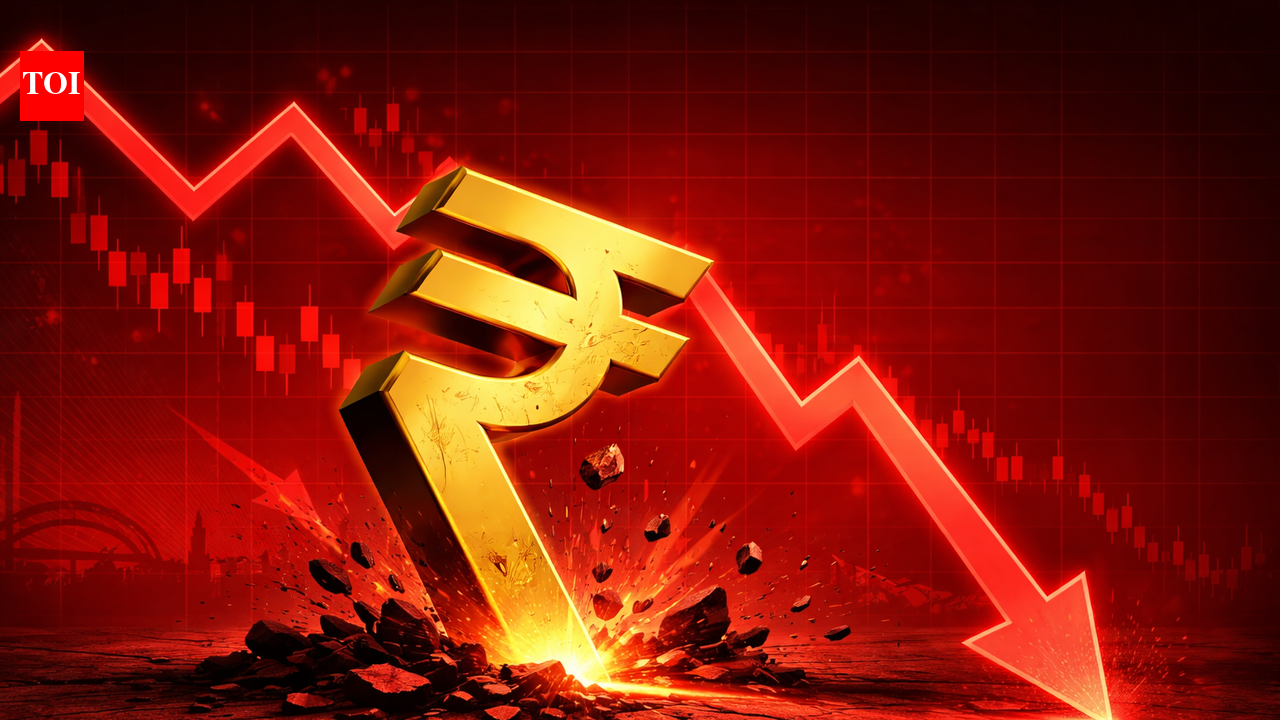
Rupee began the week in red, tumbling 48 paise to 93.31 against US dollar in early trade on Monday. This comes as geopolitical tensions around the Middle East continue to intensify and oil prices once again skyrocket beyond the $100 per barrel mark.Investor mood turned cautious after the ceasefire that had supported markets last week began to fade. At the same time, weekend talks in Pakistan failed yeild an agreement to end the war, further fueling uncertainty. In the aftermath, US President Donald Trump said on Sunday that the US Navy would begin blockading the Strait of Hormuz.Following the announcement, Brent crude for June delivery climbed 7% to $102 a barrel. At the same time, US equity futures and Asian shares fell, while US Treasury yields and the dollar moved higher, reversing last week’s trend.Meanwhile at home foreign investors continued to pull money out of Indian equities amid the uncertainty. In the first 10 days of April, foreign portfolio investors (FPIs) withdrew Rs 48,213 crore ($5.14 billion), according to NSDL data. This comes after a record outflow of Rs 1.17 lakh crore (about $12.7 billion) in March. In contrast, February had seen an inflow of Rs 22,615 crore, the highest in 17 months.So far in 2026, total FPI outflows have reached Rs 1.8 lakh crore. The continued selling reflects lower risk appetite among global investors.VK Vijayakumar, Chief Investment Strategist at Geojit Investments, said that the energy crisis linked to the Middle East conflict, along with its possible impact on the Indian economy and weakening rupee, has kept foreign investors in a selling mode. He added that markets like South Korea and Taiwan are currently more attractive due to better earnings growth expectations compared to India’s outlook for FY27.Commenting on the failed peace talks between Washington and Tehran, banking and Market Expert Ajay Bagga said, “Last Wednesday, there was hope in the markets that something was coming by when the ceasefire and the talks were announced. But that momentum has faded. We are again getting negative on the Indian markets…We are suggesting to investors not to try to trade this market…Do your disciplined monthly investment through the SIP route...”Efforts to stabilise the situation faltered over the weekend, with the United States and Iran failing to reach an agreement.The conflict, which began on February 28, has continued to ripple through global markets. Following joint strikes by the US and Israel on Iran, Tehran has disrupted the Strait of Hormuz, a key global energy route that carries nearly 20% of the world’s fuel. As tensions in the Middle East continue to intensify, investors remain cautious, with developments around the Strait of Hormuz and the broader conflict continuing to shape movements across commodities, currencies and equity markets.


Netherlands inflation rises to 2.7% in March 2026
Ghee, cooking oil prices surge Rs20 to Rs50 – SUCH TV

Phil Garner, feisty baseball lifer, three-time All-Star, dies aged 76

-

 Fashion6 days ago
India’s exports face reset as EU links trade to carbon metrics: EY
-
 Politics1 week ago
Trump confirms rescue of airman whose F-15 was downed in Iran
-

 Entertainment5 days ago
Queen Elizabeth II emotional message for Archie, Lilibet sparks speculation
-

 Tech4 days ago
This AI Button Wearable From Ex-Apple Engineers Looks Like an iPod Shuffle
-
 Tech5 days ago
As the Strait of Hormuz Reopens, Global Shipping Will Take Months to Recover
-

 Tech5 days ago
Azure customers up in arms over ‘full’ UK South region | Computer Weekly
-

 Entertainment6 days ago
Lamar Odom shocking response to Khloé Kardashian account of his overdose
-

 Tech7 days ago
A Single Strike Won’t Shut Off the Gulf’s Desalination System