

Business
Road accidents: a massive economic challenge | The Express Tribune

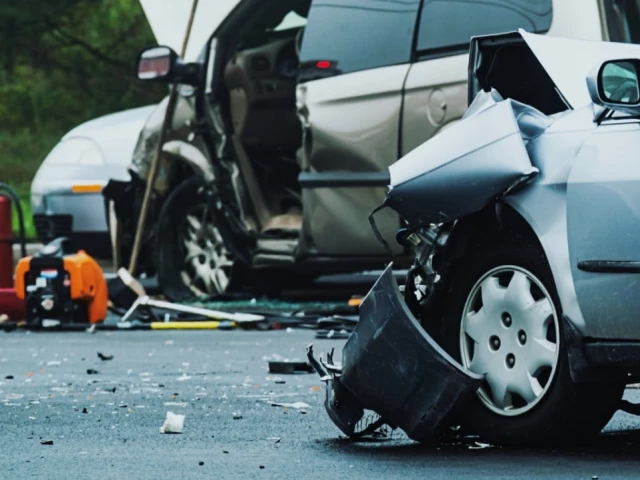
Over 90% of freight, 95% of passenger traffic moves by road; accidents are dangerous and unaffordable
KARACHI:
Road accidents in Pakistan have become a persistent national tragedy – one that unfolds daily on our highways, city streets and rural roads. Beyond the heartbreaking loss of life, these accidents impose a massive and often overlooked economic burden on the country.
Pakistan loses thousands of citizens every year to preventable crashes, and millions more suffer injuries that disrupt livelihoods, strain families and weaken the national economy. The scale of the problem is so large that it has quietly become one of Pakistan’s most expensive public health and development challenges.
Pakistan records tens of thousands of road accidents annually. The World Health Organisation (WHO) estimates that more than 27,000 people die each year on our roads, while hundreds of thousands are injured. These numbers are likely under-reported due to gaps in data collection, especially in rural areas. Every fatality represents not just a life lost but also the disappearance of a breadwinner, a skilled worker, a student or a caregiver. The ripple effects extend far beyond the immediate tragedy.
Most victims are between 18 and 45 years old, the most economically productive segment of the population. When a young worker dies or becomes permanently disabled, the country loses decades of potential economic contribution. Families fall into poverty, businesses lose trained employees, and the state faces long-term social welfare costs.
Road accidents impose several direct financial burdens on the economy. These include healthcare expenditure: Emergency response, surgeries, long-term rehabilitation and hospital stays consume significant resources. Public hospitals, already stretched thin, must allocate beds, staff time and equipment to accident victims. Private hospitals charge high fees, pushing families into debt. The cumulative healthcare cost runs into billions of rupees annually.
Then there is property and vehicle damage. Accidents involving cars, motorcycles, buses and trucks result in extensive property damage. Repair costs, insurance claims and vehicle write-offs all contribute to economic loss. For commercial transporters, a single accident can mean the loss of a vehicle worth millions of rupees and weeks of disrupted operations.
There are also costs associated with law enforcement and emergency response. Police investigations, rescue services and legal proceedings require manpower and resources. These are essential but costly components of the post-accident process.
In addition to direct costs, there are indirect costs which often exceed direct ones and have deeper long-term implications, such as loss of productivity. When a worker dies or becomes disabled, the economy loses years of potential output. Even temporary injuries result in lost workdays, reduced efficiency and lower household income. For businesses, this means lower productivity, higher recruitment costs and disruptions in operations.
Many Pakistani households rely on a single breadwinner. A fatal accident can push an entire family into poverty. Children may drop out of school to work, perpetuating cycles of low education and low income. Medical bills, funeral costs and loss of income create long-term financial instability.
An already debt-ridden government must allocate funds for disability benefits, rehabilitation programmes and social support for affected families. International studies estimate that road accidents cost countries between 2% and 5% of GDP. For Pakistan, this translates to billions of rupees lost annually. These resources could otherwise be invested in education, infrastructure or economic development.
Pakistan’s economy relies heavily on road transport. Over 90% of freight and 95% of passenger traffic moves by road. Accidents disrupt supply chains, delay deliveries and increase operational costs for logistics companies. Insurance premiums rise, vehicle downtime increases and businesses face unpredictable losses. For exporters, delays caused by highway accidents can mean missed shipping windows, penalties and damaged international credibility.
So why are there so many road accidents? The causes include poor road infrastructure, especially in rural areas; weak enforcement of traffic laws; overloaded and poorly maintained vehicles; untrained or unlicensed drivers; reckless driving and speeding; motorcycle proliferation without a safety culture; lack of pedestrian infrastructure; and inadequate public transport, which pushes more vehicles onto roads.
Motorcycles deserve special mention. They are affordable, widely used and extremely vulnerable. A huge proportion of road fatalities involve motorcyclists, many of whom do not wear helmets.
The most tragic aspect of Pakistan’s road accident crisis is that it is largely preventable. Countries that invested in road safety, such as Vietnam, Turkey and Malaysia, saw dramatic reductions in fatalities and economic losses. Pakistan can achieve similar results through a commitment to some simple precepts such as stronger enforcement, including strict penalties for speeding and unlicensed driving.
Better road engineering is also needed such as improved signage, lighting, lane markings, pedestrian bridges and safer intersections can save thousands of lives. Public awareness campaigns are an absolute necessity through sustained national campaigns. These must promote helmet use, seatbelts and safe driving habits
Contributing to the problem is the woeful state of our public transport. A safer, more reliable public transport system would reduce the number of private vehicles and motorcycles on the road and hence the number of accidents. Many road-related deaths occur because of the lack of proximate treatment facilities. More trauma centres, especially along major highways, would reduce fatalities and long-term disabilities.
Road accidents in Pakistan are not just a public health issue. They are a major economic threat. The country loses billions of rupees every year, thousands of productive citizens and countless opportunities for growth. The human suffering is immeasurable, but the economic cost is quantifiable and devastating.
Addressing this crisis requires political will, investment and a cultural shift towards road safety. The payoff would be enormous: fewer deaths, stronger families, a more productive workforce and a healthier economy. Pakistan cannot afford to ignore the human and economic impact of road accidents any longer. The cost of inaction is simply too high.
THE WRITER IS CHAIRMAN OF MUSTAQBIL PAKISTAN. HE HOLDS AN MBA FROM HARVARD BUSINESS SCHOOL






The move has raised questions over parliamentary scrutiny of future rules to deliver planned EU deals.
Source link

Rising inflation in the country has already broken the backbone of the common man but prices of ghee and cooking oil have again increased by Rs20 to Rs50 in Karachi.
According to details, the A and B brands of ghee and oil companies’ prices increased from Rs20 to Rs50 over the last ten days.
The price of A brand cooking oil is being sold at Rs610 per kilogram after an increase of Rs20.
The cooking oil of the B brand is being sold in the market at the rate of Rs500 instead of Rs450 per liter. B brand of cooking oil is available at Rs 470 per liter instead of Rs 450.
A shopkeeper said that an increase in prices has been witnessed over the last ten days.
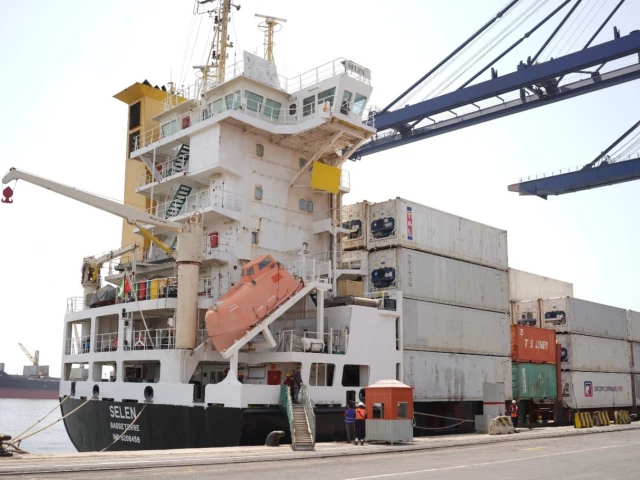
The shopkeeper further revealed that prices were increased due to the rise in shipping companies’ fares and demand in difference between demand and supply.
The outgoing year proved to be an inflationary tsunami, devastating household budgets as prices of food and essential commodities surged to record levels.
Pulses, vegetables, fruits, meat, chicken, milk, yoghurt, flour, bread, and even a cup of tea became crushingly expensive, eroding the purchasing power of salaried classes.

The Pakistan Stock Exchange witnessed a bearish trend on the first trading day of the business week on Monday.
During trading, the benchmark KSE-100 Index dropped by 5,183 points, bringing it down to 162,007 points.
So far during the session, the index has hit an intraday low of 161,638 points and a high of 162,660 points.
It is worth noting that at the end of the last trading session of the previous week, the KSE-100 Index had closed at 167,191 points.


Former NFL player Chris Payton-Jones dead at 30 after Florida car crash

The case for Man United’s Fernandes as Premier League’s best

China calls for restraint over US blockade of Hormuz, supports talks

-

 Fashion6 days ago
India’s exports face reset as EU links trade to carbon metrics: EY
-

 Politics1 week ago
Trump confirms rescue of airman whose F-15 was downed in Iran
-

 Entertainment5 days ago
Queen Elizabeth II emotional message for Archie, Lilibet sparks speculation
-
 Tech5 days ago
As the Strait of Hormuz Reopens, Global Shipping Will Take Months to Recover
-

 Tech4 days ago
This AI Button Wearable From Ex-Apple Engineers Looks Like an iPod Shuffle
-

 Tech5 days ago
Azure customers up in arms over ‘full’ UK South region | Computer Weekly
-

 Entertainment6 days ago
Lamar Odom shocking response to Khloé Kardashian account of his overdose
-

 Tech7 days ago
A Single Strike Won’t Shut Off the Gulf’s Desalination System