

Entertainment
Rob Reiner’s close friends and colleagues share fond memories of the late Hollywood legend

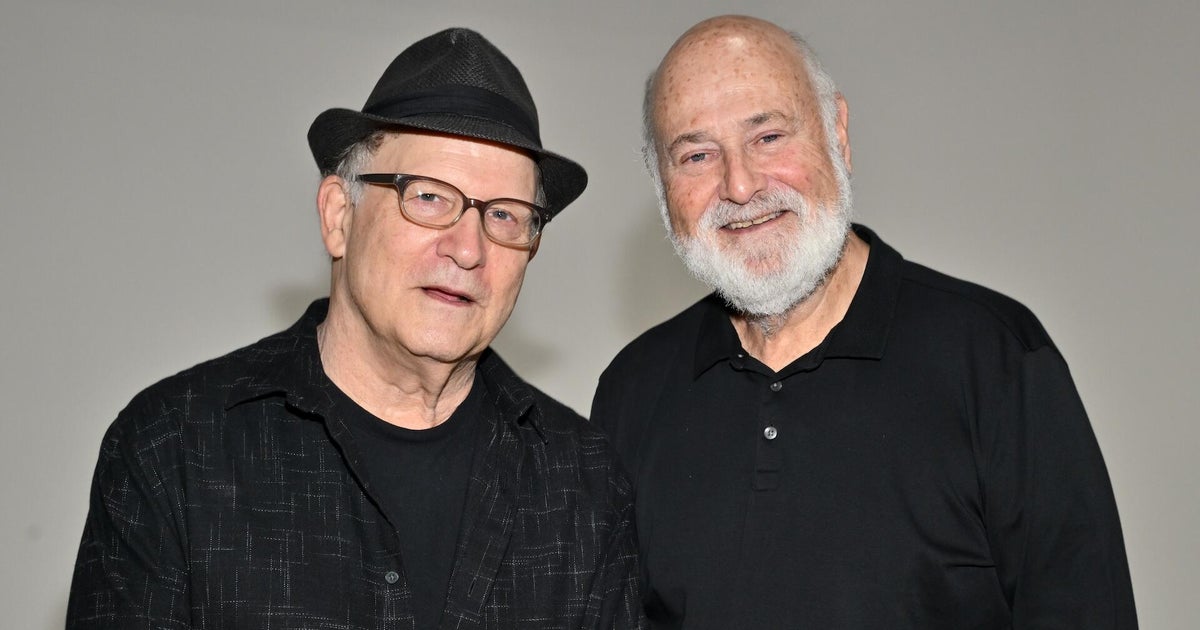
Rob Reiner’s circle was wide and eclectic, spanning comedians honing punchlines and Oscar-winning actors and filmmakers shaping Hollywood itself.
As the son of comedy legend Carl Reiner, he entered the world of entertainment early – but went on to make a name for himself as a director, filmmaker, and actor in his own right.
He’s perhaps best known for his breakout role at age 23 as Archie Bunker’s liberal son-in-law, Michael “Meathead” Stivic in the hit 1970s sitcom “All in the Family,” though others may know him more recently as Bob Day, the father of the quirky Jess Day in “New Girl.” Reiner also directed iconic films such as “The Princess Bride,” “When Harry Met Sally…,” “This is Spinal Tap,” “Stand By Me” and “A Few Good Men.”.
Friends and colleagues who worked with Reiner through the years sat down with CBS News to share their personal anecdotes and fond memories of him following the news of his tragic death. Reiner and his wife, Michele, were found dead in their Los Angeles home on Dec. 14 and their son, Nick, was charged in their murders.
Here’s a look at some tributes from those who knew Reiner best, featured in “CBS News: Rob Reiner – Scenes from a Life,” a one-hour special that will be broadcast Sunday at 8:30 p.m. ET/8 p.m. PT on CBS and streaming on Paramount+.
Albert Brooks
Albert Brooks said he’s still in disbelief over the death of his good friend, who he’s known since the pair attended drama class together at Beverly Hills High School more than 60 years ago.
“Rob was my oldest friend. It’s that simple. He’s the person that I’ve known the longest. I met him when I was 14 years old. So I’m still in that not believing it stage,” he told CBS News.
Brooks said he still finds himself dialing his pal’s number to chat, and then freezes when he realizes what he’s done.
“I know it happened, but, you know, I’m driving around and all of a sudden – I actually two days ago, I called his number,” he recalled.
Kathy Bates
Oscar-winning actress Kathy Bates has credited Reiner with changing “the course of [her] life” by directing her unforgettable performance as Annie Wilkes in “Misery” in 1990.
“If I hadn’t done ‘Misery,’ it would be like George Bailey going back and seeing what his life would have been like if he had never been there,” she said. “I wouldn’t have had some of the friends that I have now. I wouldn’t have had the richness in my life. I quite frankly probably would have stayed in the theater and I doubt I would have had a movie career. I might have dropped out altogether.”
Kiefer Sutherland
Kiefer Sutherland who played Lt. Jonathan Kendrick in the 1992 legal drama “A Few Good Men” said Reiner had an unforgettable presence on set as director. He recalled the tense courtroom scene where Jack Nicholson – Colonel Nathan Jessup – had to deliver his now famous line, “You can’t handle the truth!”
After the first moving take, Sutherland recalled Reiner asking Nicholson if he wanted to go again.
“No one said a word, and Rob went up to Jack Nicholson and whispered in his ear, ‘Do you want to do another one?’ And Jack Nicholson said, ‘Well, we’re here,'” Sutherland recalled. “So they did another one, and it was just as extraordinary.”
The actors planned a marathon filming day, but Sutherland said Reiner was so blown away by Nicholson’s performance that day that he sent everyone home early.
“They had planned to shoot the whole day, and Rob looked at everybody and said, ‘I couldn’t ask for anything more, so you guys all have the rest of the day off,” Sutherland said.









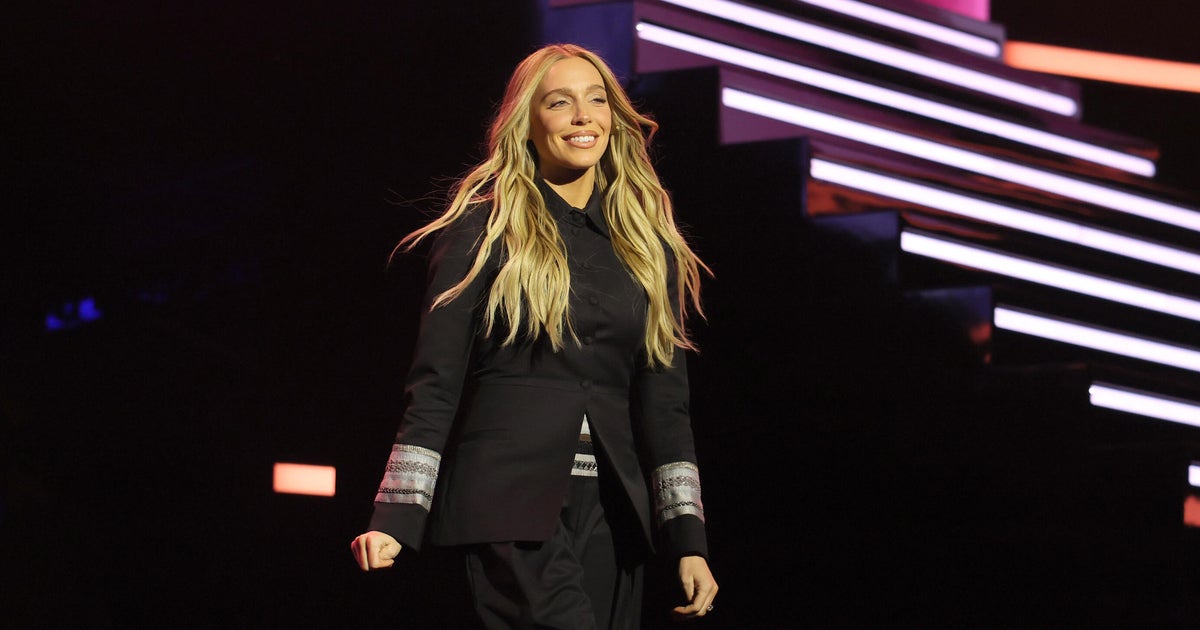
Alex Cooper, the host of one of the most popular podcasts in the United States, announced Sunday that she is expecting her first child.
The “Call Her Daddy” host shared the news in an Instagram post that showed her in a white crop top and sweatpants while looking at her husband, producer Matt Kaplan. Cooper and Kaplan tied the knot in April 2024.
“Our family,” Cooper wrote, along with a white heart emoji.
Cooper also shared the post on her Instagram story, along with a more candid selfie of herself and Kaplan. In another post, she joked that she was “honestly happy” to “finally stop trying to hide the bump.”
Cooper did not share a due date or any other information about her pregnancy.
Noam Galai
Cooper’s “Call Her Daddy” podcast has over 2.1 million subscribers on YouTube, while Cooper herself has over 7.2 million followers on Instagram.
“Call Her Daddy” features conversations covering a host of topics, including relationships, celebrity gossip and pop culture. Most episodes involve Cooper speaking with celebrities and prominent national figures, including an episode recorded with former Vice President Kamala Harris during her 2024 run for president.

Shania Twain has made her pitch to perform at Harry Styles and Zoë Kravitz’s wedding, and she’s not being subtle about it.
The 60-year-old country legend, who is currently opening for Styles on the first leg of his world tour, made the declaration during an appearance on SiriusXM’s The Pulse on Friday.
When host Joe “Brady” Blum floated the idea of Twain performing at the celebrity nuptials, she didn’t hesitate. “Oh! I would say yes if he asked,” she replied. “Just putting it out there, Harry.”
Twain is well placed to make the case, she and Styles are currently sharing stages together for the opening 12 shows of his world tour, all being held in London.
She described the invitation to open for him as “really nice,” adding that it made sense for him to begin there.
When Brady expressed hope that the pair might perform Man! I Feel Like A Woman! together again, Twain sounded equally keen.
“I hope we do, too,” she said.
As for the wedding itself, she was playfully realistic about the logistics. When asked whether she could be the entertainment, she mused aloud: “What if they disagree on that?”
Brady suggested that Kravitz’s father Lenny Kravitz could also have a say in the musical lineup, which prompted Twain to propose a rather appealing solution. “Right, him and I could sing it together,” she said with a smile.
Styles and Kravitz, 37, have been one of the most talked-about couples in entertainment since their relationship became public.
Kravitz was spotted last month wearing an impressive diamond ring, widely taken as confirmation of their engagement following a whirlwind romance of around eight months.
The Batman actress was previously engaged to actor Channing Tatum before they split in October 2024, and was briefly married to actor Karl Glusman from 2019 to 2020.
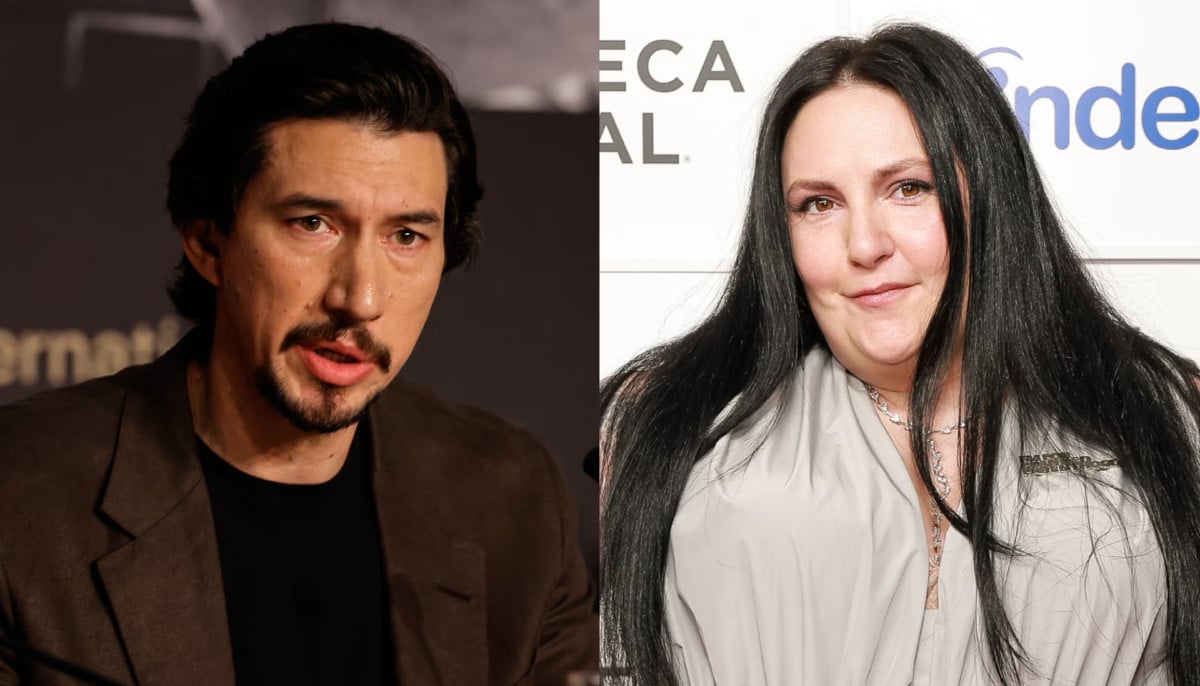
Adam Driver has finally responded to the explosive allegations Lena Dunham made about him in her memoir, and he did it with exactly one sardonic sentence.
Speaking at a Cannes Film Festival press conference for his new film Paper Tiger on Sunday, the 42-year-old was asked about the claims Dunham made in Famesick, her recently published tell-all.
His reply was brief and dry: “I have no comment on that, I’m saving it all for my book.”
It was a masterclass in saying nothing while saying quite a lot.
The response came weeks after Dunham’s 416-page memoir landed with considerable force, containing a series of serious allegations about Driver’s behaviour on the set of Girls, the HBO series on which he played Hannah Horvath’s volatile on-off boyfriend Adam Sackler.
Dunham accused him of screaming at her in her trailer, hurling a chair at the wall beside her, and punching a hole in his own trailer wall.
She also claimed he ignored the agreed blocking during their first intimate scene, physically manhandling her in a way that left her shaken.
“Stunned, I couldn’t speak for a moment,” she wrote, describing the confusion and self-doubt that followed.
Dunham has been candid about why she didn’t confront him at the time.
Speaking to The Guardian in April, she said: “At that point in my 20s, I still thought that’s what great male geniuses do, eviscerate you. Which is weird, because I was raised by a male genius who would never do that.”
The memoir also ventured into more personal territory, with Dunham claiming she and Driver came close to having an affair a month before he got engaged to his wife Joanne Tucker in 2012.
She wrote that she pulled back when he arrived at her New York home, choosing not to cross a line she felt would make returning to work impossible.
Driver, she alleged, later acknowledged the moment to her, saying: “When my girl was away, I realised I’m no good alone. I need someone to keep me in line.”
The Cannes press conference where Driver made his comment was for Paper Tiger, James Gray’s crime drama in which he plays former police officer Gary Pearl.


Indy 500: Counting Down The 10 Best Finishes In Race History

“Call Her Daddy” podcast host Alex Cooper announces pregnancy with 1st child

Shania Twain wants to sing at Harry Styles, Zoe Kravitz wedding

-

 Entertainment5 days ago
Conan O’Brien hat tricks as Oscar host
-

 Tech1 week ago
I Tried the Best Captioning Smart Glasses, and Only One Leads the Pack
-

 Tech1 week ago
Could Contact-Tracing Apps Help With the Hantavirus? Not Really
-

 Fashion5 days ago
Italy’s Zegna Group’s Q1 growth boosted by strong organic performance
-

 Sports1 week ago
Bobby Cox, legendary Atlanta Braves manager who led 1995 World Series champions, dead at 84
-

 Entertainment1 week ago
Martin Short: Facing tragedy with joy
-
 Entertainment7 days ago
Tom Brady gets back at Kevin Hart during Netflix roast
-

 Entertainment1 week ago
Martha Stewart: How to make an omelet