

Business
Royal Mail delivery delays grow ahead of controversial changes

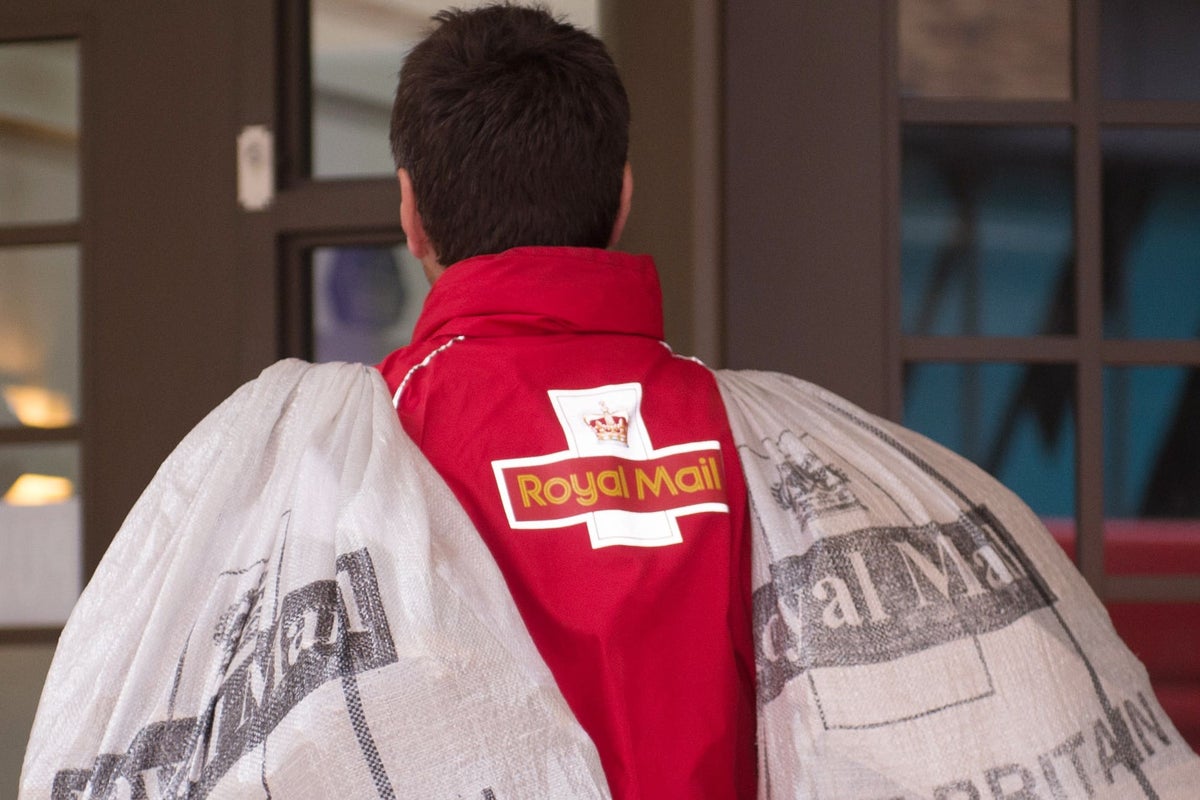
Royal Mail has disclosed that fewer than three-quarters of first-class letters were delivered on time over recent months, as it prepares to overhaul its delivery services.
Between 20 June and 28 September, a mere 73.4 per cent of first-class post reached its intended recipient the next working day.
Second-class mail fared marginally better, with 90.4 per cent delivered within three working days.
This latest report highlights a declining trend since its annual results, following a £21 million fine from regulator Ofcom for missing its 2024-25 targets.
In that year, 77 per cent of first-class and 92.5 per cent of second-class mail were on time, short of the 93 per cent and 98.5 per cent targets.
Royal Mail said it was taking action to improve the reliability of its services, including by hiring more staff and supporting its delivery offices.
It is also preparing to introduce changes that will see it scrap second-class deliveries on Saturdays and switch the service to every other weekday.
It has been running pilots for the new delivery model and is aiming to continue rolling it out from early next year.
Royal Mail’s chief operating officer Jamie Stephenson said: “Reliable deliveries really matter to our customers, and they matter to us too.
“We’re taking targeted action to improve performance – recruiting more frontline staff, simplifying operations and investing in a new delivery model, with early pilots already showing measurable results.”
He added that its team was “working hard to make sure every item arrives on time and with care”.
Royal Mail is hiring about 20,000 extra workers to help transport, sort and deliver mail over the busy festive season.

Indians sharply cut back on overseas travel spending in March, with remittances for foreign trips dropping by more than $212 million from the previous month, according to Reserve Bank of India data. The fall in outbound travel expenditure came amid rising oil prices linked to the Middle East conflict and persistent pressure on rupee, even as travel remained the single largest component of outward remittances under the Liberalised Remittance Scheme (LRS).In March, travel-related remittances fell to $1.09 billion from $1.3 billion in February and $1.65 billion in January. The decline came at a time when the West Asia conflict pushed oil prices higher and weakened rupee to record lows. Amid the situation, Prime Minister Narendra Modi urged citizens to cut down on foreign travel and adopt measures such as carpooling. Lower overseas travel spending could reduce foreign exchange outflows and help ease pressure on rupee.According to the RBI’s data on outward remittances by resident individuals, travel continued to account for the largest share of money sent abroad under the LRS in March. Total remittances during the month stood at $2.59 billion.The RBI tracks overseas spending across categories including travel, studies abroad, maintenance of close relatives, overseas investments, and property purchases. Under the LRS framework, resident individuals, including minors, can remit up to $250,000 in a financial year for permitted current or capital account transactions.Within the travel segment, the biggest component remained the ‘other travel’ category, which covers holiday spending and international credit card settlements. Indians spent $623.05 million under this category in March, accounting for nearly 57 per cent of total travel-related remittances during the month.Expenditure linked to education travel, including hostel and fee payments, stood at $450.16 million. Business travel, pilgrimage, and overseas medical treatment together accounted for $21.39 million.The data also showed a rise in remittances meant for the maintenance of close relatives abroad. Such transfers increased to $389.78 million in March from $266.18 million in February.At the same time, spending under the ‘studies abroad’ category declined. This category includes payments made for educational services accessed remotely without travelling overseas, such as correspondence courses. Remittances under this head stood at $151.71 million in March, compared to $175.68 million in February and $267.42 million in January.For the financial year 2024-25, Indians remitted a total of $29.56 billion under the LRS. Travel made up the largest portion of this amount at $16.96 billion.The RBI figures further showed that investments by Indians in overseas equity and debt instruments rose significantly to $440.22 million in March from $265.99 million in February.Meanwhile, outward remittances for the purchase of immovable property overseas declined to $38.68 million in March, down from $51.36 million a month earlier.

Gold and silver are expected to take cues from developments in the ongoing US-Iran talks this week, with analysts forecasting a largely steady trend for gold prices while silver may continue to outperform amid geopolitical tensions and elevated crude oil prices.Investors are also likely to track a series of economic indicators from the United States, including GDP data, housing numbers, consumer confidence figures and the Personal Consumption Expenditure (PCE) inflation print, as markets look for signals on the Federal Reserve’s next policy move.“Gold price momentum next week looks sideways, while silver still looks positive as focus will again be on the peace negotiations between the US and Iran to end the war,” said Pranav Mer, Vice President, EBG – Commodity & Currency Research, JM Financial Services Ltd.Trading activity in domestic commodity futures markets will be curtailed on Thursday morning due to Bakri Id.On the MCX, gold futures ended the previous week at Rs 1.58 lakh per 10 grams after posting marginal gains, while silver futures settled lower at Rs 2.71 lakh per kilogram.“Gold traded in a range-bound manner last week, posting marginal gains of around 0.40% on the MCX to close near Rs 1,58,670 per 10 grams,” said Jateen Trivedi, VP Research Analyst – Commodity and Currency, LKP Securities.He noted that crude oil prices witnessed heavy profit booking during the week and corrected nearly 7% from recent highs, easing concerns around inflationary pressure globally.“At the same time, the rupee recovered from weaker levels of 97 against the US dollar to strengthen near 95.70, which limited upside momentum in domestic gold prices despite stable international bullion trends,” Trivedi added.In international trade, Comex gold futures closed the week 1% lower at $4,523.2 per ounce. Silver futures also weakened, slipping nearly 2% to $76.20 per ounce.“Gold prices moved in a consolidative range over the past few sessions, but ended the week with a marginal loss. Prices were steady amid a lack of fresh direction in the market — be it on the economy front or the US-Iran war front,” Mer said.According to analysts, uncertainty surrounding the geopolitical situation has continued to keep markets on edge, particularly as statements from both Washington and Tehran have frequently shifted.On Sunday, US President Donald Trump said that an agreement between the US and Iran aimed at reducing tensions in the Gulf region and reopening the Strait of Hormuz was close to being finalised.Posting on Truth Social, Trump said the deal had been “largely negotiated” and that only final formalities remained.However, Iranian media disputed Trump’s remarks regarding the full reopening of the Strait of Hormuz, stating that Tehran would continue to maintain control over the key waterway.Analysts said the contrasting positions from both sides are likely to keep bullion prices sensitive to any fresh headlines emerging from the region.Meanwhile, market participants are also expected to monitor comments from Federal Reserve officials after Kevin Warsh formally succeeded Jerome Powell as head of the US central bank on Friday during a period of geopolitical tensions, market volatility and persistent inflation pressures.
Business
Stock market this week: Middle East tensions, oil prices, FII flows & more — what will guide Dalal Street

Dalal Street is heading into the new trading week with global uncertainty firmly in focus, as investors keep a close watch on the evolving situation in the Middle East, fluctuations in crude oil prices and the behaviour of foreign investors. Analysts said that sentiment is likely to remain fragile and heavily influenced by developments in negotiations between the United States and Iran, while movements in the rupee, global equities and the US dollar are also expected to shape market direction in the days ahead.Trading activity during the week is also expected to be shaped by the rupee’s movement against the US dollar, while investors continue to assess the impact of global uncertainty on risk appetite. Markets will remain closed on Thursday for Bakri Id.A key trigger for sentiment emerged over the weekend after US Secretary of State Marco Rubio said negotiations between Washington and Tehran had shown some progress, raising expectations that the ongoing conflict in West Asia could move closer to resolution.Ajit Mishra, SVP, Research at Religare Broking Ltd, said investors would closely track developments tied to crude oil, global currencies and bond markets. “This week is expected to remain highly sensitive to global macroeconomic developments and currency movements. Investors will also monitor crude oil prices, developments in US-Iran negotiations, and the trajectory of the US dollar and bond yields, all of which are expected to influence foreign flows and overall risk appetite,” he said.Apart from geopolitical developments, the Reserve Bank’s decision to transfer a record Rs 2.87 lakh crore dividend to the government for the year ended March 2026 is also expected to remain in focus. The announcement comes at a time when rising import costs and supply chain pressures linked to the West Asia conflict continue to weigh on the economy.According to Mishra, market participants are expected to evaluate how the RBI payout could affect liquidity conditions, fiscal flexibility and government spending in the months ahead.Ponmudi R, CEO of Enrich Money, said market behaviour in the coming sessions is expected to remain sensitive to fresh headlines surrounding diplomatic negotiations and oil prices. “Markets are expected to remain volatile and heavily headline-driven in the coming week, with investor attention firmly focused on developments surrounding the US–Iran situation, broader diplomatic negotiations and movements in crude oil prices,” he said.“While hopes of a diplomatic breakthrough and easing geopolitical tensions have improved sentiment modestly, investors continue to remain cautious as uncertainty surrounding the final outcome of the negotiations remains elevated,” Ponmudi added.He further said investors are expected to watch institutional flows, global equity trends, macroeconomic indicators and the rupee for further market cues. “With global uncertainty still elevated, market participants are likely to remain selective and cautious despite the recent improvement in sentiment,” he said.Vinod Nair, Head of Research at Geojit Investments Limited, said markets would require stronger support factors to build a more constructive setup. According to him, a meaningful decline in crude oil prices, steady foreign institutional investor flows and stable Q1FY27 earnings expectations without major downgrades would be important for sustained momentum.In the previous week, the BSE benchmark index rose 177.36 points, or 0.23%, while the NSE Nifty advanced 75.8 points, or 0.32%.


Patti LaBelle on being called a legend: “I have earned it”

IndyCar driver Caio Collet’s vehicle catches fire in terrifying Indy 500 wreck

Christopher Nolan’s ‘The Odyssey’ trailer sparks major backlash online

-

 Entertainment1 week ago
Where Pete Davidson, Elsie Hewitt stand after breakup: Details revealed
-

 Politics1 week ago
Rising diesel costs from Iran war strain US school budgets
-

 Tech1 week ago
Why Is Your Grill So Dumb? The Best Grills Set Temp Like an Oven
-

 Tech1 week ago
This Solar-Powered Smart Sprinkler Keeps My Lawn Watered Without Any Power Cables
-

 Fashion1 week ago
RMG trade bodies seek policy support from Bangladesh PM
-

 Fashion6 days ago
Nigeria Kwara Garment Factory, KWS Garment Production Village ink pact
-

 Fashion1 week ago
India calls for aligning standards, customs procedures with Africa
-

 Sports1 week ago
Pakistan steady after Das ton | The Express Tribune