Connect with us

Politics

Rubio, Lavrov discuss agenda before Trump-Putin talks

Published

on

Rubio, Lavrov discuss agenda before Trump-Putin talks
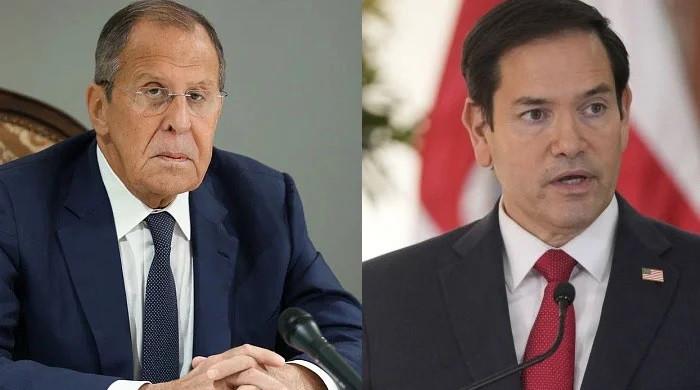

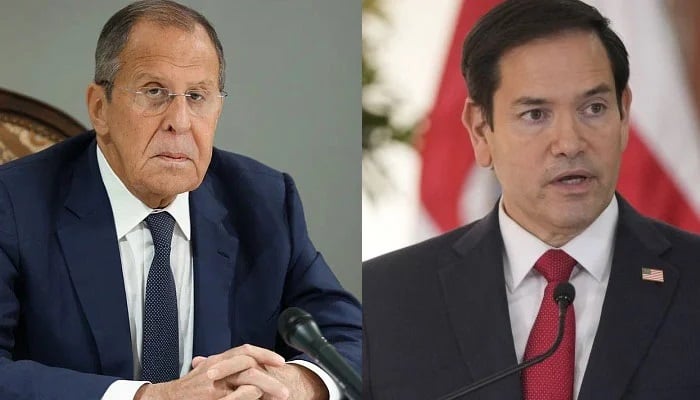
Russian Foreign Minister Sergei Lavrov (left) and US Secretary of State Marco Rubio. —  Reuters/File
Russian Foreign Minister Sergei Lavrov (left) and US Secretary of State Marco Rubio. — Reuters/File
  • US, Russia confirm commitment to a successful event: State Dept.
  • Meeting taking place at Putin’s request, says Tammy Bruce.
  • Trump-Putin meeting a “listening exercise”, says White House.

US Secretary of State Marco Rubio spoke by telephone Tuesday with Russian Foreign Minister Sergei Lavrov to prepare for the summit in Alaska between Presidents Donald Trump and Vladimir Putin, the State Department said.

“Both sides confirmed their commitment to a successful event,” State Department spokeswoman Tammy Bruce told reporters.

Bruce confirmed that Putin had requested the meeting, which will take place on Friday in the US state of Alaska.

Ukrainian President Volodymyr Zelensky has described the meeting as a “personal victory” for Putin, who had been shunned by the West since his invasion of Ukraine in February 2022.

Rubio, in a radio interview earlier Tuesday, rejected criticism of the summit.

Trump “feels like, ‘Look, I’ve got to look at this guy across the table. I need to see him face to face. I need to hear him one-on-one. I need to make an assessment by looking at him,'” Rubio told the “Sid and Friends” show.

“People have to understand — for President Trump, a meeting is not a concession,” Rubio said.

Trump has said any peace deal would involve “some swapping of territories to the betterment of both” Russia and Ukraine, which has up to now depended on the US as its main arms supplier.

But because all the areas being contested lie within Ukraine, President Volodymyr Zelensky and his European Union allies fear that he will face pressure to give up far more than Russia does.

Trump’s administration tempered expectations on Tuesday for major progress toward a ceasefire, calling his meeting on Friday with Putin in Alaska a “listening exercise.”

Zelensky and most of his European counterparts have said a lasting peace cannot be secured without Ukraine at the negotiating table, and a deal must comply with international law, Ukraine’s sovereignty and its territorial integrity.

They will hold a virtual meeting with Trump on Wednesday to underscore those concerns before the Putin summit, the first US-Russia summit since 2021.

“An imitated rather than genuine peace will not hold for long and will only encourage Russia to seize even more territory,” Zelensky said in a statement on Tuesday.

Zelensky said Russia must agree to a ceasefire before territorial issues are discussed. He would reject any Russian proposal that Ukraine pull its troops from the eastern Donbas region and cede its defensive lines.

Asked why Zelensky was not joining the US and Russian leaders at the Alaska summit, a White House spokeswoman said on Tuesday that the bilateral meeting had been proposed by Putin, and that Trump accepted to get a “better understanding” of how to end the war.

“Only one party that’s involved in this war is going to be present, and so this is for the president to go and to get a more firm and better understanding of how we can hopefully bring this war to an end,” press secretary Karoline Leavitt told reporters. “You need both countries to agree to a deal.”


Source link

Continue Reading
Click to comment

Leave a Reply

Your email address will not be published. Required fields are marked *

Politics

Trump says killings in Iran subsiding as experts warn on military intervention

Published

on

Trump says killings in Iran subsiding as experts warn on military intervention


US President Donald Trump looks on as he signs executive orders and proclamations in the Oval Office at the White House, in Washington, DC on May 5, 2025. — Reuters
  • Trump says “we are going to watch” process in Iran.
  • Gulf Arab countries concerned about US strikes.
  • Trump aides reviewing a range of options, says source.

US President Donald Trump said on Wednesday that killings in Iran’s crackdown on nationwide protests were subsiding and he believed there was no plan for large-scale executions of protesters, as analysts and diplomats warned of possible risks from a US military intervention.

Trump’s comments during an Oval Office event come as fears have escalated in the Middle East that the United States could launch strikes on Iran, following the US president’s repeated threats to intervene on behalf of protesters. He did not rule out possible US military intervention, however.

Some experts and regional diplomats warn that military intervention could backfire by smothering protests, fueling an intensified crackdown on those who participated and triggering retaliatory Iranian missile attacks on US bases in the Middle East.

In a more extreme scenario, several said, US strikes might hasten the government’s collapse, possibly unleashing chaos across the nation of 90 million, encouraging insurgencies by minority Kurdish and Baluch separatists and leaving Iran’s nuclear and missile programs unsecured.

Still, several US intelligence assessments earlier this week concluded that while the protests posed a serious challenge, the government did not appear close to collapsing, according to four knowledgeable sources.

“We have restive ethnic minorities. We have loose undeclared fissile materials. We have dispersed missile stocks with no command and control, and we have had for over a decade refugee flows … and significant atrocities are happening,” said Behnam Ben Taleblu, an analyst with the Foundation for the Defense of Democracies. “All the fears that would come with regime change would be expedited.”

Meanwhile, Iranian Foreign Minister Abbas Araqchi said “there is no plan” by Iran to hang people, when asked about the anti-government protests in the Middle Eastern nation.

“There is no plan for hanging at all,” the foreign minister told Fox News in an interview on the “Special Report with Bret Baier” show. “Hanging is out of the question,” he said.

The protests appear to be the biggest domestic challenge Iran’s clerical establishment has faced since it took power in the 1979 Islamic Revolution, with massive crowds demanding the government’s ouster and clashing with security forces.

An Iranian official has said more than 2,000 people have died since the protests erupted on December 28. A rights group put the number of deaths at more than 2,600. Many experts believe the toll is much higher.

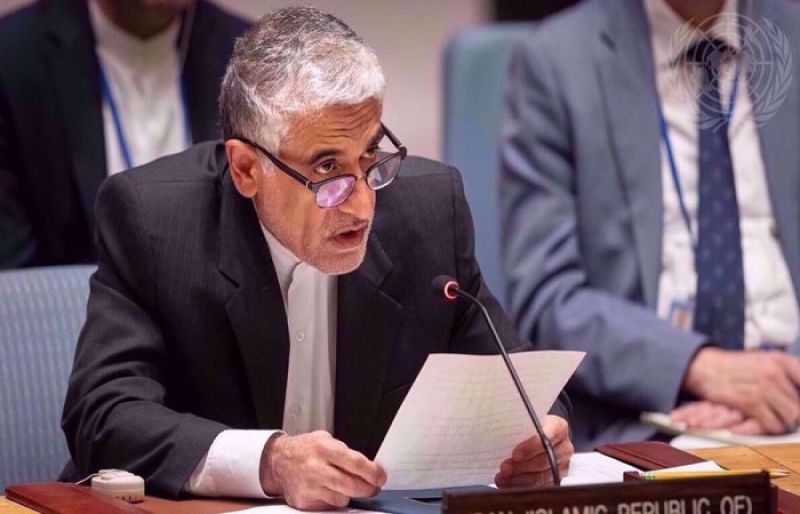
The White House and the Iranian delegation to the United Nations did not immediately respond to a request for comment.

Trump on Wednesday said “very important sources on the other side” had reported that killings in Iran’s crackdown were subsiding, and that he believed there was currently no plan for large-scale executions.

He did not rule out potential US military action, saying “we are going to watch what the process is” before noting the US administration received a “very good statement” from Iran.

Concern in the Middle East

Gulf Arab governments “are freaking out” over possible US strikes, said a regional diplomat, speaking on condition of anonymity. “In every conversation they are having with the Americans and Iranians, (the Gulf governments) have been asking them to calm down.”

Trump’s earlier warnings of intervention assumed fresh weight on Wednesday as the US began withdrawing some personnel in the region after a senior Iranian official said neighboring countries had been told that American bases would be struck in retaliation.

Not everyone expressed concern over possible US strikes.

Abdullah Mohtadi, the leader of the Komala Party of Iranian Kurdistan, a leading Kurdish party that advocates a secular democracy, dismissed the threat of separatism and said only significant US strikes can halt widespread killings of protesters by the security forces.

“The chaos is already there. The most important thing is to stop the massacre of people,” said Mohtadi, who lives in exile in London, adding that he believes opposition groups could work together to replace the theocratic government with democratic rule.

Trump, who ordered strikes on three Iranian nuclear sites in June during a 12-day war between Israel and Iran, has declined to reveal what action he would take.

One source said that Trump aides have been reviewing a range of options, including limited strikes on symbolic military targets.

Some experts said that with his repeated vows to act, Trump may have left himself little choice but to intervene should the security forces pursue their harsh crackdown.

Otherwise, they said, he risks losing credibility.

The key question, said Taleblu, is what targets would be hit.

“The nature of the target can impact the next round of protests or dampen them altogether if the population senses that Washington’s strikes are merely symbolic … and will have no meaningful impact on the security forces,” he said.

Trump could have a greater impact by interrupting Iran’s cash flows and waging cyber-attacks, giving the protests more time to play out, said Jon Alterman of the Center for Strategic and International Studies think tank.

“A military action would make everyone expect an instant result or complain it wasn’t working,” he said.

Trump has been intent on keeping up pressure on Iran after strikes on its nuclear sites in June, a White House official said. His campaign against Tehran, including both actions and the latest rhetoric, is also intended to show US adversaries that he is not shy about using US military might, the official said, citing the attack on Venezuela that toppled the country’s authoritarian leader Nicolas Maduro in early January.


Source link

Continue Reading

Politics

Iran rejects reports of protesters’ executions

Published

on

Iran rejects reports of protesters’ executions


Iranian Foreign Minister Abbas Araqchi adjusts glasses during a press conference following talks with Russian Foreign Minister Sergei Lavrov in Moscow, Russia, December 17, 2025. — Reuters

WASHINGTON: Iranian Foreign Minister Abbas Araqchi said on Wednesday that “there is no plan” by Iran to hang people, when asked about the anti-government protests in the Middle Eastern nation.

“There is no plan for hanging at all,” the foreign minister told Fox News in an interview on the Special Report with Bret Baier show. “Hanging is out of the question,” he said.

According to the Norway-based Iran Human Rights Society, hangings are common in Iranian prisons.

In an interview with CBS News on Tuesday, US President Donald Trump said he would take “very strong action” if Iran started hanging protesters, but did not elaborate on his comments. “If they hang them, you’re going to see some things,” Trump said.

Trump said on Wednesday that he was told that killings in the Iranian government’s crackdown on the protests were subsiding and that he believed there was currently no plan for large-scale executions.

Trump has been weighing a response to the situation in Iran, which is seeing its biggest anti-government protests in years.

Iran had a 12-day war with US ally Israel last year and its nuclear facilities were bombed by the US military in June. Trump has been piling pressure on Iran’s leaders, including threatening military action.

The protests posed one of the gravest tests of clerical rule in the country since the Islamic Revolution in 1979, as they evolved from complaints about dire economic hardships to defiant calls for the fall of the deeply entrenched clerical establishment.

The US-based HRANA rights group said it had so far verified the deaths of 2,403 protesters and 147 government-affiliated individuals. HRANA reported 18,137 arrests so far.

Iran’s government blames foreign sanctions for economic difficulties and alleges that its foreign enemies are interfering in domestic affairs.


Source link

Continue Reading

Politics

Denmark says White House talks failed to alter US designs on Greenland

Published

on

Denmark says White House talks failed to alter US designs on Greenland


Danish Foreign Minister Lars Lokke Rasmussen (left) and Greenlandic Foreign Minister Vivian Motzfeldt speak to the media at the Danish Embassy on January 14, 2026 in Washington, DC. — AFP
  • Danish, Greenland ministers meet Vance and Rubio at White House.
  • Trump insists Nato to back United States’s bid to control Greenland.
  • Copenhagen boosts military presence, launches Arctic exercises.

Denmark’s top diplomat said on Wednesday he failed to change the mind of US President Donald Trump’s administration on his threats to seize Greenland after flying to the White House for talks.

The foreign ministers of Denmark and Greenland, an autonomous territory of Copenhagen, met with Vice President JD Vance and Secretary of State Marco Rubio in what they hoped would clear up “misunderstandings” after Trump’s bellicose language toward the Nato ally.

“We didn’t manage to change the American position. It’s clear that the president has this wish of conquering over Greenland,” Danish Foreign Minister Lars Lokke Rasmussen told reporters after the meeting.

“And we made it very, very clear that this is not in the interest of the kingdom.”

The minister said a US takeover of Greenland, where Washington has long had a military base, was “absolutely not necessary.”

He said the issue was “very emotional” for the people of Greenland and Denmark, a steadfast US ally whose troops died alongside Americans in Afghanistan and, controversially, Iraq.

“Ideas that would not respect territorial integrity of the Kingdom of Denmark and the right of self-determination of the Greenlandic people are, of course, totally unacceptable,” Lokke said.

“We therefore still have a fundamental disagreement, but we also agree to disagree.”

He said the two sides would form a committee that would meet within weeks to see if there was possible headway.

Trump insisted hours before the talks that Nato should support the US effort to take control of Greenland, even though major European allies have all lined up to back Denmark.

Trump said Greenland was “vital” for his planned Golden Dome air and missile defense system.

“Anything less than that is unacceptable,” he wrote on his Truth Social network. “IF WE DON’T, RUSSIA OR CHINA WILL, AND THAT IS NOT GOING TO HAPPEN!”

Mocking tone

While the talks were underway, the White House posted on X: “Which way, Greenland man?”

The post included a drawing of two dogsleds — one heading towards the White House and a huge US flag, and the other towards Chinese and Russian flags over a lightning-bathed Kremlin and Great Wall of China.

Neither country has claimed Greenland, and Lokke said no Chinese ship had been spotted there in a decade.

Denmark promised ahead of the meeting to ramp up military presence further in the vast, sparsely populated and strategically located island.

Trump has derided recent Danish efforts to increase security for Greenland as amounting to “two dogsleds.” Denmark says it has invested almost $14 billion in Arctic security.

The row over Greenland has deeply shaken transatlantic relations. Both Denmark and Greenland insist only Greenlanders should decide the autonomous island’s fate.

In the quiet streets of the capital Nuuk, red and white Greenlandic flags were flying in shop windows, on apartment balconies, and on cars and buses, in a show of national unity as the talks got underway.

“We are standing together in these times when we might feel vulnerable,” the Nuuk municipality wrote on Facebook.

Greenland’s leader said on Tuesday that the island prefers to remain part of Denmark, prompting Trump to say “that’s going to be a big problem for him.”

Vance, who slammed Denmark as a “bad ally” during a visit to Greenland last year, is known for a hard edge, which was on display when he publicly berated Ukrainian President Volodymyr Zelensky in the Oval Office last February.

The meeting, however, was closed to the press, meaning there was no on-camera confrontation.

Emboldened by Venezuela

Danish Defence Minister Troels Lund Poulsen told AFP earlier Wednesday his country was boosting its military presence in Greenland and was in talks with NATO allies.

The Danish defence ministry then announced that it would do so “from today,” hosting a military exercise and sending in “aircraft, vessels and soldiers.”

Swedish officers were joining the exercise at Denmark’s request, Stockholm said.

Trump has appeared emboldened on Greenland — and on what he views as the US backyard as a whole — since ordering a deadly January 3 attack in Venezuela that removed president Nicolas Maduro.

The White House has repeatedly said military action against Greenland remains on the table.


Source link

Continue Reading

Trending